
 Bambang Pamungkas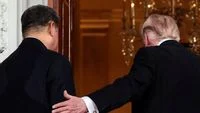
The geopolitical landscape of global technology underwent a startling nomenclature shift following a high-stakes diplomatic encounter in Washington, where United States President Donald Trump formally announced the wholesale rebranding of Artificial Intelligence to Super Intelligence, or SI. Long regarded as the defining technological frontier of the twenty-first century, the terminology previously known universally as AI has now been officially elevated within American federal discourse to reflect what the current administration terms a more precise, overarching capability. In a diplomatic twist that has surprised international observers, the People’s Republic of China has responded with a measured, open stance, signaling a willingness to accommodate Washington’s linguistic and strategic pivot regarding the future of computational dominance.
The announcement emerged in the wake of an extensive bilateral summit between President Trump and Chinese President Xi Jinping. The meeting, held in the American capital, convened the leaders of the world’s two largest economies to deliberate on a matrix of pressing geopolitical concerns, with disruptive technologies holding a prominent position on the negotiation table. The intersection of economic competition, national security, and technological supremacy made the governance of advanced algorithms a central pillar of the diplomatic agenda, setting the stage for discussions that transcended traditional trade barriers and delved directly into the architecture of future intelligence systems.
According to statements released via digital media channels by President Trump following the summit, the dialogue yielded unexpected alignment on the conceptual framing of the technology. Trump asserted that his Chinese counterpart expressed receptive sentiments toward the updated terminology during their private deliberations. "Seperti hampir semua orang lainnya, (Xi) tampaknya menyukai penggantian nama Artificial Intelligence-yang penamaannya kurang tepat dan tidak akurat-menjadi nama yang jauh lebih akurat dan penting, yaitu SUPER INTELLIGENCE," Trump conveyed in his public remarks, emphasizing his long-held view that the former moniker failed to capture the profound magnitude and transformative power inherent in advanced machine learning systems.
While Beijing did not explicitly corroborate Trump’s assertion that President Xi personally endorsed the new terminology, the reaction from the Chinese foreign policy apparatus was notably diplomatic. In an official briefing issued on Saturday, the Chinese Ministry of Foreign Affairs addressed the nomenclature change with calculated precision, noting that Beijing was closely monitoring Washington’s policy evolution and would respect the linguistic choices made by the United States government. "Mengenai pertanyaan tentang istilah kecerdasan buatan, pihak China memberikan perhatian pada posisi pihak AS dan menghormati pilihan kata pihak AS," the ministry stated, opting for a posture of strategic ambiguity that avoids direct confrontation while maintaining diplomatic decorum.
Establishment of Specialized Bilateral Communication Channels
Beyond the semantic adjustments arising from the Washington summit, the diplomatic encounter yielded tangible operational outcomes designed to mitigate technological friction. Both superpowers formally agreed to establish a dedicated bilateral communication channel specifically focused on monitoring, anticipating, and resolving crises related to artificial and super intelligence technologies. This newly minted institutional framework is intended to serve as a direct diplomatic conduit, preventing misunderstandings or automated system anomalies from escalating into broader geopolitical confrontations between Washington and Beijing.
The establishment of this specialized channel underscores a growing recognition within both capitals that unchecked algorithmic acceleration poses systemic risks to global stability. As autonomous systems become increasingly integrated into financial markets, critical infrastructure, and defense frameworks, the potential for unintended escalations driven by automated decision-making has emerged as a primary security concern. The diplomatic architecture agreed upon during the summit provides a safety valve, ensuring that technological competition does not entirely eclipse the necessity for crisis management protocols.
Divergent Philosophical Approaches to Technological Governance
Despite the institutional breakthrough of a dedicated communication channel, profound philosophical divergences persist between the two superpowers regarding the ultimate trajectory and governance of Super Intelligence. These divergent viewpoints reflect differing domestic governance models, risk assessments, and long-term strategic ambitions for the technology.
President Trump has consistently maintained a deregulatory and optimistic stance concerning the trajectory of computational advancement. Throughout his political career, Trump has frequently minimized or outright dismissed existential warnings regarding artificial intelligence, arguing that excessive regulatory burdens risk stifling American innovation and conceding technological leadership to foreign adversaries. From the perspective of the current U.S. administration, the transition to the terminology of "Super Intelligence" is not merely semantic; it represents a bold declaration of American intent to dominate the pinnacle of technological achievement without the paralysis of preemptive containment measures.
Conversely, President Xi Jinping and the broader Chinese political establishment have cultivated a markedly more cautious and precautionary philosophical framework. Beijing’s approach to advanced algorithmic systems is deeply rooted in the imperative of social stability, ideological control, and state oversight. Chinese leadership has repeatedly emphasized that the development of hyper-advanced computational capabilities must remain strictly subordinated to human authority. This philosophy manifests domestically through stringent regulatory regimes enforced by the Cyberspace Administration of China, which subjects algorithmic models to rigorous vetting, content controls, and security evaluations prior to public deployment.
Background Context and Chronological Evolution of US-China Tech Rivalry
To fully understand the gravity of the recent summit and the subsequent rebranding of AI, one must examine the protracted historical arc of the technology’s evolution and the escalating geopolitical rivalry between the United States and China over digital supremacy. The phrase "Artificial Intelligence" was originally coined at the Dartmouth Workshop in 1956, establishing a academic field that spent decades cycling through periods of immense optimism followed by severe funding winters, colloquially known as "AI winters."
However, the advent of deep learning in the early 2010s, powered by exponential increases in computational processing capacity and vast quantities of digitized data, transformed AI from theoretical computer science into the primary engine of the global digital economy. By the late 2010s, both Washington and Beijing recognized that technological leadership in this domain would dictate the geopolitical hierarchy of the twenty-first century.
The administration of U.S. President Donald Trump during his first term initiated a series of aggressive policy measures, including export controls on advanced semiconductor manufacturing equipment, targeted sanctions against major Chinese technology conglomerates, and the restriction of foreign investments in sensitive domestic tech sectors. These actions laid the groundwork for a bifurcated global technology ecosystem characterized by supply chain decoupling and intense competition for talent and capital.
As generative models and large-scale neural networks achieved mainstream prominence in the 2020s, the regulatory stakes escalated exponentially. The emergence of systems capable of generating complex code, synthesizing human-like text, and operating autonomous machinery prompted global policymakers to grapple with the profound socio-economic disruptions and security vulnerabilities inherent in rapid technological deployment. The rebranding of the field to "Super Intelligence" by the Trump administration in late 2026 reflects an ideological attempt to re-anchor the American narrative around absolute dominance, framing the technology not as a set of software tools, but as an epochal civilizational leap.
Broader Implications for Global Markets and Geopolitics
The convergence of Washington’s linguistic pivot, Beijing’s diplomatic accommodation, and the establishment of a bilateral crisis-management channel carries profound implications for the global economy, international security architecture, and transnational scientific collaboration.
From an economic standpoint, the formalization of "Super Intelligence" as a primary category of federal policy priority is expected to catalyze a new wave of public-private partnerships, venture capital investment, and defense procurement in the United States. Corporations operating within the semiconductor, cloud computing, and advanced manufacturing sectors will likely align their corporate nomenclature and strategic proposals with the new federal terminology to secure preferential treatment and research grants. Concurrently, Chinese technology firms, operating under the watchful eye of state regulators, will continue their aggressive push toward domestic self-sufficiency in foundational models and computing hardware, navigating the delicate balance between state-mandated security and global market competitiveness.
Geopolitically, the muted and pragmatic response from Beijing indicates a sophisticated tactical approach by Chinese leadership. By acknowledging Washington’s preference for the term "Super Intelligence" without explicitly endorsing its underlying philosophical assumptions, China preserves its diplomatic latitude while avoiding an unnecessary escalation over semantics. This calculated restraint suggests that both superpowers, despite their systemic rivalry, recognize the utility of maintaining diplomatic channels to manage the unpredictable trajectory of transformative technologies.
Furthermore, the introduction of a specialized communication channel to manage AI and SI incidents marks a tentative step toward international arms control in the digital age. While traditional arms control agreements historically focused on nuclear, chemical, or conventional military hardware, the intangible and decentralized nature of advanced computing presents entirely novel verification and enforcement challenges. The willingness of Washington and Beijing to institutionalize dialogue on this front could potentially serve as a foundational baseline for broader multilateral frameworks involving other technology-advanced nations, such as the European Union, Japan, and the United Kingdom.
As the global community enters this newly designated era of Super Intelligence, the friction between American technological libertarianism and Chinese state-directed technological governance will undoubtedly continue to shape the contours of international relations. Whether the newly established communication channels can successfully withstand the inevitable geopolitical pressures and technological shocks of the future remains one of the defining questions of the modern epoch. For now, the détente observed in Washington and Beijing signals a fragile yet crucial acknowledgement that the forces unleashed by modern computational science require unprecedented levels of diplomatic vigilance and cross-border cooperation.








