Chalifah Fatihah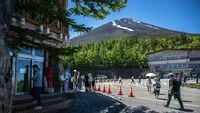
Mount Fuji stands as an enduring symbol of Japan, its near-symmetrical volcanic cone recognized across the globe as a masterpiece of natural architecture. While millions view the peak from afar or join the seasonal rush to scale its slopes, photographer Megumi Ueda has forged an entirely different relationship with the nation’s highest elevation. For the past seventeen years, Ueda has traded the comforts of modern urban life for a temporary home at 3,776 meters above sea level, living and working out of a Shinto shrine nestled near the summit. Her journey offers a rare, intimate perspective on Japan’s most sacred peak, blending the disciplines of high-altitude documentary photography, meteorological observation, and mountain safety advocacy. Operating from an environment defined by severe weather and physical isolation, Ueda has documented the myriad faces of Mount Fuji—from breathtaking sunrises to life-threatening gales—transforming her artistic passion into a vital service for the hundreds of thousands who attempt the climb each year.
The Genesis of a High-Altitude Calling
Megumi Ueda’s immersion in the world of Mount Fuji did not begin with a lifelong ambition to conquer extreme altitudes. Rather, her introduction to the mountain occurred in her early thirties, prompted by a casual suggestion from a friend who encouraged her to undertake the climb. At the time, Ueda was a photographer navigating ordinary professional pathways, largely detached from the rigorous demands of mountaineering. However, upon reaching the summit, the sweeping vistas and the profound silence of the high-altitude landscape left an indelible impression on her consciousness.
The experience proved so transformative that when she descended, the emotional weight of the encounter overwhelmed her. As she looked back at the towering volcanic peak from the base, memories of the summit flooded her mind, and she broke into tears. Driven by a desire to remain connected to that profound sense of awe, Ueda sought a way to prolong her engagement with the mountain. She applied for and secured seasonal employment at a Shinto shrine located near the peak. This position not only granted her an extended stay at high altitude but also placed her at the literal apex of Japanese geography for weeks at a stretch. What began as a spontaneous recreational climb evolved into a nearly two-decade vocation, redefining her career as a visual storyteller and embedding her into the seasonal rhythms of the mountain.
A Daily Routine at the Edge of the Atmosphere
Life at 3,776 meters requires a fundamental departure from conventional norms. During the official climbing season, Ueda’s daily existence is governed by the elements. Her responsibilities at the shrine involve assisting with day-to-day operations, including the preparation of meals for the resident staff. Yet, her primary vocation unfolds through the lens of her camera and her meticulous tracking of environmental conditions.
Her day routinely begins at approximately 4:00 AM. In the bitter pre-dawn chill, Ueda positions herself to capture the dawn breaking over the Pacific Ocean and the surrounding Honshu landscape. The resulting photographs document a rapidly shifting canvas where the golden hues of sunrise give way to stark, high-altitude daylight, and where cloud inversions frequently create an illusion of standing above an ocean of white foam.
Beyond aesthetic pursuits, Ueda’s daily routine includes rigorous environmental monitoring. Armed with specialized instruments, she regularly measures the ambient temperature and wind velocity at the peak. Lacking official automated monitoring infrastructure directly at the vulnerable upper reaches, Ueda bridges an information gap by compiling these real-time metrics and publishing them online. For climbers preparing to embark from the fifth station, her updates provide an invaluable baseline of what to expect upon reaching the summit ridge, moving beyond generic weather forecasts to offer hyper-local, visual, and numerical data regarding the actual atmospheric hazards.
The Human Toll: Safety, Risk, and Rescue at the Summit
Mount Fuji’s serene aesthetic from a distance often lulls inexperienced visitors into a false sense of security. In reality, the upper tiers of the mountain present severe environmental hazards. Meteorological data from the region indicates that summer temperatures at the summit can plummet to levels typical of a lowland winter in February. Concurrently, ferocious winds can reach speeds capable of knocking a grown adult off balance, while sudden fog and dense cloud cover can reduce visibility to near zero, increasing the likelihood of disorientation and falls.
These hazards are amplified by the sheer volume of human traffic. Each official climbing season draws upwards of 200,000 people to the trails of Mount Fuji, transforming the pilgrimage into a massive logistical and safety undertaking for local authorities and rescue personnel. Despite advisory campaigns by Japanese authorities, a significant percentage of climbers remain underprepared, tackling the ascent in inadequate clothing, lacking proper footwear, or suffering from acute mountain sickness.
The consequences of this underpreparedness are stark. Media reports from the region indicate that at least six individuals lost their lives on the slopes of Mount Fuji during the most recent climbing season. These fatalities underscore a persistent challenge for mountain management: balancing open public access to a revered cultural landmark with the imperative of preserving human life in a hostile alpine environment.
Ueda’s role on the mountain extends far beyond documentation and meteorology; she has become an informal frontline responder. Having completed formal training in wilderness first aid, she has repeatedly intervened in emergency situations near the summit. Her encounters range from assisting hikers experiencing hypothermia due to improper attire to aiding those who have suffered traumatic injuries from falls on the rocky, unstable terrain. Through her online communications, Ueda explicitly aims to contextualize these risks. By pairing her temperature and wind measurements with striking visual evidence of the harsh conditions, she seeks to communicate the gravity of alpine hazards in a manner that raw statistical data often fails to achieve. Her overarching objective is straightforward: to instill a deeper respect for mountain safety among prospective climbers, thereby reducing the annual toll of injuries and fatalities.
The Broader Implications of High-Altitude Documentation
Ueda’s seventeen-year tenure on Mount Fuji intersects with broader conversations regarding tourism management, environmental conservation, and the changing nature of outdoor recreation in Japan. In recent years, Japanese authorities and local municipalities have grappled with the phenomenon of "bullet climbing"—where individuals attempt to ascend from the fifth station to the summit overnight without resting, often in a bid to catch the sunrise. This practice not only strains emergency services but also drastically increases the incidence of altitude sickness and exhaustion.
By documenting both the sublime beauty and the unforgiving harshness of the peak, chroniclers like Ueda provide an unvarnished window into the realities of modern mass mountaineering. Her photographs serve as a dual narrative: a celebration of human endurance and natural majesty, and a cautionary record of the vulnerability of unprepared travelers. As local governments increasingly discuss the implementation of stricter access controls, daily caps on visitor numbers, and potential toll systems to manage overcrowding, the visual data and frontline accounts offered by observers stationed on the mountain provide crucial context for policymakers and the public alike.
Conclusion: A Continuing Legacy on the Summit
As the seasonal climbing window draws to a close and the extreme weather of autumn and winter reasserts itself, the shrines and trails near the summit of Mount Fuji empty out, returning the peak to its austere winter isolation. For Megumi Ueda, the conclusion of the season marks a temporary departure, but not a permanent farewell. She has already stated her intention to return with the melting of the snows next summer, resuming her post at the shrine, her meteorological observations, and her photographic stewardship of Japan’s most famous peak.
Through nearly two decades of dedication, Ueda has cemented a unique role in the cultural and physical landscape of Mount Fuji. She is neither a traditional mountaineering guide nor a government official, yet her presence at 3,776 meters bridges the gap between the millions who dream of the summit and the formidable reality of the mountain itself. As long as she continues to climb through the mist to greet the dawn, her work will remain a testament to the enduring allure of the heights, and a vital reminder of the respect demanded by the roof of Japan.