
 Tyo Susilo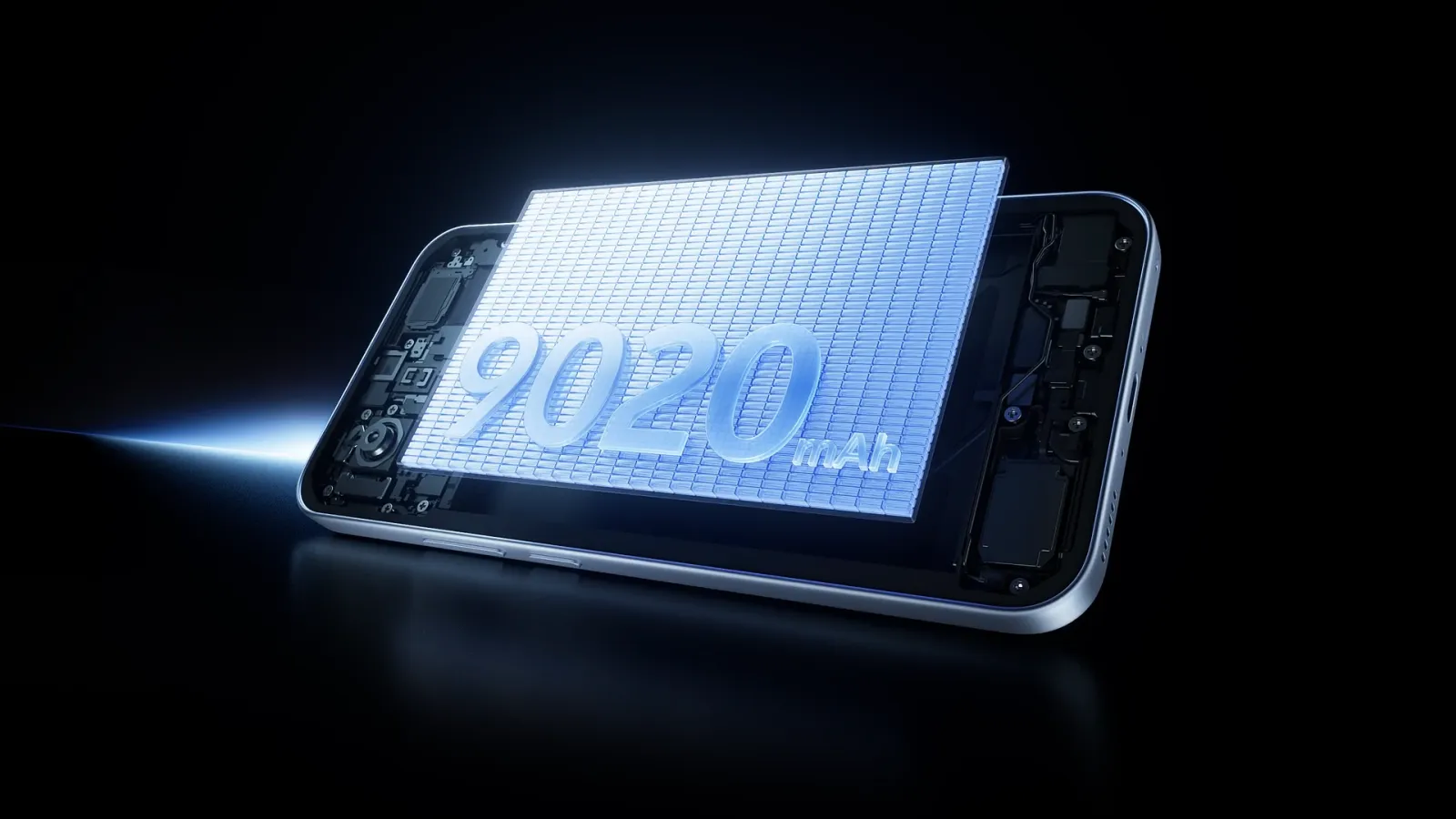
The race for smartphone endurance is entering a transformative new phase as manufacturers in China reportedly prepare to push battery capacities far beyond current limits. While handsets equipped with 10,000mAh power cells have transitioned from conceptual novelties to tangible market offerings, leading original equipment manufacturers (OEMs) are refusing to halt their momentum. Recent industry intelligence indicates that major Chinese smartphone brands are actively testing advanced battery architectures heavily inspired by recent engineering paradigms pioneered by Apple. By combining metallic casings with cutting-edge internal structuring, the next generation of mobile devices could achieve unprecedented energy densities without sacrificing ergonomic profiles.
Main Facts and Technological Shifts
According to reports from prominent industry insider Digital Chat Station, at least one major Chinese smartphone manufacturer is currently evaluating batteries enclosed in steel cases and paired with stacked-cell technology. This departure from conventional manufacturing methods marks a significant evolution in mobile hardware design. Traditional smartphone batteries typically rely on a jelly-roll or winding construction method, which, while reliable, leaves micro-spaces underutilized within the chemical enclosure.
In contrast, the stacked-cell design reorganizes the internal components of the battery into folded layers. This spatial configuration maximizes the internal volume of the device chassis, allowing for a higher volume of active energy-storing materials in the same physical footprint. When combined with a rigid steel or metal outer casing—a technique initially mainstreamed by Apple with the iPhone 16 Pro series—the resulting power cell offers enhanced structural integrity alongside higher energy density. This structural rigidity allows the battery to withstand physical stress better, minimizes swelling risks, and permits tighter spatial integration within increasingly thin phone chassis.
Chronology and Background of the Trend

The convergence of Chinese manufacturing innovation and Apple-inspired structural designs did not happen overnight; it represents the culmination of a multi-year pursuit to solve the smartphone industry’s most persistent bottleneck: battery life. Over the past three years, the smartphone market has witnessed a paradigm shift away from traditional graphite anodes toward silicon-carbon (Si-C) anode technology.
Chronologically, the timeline of this evolution unfolded through several key milestones:
- 2023 to Early 2024: Major Chinese brands such as Honor, Vivo, and Xiaomi began commercializing silicon-carbon batteries, successfully driving capacities from the traditional 5,000mAh ceiling into the 5,500mAh to 6,000mAh range.
- Late 2024: Apple introduced its iPhone 16 Pro lineup featuring a redesigned metallic battery casing, proving that steel-enclosed power cells could be mass-produced safely while enhancing structural rigidity and thermal dissipation.
- 2025: Silicon-carbon density improvements pushed mainstream Chinese mid-range and flagship devices past the 7,000mAh threshold, with specialized endurance models touching 10,000mAh through bulky, dual-cell configurations.
- Late 2026: Current industry leaks indicate that brands are combining the steel-cased, stacked-cell architecture with advanced silicon-carbon compositions, bridging the gap between ultra-high capacity and sleek, consumer-friendly industrial design.
Supporting Data and Technical Implications
To understand the scale of this technological leap, one must examine the progression of power density metrics in mobile computing. Historical smartphone batteries achieved energy densities averaging around 600 to 700 watt-hours per liter (Wh/L). With the introduction of silicon-carbon anodes, that figure climbed past 800 Wh/L, allowing more chemical energy to be stored per cubic millimeter.
Industry analysts project that if the fusion of stacked-cell technology and steel casings becomes widely commercialized across Chinese supply chains, energy densities could approach or exceed 900 Wh/L. For the consumer, this translates to tangible hardware metrics:
- iPhone 18 Pro Max Projections: Industry forecasts suggest Apple’s upcoming flagship could integrate a 5,391mAh battery—representing an approximate 12 percent capacity increase over preceding generations—largely driven by continuous refinement of these internal spatial efficiencies and the omission of physical SIM trays in specific regional models.
- Chinese Flagship Targets: Brands known for aggressively pushing hardware boundaries—including Honor, Realme, iQOO, and Xiaomi—are positioned to leverage these exact methodologies. Rather than relying on cumbersome dual-cell stacks that drastically increase device thickness, manufacturers anticipate that a single, steel-cased stacked cell could house between 9,000mAh and 10,000mAh comfortably within a standard smartphone chassis.
Official Responses and Industry Perspectives

Because these hardware developments remain in the research, development, and testing phases, major OEMs have yet to issue formal product announcements or technical whitepapers confirming commercial deployment timelines. However, supply chain insiders note that R&D departments across Shenzhen and Beijing view structural battery improvements as the definitive battleground for consumer loyalty.
Industry analysts point out that while raw processing power and camera optics have reached iterative plateaus, battery longevity remains a primary consumer pain point. By adopting manufacturing techniques that enhance structural safety while simultaneously increasing capacity, brands can cater to power users, mobile gamers, and content creators without compromising on the aesthetic demands of modern industrial design. Furthermore, the use of metallic casings addresses rising concerns regarding thermal management, as higher-capacity batteries generate substantial heat during rapid charging cycles—a critical factor given that many of these brands are simultaneously pushing charging speeds past the 100-watt threshold.
Broader Impact and Future Implications
The potential widespread adoption of steel-cased, stacked-cell batteries carries profound implications for the global mobile ecosystem. From a manufacturing standpoint, transitioning away from traditional winding techniques requires substantial retooling of factory assembly lines, potentially introducing short-term supply chain bottlenecks and higher initial production costs. Consequently, these advanced power solutions are expected to debut in ultra-premium flagship devices before trickling down to mid-range and budget segments over a multi-year horizon.
Environmental and safety implications are equally significant. As battery capacities scale toward the 10,000mAh mark, regulatory bodies and consumer safety agencies maintain strict oversight regarding thermal runaway, puncture resistance, and long-term chemical degradation. The implementation of rigid steel housings inherently improves physical durability, reducing the likelihood of internal short circuits caused by drops or structural flexing.
Ultimately, this cross-pollination of engineering concepts between competing global smartphone ecosystems demonstrates an industry-wide commitment to redefining mobile endurance. As manufacturers finalize their prototype testing phases heading into the next hardware cycle, the question is no longer whether multi-day battery life will become standard, but rather how thinly and efficiently engineers can package unprecedented quantities of power into the palm of the user’s hand.








