
 Chalifah Fatihah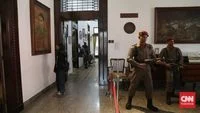
The modest yet stately white residence situated at Jalan Teuku Umar Nomor 40 in Menteng, Central Jakarta, stands today as a quiet guardian of one of the most tumultuous nights in modern Indonesian history. Long before it was designated as a public historical repository, this domicile was the private sanctuary of General Besar Abdul Haris (A.H.) Nasution, one of the nation’s most prominent military strategists and founding fathers of the Indonesian National Armed Forces (TNI). Today, the building has transitioned into the Sasmitaloka Jenderal Besar A.H. Nasution Museum, an institutional archive that meticulously preserves the harrowing memories of September 30, 1965, while celebrating the enduring legacy of a military leader who helped shape the trajectory of the republic.
To fully understand the weight carried by the walls of this heritage structure, one must examine the geopolitical and domestic climate of Indonesia in the mid-1960s. The nation was navigating a period of profound political instability, characterized by ideological polarization between the military, particularly the Army, and the Communist Party of Indonesia (PKI), alongside the increasingly left-leaning policies of President Sukarno. Against this backdrop of heightened tension, General Nasution, who served as the Coordinating Minister for Defense and Security at the time, emerged as a principal obstacle to communist maneuvers. This friction culminated in the operational maneuver known as the 30 September Movement, or G30S, which sought to decapitate the leadership of the Indonesian Army by abducting its top-ranking generals under the cover of darkness.
A Night of Terror: The Chronology of October 1, 1965
The tranquility of the Menteng neighborhood was violently shattered in the early hours of October 1, 1965. According to historical records curated by the Indonesian Army Directorate of History and testimonies from surviving family members, a truckload of heavily armed personnel belonging to the Tjakrabirawa Regiment—the presidential bodyguard unit—alongside affiliated civilian militia members, arrived at Jalan Teuku Umar 40 at approximately 04:00 Western Indonesia Time (WIB). The detachment breached the perimeter with the explicit objective of capturing General Nasution dead or alive.
Inside the residence, the general and his wife, Johanna Sunarti Nasution, were awakened by the commotion and the sound of gunfire. Demonstrating immediate tactical awareness, General Nasution recognized the mortal danger and prepared to face the intruders. However, urged by his wife to preserve his life for the sake of the nation and their family, Nasution executed a daring escape. He broke through a side door leading toward the rear perimeter wall, which bordered the diplomatic compound of the Embassy of Iraq. Despite sustaining a fracture in his foot during the frantic leap over the metal spikes of the fence, the general managed to evade capture, finding temporary sanctuary within the embassy grounds while bleeding and concealed by the darkness.
While General Nasution successfully slipped through the net of the raiding party, the cost of his escape was devastatingly high. The commotion inside the house drew the attention of the intruders toward the family quarters. Five-year-old Ade Irma Suryani Nasution, the general’s youngest daughter, was scooped up from her bed by her mother and an aunt in an attempt to flee to safety. As they crossed a hallway, a burst of indiscriminate gunfire pierced the door. Several bullets struck the young child, inflicting severe internal injuries. Despite immediate emergency response and subsequent intensive medical treatment at the Central Army Hospital (RSPAD) Gatot Soebroto, young Ade Irma succumbed to her wounds days later on October 6, 1965, becoming one of the youngest and most tragic casualties of the political crisis.
In a parallel act of extraordinary valor, First Lieutenant Czi Pierre Andreas Tendean, the young personal aide-de-camp to General Nasution, confronted the raiding party in the main hallway. Seizing a moment of confusion and acting with supreme selflessness, Tendean stepped forward and identified himself as General Nasution to divert the assassins’ attention away from his superior. The captors, blinded by the darkness and the urgency of their mission, took the young lieutenant into custody, dragging him away into a waiting vehicle. Pierre Tendean was subsequently transported to Lubang Buaya on the southern outskirts of Jakarta, where he was executed alongside several other kidnapped general officers. His supreme sacrifice ensured that General Nasution survived to rally the loyalist forces of the military.
Preserving a Legacy: From Private Home to National Museum
General A.H. Nasution’s association with the property at Jalan Teuku Umar 40 began in 1949, a pivotal year following the recognition of Indonesia’s sovereignty by the Dutch. Having been appointed as the Chief of Staff of the Army (KSAD), Nasution utilized the residence as his primary family home through decades of political shifts, military restructuring, and retirement. He resided in the house continuously until his passing on September 6, 2000, transforming the address into a familiar landmark for military historians and political dignitaries alike.
Recognizing the immense historical significance of the residence and the personal sacrifices endured within its rooms, the government initiated steps to preserve the estate. On December 3, 2008, then-President Susilo Bambang Yudhoyono officially inaugurated the building as the Sasmitaloka Jenderal Besar A.H. Nasution Museum. The term "sasmitaloka" is derived from Old Javanese roots, where sasmita denotes a sign, hint, or remembrance, and loka signifies a place or world. Thus, the museum translates literally to a place designated for remembering and honoring significant historical events, milestones, and personal sacrifices.
Curatorial Insights and Artifacts within the Museum
Managed under the auspices of the Indonesian Army Historical Service, the museum currently houses a meticulously maintained inventory of approximately 2,185 items. The curation is designed to offer visitors an immersive educational experience, balancing the military career of the general with the deeply personal tragedy that befell his household.
Upon entering the complex, visitors are greeted by a preserved physical environment that mirrors the layout of the house during the 1960s. The interior features original furniture, family photographs, and the personal study of General Nasution, where he penned numerous military doctrine texts and historical memoirs, including his seminal work Fundamentals of Guerrilla Warfare.
Among the standout exhibits are:
- The authentic military service uniforms worn by General Nasution during his active duty.
- The personal vehicle of the general, a vintage Volvo sedan that symbolizes the era of his leadership.
- A poignant collection of paintings and personal belongings belonging to Ade Irma Suryani, preserving her memory for contemporary generations.
- A series of lifelike dioramas positioned strategically throughout the rooms, recreating the tense moments of the October 1 predawn raid, complete with accurate depictions of the structural damage sustained during the gunfight.
Public Accessibility and Operational Guidelines
In line with national educational objectives to foster historical awareness among the younger generation, the Indonesian government mandates that access to the Sasmitaloka Jenderal Besar A.H. Nasution Museum remain open to the public without any admission fees. The institution serves as a frequent destination for school field trips, historical researchers, and domestic tourists seeking to understand the complexities of modern Indonesian history.
The operational schedule for the museum is structured as follows:
- Operating Days: Tuesday through Sunday (Closed on Mondays and National Public Holidays)
- Operating Hours: 08:00 to 14:00 WIB
- Admission Fee: Free of charge
Broader Implications and Historical Analysis
The preservation of the Jalan Teuku Umar 40 residence carries profound implications for the collective memory of the Indonesian nation. The events of 1965 remain one of the most intensely debated and sensitive chapters in modern historiography, marking the transition from the Guided Democracy era under President Sukarno to the rise of the New Order under Major General Suharto.
Historians and political analysts emphasize that museums like Sasmitaloka serve a dual purpose. On one hand, they act as memorials to institutional loyalty and personal sacrifice, immortalizing figures like Pierre Tendean and young Ade Irma Suryani as symbols of national resilience. On the other hand, they provide physical evidence that anchors abstract political narratives into tangible realities. By maintaining the bullet holes in the doors, the broken glass, and the exact floorboards where the struggle took place, the museum transcends traditional textbook learning, compelling visitors to confront the human cost of political upheaval.
Ultimately, the Sasmitaloka Jenderal Besar A.H. Nasution Museum stands not merely as a monument to a single catastrophic night, but as an enduring testament to the resilience of a family and an institution caught in the crosscurrents of history. It invites ongoing dialogue, reflection, and education, ensuring that the lessons of the past continue to guide the democratic trajectory of contemporary Indonesia.








