Tata Titiana
The landscape of modern Indonesian tourism is intrinsically linked to the legacy of the colonial Hindia Belanda, or the Dutch East Indies. While contemporary travelers often view the archipelago through the lens of modern resorts and boutique eco-lodges, the foundation of the nation’s commercial hospitality sector was laid more than a century ago. Following the opening of the Suez Canal in 1869, maritime travel between Europe and the Nusantara accelerated dramatically. Initially dominated by trade vessels, the late 19th century witnessed a significant shift as commercial steamships and early luxury cruise liners began docking in Indonesian ports, carrying Western tourists eager to explore the exotic tropics.
To accommodate these affluent European travelers, the colonial administration and private entrepreneurs recognized an urgent need for Western-standard accommodations. This realization marked the official inception of organized tourism in the region, primarily concentrated on the island of Java and later expanding to Bali. What is remarkable is that several of these architectural landmarks, born out of colonial ambition and geopolitical transformation, have survived turbulent historical epochs—including the Japanese occupation, the Indonesian National Revolution, and the birth of the republic—and continue to operate today. These properties serve not merely as places to lodge, but as living museums preserving the architectural and cultural memory of Indonesia.
Hotel Indonesia Kempinski: Jakarta’s First Luxury Icon
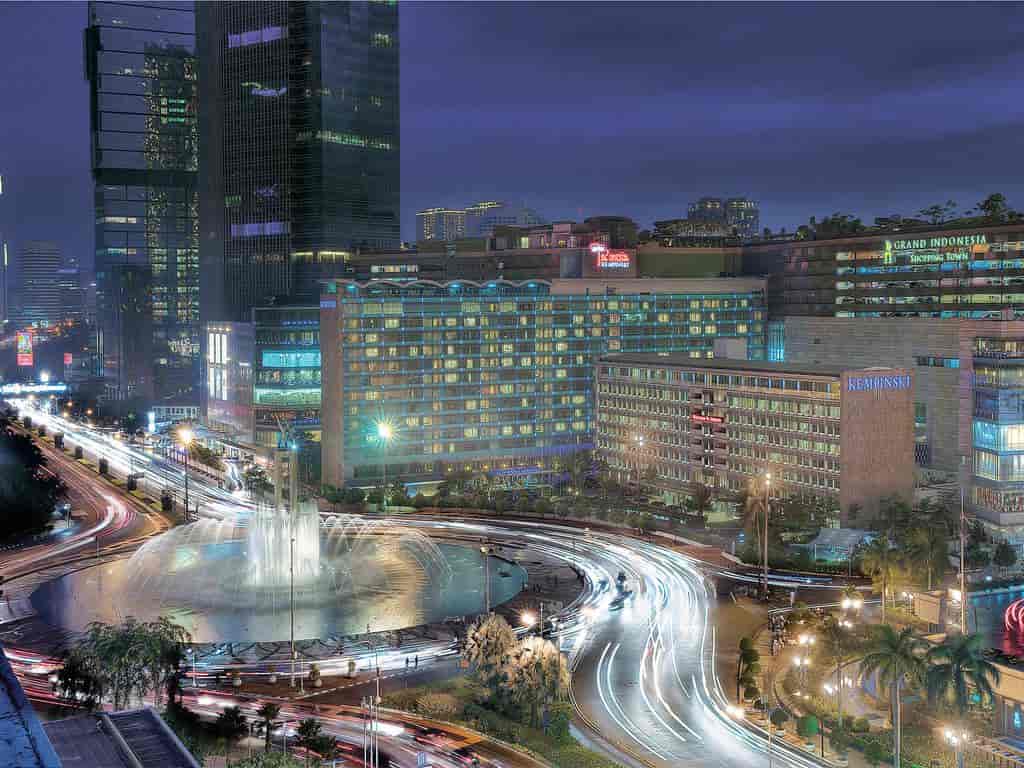
Standing tall in the heart of the capital, the Hotel Indonesia Kempinski holds the distinction of being Indonesia’s first five-star luxury hotel and, at the time of its completion, the tallest building in Jakarta. The genesis of this monumental project is deeply rooted in the post-colonial nation-building efforts of President Sukarno. Rather than being built by the Dutch, the hotel was constructed utilizing reparations and assets obtained from Japan following World War II.
Officially inaugurated on August 5, 1962, the hotel was commissioned to serve as the official residence for international athletes participating in the IV Asian Games. President Sukarno envisioned the property as a modern face for the newly independent republic, signaling to the world that Indonesia could host international events with sophistication and grandeur. Decades later, the property continues to host global dignitaries. In March 2020, the hotel made international headlines when King Willem-Alexander and Queen Máxima of the Netherlands chose the property for their historic state visit to Indonesia, staying in the presidential suite equipped with specialized security infrastructure, including bulletproof glass.
From an architectural and economic standpoint, the Hotel Indonesia Kempinski set a precedent for luxury real estate development in Southeast Asia. It demonstrated how indigenous craftsmanship could be merged with international hospitality standards. Today, nightly rates generally begin around IDR 2.98 million, though pricing fluctuates based on seasonal demand, macroeconomic inflation, and international tourism trends.
Hotel Majapahit Surabaya: The Crucible of Nationalism
In East Java, the Hotel Majapahit Surabaya stands as a silent witness to some of the most pivotal moments in Indonesia’s struggle for independence. Originally established in 1910 by the Sarkies Brothers—noted Armenian hoteliers who developed several iconic properties across Southeast Asia—the hotel initially opened its doors under the name Hotel Oranje. During the Japanese occupation of Indonesia, the property was requisitioned and renamed Hotel Yamato.
The hotel’s most significant historical inflection point occurred on September 19, 1945, just weeks after Indonesia proclaimed its independence. Tensions boiled over at the hotel following the failure of negotiations between Republican leaders and the Dutch delegation led by W.V.Ch. Ploegman. In an act of defiance that galvanized the local populace, Indonesian youths scaled the roof of the hotel and tore the blue strip off the Dutch red-white-and-blue flag, transforming it into the red-and-white flag of Indonesia. This event, known as the Hotel Yamato incident, catalyzed the historic Battle of Surabaya on November 10, 1945.
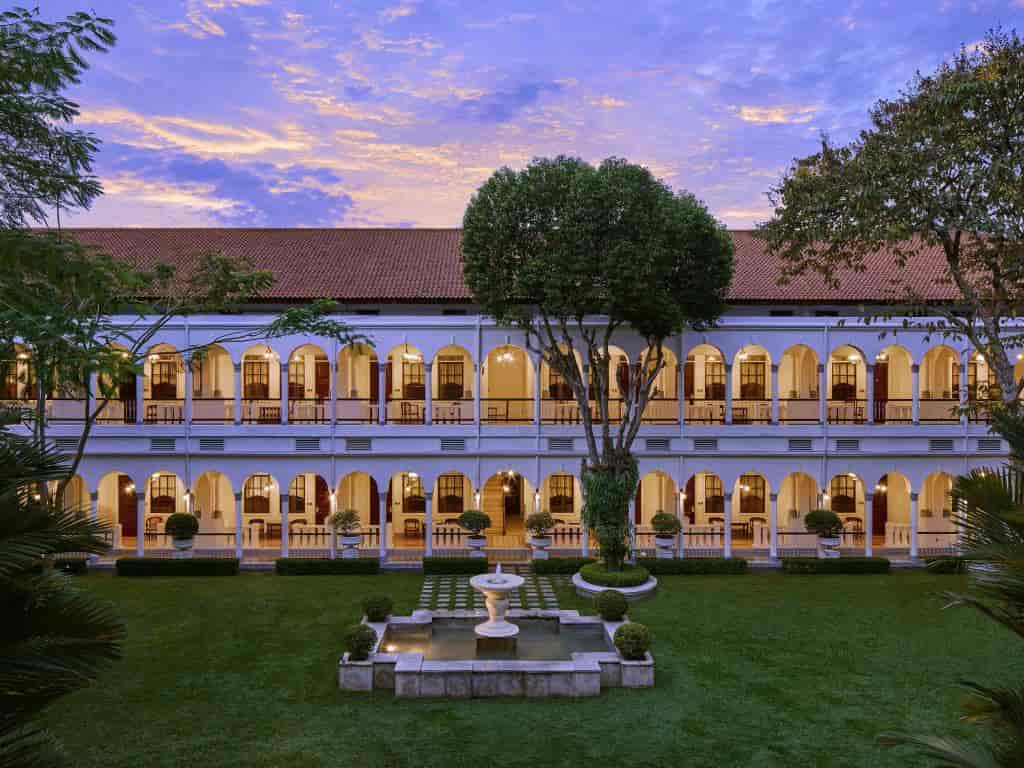
Rebranded as Hotel Majapahit under the management of the Fairmont-associated heritage portfolio, the property preserves its distinct colonial art deco architecture amidst sprawling tropical gardens. Visitors can experience this historic atmosphere with room rates starting from approximately IDR 985,125 per night, offering a tangible connection to the turbulent birth of the Indonesian republic.
Royal Ambarrukmo Yogyakarta: A Royal Estate Turned International Standard
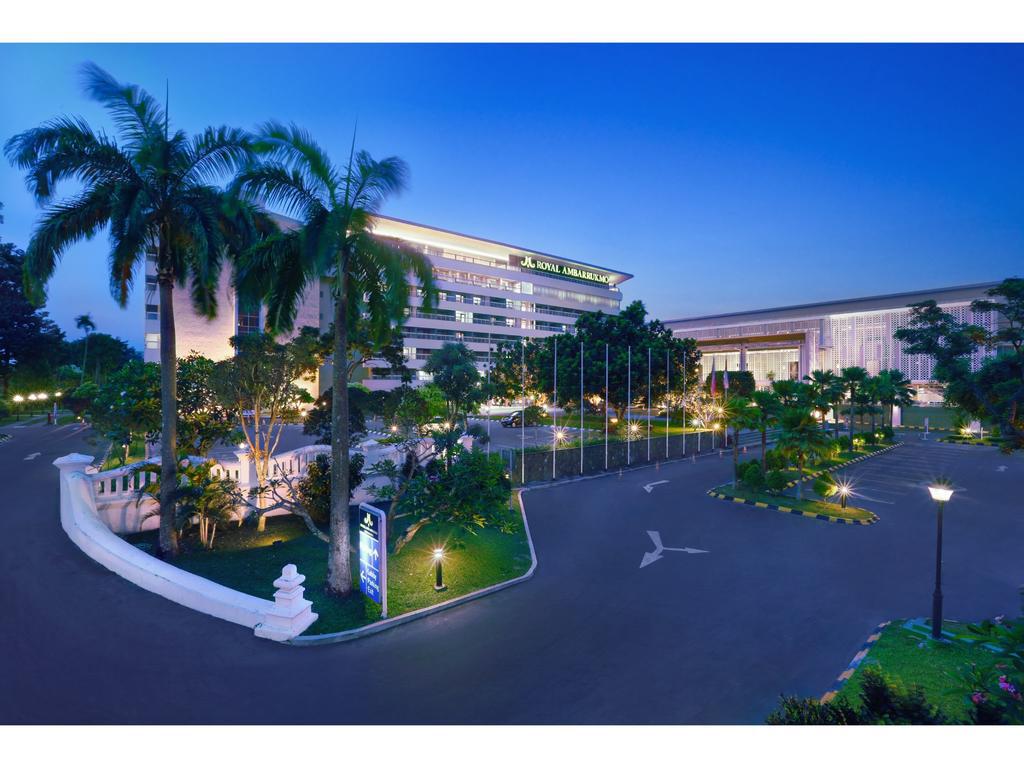
Moving into the cultural heartland of Java, the Royal Ambarrukmo Yogyakarta represents a unique fusion of royal Javanese heritage and modern hospitality. Located on Jalan Laksda Adisucipto, the property occupies the former site of the Ambarrukmo palace complex, which was originally constructed by Sultan Hamengku Buwono V and later served as the residence of Sultan Hamengku Buwono VII during his retirement.
The transformation of the royal compound into a modern hotel occurred during the 1960s under the direct guidance of President Sukarno. In 1966, the Royal Ambarrukmo was designated as one of the four foundational state-sponsored hotels—alongside Hotel Indonesia in Jakarta, Hotel Ambarrukmo, and Bali Beach Hotel—meant to project a revitalized image of Indonesian tourism to the international community. The integration of the historic Loji (colonial-style administrative building) and the Pendopo (traditional Javanese pavilion) within the hotel grounds ensures that the property maintains its historical integrity.
Today, operating as a five-star luxury establishment, the hotel offers comprehensive amenities including championship golf access, specialized wellness facilities, and landscaped gardens that echo its royal past. Nightly rates begin around IDR 911,250, making high-end heritage tourism accessible to a broad demographic of travelers.
Hotel Savoy Homann Bandung: The Art Deco Masterpiece of the Priangan
Often referred to as the Paris of Java, Bandung boasts some of the finest examples of Dutch colonial architecture in Southeast Asia, with the Hotel Savoy Homann serving as its crown jewel. The establishment’s origins trace back to the early 19th century when the Homann family established a modest bamboo-and-wood accommodation, famous among colonial planters for the culinary delights of Mrs. Homann’s traditional rijsttafel feasts.
The current structure, however, is a triumph of modern architecture. In 1939, the Dutch architect Albert Aalbers was commissioned to redesign the hotel. Aalbers infused the building with a striking streamline Moderne and Art Deco aesthetic, characterized by sweeping curves meant to evoke the movement of ocean waves. Rebranded as the Savoy Homann in 1940, the hotel quickly established itself as the most prestigious address in the Priangan highlands.
The global renown of the hotel was solidified by the roster of international luminaries who walked its corridors, most notably the legendary silent film actor Charlie Chaplin, who stayed at the property during his travels to Java in the 1930s. Furthermore, during the historic Bandung Conference of 1955—the first large-scale Asian-African conference—delegates and world leaders walked the halls of the Savoy Homann, cementing its status as a monument to international diplomacy and anti-colonial solidarity. Modern travelers can book stays at this historic landmark with rates starting from approximately IDR 390,880 per night.
Inna Bali Heritage Hotel: Pioneering Tourism in the Island of the Gods
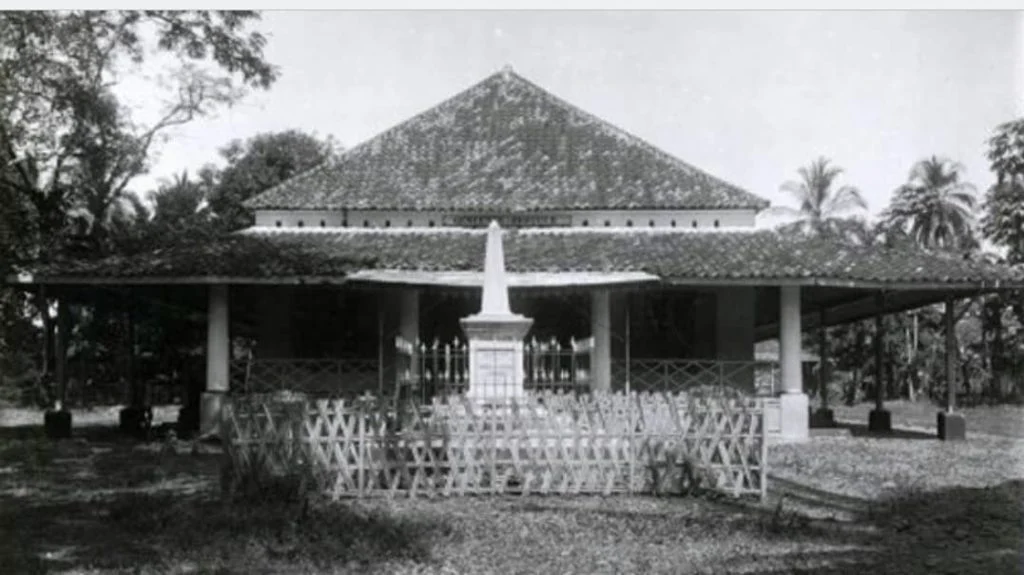
While Java was the primary administrative and economic engine of the Dutch East Indies, the island of Bali emerged as a tourism paradise in the interwar period. The Inna Bali Heritage Hotel, located in the urban core of Denpasar, holds the distinction of being the first modern luxury hotel established on the island, officially opening its doors on August 22, 1927.
The establishment of the hotel was directly tied to the expansion of the Royal Packet Navigation Company (Koninklijke Paketvaart-Maatschappij, or KPM), which introduced regular steamship services connecting Singapore, Java, and Bali. Recognizing the influx of European anthropologists, artists, and wealthy leisure travelers, the colonial administration supported the creation of a standardized European hotel in Denpasar to manage the growing demand.
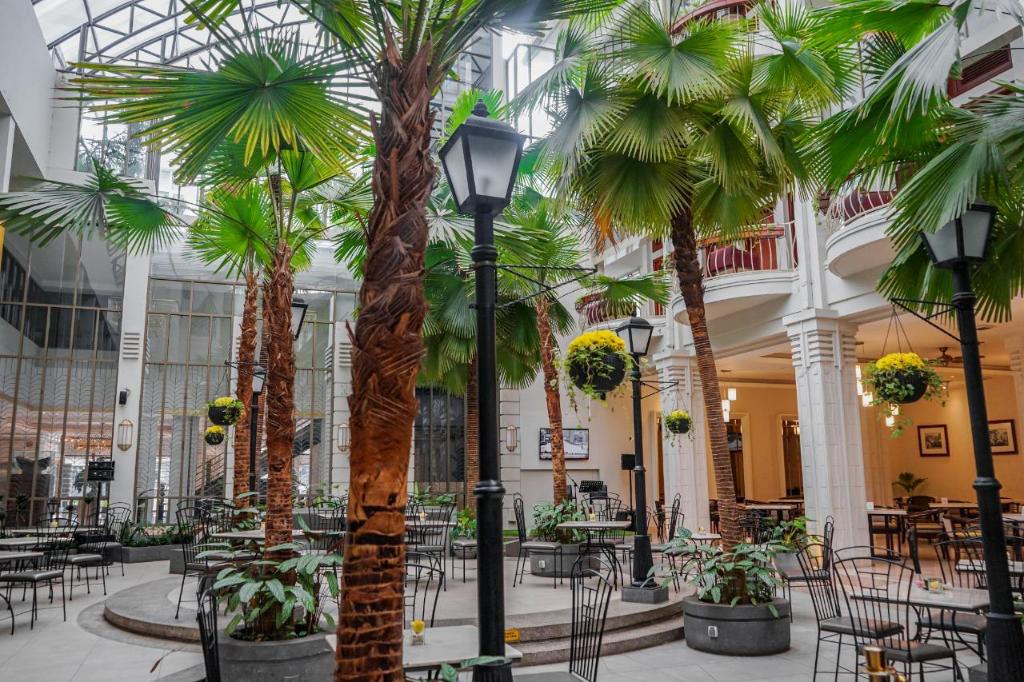
Operating today as a three-star heritage property, the Inna Bali Heritage Hotel has preserved its classic colonial layout, featuring central courtyards, tropical gardens, and verandas that reflect the transitional architectural style of the late 1920s. With rooms starting from around IDR 270,000 per night, the property offers budget-conscious travelers a rare opportunity to reside within a foundational piece of Bali’s tourism history.
Economic Implications and Sector Outlook
The sustained operation of these historic properties carries significant implications for the contemporary Indonesian tourism economy. As global travelers increasingly seek authentic, narrative-driven experiences rather than generic luxury, heritage hospitality has emerged as a vital segment of the country’s tourism marketing strategy.
However, maintaining these colonial-era structures presents distinct operational challenges. Asset owners must balance the strict preservation mandates required for historical landmarks with the modern infrastructural demands of contemporary travelers, such as high-speed digital connectivity, energy-efficient climate control, and advanced safety standards. Furthermore, pricing across these properties remains subject to traditional market forces, including seasonal fluctuations between high and low tourism periods, domestic inflation rates, and local tax policies.
Ultimately, these five hotels transcend their commercial function. They act as physical archives of Indonesia’s complex historical narrative—bridges connecting the colonial past with the dynamic present of the Indonesian republic. By preserving their architecture and sharing their stories, these institutions ensure that the foundational chapters of Indonesian tourism continue to be written by every guest who walks through their doors.