Tata Titiana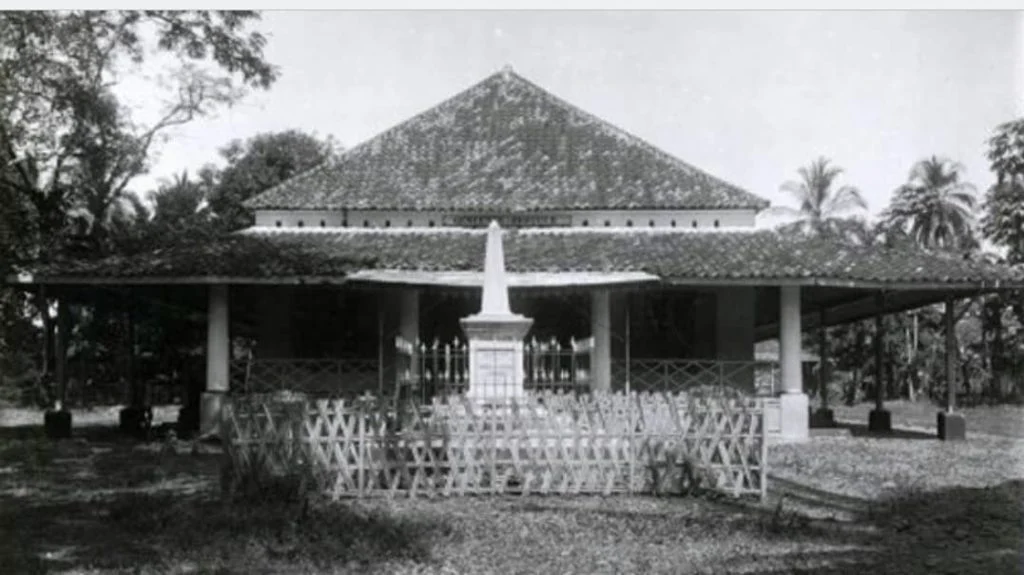
Long before it officially became an autonomous municipality in the West Java province on April 27, 1999, and decades prior to its time as a mere administrative district within Bogor Regency, Depok held a status unlike any other region in the Indonesian archipelago. At the turn of the 20th century, this territory functioned virtually as an independent state. Complete with a democratically elected president, its own administrative governance structure, and a distinct socio-political identity, the history of colonial-era Depok remains a fascinating yet widely overlooked chapter in Indonesian historiography.
To understand how a patch of dense West Java jungle transformed into a self-governing entity, historians must trace the trajectory back to the late 17th century—an era defined by Dutch East India Company (VOC) expansion, private land ownership, and the complex legacies left behind by wealthy European merchants.
Origins of a Private Domain: The Vision of Cornelis Chastelein
The historical foundation of Depok was laid in the final decades of the 17th century by Cornelis Chastelein, a wealthy VOC merchant, landowner, and devout Catholic born in Amsterdam in 1658. Disillusioned by certain corporate policies of the VOC and driven by his religious convictions, Chastelein eventually resigned from active company service to focus on agricultural development and land acquisition.
Between 1696 and 1699, Chastelein purchased vast tracts of land spanning approximately 12.44 square kilometers in the southern hinterlands of Batavia, paying roughly 2,400rixdollars for the territory. Crucially, this land was acquired under a private domain (partikuliere landerijen) status. This meant that while the territory fell geographically outside the direct administrative reach of the Dutch colonial government in Batavia, Chastelein exercised absolute seigneurial rights over the land and its inhabitants.
At the time of purchase, the region was largely pristine wilderness. Utilizing his personal wealth, Chastelein brought in laborers and enslaved individuals gathered from various regions across the archipelago—including Bali, Sulawesi, Timor, Maluku, and parts of Java—to clear the dense forests. These laborers were tasked with transforming the untamed landscape into productive agricultural estates, cultivating cash crops such as coffee, pepper, and fruit trees. The geographical scope of Chastelein’s private domain was remarkably vast for the period, stretching from the boundaries of modern-day Depok northward through Pasar Minggu in South Jakarta, all the way to Gambir in Central Jakarta.

From Testament to Territory: The Emancipation of 1714
Cornelis Chastelein passed away on June 28, 1714. However, his final testament fundamentally altered the trajectory of the land and the lives of the people bound to it. As a devout Catholic influenced by humanitarian and religious ethics, Chastelein included revolutionary provisions in his will regarding the enslaved population laboring on his estates.
Before his death, Chastelein decreed that all enslaved individuals working on his Depok estates were to be granted their freedom upon his passing. Furthermore, he bequeathed substantial parcels of land, residential houses, livestock, and agricultural tools to these newly emancipated individuals. To ensure order and prevent chaos or violent power struggles following his demise, Chastelein appointed Jarong van Bali, one of the trusted community leaders among the freedmen, to oversee the initial administration and protection of the newly liberated population.
This group of freedmen—often referred to historically as the Depokers or the "Belanda Depok" (Depok Dutch, owing to their adoption of European surnames, Western attire, Calvinist or Christian religious practices, and close cultural ties to Dutch language and customs)—settled permanently on the land. They formed a distinct socio-cultural community that viewed itself as separate from both the surrounding native Javanese/Sundanese populations and the official Dutch colonial administration.
The Rise of the Depok Republic: Structure and Chronology of a Unique State
By the early 20th century, the descendants of Chastelein’s freedmen sought a formalized political framework to manage their growing community and protect their private land titles against encroaching colonial bureaucracy. Collaborating with legal counsels from Batavia, the community established a formal government body in 1913, officially designated as Het Gemeente Bestuur van Het Particuliere Land Depok (The Municipal Administration of the Private Land of Depok).
Rather than adhering to a monarchical or colonial-appointed leadership model, the community opted for a remarkably progressive system: a democratic republic led by a president.
Chronology of Presidential Leadership (1913–1952)
- 1913: Gerrit Jonathans assumed office as the first President of Depok, serving a standard three-year term. The governance model strictly avoided the position of a vice president; instead, the president was supported by an administrative secretary to execute executive duties.
- 1921: Martinus Laurens took office following subsequent electoral cycles, guiding the community through the shifting economic landscapes of the post-World War I era.
- 1930: Leonardus Leander assumed the presidency, presiding over the community as global economic turmoil struck during the Great Depression.
- 1952: Johannes Matjis Jonathans became the fourth and final president of the autonomous Depok territory, serving during a volatile period defined by Indonesia’s hard-won independence and the subsequent restructuring of the young republic’s administrative boundaries.
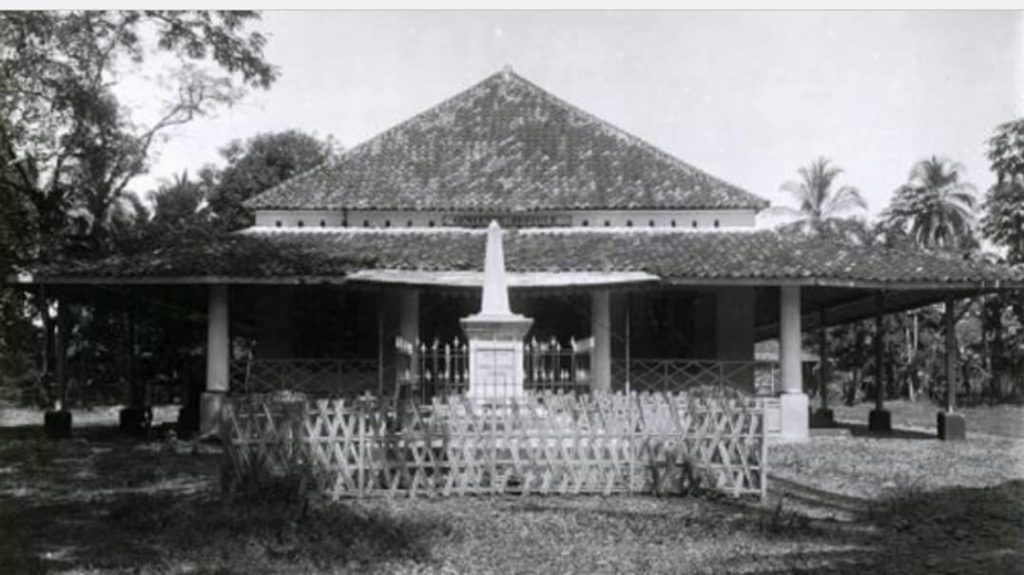
The administrative heart of this micro-state was established around the Kilometer 0 marker, anchored by the iconic Tugu Depok (Depok Monument). Adjacent to the administrative center stood the primary government building, a structure that has since been preserved through history and now functions as the Harapan Hospital. Elections were held strictly every three years, reflecting a localized commitment to republicanism and democratic representation unique within the colonial landscape of the Dutch East Indies.
Institutional Implication and the Transition to Indonesian Sovereignty
The existence of a self-administered quasi-state within the outer rings of Batavia presented a complex legal and political anomaly for the emerging Republic of Indonesia following its declaration of independence in 1945. While the Indonesian national revolution swept across Java, the unique status of the private land of Depok persisted for a brief transitional period under the leadership of President Johannes Matjis Jonathans.
By 1952, the geopolitical realities of a unified, sovereign Indonesian state rendered the continuation of private colonial-era municipal entities untenable. Through a formal deed of surrender (akte penyerahan tanah partikulir), President Johannes Matjis Jonathans officially handed over the administration and sovereign control of the Depok private land to the central government of the Republic of Indonesia. This pivotal legal transfer dissolved the Gemeente Bestuur, integrating the territory fully into the broader administrative framework of West Java.
Historical Legacy and Modern Context
Decades later, the modern city of Depok was officially established as an autonomous municipality (kotamadya) on April 27, 1999, separating administratively from the Bogor Regency to accommodate rapid urbanization, infrastructural development, and population growth spurred by the expansion of institutions such as the University of Indonesia.
While contemporary residents recognize Depok’s municipal age as relatively young, historians and cultural preservationists emphasize that the city’s institutional lineage stretches back over three centuries. The legacy of Cornelis Chastelein’s 1714 testament, the formation of the 1913 republic, and the brief tenure of its four democratically elected presidents highlight a fascinating, anomalous episode where a corner of West Java functioned as an independent administrative republic long before the modern Indonesian state unified the archipelago.