
 Azin Asro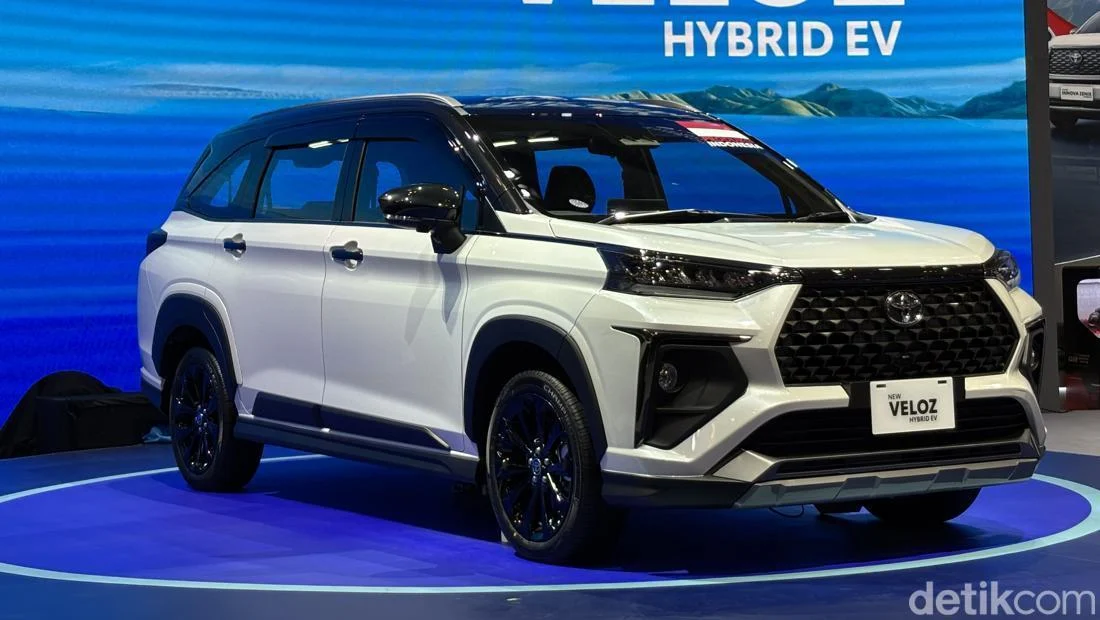
JAKARTA — Nearly a year following its highly anticipated commercial debut in the Indonesian automotive market, the electrified iteration of Toyota’s popular multi-purpose vehicle, the Toyota Veloz Hybrid, continues to be earmarked exclusively for local consumers. Despite the combustion-engine variant of the Veloz standing as one of the cornerstone products in Toyota Motor Manufacturing Indonesia’s (TMMIN) robust global export lineup, corporate leadership has confirmed that international shipments for the hybrid model have not yet commenced.
The decision to hold off on global distribution for the hybrid variant has drawn attention from industry analysts, particularly given Indonesia’s strategic positioning as a major automotive manufacturing and export hub for the Southeast Asian region and beyond. While local demand for electrified vehicles (EVs) has experienced an upward trajectory supported by government incentives and expanding infrastructure, the absence of the Veloz Hybrid in international markets highlights a deliberate, phased manufacturing and distribution strategy by the Japanese automaker.
Domestic Prioritization Amid Growing Local Demand
Addressing the status of the vehicle during a media briefing at the company’s manufacturing complex in Karawang, West Java, PT Toyota Motor Manufacturing Indonesia Vice President Director I Nyoman Winaya elucidated the current operational stance of the company. Winaya emphasized that TMMIN’s primary objective at this juncture is to satisfy the burgeoning domestic appetite for accessible hybrid technology before turning attention toward overseas markets.
"For the time being, the Veloz Hybrid remains our primary focus to fulfill the needs of the Indonesian market," Winaya stated. "Moving forward, we remain entirely open to exploring export opportunities, naturally while carefully evaluating the specific requirements, regulatory frameworks, consumer characteristics, and demand patterns in each respective destination market."
This measured approach aligns with Toyota’s broader corporate philosophy of balancing local market saturation with sustainable export growth. The Veloz Hybrid, positioned as a strategic entry point into the electrified segment, arrived with a competitive pricing strategy designed to accelerate the adoption of green technology among Indonesian families. By securing a strong domestic foothold first, TMMIN aims to iron out any early-stage supply chain nuances and gauge long-term reliability metrics under localized driving conditions before introducing the powertrain to foreign jurisdictions with differing climatic and infrastructural profiles.
A Chronological Overview of the Veloz Hybrid’s Lifecycle
To understand the current positioning of the Veloz Hybrid, it is essential to examine the chronology of its development, production, and commercialization within the Indonesian automotive landscape.
The journey of Toyota’s electrified MPV footprint began to take definitive shape in late 2025, when the vehicle made its initial domestic introduction. This move signaled a significant milestone for TMMIN, as it marked an expansion of locally produced electrified vehicles (xEVs) tailored for the ASEAN market. Following its introductory phase, the vehicle gained substantial momentum when it was officially showcased and aggressively marketed to the broader public during the Indonesia International Motor Show (IIMS) in early 2026. At this automotive exhibition, Toyota positioned the MPV as its most affordable hybrid option within the domestic lineup, commanding significant attention from consumers seeking fuel efficiency without sacrificing passenger capacity.
Production commenced at TMMIN’s state-of-the-art facility located in Plant 2 Karawang, West Java. Leveraging the facility’s advanced manufacturing technologies and skilled local workforce, the production lines rapidly scaled operations. By August 2026—marking less than a year since the initial introduction—cumulative production figures for the Veloz Hybrid reached an impressive milestone of approximately 15,000 units. This rapid production scaling underscores both the manufacturing efficiency of the Karawang plant and the surprisingly robust domestic uptake of the electrified model.
Robust Local Content and the Broader Export Ecosystem
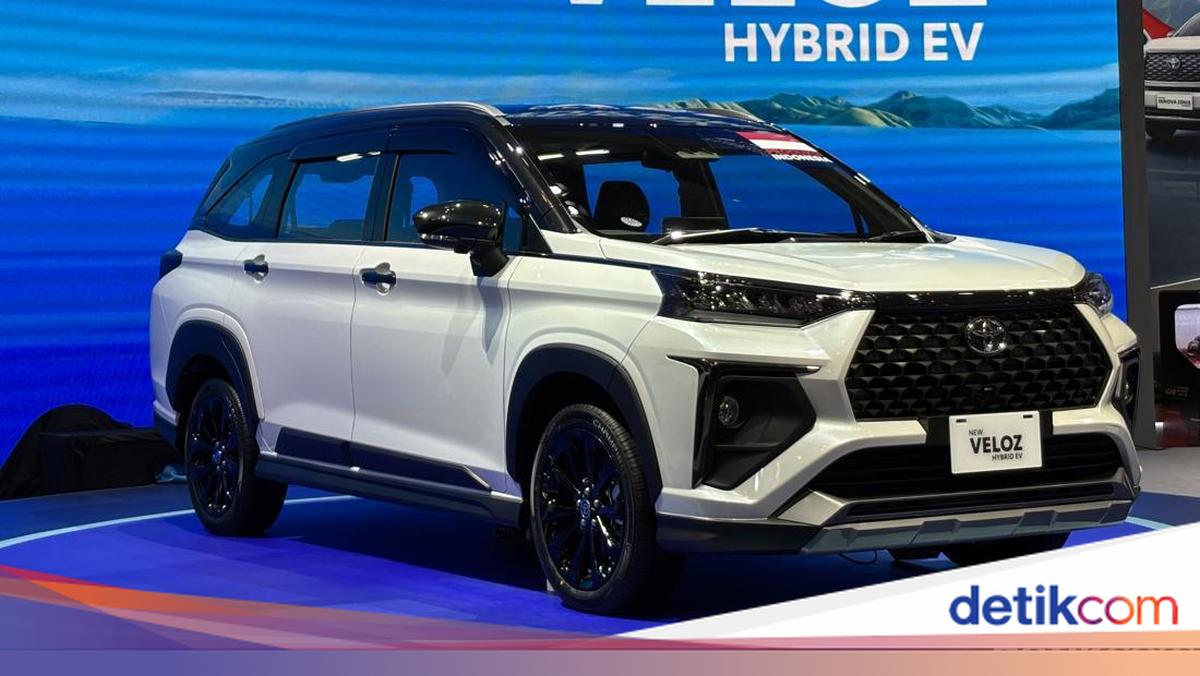
A critical factor underpinning the production success of the Veloz Hybrid is its high degree of domestic integration. TMMIN has successfully achieved a Local Content Level (Tingkat Komponen Dalam Negeri / TKDN) of up to 65 percent for the Veloz Hybrid. This high percentage reflects extensive collaboration with domestic tier-1 and tier-2 automotive component suppliers, fostering technology transfer and strengthening the national automotive supply chain ecosystem. High local content not only insulates the manufacturing process against global logistics volatility and currency fluctuations but also ensures compliance with domestic industrial policies aimed at boosting local manufacturing value-addition.
While the Veloz Hybrid remains strictly within domestic borders, TMMIN maintains a formidable and diversified export portfolio for its other conventionally powered and electrified models. Data compiled up to August 2026 illustrates the extensive reach of Indonesian-made Toyota vehicles across the globe. The current roster of models exported from Indonesia includes the foundational Avanza and Veloz (gasoline variants), the compact SUV Raize, the hybrid crossover Yaris Cross, the rugged SUV Fortuner, and the entry-level hatchback Agya (marketed as the Wigo in select international territories).
Among this diverse stable of globally distributed vehicles, the Avanza and Veloz family historically commands the highest export volume, serving dozens of countries across diverse regions, including the Middle East, Latin America, Africa, and Southeast Asia. The omission of the hybrid variant from this established export pipeline is therefore not indicative of manufacturing incapacity, but rather a deliberate prioritization of resource allocation.
Economic and Industrial Implications
The decision to temporarily restrict the Veloz Hybrid to the Indonesian domestic market carries several notable economic and industrial implications for the country’s automotive sector.
First, it reinforces Indonesia’s status as a primary focal market for automotive decarbonization. By concentrating the initial supply of an affordable, high-TKDN hybrid MPV entirely within the domestic sphere, manufacturers are actively supporting national carbon reduction targets and encouraging consumers to transition away from pure internal combustion engine (ICE) vehicles. This localized saturation helps build consumer confidence in electrified powertrains, supported by a growing network of localized service centers and technician training programs specifically geared toward high-voltage systems.
Second, the steady production volume—exceeding 15,000 units in under a year—demonstrates the operational resilience and agility of Indonesian manufacturing facilities. Plant 2 in Karawang has proven its capability to handle complex assembly processes involving battery packs, electric motors, and specialized control units alongside traditional powertrains. This capability serves as a vital proof-of-concept for TMMIN, laying a solid technical foundation for when export approvals for the hybrid variant are eventually granted.
Finally, looking toward the medium and long term, the eventual expansion of Veloz Hybrid exports could significantly bolster Indonesia’s foreign exchange earnings and trade balance. As neighboring countries and emerging economies implement stricter emission standards and seek cost-effective electrification solutions, Indonesian-built hybrid MPVs equipped with high local content will be exceptionally well-positioned to compete internationally.
Future Outlook and Global Market Readiness
As the automotive industry navigates the multifaceted transition toward sustainable mobility, the trajectory of the Toyota Veloz Hybrid serves as an illuminating case study in strategic market sequencing. TMMIN’s leadership has made it clear that while international expansion is not an immediate priority for this specific model, the door remains wide open for future global deployment.
The ultimate timeline for exporting the Veloz Hybrid will likely depend on several external and internal variables, including the stabilization of domestic supply and demand dynamics, the establishment of supportive regulatory frameworks in target export destinations, and the readiness of international logistics networks to handle electrified vehicle transport. Until those conditions align to favor outbound shipments, Indonesian consumers will remain the exclusive beneficiaries of Toyota’s locally produced, high-TKDN electrified family vehicle, marking a unique chapter in the nation’s ongoing evolution as a premier automotive manufacturing powerhouse.








