
 Azin Asro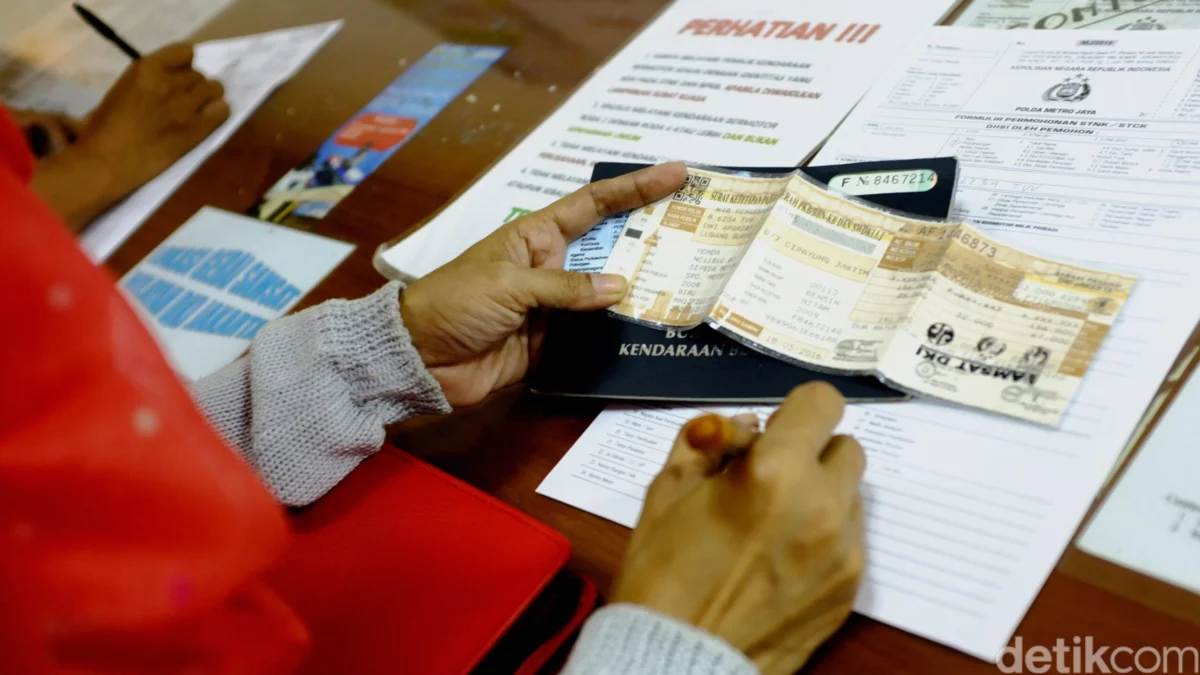
JAKARTA — The ongoing digital transformation within the Indonesian National Police has reached a significant milestone regarding vehicle administration and traffic enforcement. Motorists across the archipelago no longer need to carry physical paper copies of their Vehicle Registration Certificates, commonly known as Surat Tanda Nomor Kendaraan (STNK), provided they possess the official digital counterpart integrated within the Korlantas digital ecosystem. This policy transition represents a major step forward in bureaucratic simplification, leveraging smartphone technology to reduce administrative burdens for millions of daily commuters while maintaining strict standards of legal compliance and road safety enforcement.
The integration of vehicle documents into mobile applications marks a definitive shift away from traditional, paper-based administrative hurdles that have persisted for decades. For generations, Indonesian motorists faced the constant anxiety of misplacing the paper STNK document or leaving it inside the glove compartment of a different vehicle, scenarios that frequently resulted in administrative friction during routine traffic stops. With the rollout of the official Digital Korlantas application, vehicle owners can now access an authenticated, digital mirror of their registration documents directly on their mobile devices, ensuring that legal proof of vehicle ownership and operational validity is perpetually within arm’s reach.
Understanding the Legal Framework of STNK and Digital Equivalency
To fully appreciate the significance of this policy shift, one must examine the foundational legal status of the STNK within the Indonesian transportation ecosystem. Under current national regulations, the STNK serves as the primary official document confirming that a specific motor vehicle has been formally registered with the state and is legally authorized to operate on public thoroughfares. It acts as definitive proof of vehicle legality, housing critical data points including the vehicle identification number, engine specifications, ownership details, and the mandatory annual expiration date.
Historically, traffic law enforcement personnel required motorists to present the physical document during roadside inspections. The failure to produce this physical paper upon request traditionally subjected the driver to immediate sanction, regardless of whether the vehicle taxes had been paid in full or whether the registration was otherwise completely valid.
However, leadership within the Indonesian National Police Traffic Corps (Korlantas Polri) has formally clarified that the newly introduced digital variant is not merely a supplementary convenience, but a legally binding equivalent. According to Head of Korlantas Polri, Inspector General Pol Wibowo, the digital STNK functions as an exact digital mirroring of the physical document.
"The digital STNK is a mirroring of the physical STNK currently in effect and possesses the exact same legal power as the physical STNK," stated Inspector General Wibowo during a recent briefing on digital traffic administration. He further emphasized that if a driver forgets or fails to bring the physical paper due to unforeseen circumstances, presenting the verified digital document downloaded directly through the official Digital Korlantas application is entirely sufficient for law enforcement purposes. Officers deployed in the field are mandated to accept this digital presentation without penalizing the motorist.
Statutory Obligations and Traffic Regulations
Despite the acceptance of digital documentation, the fundamental legal requirement for motorists to possess and be ready to present vehicle credentials remains firmly anchored in national legislation. The primary statutory foundation governing this obligation is Law Number 22 of 2009 concerning Traffic and Road Transportation. Specifically, Article 106, Paragraph 5 of this legislation outlines the strict documentation duties imposed upon anyone operating a motor vehicle on public roads.
The statutory text explicitly dictates that during any official vehicle inspection conducted by authorized personnel along public corridors, every individual operating a motor vehicle is legally obligated to present several key credentials upon demand. These mandatory items include the Vehicle Registration Certificate or Vehicle Trial Registration Certificate, a valid Driver’s License (SIM), proof of periodic roadworthiness testing where applicable, and any other legally recognized proof of validity.
Legal experts and traffic analysts point out that while the medium of presentation has evolved from physical paper to encrypted digital displays, the statutory mandate to substantiate vehicle legality remains absolute. The transition to the digital platform merely updates the execution of Article 106, Paragraph 5, aligning twentieth-century regulatory language with twenty-first-century digital infrastructure.
The Chronology and Evolution of Digital Traffic Administration in Indonesia
The journey toward a paperless traffic administration system in Indonesia did not happen overnight; it is the culmination of a multi-year strategic roadmap designed to modernize public services, curb administrative corruption, and improve overall operational efficiency within the police force.
Phase one of this technological evolution began with the digitization of vehicle tax payments and the gradual introduction of electronic registration databases. For years, the Indonesian police, in collaboration with regional tax offices, sought ways to streamline the annual tax renewal process, which historically required long queues at physical Samsat (One-Stop Administration Office) service centers.
By 2021 and 2022, the National Police accelerated these modernization efforts in response to the COVID-19 pandemic, which necessitated contactless public services. This period saw the launch of the Digital Korlantas application, an integrated mobile platform designed to house various driving-related services, including online SIM renewals (SINAR), digital vehicle registration renewals (SKRIP), and electronic traffic law enforcement reporting (ETLE).
The subsequent introduction of the digital STNK mirroring feature represented the next logical step in this evolution. By establishing secure Application Programming Interfaces (APIs) connected directly to the National Police’s vehicle registration database, developers ensured that the digital documents displayed on mobile screens could not be easily forged. Each digital STNK features dynamic security elements, such as QR codes and encrypted verification tokens, allowing traffic officers to instantly verify the authenticity of the document against central servers during roadside checks.
Operational Implications for Law Enforcement and Motorists
The widespread adoption of digital vehicle documents carries profound implications for both the daily routines of Indonesian motorists and the tactical procedures of law enforcement personnel stationed across the nation’s roadways.
For the average motorist, the most immediate benefit is the elimination of administrative anxiety. Commuters frequently utilize multiple vehicles within a household or switch between personal and professional transport modes. Under the old system, forgetting to transfer the physical STNK folder from one vehicle’s glove compartment to another created a high-risk scenario for motorists, who could face fines or vehicle impoundment even if their tax obligations were fully settled. The digital STNK completely resolves this vulnerability, as a driver’s smartphone typically contains all registered documents linked to their national identity number (NIK) and verified vehicle plates.
From the perspective of traffic police operations, the integration of digital documents significantly enhances field efficiency. Roadside inspections, which traditionally involved lengthy manual checks of physical paper documents against handwritten ledgers or radio inquiries, can now be streamlined through rapid digital scanning. Officers equipped with mobile verification tools can authenticate a digital STNK in a matter of seconds, reducing traffic congestion caused by prolonged checkpoint stops and minimizing human error in document verification.
Furthermore, digital integration acts as a powerful deterrent against document forgery. Historically, the illicit market for counterfeit physical STNK papers posed a persistent challenge for law enforcement agencies attempting to crack down on stolen or illegally imported vehicles. Because the digital STNK relies on live synchronization with the centralized Korlantas database, fraudulent copies stored as simple screenshots lack the interactive cryptographic verification required by police scanning devices, making counterfeiting virtually impossible.
Broader Economic and Environmental Impacts
Beyond immediate legal and operational adjustments, the shift toward a paperless vehicle administration system yields substantial secondary benefits in terms of environmental sustainability and bureaucratic cost reduction.
Government printing agencies historically consumed vast quantities of specialized security paper, specialized inks, and protective laminates to produce millions of physical STNK documents annually. Transitioning a significant percentage of the driving population to digital-first documentation drastically reduces the consumption of paper resources and the carbon footprint associated with physical document distribution and logistics.
Economically, the streamlining of administrative services reduces the man-hours lost to physical queues at government offices. Motorists no longer need to take time off work solely to collect renewed physical paperwork following remote tax payments, translating into preserved economic productivity across the broader workforce.
Challenges and Future Outlook for Digital Infrastructure
Despite the undeniable progress represented by the digital STNK policy, transportation analysts and digital rights advocates emphasize that the successful implementation of this system depends heavily on robust supporting infrastructure and public digital literacy.
One primary consideration is digital equity and accessibility. While smartphone penetration in Indonesia’s major urban centers is exceptionally high, rural and remote regions may experience varying degrees of cellular connectivity stability. Law enforcement agencies have acknowledged this reality, which is why the physical STNK remains a valid and available option for citizens who prefer traditional paperwork or lack consistent smartphone access. Police leadership has repeatedly stressed that the digital STNK serves as an inclusive alternative rather than an immediate, mandatory replacement that penalizes those without digital devices.
Additionally, data security and system reliability remain paramount concerns. As millions of motorists upload sensitive personal and vehicular data into the Digital Korlantas ecosystem, the National Police face an ongoing responsibility to maintain state-of-the-art cybersecurity protocols to protect against potential data breaches or system outages. Ensuring uninterrupted uptime for verification servers is critical, especially given that a widespread network outage during peak commuting hours could theoretically disrupt roadside enforcement protocols if officers rely exclusively on digital connectivity.
Looking ahead, Korlantas Polri officials have indicated that the digital transformation of traffic administration will continue to expand. Future iterations of the platform are expected to integrate further services, including digitized vehicle inspection records, automated insurance verification, and more seamless cross-provincial administrative transfers.
In summary, the official recognition of the digital STNK as a legal equivalent to its physical predecessor marks a transformative chapter in Indonesian public administration. By bridging statutory mandates with modern mobile technology, the National Police have successfully alleviated a common source of friction for millions of drivers while enhancing the security and efficiency of national traffic enforcement. As motorists adapt to this paperless reality, the focus will increasingly shift toward maintaining the robust technological infrastructure necessary to sustain a secure, transparent, and digitally empowered transportation network across Indonesia.








