
 Bambang Pamungkas
In recent years, corporate sustainability has frequently been reduced to a compliance checkbox, an environmental, social, and governance (ESG) reporting exercise, or a mandatory concession to regulatory oversight. However, against the backdrop of mounting geopolitical fragmentation, accelerating climate change, profound technological disruptions, and sweeping realignments in global supply chains, sustainability has firmly graduated from a peripheral reporting duty into a core corporate survival strategy. For modern decision-makers, the central strategic inquiry is no longer whether environmental and social factors matter, but rather how these shifting dynamics will directly dictate long-term capital allocation, structural growth trajectories, and competitive defensibility.
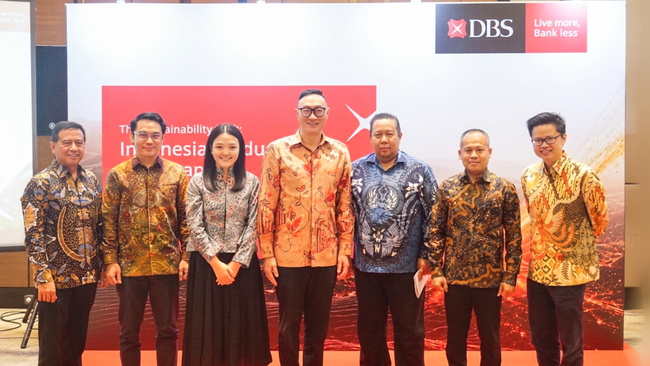
This paradigm shift forms the foundational thesis of a comprehensive research initiative released by PT Bank DBS Indonesia. Entitled The Sustainability Shift: Indonesia’s Industrial Landscape in Five Key Sectors, Opportunities and Risks, the report examines how Indonesian enterprises across vital economic pillars are increasingly leveraging sustainability not merely as a moral obligation or risk-mitigation tool, but as a primary catalyst for operational resilience, market dominance, and long-term value creation. Despite these imperatives, a vast number of corporate entities across the archipelago remain in the exploratory phases of defining their definitive ESG pathways.
Positioned at the intersection of international financial acumen and deep local market expertise, Bank DBS Indonesia has emerged as a premier banking partner, guiding corporations through this labyrinth of transformation. By offering insights-driven advisory services alongside globally recognized sustainable financing frameworks, the institution empowers businesses to execute decisions that simultaneously safeguard profitability, enhance operational efficiency, and preserve the environment.
The Evolution of Competitiveness in a Volatile Global Economy
The global macroeconomic landscape is undergoing structural revisions that demand a radical rethinking of corporate strategy. Volatile commodity markets, recurring geopolitical friction points, and an acute awareness of supply chain vulnerabilities have underscored the necessity of robust energy architectures, resilient logistics frameworks, and high-integrity digital infrastructures. Furthermore, heightened global demands for traceability, rigorous environmental transparency, and standardized sustainability metrics are directly influencing market access and cross-border investment decisions.
According to the research conducted by Bank DBS Indonesia, the modern definition of enterprise competitiveness over the coming decade will be governed by three foundational pillars: absolute economic and operational resilience, secure industrial market access, and adaptive capacity against climate-induced disruptions and geopolitical shocks.
Addressing these intersecting priorities, William Simadiputra, Head of Research at PT Bank DBS Indonesia, emphasizes that sustainability can no longer function in a vacuum as an isolated corporate department. Instead, it must be deeply integrated into the overarching mechanisms by which enterprises govern risk, deploy capital, and capture emerging growth vectors.
"Looking ahead, the winners in every sector will not simply be those who are adept at creating value or those who are merely resilient against shocks, but those who are capable of orchestrating all three simultaneously: value, resilience, and sustainability," Simadiputra stated during a briefing detailing the research findings.
Five Sectors, Five Unique Transformation Pathways
While macroeconomic pressures create a universal mandate for adaptation, the practical execution of sustainability varies significantly across distinct industrial domains. The DBS Indonesia report meticulously breaks down the structural evolutions occurring across five pivotal sectors of the national economy.
Energy: Pivoting from Mere Transition to Total Energy Security
Within the energy, renewable, and infrastructure segments, the conversation around sustainability is increasingly synonymous with national energy security. Indonesia’s electricity demand is projected to undergo a historic expansion, escalating from approximately 300 terawatt-hours (TWh) recorded in 2024 to an anticipated trajectory exceeding 1,800 TWh by 2060. This staggering surge is primarily propelled by the mass adoption of electric vehicles (EVs), industrial downstream processing, exponential data center expansion, artificial intelligence (AI) integration, and widespread household electrification.
Simadiputra notes that this systemic transformation unlocks unprecedented capital expenditure and investment opportunities across the entire electrification ecosystem. Key areas primed for exponential growth include solar power generation, geothermal energy harvesting, advanced battery energy storage systems (BESS), smart grid modernization, and industrial electrification initiatives.
Digital Infrastructure: Artificial Intelligence Catalyzes a New Investment Supercycle
As Southeast Asia’s largest digital economy—with an estimated gross merchandise value touching $99 billion—Indonesia stands at the forefront of regional technological adoption. Notably, roughly 79% of local digital consumers are already engaging with artificial intelligence applications, compounding the demand for secure cloud computing, advanced cybersecurity protocols, and high-capacity data centers.
"For many enterprises, the question today is no longer merely how to access connectivity, but how to prepare the sophisticated digital infrastructure required to support an economy driven by artificial intelligence," Simadiputra remarked.
This technological leap positions green data centers, infrastructure powered entirely by renewable energy, and ultra-efficient cooling technologies as critical asset classes for forward-looking institutional investors over the next decade.
Healthcare: Prioritizing Supply Chain Resilience over Compliance
The healthcare and pharmaceutical sectors face unique systemic challenges, most notably a severe structural reliance on imported active pharmaceutical ingredients (APIs). With approximately 90% of APIs currently sourced from overseas markets, domestic healthcare providers operate under constant exposure to global supply disruptions, even as domestic demand surges due to the rising prevalence of chronic and non-communicable diseases.
"In this specific context, sustainability is no longer merely an environmental concern; it directly addresses supply chain security, equitable healthcare access, and the architectural ability to build a truly resilient national health system," Simadiputra explained.
Consequently, growth opportunities are emerging through targeted API localization, the strengthening of domestic manufacturing capacities, supplier diversification, and the expansion of specialized medical services which remain underserviced across the Indonesian archipelago.
Agribusiness: Shifting Focus from Territorial Expansion to Productivity
In the food and agribusiness sectors, strategic priorities are pivoting decisively away from land-heavy agricultural expansion toward intensive productivity enhancement and national food security.
Within the palm oil industry, future viability is inextricably linked to higher crop yields per hectare, aggressive replanting programs, and the capability to satisfy rigorous international traceability frameworks. Simultaneously, government initiatives such as the Free Nutritious Meal (Makan Bergizi Gratis or MBG) program, paired with the expansion of Grand Grand Parent (GGP) poultry breeding stocks, are establishing robust long-term demand baselines.
These structural shifts are channeling capital into agritech innovations, cold chain logistics infrastructure, advanced traceability systems, modern livestock management technologies, and circular economy solutions designed to maximize output while minimizing resource waste.
Metals and Mining: Upgrading from Production Volume to Sustainable Competitiveness
Having firmly established itself as a global titan in the production of nickel and critical minerals, Indonesia faces a crucial next phase where sheer production volume will no longer suffice as a competitive moat. International trade mechanisms, such as the European Union’s Carbon Border Adjustment Mechanism (CBAM), stringent EU battery regulations, and escalating traceability mandates, are radically altering how global markets evaluate mineral value chains.
"Therefore, future opportunities are shifting toward the development of battery components, battery energy storage systems, closed-loop battery recycling, low-carbon metals, and high-value manufacturing that firmly elevates Indonesia’s positioning within the global value chain," Simadiputra emphasized.
Overcoming Implementation Hurdles: Beyond the Availability of Capital
A critical realization stemming from the DBS Indonesia research is that the mere abundance of lucrative investment opportunities does not automatically translate into seamless execution. Many strategic projects frequently encounter friction points during implementation, including inadequate project readiness, complex financing structures, challenging risk profiles, unpredictable cash flow certainty, and regulatory ambiguities.
This complexity underscores the evolving nature of corporate advisory needs. Organizations operating in modern markets require far more than straightforward access to capital; they demand nuanced, data-backed insights regarding sectoral shifts, shifting value chains, and the precise variables that will dictate future market defensibility.
Translating Insights into Strategic Decisions
Addressing the corporate advisory imperative, Anthonius Sehonamin, Director of Institutional Banking Group at PT Bank DBS Indonesia, emphasizes that in an increasingly complex business operating environment, the caliber of corporate decision-making is every bit as critical as the availability of financing lines.
As a trusted financial partner to institutions across Asia, Bank DBS Indonesia continually leverages its deep sectoral intelligence, macroeconomic perspectives, advisory competencies, and expansive regional network to help executive decision-makers decode ongoing structural transformations.
"What corporations need today is not merely capital access, but absolute clarity on which sectors demand immediate movement, which investment priorities yield the highest tangible impact, and how to architect financing structures that precisely match their individual business risk profiles," Sehonamin stated.
Sehonamin reaffirmed that the publication of The Sustainability Shift: Indonesia’s Industrial Landscape in Five Key Sectors, Opportunities and Risks underscores the bank’s unwavering commitment to fostering national economic resilience. The exhaustive report maps out critical risk-reward matrices across pivotal industries, offering actionable frameworks for enterprises aiming to fortify their competitive standing against the shifting tides of Indonesia’s economic evolution.
"For enterprises actively mapping out their strategic horizons for the next five to ten years, understanding the sustainability shift is no longer optional. It is an indispensable prerequisite for navigating the next phase of economic growth, investment deployment, and competitive survival in Indonesia," Sehonamin concluded.
The complete research report, The Sustainability Shift: Indonesia’s Industrial Landscape in Five Key Sectors, Opportunities and Risks, is accessible for institutional download via official corporate channels.








