
 Bambang Pamungkas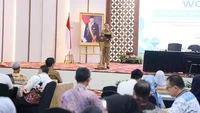
Jakarta, CNBC Indonesia — In a monumental step toward reinforcing fiscal transparency and accountability across the archipelago, the Ministry of Home Affairs (Kemendagri), through its Directorate General of Regional Financial Development (Ditjen Bina Keuda), has officially integrated the Regional Government’s Integrated Owner’s Estimate Information System (SIPASTI-Pemda) with the Regional Government Information System (SIPD). This strategic inter-system integration represents a collaborative milestone involving the Ministry of Home Affairs, the Ministry of Public Works (KemenPU), and the National Strategy for Corruption Prevention (Stranas PK). The primary objective is to overhaul the governance of planning, budgeting, and execution for regional construction projects, ensuring they are thoroughly standardized, highly accountable, and fully defensible against fiscal mismanagement.
The Core Challenge of Regional Construction Spending
Construction and infrastructure development consistently command a massive portion of regional budgets (APBD) throughout Indonesia’s provinces, regencies, and municipalities. Roads, bridges, public buildings, and drainage systems form the backbone of regional economic connectivity and societal welfare. However, despite the substantial capital allocated annually, local governments have historically wrestled with recurring bottlenecks, structural inefficiencies, and quality deficits.
According to high-level officials within the Ministry of Home Affairs, the root cause of these systemic failures rarely stems from poor execution on the ground. Instead, the vulnerability begins much earlier—during the initial planning and estimation phases. For years, the calculation of the Owner’s Estimate (Harga Perkiraan Sendiri, or HPS) for regional construction projects suffered from a lack of reliable standardization and verifiable data trails.
Agus Fatoni, the Director General of Regional Financial Development at the Ministry of Home Affairs, underscored this reality during an official policy briefing. "The quality issue in construction spending is not merely a matter of field implementation, but fundamentally stems from construction cost planning that is neither standardized nor traceable," Fatoni stated.
The ramifications of inaccurate HPS calculations are twofold and deeply damaging. When an Owner’s Estimate is artificially inflated due to poor benchmarking or intentional oversight, it opens the floodgates for budget mark-ups, collusion, and widespread fiscal waste. Conversely, when an HPS is calculated unrealistically low, contractors face severe operational pressures. To stay afloat under underfunded bids, providers frequently cut corners on material quality and safety compliance, frequently resulting in structural degradation, public safety hazards, or abandoned projects ending in contract terminations.
Balancing Fiscal Efficiency and Structural Quality
The newly rolled-out integration of SIPASTI-Pemda and SIPD is engineered precisely to navigate this delicate fiscal tightrope. Rather than pushing for the cheapest possible option at the expense of infrastructure longevity, the system is designed to promote pricing rationality and regulatory compliance.
"SIPASTI-Pemda was developed to formulate Standard Expenditure Analysis [Analisis Standar Belanja] and HPS for construction work in local governments in a standardized and reasonable manner, which does not mean it must always be cheap," Fatoni emphasized. "Because what we want to safeguard is not only the efficiency of the regional budget [APBD], but also the actual quality of the construction work."
By anchoring regional cost projections to standardized metrics, local governments can systematically prevent both budgetary bloat and substandard construction. The system provides automated guardrails that align regional infrastructure spending with national benchmarks, ensuring that every taxpayer rupiah yields tangible, long-lasting utility.
Implementation Roadmap and Operational Readiness
To ensure a seamless transition without overburdening local government apparatuses, the Ministry of Home Affairs has laid out a clear administrative and technical roadmap. Rikie, the Director of Regional Budget Planning at Ditjen Bina Keuda, outlined the proactive steps local governments must take to operationalize the integrated platforms.
First, regional administrations are instructed to conduct a thorough inventory of their existing conditions regarding Standard Expenditure Analysis. Local governments must review their current practices for formulating Unit Price Standards (Standar Harga Satuan) and project-specific HPS. Furthermore, regional agencies must designate qualified personnel, assign user roles, and establish clear operational authorizations for managing both SIPASTI-Pemda and SIPD interfaces.
Crucially, the Ministry has reassured regional stakeholders that the integration does not represent an expensive, proprietary software acquisition that would strain regional treasuries. The platform is provided entirely free of charge to local administrations.
"This system is provided free of charge and is expected to serve as an instrument to strengthen the quality of regional spending," Rikie explained. "Ultimately, the quality of regional spending is not only measured by the magnitude of the budget absorbed, but also by the quality and benefits of the infrastructure generated for the community."
Strategic Anti-Corruption Measures and Regulatory Alignment
The incorporation of SIPASTI-Pemda into SIPD is not an isolated administrative tweak; it is a core component of Indonesia’s broader anti-corruption architecture. Sari Anggraeni, Daily Coordinator of the National Strategy for Corruption Prevention (Stranas PK), highlighted that the system directly targets the pre-tender vulnerabilities where corruption risks are historically highest.
"The integration of SIPD with SIPASTI-Pemda is one of the corruption prevention strategies to minimize the risk of inflated construction work costs before the tender process even begins," Anggraeni noted. She pointed out that this initiative directly fulfills the targets outlined under Action Number 7 of the National Corruption Prevention framework, which specifically focuses on preventing corruption in public procurement of goods and services (PBJ).
By digitizing and standardizing the estimation process, discretionary loopholes that previously allowed procurement officials or external actors to manipulate pricing parameters are systematically closed. Every calculation must now pass through standardized algorithms and transparent digital audit trails.
Compounding the problem of arbitrary calculations has been the use of outdated metrics. Dimas Ricky, Head of the Sub-Directorate for Construction Work Cost Analysis at the Ministry of Public Works (KemenPU), revealed that technical discrepancies in calculation formulas have long plagued regional projects.
"We still find calculation formulas that are no longer relevant," Ricky asserted, pointing to the urgent need for structural updates in how labor, material, and equipment indices are applied across different geographical zones. The integration of SIPASTI-Pemda directly addresses this by synchronizing regional calculations with up-to-date Ministry of Public Works standards.
Chronology and Evolution of Regional Financial Governance
The journey toward this comprehensive digital integration reflects a multi-year effort by the Indonesian government to centralize, digitize, and clean up public procurement and regional budgeting.
- Phase 1: Decentralization and Fragmented Systems (Early 2000s–2010s): Following the era of regional autonomy, local governments enjoyed wide latitude in managing their budgets and setting local procurement standards. However, this decentralization often lacked robust oversight, leading to widespread discrepancies in regional unit prices and high rates of procurement leakage.
- Phase 2: Introduction of SIPD (2020): The Ministry of Home Affairs launched the Regional Government Information System (SIPD) to unify regional planning, budgeting, and administration into a single digital ecosystem, enhancing transparency and reducing bureaucratic friction.
- Phase 3: Development of SIPASTI-Pemda: Recognizing that construction costs required specialized technical precision beyond standard accounting, specialized systems like SIPASTI were conceptualized to govern Owner’s Estimates.
- Phase 4: Inter-Agency Synergy and Full Integration (2026): Aligning with Stranas PK guidelines and KemenPU technical standards, the Ministry of Home Affairs officially integrates SIPASTI-Pemda directly into the SIPD infrastructure. This closes structural gaps, unifies technical cost parameters with general financial planning, and establishes a nationwide standardized defense against procurement fraud.
Broader Economic Implications and Analyst Outlook
The successful deployment of the SIPASTI-Pemda and SIPD integration carries profound implications for Indonesia’s regional economic development. Infrastructure is widely recognized as a primary catalyst for regional growth, lowering logistics costs, connecting rural producers to urban markets, and driving local employment. However, when infrastructure projects are plagued by corruption, structural failures, or chronic delays, the anticipated macroeconomic multipliers are severely curtailed.
From a fiscal policy perspective, enforcing standardized HPS calculations preserves valuable regional revenues. In an era where regional governments face tight fiscal space due to fluctuating transfer funds from the central government, every rupiah saved through efficient procurement can be redirected toward critical public services such as healthcare, education, and social safety nets.
Furthermore, the integration signals a maturing digital governance model in Indonesia. By breaking down bureaucratic silos between the Ministry of Home Affairs, the Ministry of Public Works, and anti-corruption watchdogs, the central government is providing local authorities with the digital tools necessary to execute good governance without imposing financial burdens.
As local governments across Indonesia begin adopting the integrated framework, the ultimate test will lie in consistent enforcement, rigorous technical training for regional operators, and proactive monitoring by oversight bodies. If implemented effectively, the SIPASTI-Pemda and SIPD merger will not only curb the insidious creep of procurement corruption but will also ensure that generations of Indonesians inherit resilient, high-quality public infrastructure built to last.








