
 Azin Asro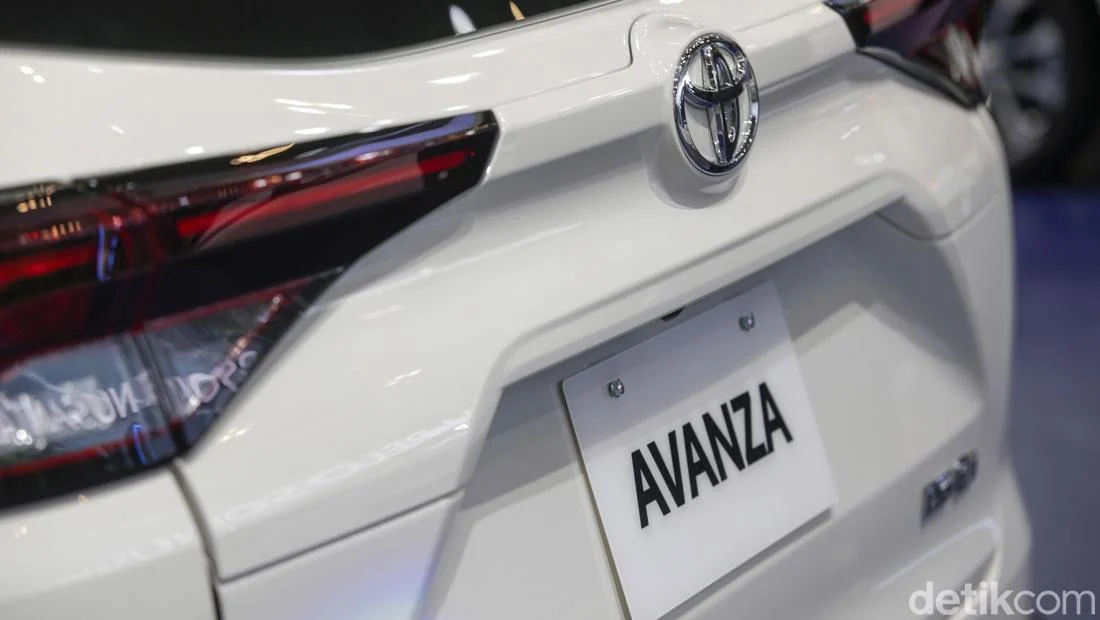
Vehicle ownership in Indonesia’s capital city involves regulatory frameworks that extend far beyond the initial purchase price and routine maintenance costs. For households or individuals possessing more than one motor vehicle of the same category, the financial obligations scale upward through a regulatory mechanism known as the progressive vehicle tax. This policy, implemented across various provinces in Indonesia including the Special Capital Region of Jakarta, directly impacts vehicle owners who register multiple units under the same name and residential address.
A prominent example of this fiscal policy can be observed when examining the annual tax obligations for owners of the Toyota Avanza, one of the most ubiquitous multi-purpose vehicles on Indonesian roads. Even when two vehicles share the exact same year, model, transmission, and engine specifications, their annual motor vehicle tax (Pajak Kendaraan Bermotor or PKB) can differ substantially. This divergence is driven entirely by the order of vehicle registration, distinguishing between a primary vehicle and subsequent asset acquisitions.
Detailed Examination of Progressive Tax Mechanics in Jakarta
The implementation of progressive taxation is designed to regulate traffic congestion, encourage efficient use of public transportation, and generate municipal revenue from affluent households capable of maintaining multiple private transports. Under the current regional regulations enforced within the Jakarta jurisdiction, the taxation tiers apply distinct percentage rates based on the sequence of vehicle ownership.
For the first registered vehicle—commonly referred to primary ownership—the baseline tax rate is established at 2 percent of the vehicle’s Nilai Jual Kendaraan Bermotor (NJKB), which represents the official sales value of the vehicle determined by the regional government. However, the moment a taxpayer registers a second vehicle of the same category, the applicable coefficient increases significantly. The progressive tax rate for a second vehicle in Jakarta is levied at 3 percent. For third vehicles, the rate climbs further to 4 percent, and subsequent acquisitions face incremental increases up to the maximum cap regulated by regional law.
To illustrate the financial impact of this regulation, one can analyze the operational cost differences between owning a single Toyota Avanza versus maintaining two identical units concurrently in Jakarta. Assuming an owner possesses a Toyota Avanza 1.3 L manual transmission variant as their primary household vehicle, the 2 percent tax rate yields an annual baseline figure of approximately Rp 4 million. Conversely, if the exact same household registers a second Toyota Avanza 1.3 L manual transmission variant, the application of the 3 percent progressive rate elevates the annual liability to roughly Rp 5.9 million. This creates a cost differential of nearly Rp 2 million per year for holding a secondary vehicle of the exact same specification.
Broader Portfolio Comparison Across Avanza Variants
The discrepancy between primary and secondary vehicle taxation extends across the entire lineup of the Toyota Avanza model family available in the Indonesian market. The vehicle is manufactured in various trims, categorized primarily by engine displacement—specifically the 1.3-liter and 1.5-liter configurations—coupled with either manual transmissions (M/T) or continuous variable transmissions (CVT).
For entry-level configurations such as the Avanza 1.3 L M/T and the Avanza 1.3 L CVT, the baseline tax calculated at the primary ownership tier consistently hovers in the range of Rp 4 million to Rp 4.3 million, depending on the exact manufacturing year and regional valuation adjustments. When these exact variants are registered under a secondary ownership status, the resulting tax obligations jump into the upper-5 million rupiah bracket, frequently approaching the threshold of Rp 6 million annually.
For higher-tier trims, such as the Avanza 1.5 G M/T and the flagship Avanza 1.5 G CVT, the baseline primary taxes are naturally higher due to the elevated NJKB valuation of a more powerful engine and advanced feature sets. Primary ownership taxes for these 1.5-liter models generally range between Rp 4.8 million and Rp 5.3 million. When subjected to the 3 percent progressive tax rate for secondary ownership, the annual tax obligations for these higher-end variants can easily exceed Rp 7 million to Rp 7.5 million. Consequently, vehicle owners must factor these recurring progressive costs into their long-term budgeting, as the financial burden scales proportionally with the base value of the vehicle.
Regulatory Background and Context of Progressive Taxation in Indonesia
The introduction and enforcement of progressive vehicle taxes in Indonesia are rooted in regional autonomy laws that grant provincial governments the authority to regulate and collect local taxes, including the Motor Vehicle Tax (PKB) and the Motor Vehicle Title Transfer Fee (BBN KB). Over the past decade, major metropolitan areas—led by Jakarta—have faced acute challenges regarding traffic congestion, air pollution, and limited spatial capacity for road infrastructure.
In response to these urban mobility crises, regional legislative bodies instituted progressive taxation as a demand-management tool. The policy aims to discourage individuals from accumulating excessive private transport units within a single household. By imposing financial penalties through elevated tax percentages on second, third, and fourth vehicles, the government seeks to moderate the exponential growth of the private vehicle population.
Furthermore, the administration of progressive taxes relies heavily on the National Single Window system and integrated vehicle registration databases managed jointly by the Indonesian National Police (Korlantas Polri), regional tax offices (Bapenda), and state-owned insurance institutions (Jasa Raharja). This integrated database uses the National Identity Number (NIK) and family registry data (Kartu Keluarga) to track vehicle ownership. Consequently, vehicles registered under the same family name at a single residential address are automatically classified under progressive tiers, closing loopholes where individuals attempted to bypass higher tax rates by registering secondary cars under the names of spouses or dependents living at the same address.
Comparative Regional Variations Across Indonesian Provinces
It is critical for vehicle owners to recognize that progressive tax rates and calculation formulas are not uniform across the entire territory of Indonesia. While Jakarta applies a 2 percent rate for the first vehicle and 3 percent for the second, other provinces possess the statutory authority to establish their own progressive tax brackets within statutory limits set by national law.
For instance, neighboring provinces such as West Java and Banten implement their own distinct progressive tax scales. In some jurisdictions, the progressive rate for a second vehicle may start higher than 3 percent, while other regions might offer temporary tax amnesty programs or seasonal progressive tax exemptions to stimulate regional economic activity or encourage compliance among delinquent taxpayers. Therefore, vehicle owners who relocate assets across provincial boundaries or maintain residences in multiple cities must consult local regional revenue agency regulations to accurately anticipate their annual tax liabilities.
Socio-Economic Implications for Vehicle Owners and Households
The financial implications of progressive vehicle taxation extend deeply into household budgeting, particularly for middle-class families in urban centers who rely on multiple cars for daily commuting, business operations, and family transport. While commercial vehicles registered under corporate entities are generally exempt from personal progressive tax structures—subject instead to corporate tax regulations—private individuals bearing multiple vehicles feel the immediate pinch of these recurring annual expenditures.
Financial planners note that many prospective car buyers fail to calculate the cumulative cost of vehicle ownership, focusing solely on monthly installment plans and fuel expenses while overlooking the escalation of annual taxes. For a household maintaining two modern multi-purpose vehicles, the combined annual tax bill can easily surpass Rp 12 million to Rp 14 million simply to maintain legal registration and roadworthiness. Over a standard five-year ownership lifecycle, progressive taxation accounts for a significant portion of the total cost of ownership, occasionally influencing resale values in the secondhand market.
In the secondary vehicle market, prospective buyers frequently scrutinize whether a used car is registered as a first or subsequent owner vehicle. Purchasing a used car that was previously registered as a secondary vehicle means the new owner inherits the progressive status unless the previous owner has officially processed a vehicle ownership transfer (balik nama) and deregistered the asset from their NIK. Failure to promptly transfer vehicle titles can result in the new buyer unexpectedly facing progressive tax rates linked to the seller’s active vehicle registry, leading to administrative disputes and financial friction during annual tax renewal periods at local Samsat (Sistem Administrasi Manunggal Satu Atap) offices.
Official Responses and Administrative Compliance Measures
Regional revenue authorities, including Jakarta’s Badan Pendapatan Daerah (Bapenda), continually urge vehicle owners to maintain strict compliance with administrative requirements, particularly regarding the timely reporting of vehicle sales and ownership transfers. When a vehicle is sold, the former owner is strongly advised to immediately file a report of sale (lapor jual) with Samsat. This administrative action deactivates the vehicle from the seller’s NIK, ensuring that subsequent vehicle acquisitions by the same individual do not inadvertently trigger higher progressive tax tiers.
Moreover, tax authorities have increasingly digitized their services to assist citizens in verifying their tax status prior to payment. Mobile applications, official regional websites, and SMS gateway services now allow taxpayers to input their vehicle registration numbers and NIK data to view detailed breakdowns of their primary and progressive tax obligations. These digital transparency initiatives have significantly reduced queues at physical Samsat offices while empowering vehicle owners to audit their tax calculations for accuracy.
As urban centers continue to grapple with infrastructure limitations and environmental sustainability targets, fiscal policies such as progressive vehicle taxation remain a cornerstone of regional regulatory frameworks. For owners of popular models like the Toyota Avanza, understanding the distinction between primary and secondary tax classifications is essential for maintaining financial predictability and ensuring full compliance with Indonesian motoring laws.








