Azin Asro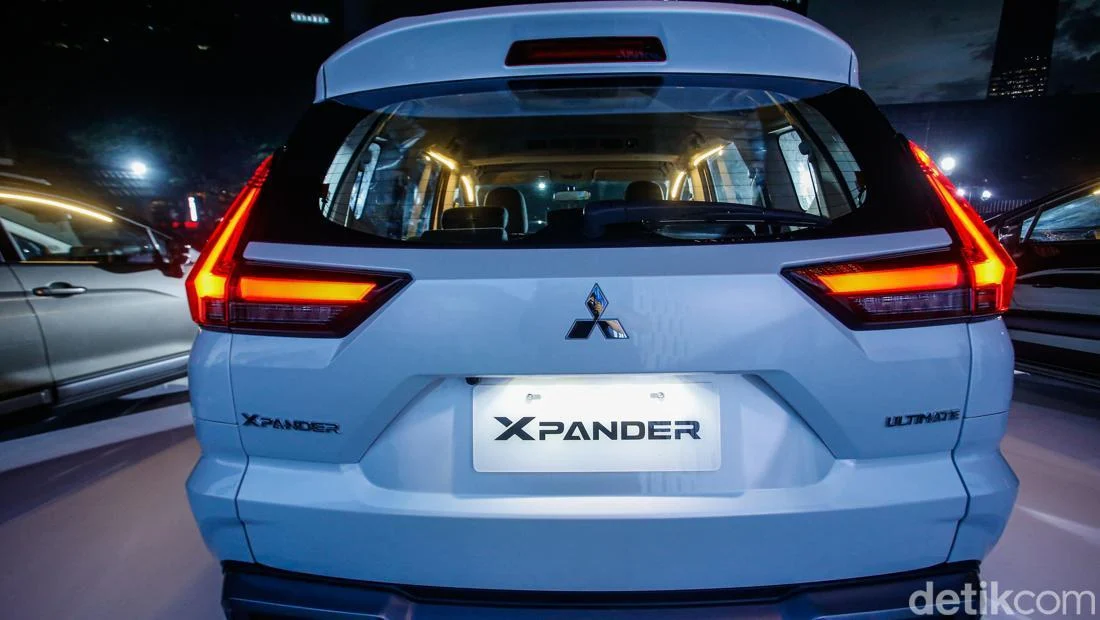
The annual vehicle tax for the Mitsubishi Xpander model year 2026 starts at approximately 4 million Indonesian Rupiahs, according to recent regulatory calculations for the Jakarta region. As one of Indonesia’s most dominant Low Multi-Purpose Vehicles (LMPVs), the Mitsubishi Xpander continues to capture significant market share, prompting prospective buyers and current owners to closely evaluate the financial obligations associated with its ownership. With base Nilai Jual Kendaraan Bermotor (NJKB)—or Motor Vehicle Selling Value—starting from 206 million Indonesian Rupiahs, the lowest tax bracket begins in the 4 million Rupiah range, while higher-end variants reach upwards of 5 million Rupiahs for first-time vehicle registration in the capital.
Understanding the financial commitments of vehicle ownership requires a thorough examination of not only the purchase price and annual taxes, but also the broader regulatory framework governing vehicle taxation in Indonesia. This comprehensive report details the official tax estimations, pricing structures, vehicle specifications, and the economic implications of owning a Mitsubishi Xpander in the current automotive landscape.
Detailed Breakdown of 2026 Mitsubishi Xpander Taxation
Vehicle taxation in Indonesia, specifically the Pajak Kendaraan Bermotor (PKB), is calculated based on the NJKB established by the local government, multiplied by a progressive coefficient determined by vehicle ownership order and regional base rates. For the 2026 Mitsubishi Xpander registered in Jakarta as a primary vehicle (kepemilikan kendaraan pertama), the baseline tax calculations reflect the vehicle’s competitive market positioning.
For entry-level variants such as the Mitsubishi Xpander GLS equipped with a manual transmission (MT) or automatic transmission (AT), the NJKB sits at the lower end of the spectrum, translating to an annual base tax starting around 4 million Rupiahs. Conversely, upper-tier trims, notably the Mitsubishi Xpander Ultimate AT, command a higher NJKB due to their extensive feature sets, advanced safety technologies, and aesthetic enhancements, pushing the annual tax liability past the 5 million Rupiah threshold.
It is vital for consumers to recognize that these figures represent base calculations under specific conditions. The final tax amount printed on the vehicle registration notice (STNK) is subject to variance based on several critical factors:
- Regional Discrepancies: Vehicle tax rates and coefficients vary across different provinces throughout Indonesia. While Jakarta applies a base first-vehicle tax rate of 2 percent, other regions may implement slightly different percentages.
- Progressive Taxation: Owners registering the vehicle as their second, third, or subsequent automobile face progressive tax rates that increase exponentially, significantly raising the annual financial burden beyond the base 4 million to 5 million Rupiah range.
- Additional Fees: The annual tax bill also incorporates compulsory traffic accident fund contributions (SWDKLLJ) managed by PT Jasa Raharja, which add a fixed nominal fee to the total payment.
Chronological Evolution and Market Context of the Mitsubishi Xpander
To fully understand the current positioning of the 2026 Mitsubishi Xpander, one must review its evolutionary trajectory within the fiercely competitive Indonesian automotive sector.
Launched initially at the Gaikindo Indonesia International Auto Show (GIIAS) in 2017, the Mitsubishi Xpander fundamentally transformed the LMPV segment. Prior to its introduction, the market was heavily dominated by utilitarian, boxy multi-purpose vehicles focused strictly on capacity rather than design. Mitsubishi Motors broke this mold by introducing a vehicle that combined the practical utility of an MPV with the bold, aggressive styling cues of a Sport Utility Vehicle (SUV)—a design philosophy known as the Dynamic Shield.
Chronology of Key Milestones:
- 2017: World premiere in Indonesia, receiving overwhelmingly positive market reception and accumulating tens of thousands of advance bookings within weeks.
- 2020: Introduction of minor cosmetic updates and enhanced variant offerings to maintain competitiveness against refreshed rivals.
- 2021: Major generational overhaul featuring the implementation of a Continuous Variable Transmission (CVT) system, a redesigned interior, electronic parking brake functionality, and elevated ground clearance, which further solidified its SUV-like appeal.
- 2023–2024: Continuous adaptation to shifting emission standards and integration of updated connectivity features, keeping pace with digital integration trends in modern cabins.
- 2025–2026: Consolidation of its market position with refined engine tuning, optimized fuel economy, and transparent tax and pricing structures tailored to shifting purchasing power in post-pandemic economic conditions.
Engineering Specifications and Performance Dynamics
Beneath the exterior styling of the 2026 Mitsubishi Xpander lies a powertrain engineered to balance daily commuting demands with long-distance family travel efficiency. The manufacturer relies on a proven 1.5-liter MIVEC (Mitsubishi Innovative Valve timing Electronic Control system) DOHC engine.
Engine Specifications Overview:
- Displacement: 1,499 cc (1.5 Liters)
- Valve Configuration: 16-valve, DOHC with MIVEC
- Maximum Power: 105 PS (approximately 103.5 horsepower) delivered at 6,000 rpm
- Maximum Torque: 141 Nm delivered at 4,000 rpm
- Transmission Options: 5-speed manual transmission (MT) and smooth-shifting Continuous Variable Transmission (CVT)
The implementation of the CVT transmission in later iterations of the Xpander represents a strategic engineering decision. Unlike traditional stepped automatic gearboxes, the CVT ensures seamless power delivery without abrupt gear changes, enhancing passenger comfort during urban stop-and-go driving while simultaneously optimizing fuel consumption. The MIVEC technology continuously adjusts valve timing to match engine load, ensuring that the vehicle maintains adequate responsiveness when accelerating while minimizing fuel burn during steady highway cruising.
Pricing Structure of the 2026 Mitsubishi Xpander
Purchasing a new vehicle involves balancing upfront acquisition costs with long-term maintenance and tax obligations. The 2026 Mitsubishi Xpander is positioned competitively within the Indonesian LMPV segment, competing directly against established volume sellers such as the Toyota Avanza, Daihatsu Xenia, Honda Mobilio, and Hyundai Stargazer.
Market Pricing Breakdown:
- Entry-Level Variants: The most affordable variants of the Mitsubishi Xpander start at approximately 270 million Indonesian Rupiahs. These models provide essential safety features, core comfort amenities, and the signature 1.5L MIVEC engine paired with a manual transmission, making them attractive for fleet buyers and budget-conscious families.
- Mid-Tier Variants: Mid-level trims balance cost and convenience, offering upgraded infotainment displays, alloy wheels, and interior trimmings designed to enhance the daily driving experience.
- Flagship Variants: The top-tier models, culminating in the Ultimate AT variant, reach prices of up to 348 million Indonesian Rupiahs. These flagship editions incorporate comprehensive safety suites, premium upholstery, advanced lighting systems, and refined interior aesthetics that justify the higher investment.
Industry Analysis and Economic Implications of Ownership Costs
From a macroeconomic perspective, the pricing and taxation structure of family vehicles like the Mitsubishi Xpander serve as a reliable barometer of middle-class purchasing power in Indonesia. Automotive analysts observe that while vehicle prices have experienced upward adjustments over the years due to inflation, material costs, and currency fluctuations, manufacturers work diligently to keep running costs—such as annual vehicle taxes—predictable.
For prospective buyers, factoring in the annual tax obligation is an essential component of total cost of ownership (TCO) calculations. While the base tax of 4 million to 5 million Rupiahs for a primary vehicle in Jakarta appears manageable, consumers must also account for:
- Fuel Expenditure: Regular consumption of RON 92 gasoline to ensure optimal performance of the MIVEC engine.
- Routine Maintenance: Scheduled servicing at authorized Mitsubishi dealerships to preserve warranty coverage.
- Insurance Premiums: Comprehensive or Total Loss Only (TLO) motor insurance policies to protect against unforeseen road incidents.
- Progressive Tax Penalties: Households operating multiple registered vehicles must budget for significantly higher annual tax multipliers.
Official Perspectives and Future Outlook
Industry stakeholders and automotive association representatives note that vehicle taxation models in Indonesia continue to encourage modernization and environmental consciousness. Although conventional internal combustion engine (ICE) vehicles like the Xpander remain the backbone of family mobility due to extensive refueling infrastructure and proven reliability, the broader ecosystem is gradually shifting toward electrification.
Nevertheless, vehicles equipped with efficient, low-emission internal combustion engines—such as the Xpander’s 1.5L MIVEC powerplant—continue to enjoy steady demand. Their mechanical simplicity, ease of maintenance, and high resale value ensure that they remain a cornerstone of family transportation across the archipelago.
Conclusion
The 2026 Mitsubishi Xpander remains a formidable contender in Indonesia’s highly competitive automotive market. With a starting price ranging from 270 million to 348 million Rupiahs, and an annual vehicle tax obligation spanning between 4 million and 5 million Rupiahs for primary vehicle owners in Jakarta, the model strikes a balance between accessibility and modern feature integration. By understanding the intricate details of NJKB valuations, regional tax variations, progressive ownership penalties, and mechanical specifications, consumers are better positioned to make informed financial decisions regarding their next family vehicle purchase.