Azin Asro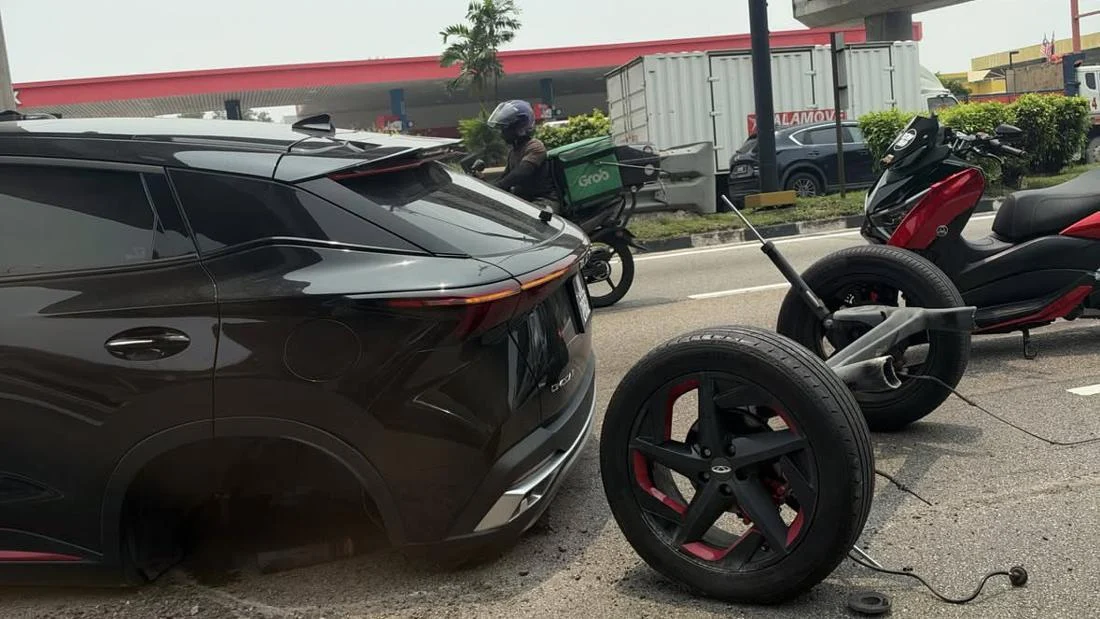
The modern automotive landscape is increasingly defined by rapid technological integration, aggressive global expansion, and fierce competition, particularly within the burgeoning electric and crossover vehicle segments. However, manufacturing challenges continue to pose significant hurdles for emerging global brands striving to establish consumer trust. A striking illustration of this reality recently unfolded in Malaysia, where a late-model Chery Omoda 5 crossover became the subject of intense social media scrutiny after its rear axle completely detached from the vehicle body during transit. The viral incident has not only reignited consumer anxieties regarding structural integrity and quality control within modern manufacturing plants but has also forced the Chinese automaker to confront lingering questions regarding prior component failures in the Southeast Asian market.
As images and video footage of the distressed crossover circulated widely across digital platforms, automotive safety analysts, regional transport authorities, and prospective buyers alike began closely examining the implications of the structural failure. While the exact sequence of events leading up to the structural separation remains under active review by independent automotive experts, the incident highlights the critical importance of rigorous post-production inspections, supply chain transparency, and proactive consumer communication in the face of unexpected mechanical anomalies.
Chronology of the Incident and Digital Outcry
The sequence of events began on a seemingly ordinary stretch of roadway in Johor, Malaysia, where a Chery Omoda 5 was documented resting in a precarious position across traffic lanes. In the widely shared photographs and video clips, the compact crossover’s rear axle assembly is visibly severed and separated from the main chassis, while the rear wheel remains firmly attached to the disconnected hub structure. Additional digital footage captured minor body damage, specifically a dented rear-right passenger door, alongside a motorcycle stopped in close proximity to the disabled vehicle, prompting widespread online speculation regarding a potential multi-vehicle collision or an abrupt evasive maneuver.
Local authorities, including the Royal Malaysia Police in Johor, maintained a cautious approach in the immediate aftermath of the event, withholding formal accident reconstruction statements while preliminary traffic assessments were conducted. Eyewitness documentation from the scene depicted three individuals—a motorcyclist, a female passenger, and a male driver—standing safely on the roadside. While none appeared to have sustained severe physical injuries, the visible distress of the occupants, particularly the female passenger engaged in urgent telephone communication, underscored the traumatic nature of experiencing a sudden, catastrophic mechanical failure at speed.
As the media narrative gained momentum across X (formerly Twitter) and various automotive forums, commentators and armchair investigators offered competing theories to explain the axle separation. Several prominent social media users suggested that the vehicle may have failed to brake in time to avoid a sudden obstacle or a preceding vehicle’s abrupt deceleration, thereby absorbing severe kinetic forces that exposed underlying structural vulnerabilities. Others pointed to potential mechanical fatigue, improper torque specifications on suspension fasteners, or compromised trailing arm integrity as primary catalysts for the failure. Despite the proliferation of hypotheses, definitive technical conclusions remained elusive pending formal inspections by authorized engineering personnel.
Contextualizing Prior Recall Actions in Malaysia
To fully comprehend the gravity of the Johor incident, it is essential to examine the historical context of the Chery Omoda 5 platform within the Malaysian automotive market. This occurrence does not represent the first time the crossover has faced scrutiny regarding rear axle durability. Earlier operational cycles in the region revealed isolated instances of structural fatigue, prompting proactive intervention by regional dealerships and the parent manufacturer.
In response to previous component anomalies, Chery’s Malaysian subsidiary initiated a targeted safety recall encompassing approximately 600 units of the Omoda 5. The stated objective of this service campaign was to inspect potential vulnerabilities in the rear axle assembly and to transparently report inspection outcomes and root-cause analyses to the Ministry of Transport Malaysia. Subsequent technical investigations conducted by the automaker’s engineering division isolated the primary defect to an automated welding machine calibration error at the manufacturing facility. Specifically, a restricted batch of 60 vehicles produced during a specific manufacturing window in August 2023 exhibited welding inconsistencies that could potentially compromise the structural longevity of the rear suspension under sustained operational stress.
The intersection of the recent viral photographic evidence with this documented historical recall has amplified public debate. Consumers and automotive watchdogs have raised pertinent questions regarding whether the vehicle involved in the Johor incident belonged to the previously identified manufacturing batch, or if the failure points toward a broader, previously undiscovered vulnerability within the global supply chain or assembly protocols.
Technical Analysis of Structural and Mechanical Failures
In the realm of modern automotive engineering, the rear axle and suspension assembly serve as critical load-bearing components tasked with maintaining vehicle stability, absorbing road irregularities, and transmitting driving and braking forces safely to the pavement. When a component as vital as a rear axle detaches entirely from the vehicle chassis, it typically indicates a catastrophic failure of primary attachment points, such as the subframe mounts, trailing arms, or axle beam welding seams.
Automotive engineers specializing in vehicle dynamics note that modern unitized body structures rely heavily on automated precision welding and high-tensile steel alloys to maintain structural rigidity. If a robotic welding apparatus experiences calibration drift or software desynchronization during production, the resulting weld penetration may fall below engineering tolerances. Over time, continuous dynamic loading—exacerbated by road vibrations, vehicular weight, and localized impacts—can propagate micro-fractures through the compromised weld zone, eventually leading to sudden and complete structural separation.
Furthermore, industry experts emphasize that while external factors such as severe road impacts or collisions can induce extreme stress, a structural separation occurring independently of a major crash strongly implicates pre-existing material fatigue or assembly defects. The detachment of a rear axle while the wheel remains attached to the housing points directly to the failure of the structural links connecting the suspension module to the vehicle body, rather than a simple tire blowout or wheel bearing seizure.
Corporate Response, Silence, and Public Relations Implications
As of the current reporting cycle, Chery Automobile and its regional distribution partners have maintained a measured public posture, having yet to issue a definitive, case-specific statement regarding the Johor incident. This institutional silence, while standard protocol while technical teams await physical inspection of the disabled vehicle, has allowed speculation to flourish within digital spaces.
In the contemporary automotive landscape, brand perception is inextricably linked to crisis communication velocity and transparency. When safety-related incidents involving structural integrity go viral on social media, delayed corporate responses can inadvertently erode consumer confidence, regardless of the ultimate findings of the technical investigation. Public relations and crisis management specialists consistently advise automotive manufacturers to couple rapid fact-finding missions with proactive, reassuring communications that outline the steps being taken to verify vehicle safety.
For Chery, which has invested heavily in expanding its international footprint outside of China—particularly in Southeast Asia, Latin America, Europe, and Australia—maintaining an unblemished safety record is paramount. The Omoda 5 serves as a vanguard model designed to showcase the brand’s competitive capabilities in design, technology, and build quality. Consequently, effectively managing the fallout from structural integrity concerns is not merely a localized customer service challenge, but a strategic imperative for the brand’s global growth trajectory.
Broader Industry Implications and Regulatory Oversight
The incident involving the Chery Omoda 5 highlights broader regulatory and manufacturing realities facing the global automotive industry during a period of rapid electrification and platform sharing. As automakers accelerate production timelines and leverage global supply chains to reduce costs, maintaining rigorous quality assurance standards across all manufacturing nodes becomes increasingly complex.
Regulatory bodies worldwide, including the Ministry of Transport Malaysia, maintain stringent oversight mechanisms designed to protect consumers from systemic manufacturing defects. Voluntary and mandatory recalls are standard regulatory instruments utilized to rectify verified safety risks before they result in widespread roadway hazards. However, the occurrence of structural failures outside of formally recalled batches inevitably prompts calls for intensified regulatory scrutiny, expanded audit scopes, and enhanced transparency from manufacturing plants.
For consumers, such incidents serve as a stark reminder of the complex mechanical engineering underpinning modern personal transport. While advanced driver-assistance systems and digital infotainment suites often dominate marketing narratives, foundational mechanical reliability remains the ultimate arbiter of vehicle safety. The ongoing scrutiny faced by the Chery Omoda 5 underscores the vital role played by independent digital documentation, responsive journalism, and active regulatory oversight in holding global manufacturers accountable for vehicle safety standards.
As the physical vehicle in question undergoes comprehensive forensic examination by authorized engineers and technical experts, the global automotive community awaits conclusive data regarding the exact root cause of the Johor separation. Whether the incident is ultimately attributed to an isolated manufacturing oversight, an unreported preceding collision, or a broader component vulnerability, the episode serves as a powerful case study in the intersection of modern vehicle manufacturing, digital media dissemination, and consumer safety advocacy.