
 Chalifah Fatihah
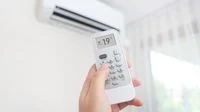
As global temperatures continue to rise due to shifting climatic patterns, millions of urban residents increasingly rely on air conditioning systems to maintain thermal comfort inside residential properties. During periods of intense heat waves, sealing windows and running split-unit air conditioners continuously has become the standard defense against soaring outdoor temperatures. While this practice successfully drops indoor temperatures and creates a physically comfortable living environment, it frequently introduces a hidden trade-off concerning public health. Recent scientific investigations and environmental health studies indicate that keeping air conditioning running non-stop in tightly sealed spaces can significantly alter indoor air dynamics, trapping microscopic pollutants and failing to supply adequate fresh oxygen. To understand how prolonged air conditioner usage impacts domestic atmospheres, researchers across environmental physics and indoor health sectors have launched comprehensive computational modeling studies to assess the true cost of cooled, enclosed spaces.
The Investigation Into Indoor Particulate Matter and Air Conditioning Efficacy
The discussion surrounding indoor air quality and mechanical cooling gained prominent traction following a comprehensive study published in the Journal of Physics: Conference Series. This academic inquiry specifically examined the ramifications of widespread residential air conditioning adoption on indoor air purity within housing stock in the United Kingdom. Rather than relying solely on subjective assessments, the research team deployed advanced computational modeling to simulate human exposure to domestic air pollutants across a wide spectrum of environmental conditions.
The study rigorously evaluated 14 distinct scenarios. These simulations contrasted the outcomes of natural ventilation, mechanical air conditioning, and hybrid systems that combined both methods. Furthermore, the researchers factored in varying degrees of filter efficiency to determine how effectively domestic hardware could strip hazardous particles from circulating air streams. The primary focus of the simulation centered on PM2.5—atmospheric particulate matter that has a diameter of 2.5 micrometers or smaller. Due to its microscopic dimensions, PM2.5 bypasses the body’s natural filtration defenses in the nose and upper respiratory tract, penetrating deep into the pulmonary alveoli and eventually entering the human bloodstream, where it poses severe cardiovascular and respiratory risks.
The computational results revealed a nuanced reality regarding the pollution-filtering capabilities of standard residential air conditioners. When fitted with filters possessing a 30 percent filtration efficiency rating, the simulated air conditioning units successfully reduced indoor PM2.5 exposure levels by up to 4.5 percent compared to buildings relying strictly on natural ventilation. However, when the filter efficiency rating dropped to 10 percent—a common scenario in neglected or lower-grade domestic units—the indoor exposure to PM2.5 actually surged by as much as 5.8 percent.
This statistical discrepancy demonstrates that mechanical cooling units do not inherently guarantee cleaner indoor air. The operational success of an air conditioner in purifying indoor environments relies heavily on the mechanical integrity and collection capability of its internal filtration media. Moreover, the fundamental design of standard residential split-system air conditioners must be taken into account. These units typically operate on a closed-loop recirculation mechanism; they draw in stagnant indoor air, pass it over cold evaporator coils to drop its temperature, and blow that same air back into the room. This process rarely introduces fresh outdoor air into the living space. Consequently, if doors and windows remain shut, any volatile organic compounds (VOCs) or particulate matter generated internally by human activities remain trapped, circulating continuously through filters that were never engineered to capture all chemical and biological pollutants.
The Broader Health Imperatives of Domestic Air Exchange
The absence of adequate ventilation in sealed, air-conditioned rooms carries significant physiological consequences for occupants. Modern residences are filled with hidden sources of indoor pollution. Routine daily activities, such as cooking meals on gas or electric stoves, cleaning floors with chemical disinfectants, burning scented candles, and even the off-gassing of synthetic building materials and furniture, continuously release particulate matter and toxic gases into the immediate environment.
When a building’s envelope is entirely sealed to preserve chilled air, these domestic pollutants accumulate over time. Without a mechanism to flush out stale air and replace it with fresh atmospheric oxygen, indoor air quality rapidly degrades. This phenomenon directly intersects with findings published in the academic journal Indoor Environments, which explored the correlation between indoor ventilation rates and human health outcomes.
The study analyzed seven distinct categories of physical health symptoms and discovered a clear trend: six of the seven symptom categories exhibited a pronounced reduction in frequency and severity when indoor ventilation rates were increased. The investigated health indicators included chronic asthma flare-ups, localized and systemic skin irritations, inflammation of mucous membranes, acute respiratory infections, general pulmonary distress, and a collection of unexplained systemic complaints commonly associated with Sick Building Syndrome.
The findings emphasize that thermal comfort and physiological well-being are not synonymous. A room that feels pleasantly cool is not necessarily a healthy space to inhabit for extended periods. Conversely, simply flinging open windows is not a universal solution, particularly if the home is located in an urban center characterized by high levels of outdoor traffic pollution or industrial emissions. Maintaining a healthy indoor climate requires a delicate balancing act that accounts for local meteorological conditions, exterior pollution levels, and the specific ventilation architecture of the property.
Implications for Modern Urban Living and Home Management
The reliance on continuous air conditioning mirrors broader trends in rapid urbanization and real estate development. As cities expand and urban heat islands trap higher temperatures, residential architecture increasingly prioritizes airtight construction to maximize energy efficiency and minimize thermal loss. While this architectural strategy reduces cooling energy expenditures, it simultaneously transforms residential interiors into confined ecological chambers where airborne pollutants can concentrate.
Public health officials and environmental engineers stress that consumers must move beyond the binary mindset of choosing solely between thermal comfort and fresh air. Recognizing the limitations of standard air conditioning systems allows homeowners to adopt targeted mitigation strategies that protect indoor air quality without sacrificing comfort. Experts recommend a multi-layered approach to managing indoor environments during peak heat seasons:
- Rigorous and Regular Filter Maintenance: Homeowners must clean or replace air conditioner filters in strict accordance with manufacturer specifications. Standard residential filters are designed primarily to protect the cooling coils from dust accumulation rather than to purify the air for human respiration; thus, maintaining them ensures optimal airflow and prevents the re-circulation of trapped particulate matter.
- Active Source Mitigation: Minimizing the generation of indoor pollutants is critical when running climate control systems. Utilizing dedicated kitchen exhaust hoods, mechanical ventilation fans, and air purifiers equipped with High-Efficiency Particulate Air (HEPA) filters during and after cooking or cleaning can drastically reduce the concentration of volatile organic compounds and fine particulates.
- Strategic Ventilation Scheduling: Instead of keeping windows sealed indefinitely, occupants should monitor local air quality indices and open windows during windows of opportunity when outdoor pollution levels are lowest—such as early mornings or late evenings—to facilitate healthy air exchange.
Ultimately, while air conditioning remains an indispensable tool for mitigating the health hazards of extreme heat, it must be managed as part of a holistic indoor environmental strategy. Understanding that cooled air is not automatically purified air empowers residents to make informed adjustments to their daily routines, safeguarding both their immediate comfort and their long-term respiratory health.