Nila Kartika Wati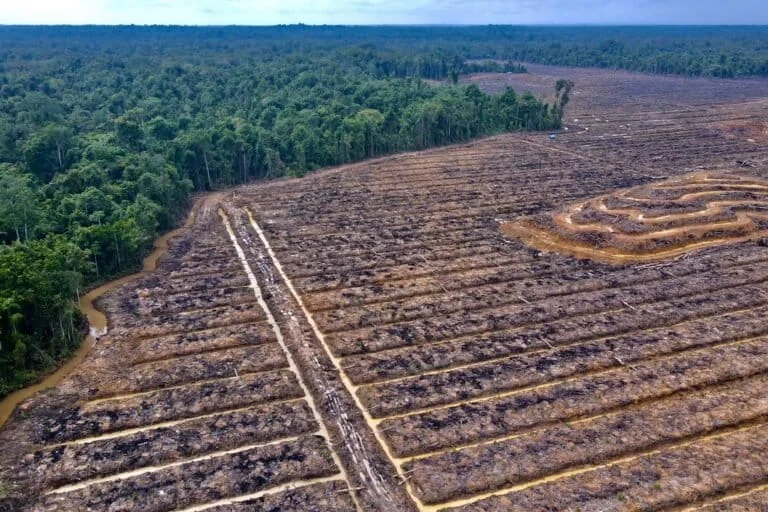
The Communion of Churches in Indonesia, known as Persekutuan Gereja-Gereja di Indonesia or PGI, has formally announced its opposition to the Indonesian government’s National Strategic Projects, specifically targeting the large-scale food estate initiatives focused on sugar cane development in Merauke, South Papua. This stance, articulated in an official release following the PGI Working Committee Meeting (MPL-PGI) held in Merauke, underscores a growing rift between state-led developmental agendas and the protection of indigenous rights and ecological integrity. The PGI’s rejection is rooted in a comprehensive assessment of the Merauke food estate, which the organization claims systematically ignores and violates the fundamental human rights of indigenous peoples. According to the PGI, these projects facilitate the seizure of ancestral territories and living spaces, dismantle long-standing cultural traditions, and threaten the survival of future generations of Papuans.
The religious body further contends that the National Strategic Project (PSN) in Merauke poses an existential threat to the preservation of forests, soil, and natural resources—elements that have served as the lifeblood of indigenous communities for millennia. From a theological perspective, the PGI views the environmental degradation associated with these projects as a violation of the ecological order entrusted by God to humanity. This religious opposition coincides with alarming data released by environmental watchdogs, highlighting a significant disconnect between the government’s promises of food security and the on-the-ground reality of environmental destruction.
The Scale of the Merauke Sugar Cane Project
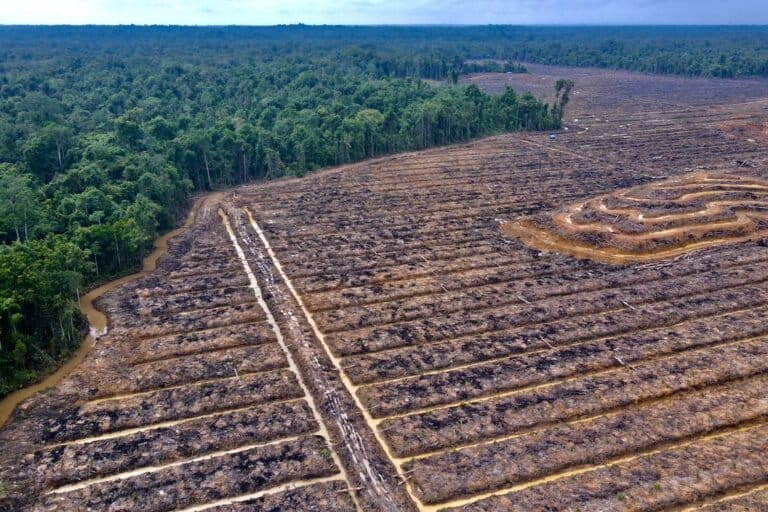
At the heart of the controversy is a massive sugar cane plantation project covering approximately 560,000 hectares, an area roughly equivalent to the size of the island of Bali. This project is being spearheaded by a consortium of ten companies, nine of which have been identified as having direct links to two major corporate groups with extensive histories in the palm oil industry. In late December 2025, Greenpeace Indonesia released a critical research report titled "The Bitter Reality Behind the Sweet Promises of the Merauke Sugar Cane PSN," which meticulously detailed the potential fallout of this industrial expansion.
The research reveals that the project targets primary forest covers that are essential for global climate regulation. If the entire planned area is cleared, the resulting deforestation could release an estimated 221 million tons of CO2 into the atmosphere. To put this into perspective, such a carbon surge is equivalent to the annual emissions produced by 48 million passenger vehicles. The speed of land clearing has already reached alarming rates; data indicates that within an 18-month period, just two companies within the consortium managed to clear 23,000 hectares of forest, savanna, and wetlands. As of October 2025, documented deforestation in two specific sugar cane concessions in Merauke has already generated emissions comparable to the annual carbon footprint of the city of Bandung.
Systematic Threats to Indigenous Living Spaces
The project’s footprint overlaps significantly with the ancestral lands of the Marind, Yei Nan, and Muyu indigenous peoples. For these communities, the forest is not merely a commodity or a plot of land but a "living space" (ruang hidup) that provides food, medicine, and spiritual connection. The conversion of these lands into industrial monoculture plantations effectively erases the traditional socio-ecological systems that have sustained these tribes for generations.
Critics and researchers argue that the government’s approach to "planned deforestation" in Papua suggests a troubling legal and ethical framework. The term mens rea, or "guilty mind," has been invoked by observers to describe how state policies are being used to create or plan disasters for citizens. By prioritizing industrial expansion over the documented warnings of environmentalists and the protests of local residents, the state is seen as intentionally marginalizing the very people it is sworn to protect. The PGI has called for the government to open a space for honest, equal, and dignified dialogue with Papuan indigenous groups, a step that has reportedly been bypassed in the rush to implement the PSN.
The Emergence of Ecotheology and Ecological Faith
The opposition from PGI is part of a broader global movement where religious values are increasingly becoming the foundation for environmental activism. This concept, often referred to as "Ecotheology" or "Ecological Faith," posits that the preservation of nature is a divine mandate. In the Indonesian context, this movement bridges various faiths. For instance, Islamic scholars such as Quraish Shihab have emphasized through the Tafsir Al-Misbah that the Quran strictly prohibits making "mischief on the earth" after it has been set in order. This theological perspective views the harmony of the universe as a gift from God that humans are tasked to maintain as khalifatul fil ardl (stewards of the earth).
The PGI’s stance in Merauke mirrors recent international developments, such as the Vatican’s reported refusal to join certain political boards, emphasizing that religious authority must remain independent and focused on the protection of the vulnerable. In Merauke, this manifests as a "corrective consciousness"—a collective effort to challenge the extractive and often greedy paradigms of modern economic development. Religious leaders are increasingly positioning themselves as a balancing force, stepping in when state policies veer toward ecological and social injustice.
Timeline of Recent Developments and Research
The escalation of the Merauke sugar cane project has followed a rapid timeline of industrial activity and subsequent pushback:
- Mid-2024 to Late 2025: Rapid expansion of land clearing by the corporate consortium. Satellite imagery confirms the loss of 23,000 hectares of diverse ecosystems, including high-carbon wetlands.
- October 2025: Deforestation in two specific concessions reaches 13,000 hectares, sparking renewed calls from climate scientists regarding Indonesia’s commitment to its "FOLU Net Sink 2030" goals.
- December 2025: Greenpeace Indonesia publishes its "Bitter Reality" report, providing the statistical backbone for the current opposition movement.
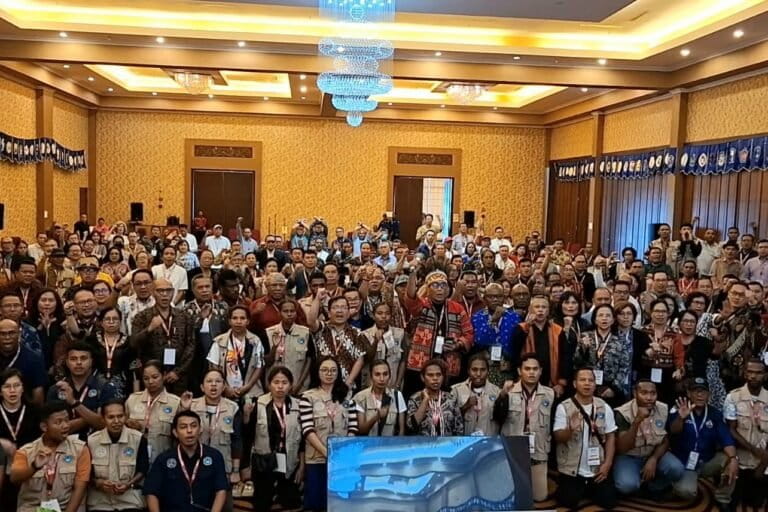
- Early 2026: The MPL-PGI meeting in Merauke results in a formal recommendation to reject the PSN, citing human rights violations and ecological destruction.
- March 2026: Cross-faith leaders emerge as guarantors for environmental and human rights activists, such as Dera and Munif, who faced criminalization for their opposition to extractive projects.
Corporate Interests and the "Palm Oil Connection"
The involvement of a consortium where 90% of the members are linked to the palm oil industry has raised significant red flags for transparency advocates. The palm oil sector in Indonesia has a long history of land disputes and deforestation, and critics fear that the sugar cane project is simply a new vehicle for the same corporate interests to access large tracts of primary forest. By labeling these ventures as "National Strategic Projects," the government provides them with streamlined permitting processes and legal protections that often bypass the rigorous environmental impact assessments (AMDAL) and the principle of Free, Prior, and Informed Consent (FPIC) required when dealing with indigenous lands.
The potential for "greenwashing" is also a concern. While the government frames the sugar cane project as a move toward energy sovereignty (through bioethanol) and food security, the environmental cost—specifically the 221 million tons of potential CO2 emissions—suggests a net negative impact on the global climate crisis.
Broader Implications for Climate Policy and Human Rights
The situation in Merauke serves as a litmus test for Indonesia’s democratic and environmental health. The overlap of indigenous displacement, massive carbon release, and the criminalization of dissent paints a complex picture of the challenges facing the region. The PGI and other members of the "Cross-Faith Brotherhood" argue that the state must undergo an "ecological repentance" (tobat ekologis). This is not merely a moral plea but a call for a structural shift in how development is defined and implemented.
The "corrective consciousness" demanded by these religious and civil society groups requires the state to recognize that nature has inherent rights. This includes the right to be protected, the right to not be destroyed for short-term profit, and the right to be restored when damage occurs. For the people of Merauke—the Marind, Yei Nan, and Muyu—the struggle is about more than just trees; it is about the right to exist in a world where their heritage and their environment are not sacrificed on the altar of industrial expansion.
As the international community watches, the tension in Papua highlights a global struggle: the conflict between aggressive state-led industrialization and the preservation of the planet’s last remaining frontiers. The unified voice of religious leaders, environmentalists, and indigenous communities in Merauke sends a clear message that development without justice is not progress, but a recipe for ecological and social catastrophe. The hope remains that the government will heed these warnings and pivot toward a development model that respects both the sanctity of the earth and the dignity of its original inhabitants.