Nila Kartika Wati
The decision by the Tomohon City Government to officially ban the trade of dog and cat meat at the notorious Tomohon Extreme Market marks a pivotal shift in the socio-cultural and public health landscape of North Sulawesi, Indonesia. This move, which was enacted following years of international pressure and local advocacy, addresses a tradition that has long defined the culinary identity of the Minahasa people while simultaneously posing significant risks to public safety and animal welfare. The transition from a deeply rooted cultural practice known as Rintek Wuuk (RW) to a regulated public health policy reflects a broader national movement toward aligning Indonesian food safety standards with international norms. By examining the historical origins of dog consumption in the region, the economic shifts that turned a subsistence practice into a commercial industry, and the multifaceted health and psychological impacts of the trade, a clearer picture emerges of why this ban is both a necessary and complex milestone for the region.
The Historical and Cultural Roots of Rintek Wuuk
To understand the gravity of the recent ban, one must first explore the deep historical ties between the Minahasa people and dogs. Archaeological evidence and linguistic studies suggest that dogs were first introduced to the Indonesian archipelago by Austronesian-speaking populations approximately 3,000 years ago. While carbon dating of dog bones in prehistoric sites remains sparse, the presence of dogs in early Minahasan society is immortalized in stone. Relief motifs on Waruga—traditional Minahasan stone sarcophagi dating back to the 7th century AD—depict dogs in various roles, indicating their long-standing interaction with humans.
In the traditional Minahasan context, the consumption of dog meat, colloquially referred to as Rintek Wuuk or "RW" (which translates to "fine hair"), was not an everyday occurrence. Historically, dogs were primarily utilized as hunting companions and guardians. The consumption of their meat was largely restricted to specific circumstances, such as periods of famine (paceklik) or when traditional forest game was unavailable. During these times, dog meat served as a vital protein source for families. Crucially, the practice was communal and subsistence-based; it was not a commercial enterprise.
Interestingly, Minahasan culture is known for its "omnivore" reputation, yet it maintains strict spiritual taboos. The only animal traditionally forbidden for consumption is the owl, known locally as the Manguni. The Manguni is highly sacralized as a herald of wisdom and a spiritual guide, contrasting sharply with the pragmatic view traditionally held toward other animals. This cultural framework highlights that while the Minahasa were open to diverse food sources, their consumption habits were governed by specific ecological and spiritual boundaries.
From Subsistence to the Market: The Commercialization of RW
The shift from private, situational consumption to a thriving commercial trade occurred alongside the integration of North Sulawesi into the broader market economy. As urban centers like Tomohon grew, the demand for traditional delicacies became a source of revenue. What was once a method of population control for a rapidly reproducing animal became a lucrative trade. The Tomohon Extreme Market eventually gained international notoriety for its sale of various wildlife and domestic animals, including dogs, cats, snakes, and bats.
By the late 20th and early 21st centuries, the trade had scaled significantly. Thousands of dogs were transported across provincial lines to meet the demand in North Sulawesi, often in cramped and unhygienic conditions. This commercialization stripped away the traditional context of the practice, replacing it with an industrial-scale slaughter system that prioritized profit over animal welfare and public health. The "Extreme Market" became a tourist attraction, but it also became a focal point for global animal rights organizations, which documented the brutal methods of slaughter, including bludgeoning and blowtorching animals in public view.
The Public Health Mandate: Rabies and Zoonotic Risks
The primary driver behind the government’s intervention was the undeniable threat to public health. The World Health Organization (WHO) and the Indonesian Ministry of Health have consistently identified dog meat trade as a major factor in the transmission of rabies. Indonesia aims to be rabies-free by 2030, a goal that is fundamentally incompatible with the unregulated movement and slaughter of dogs. Statistics indicate that dogs are the primary vectors for rabies in Indonesia, accounting for approximately 98 percent of all human rabies cases.
Beyond rabies, the consumption of dog meat is associated with a variety of other health risks. The Directorate General of Livestock and Animal Health Services (Ditjen PKH) within the Ministry of Agriculture issued a circular letter (No. 9874/SE/pk.420/f/09/2018) clarifying that dog meat does not meet the legal definition of "food" under Indonesian law. This legal distinction is based on the risk of zoonotic diseases—illnesses that jump from animals to humans. In addition to rabies, consumers of dog meat are at risk for:
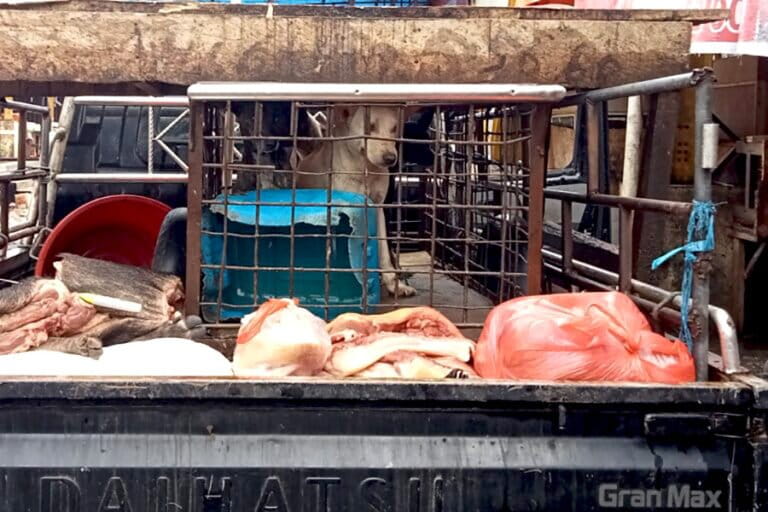
- Bacterial Infections: Pathogens such as E. coli and Salmonella are common in meat handled in the unsanitary conditions typical of unregulated markets.
- Cholera: Outbreaks have been linked to the transport and slaughter of dogs in several Southeast Asian contexts.
- Parasitic Diseases: Trichinellosis is a significant risk when consuming undercooked meat from domestic animals that have not undergone veterinary inspection.
- Chronic Health Issues: Some studies suggest a correlation between dog meat consumption and increased risks of hypertension and digestive tract disorders, though these are often exacerbated by the high-sodium preparations used in traditional RW dishes.
The Psychological Impact and Social Normalization of Violence
A less discussed but equally critical aspect of the trade is its impact on the social fabric and the psychological development of the younger generation. The Tomohon Extreme Market is a public space where children are often present. The sight of animals being handled violently and slaughtered in the open can have profound effects on a child’s empathy and psychological health.
Psychologists argue that the normalization of cruelty toward animals can lead to a desensitization toward violence in general. When a community witnesses the public suffering of animals as a routine part of commerce, it risks eroding the moral boundaries that protect against other forms of aggression. The ban, therefore, serves a dual purpose: it protects the physical health of the population while also fostering a more compassionate social environment.
Chronology of the Ban and Official Responses
The path to the 2023 ban was paved by years of advocacy and incremental policy changes.
- 2018: The Ministry of Agriculture issued its first major circular letter urging local governments to restrict the dog meat trade due to health risks.
- 2020-2022: Animal welfare coalitions, such as Dog Meat Free Indonesia (DMFI), intensified their campaigns, presenting undercover footage of the Tomohon market to provincial and national authorities.
- January 2023: The Karanganyar Regency in Central Java became one of the first to implement a total ban, setting a legal precedent for other regions.
- July 2023: The Tomohon City Government, led by Mayor Caroll Senduk, officially announced the ban on the trade of dogs and cats at the Tomohon Extreme Market. The announcement was made in collaboration with Humane Society International (HSI) and other advocacy groups.
The response from the international community was overwhelmingly positive, with animal welfare advocates hailing it as a "historic victory." However, the local response was more nuanced. While many residents acknowledged the health benefits, some traders expressed concerns regarding their livelihoods. In response, the local government and NGOs have discussed potential transition programs to help traders shift to selling meat that is legally recognized and safer, such as poultry or beef.
Analytical Implications: Balancing Heritage and Progress
The ban on dog meat in Tomohon represents a clash between traditional "heritage" and modern "civilization" standards. From a journalistic perspective, it is essential to analyze whether such a ban can be effectively enforced in a region where the appetite for RW remains high. Legal experts suggest that without consistent enforcement and a change in consumer behavior, the trade may simply move underground.
Furthermore, the ban highlights the importance of the "One Health" approach—a collaborative, multisectoral, and transdisciplinary approach that recognizes the interconnection between people, animals, plants, and their shared environment. By removing dogs from the food supply chain, Tomohon is effectively implementing a One Health strategy to mitigate the risk of the next pandemic and to eradicate rabies locally.
The economic implications are also significant. Tomohon is a gateway for tourism in North Sulawesi. For years, the Extreme Market was a "dark tourism" destination. By cleaning up the market and removing the most controversial elements, the city can reposition itself as a destination for eco-tourism and cultural tourism that aligns with global ethical standards. This could potentially bring in more affluent and ethically-conscious travelers, offsetting any temporary losses from the cessation of the dog meat trade.
Conclusion: A New Chapter for Minahasa
The prohibition of the dog and cat meat trade in Tomohon is not merely a legal directive; it is a cultural evolution. It acknowledges that traditions are not static and must adapt when they pose a clear and present danger to the well-being of the community. The Minahasa people have a rich history of resilience and adaptation, from the era of Austronesian migrations to the adoption of modern governance.
While the "Rintek Wuuk" tradition may linger in the memories of the older generation, the future of Tomohon and North Sulawesi appears to be heading toward a safer, more humane trajectory. The success of this ban will ultimately depend on the continued commitment of the local government to enforce the law and the willingness of the community to embrace a new culinary identity—one that honors its past without compromising its future health and moral standing. As the cages at the Tomohon Extreme Market remain empty of dogs and cats, the city takes its first steps toward a new era of public health and animal welfare.