Tata Titiana
Indonesia’s vibrant tourism landscape, renowned for its diverse cultural heritage and stunning natural beauty, owes a significant, though often overlooked, debt to its colonial past. The archipelago’s strategic location, particularly after the opening of the Suez Canal, made it a crucial hub for European trade and, subsequently, a destination for burgeoning leisure travel. In the 19th century, as passenger liners began making calls at Indonesian ports, the demand for comfortable accommodations for these European travelers, predominantly of "white" descent, surged. In response, the Dutch East Indies administration and private investors embarked on constructing a series of hotels, many of which stand today, not merely as historical relics, but as operational establishments that continue to welcome guests, offering a tangible connection to Indonesia’s complex history.
The establishment of these hotels on Java, in particular, is considered by many tourism historians as a foundational marker for the development of modern tourism in Indonesia. While many of these grand structures have been modernized to meet contemporary standards, their historical significance remains palpable. They are silent witnesses to pivotal moments in Indonesian history, from the colonial era through periods of occupation, independence struggles, and the dawn of the nation. This article delves into a selection of these remarkable hotels, exploring their origins, historical resonance, and their continued presence in Indonesia’s hospitality sector.
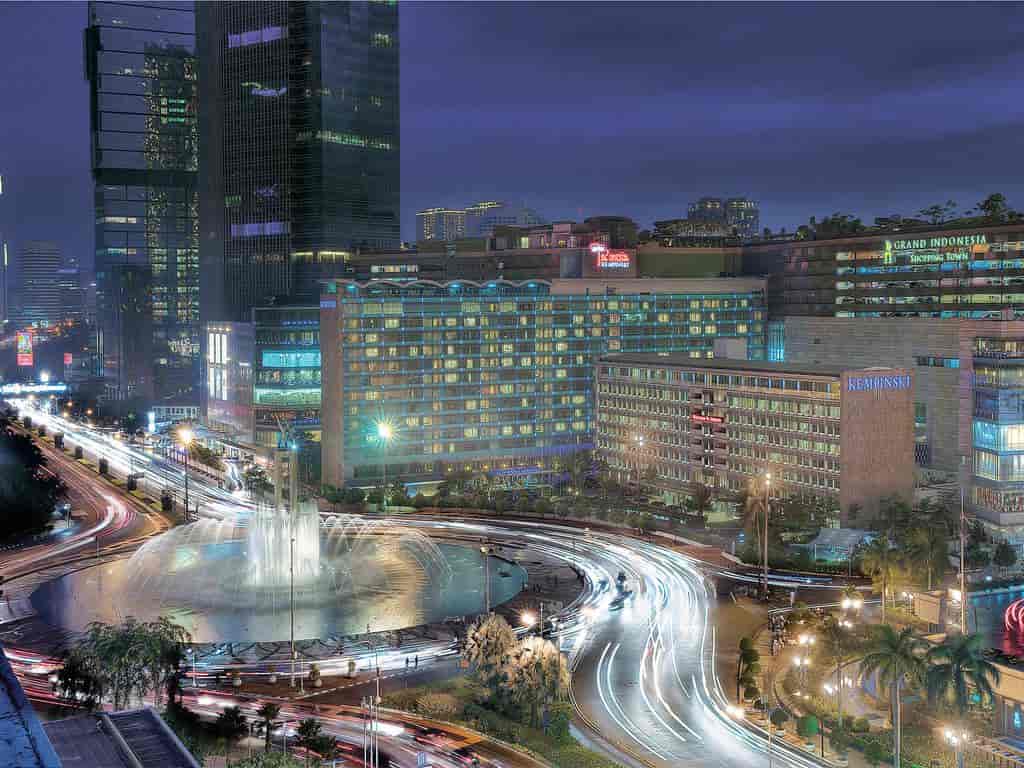
Hotel Indonesia Kempinski: A Symbol of Modernity and National Pride
Perhaps one of the most iconic of these enduring establishments is the Hotel Indonesia Kempinski in Jakarta. Inaugurated in 1962, it was conceived not just as a luxury hotel but as a symbol of a newly independent Indonesia’s burgeoning modernity and its capacity to host international events. Its construction was notably funded through proceeds from the Japanese war reparations, a complex economic legacy of World War II. The hotel was officially opened to accommodate athletes and dignitaries attending the IV Asian Games, marking a significant step in Indonesia’s re-emergence on the global stage.
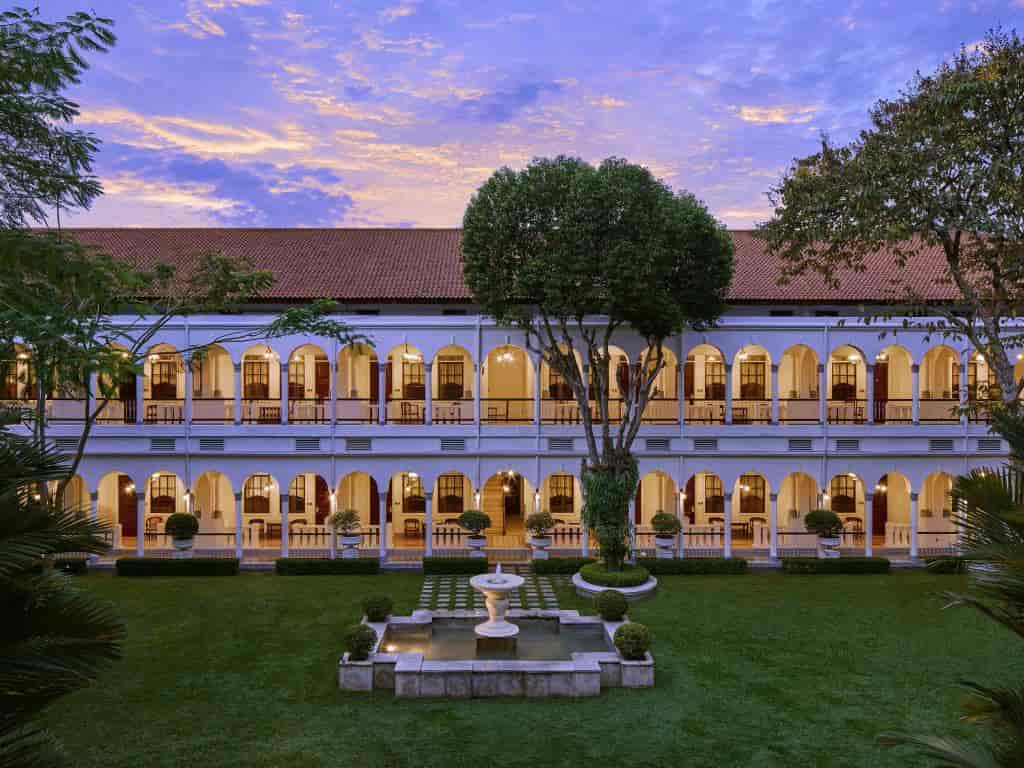
Its architectural design, a testament to mid-century modernism, was intended to impress, and it succeeded, becoming the tallest building in Jakarta at the time of its opening and the nation’s first five-star luxury accommodation. Over the decades, Hotel Indonesia Kempinski has hosted numerous heads of state, royalty, and international celebrities, cementing its status as a landmark of Indonesian hospitality. A notable recent event underscores its continued importance: in 2020, the hotel had the distinct honor of hosting the Dutch King and Queen during their state visit to Indonesia. Their stay in the hotel’s premium suites, equipped with bulletproof glass, highlighted the enduring diplomatic ties and the hotel’s capacity to provide secure and luxurious accommodation for the highest-profile guests. The hotel’s pricing typically starts around IDR 2.98 million per night, reflecting its luxury positioning and historical significance.
Hotel Majapahit Surabaya: A Crucible of National Identity
In Surabaya, East Java, the Hotel Majapahit stands as a profound emblem of Indonesian resilience and the fervent spirit of the nation’s struggle for independence. Opened in 1910, this architectural gem was originally named Hotel Oranje, reflecting the Dutch colonial presence. It was later renamed Hotel Yamato during the Japanese occupation. However, its most indelible historical moment occurred in the immediate aftermath of Indonesia’s declaration of independence in 1945.
The hotel became the focal point of a pivotal event known as the Battle of Surabaya. Following the Allied liberation of Japanese-occupied Indonesia, British forces, accompanied by Dutch colonial administrators, sought to reassert Dutch authority. A crowd of Indonesian patriots, incensed by the flying of the Dutch flag atop the hotel, stormed the building. In a symbolic act of defiance and assertion of sovereignty, they tore off the blue stripe of the Dutch flag, leaving only the red and white of the Indonesian national flag. This act of bravery, deeply etched in the city’s history, transformed Hotel Majapahit into a powerful symbol of Indonesian nationalism.
Originally constructed by the Sarkies Brothers, renowned hoteliers of Armenian descent, the hotel has undergone several transformations while retaining its grandeur. Its historical importance continues to draw visitors interested in understanding the early days of Indonesia’s independence. Rates for Hotel Majapahit Surabaya typically begin around IDR 985,125 per night, offering a chance to stay within walls steeped in revolutionary history.
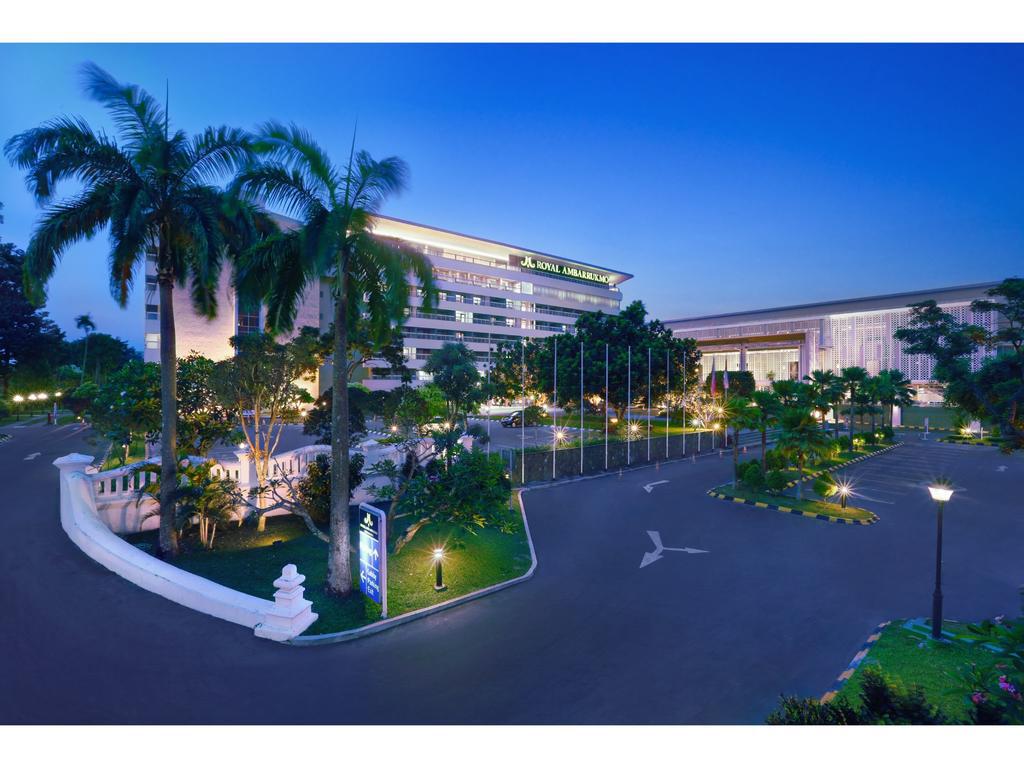
Royal Ambarrukmo Yogyakarta: A Royal Legacy in the Cultural Heart of Java
Yogyakarta, the cultural heartland of Java, is home to the Royal Ambarrukmo, a hotel with deep royal connections. Established by Sultan Hamengku Buwono V, the hotel has a distinguished history that predates its formal promotion as an international hotel. In 1966, it was among the first four hotels in Indonesia to be officially endorsed by President Soekarno as part of his initiative to develop Indonesia’s international tourism infrastructure.
Located on Jalan Laksda Adisucipto, the Royal Ambarrukmo embodies a blend of Javanese royalty and sophisticated hospitality. As a five-star establishment, it offers an array of luxurious amenities, including golf facilities, game rooms, and poolside bars, catering to a discerning clientele. Its integration with the historic Ambarrukmo Palace complex adds a unique dimension, allowing guests to experience the grandeur of Javanese royal heritage firsthand. The hotel’s commitment to preserving its historical essence while providing modern comforts makes it a compelling destination. Pricing for stays at the Royal Ambarrukmo typically starts at approximately IDR 911,250 per night.
Hotel Savoy Homann Bandung: Art Deco Elegance and International Acclaim
Bandung, a city known for its cool climate and colonial-era architecture, is home to the Hotel Savoy Homann, a grand establishment with a storied past. Situated on Jalan Asia-Afrika, a street that witnessed the historic 1955 Asian-African Conference, the hotel itself has a history dating back to the early 20th century. Initially owned by the Homann family, it gained renown for its culinary offerings, particularly the exquisite "rijsttafel" prepared by Mrs. Homann.
The hotel’s current Art Deco design, a striking wave-like structure, was the brainchild of renowned architect Albert Aalbers and was completed in 1939. The following year, it was renamed Savoy Homann to further emphasize its stature. The hotel has attracted a distinguished roster of guests throughout its history, including the legendary filmmaker and actor Charlie Chaplin, who is documented to have stayed at the Savoy Homann. Its elegant design and historical ambiance continue to attract travelers seeking a blend of vintage charm and contemporary luxury. Accommodation at Hotel Savoy Homann Bandung generally starts from around IDR 390,880 per night, making it an accessible option for experiencing a piece of Bandung’s colonial legacy.
Inna Bali Heritage Hotel: A Pioneer of Balinese Hospitality
On the famed island of Bali, the Inna Bali Heritage Hotel holds the distinction of being the island’s first luxury accommodation. Opened on August 22, 1927, its establishment coincided with a growing influx of international tourists arriving in Bali via the steamships of the Koninklijke Paket-vaart Maatschappij (Royal Packet Navigation Company). This marked a significant moment in the development of Bali as a global tourist destination.
Originally a three-star hotel, the Inna Bali Heritage Hotel is situated in the bustling Denpasar area. Its enduring appeal lies in its historical significance as a pioneer of Balinese hospitality and its integration into the island’s tropical charm. The hotel offers a range of facilities, including gardens, a restaurant, a swimming pool, and a café, providing a comfortable and historically resonant stay. Its presence signifies the early integration of Western tourism infrastructure into the unique cultural fabric of Bali. Prices for the Inna Bali Heritage Hotel typically begin at approximately IDR 270,000 per night, offering an affordable entry point into experiencing Bali’s early tourism history.
Enduring Legacies and Evolving Tourism
These five hotels represent just a fraction of the numerous colonial-era establishments that continue to operate across Indonesia. Each possesses a unique narrative, interwoven with the nation’s journey through different historical epochs. From the grand halls that once hosted Dutch administrators to the rooms that sheltered revolutionary heroes and international icons, these hotels are more than just places to stay; they are living museums, offering guests an immersive experience of Indonesia’s rich and multifaceted past.
The pricing for these heritage hotels, as with any accommodation, can fluctuate based on seasonal demand (high versus low season), inflation rates, local tax policies, and overall demand. Booking during periods of lower demand generally results in more favorable rates. Prospective guests are always advised to verify final pricing before confirming reservations to ensure they secure the best possible value while experiencing a tangible piece of Indonesia’s enduring colonial-era hospitality. The continued operation and popularity of these hotels underscore a growing appreciation for historical preservation and the unique storytelling potential embedded within these architectural landmarks. They serve as vital conduits for understanding Indonesia’s evolution, from its colonial beginnings to its present-day status as a major global tourism destination.