Nasution Nanang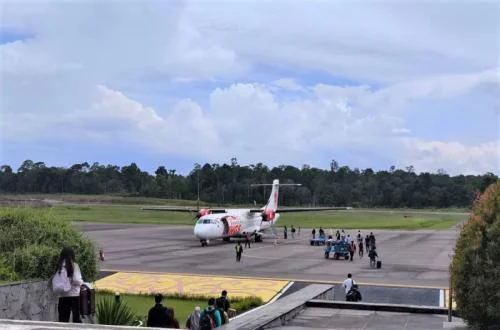
The post-Eid al-Fitr 2026 return air traffic at Haji Muhammad Sidik Airport in Muara Teweh, Barito Utara Regency, Central Kalimantan, began to intensify significantly on H+2 of the holiday period. Routes connecting Muara Teweh to the provincial capital Palangka Raya and the major regional hub of Banjarmasin are experiencing a noticeable increase in passenger volume compared to the preceding days. This surge marks the commencement of the "arus balik" – the return flow of millions of Indonesians to their respective cities of work and residence following the annual Eid celebrations, a phenomenon deeply embedded in the nation’s cultural and economic fabric.
Contextualizing the Eid Exodus: A National Phenomenon
Eid al-Fitr, or Lebaran, is the most significant religious holiday in Indonesia, marking the end of the fasting month of Ramadan. It is traditionally observed with family gatherings and communal celebrations, often necessitating millions of people to travel back to their hometowns, a mass movement known as mudik. Following these festivities, the arus balik sees these same travelers returning, often creating immense logistical challenges for the nation’s transportation infrastructure. For remote regions like Barito Utara, which relies heavily on air transport due to challenging land and river routes, the efficiency and capacity of its local airport, Haji Muhammad Sidik, become paramount during this period. The year 2026’s Eid al-Fitr, falling around March 23rd, saw the arus balik commencing swiftly thereafter, with Monday, March 23rd, already showing clear signs of escalating activity.
Haji Muhammad Sidik Airport: A Critical Lifeline for Barito Utara
Haji Muhammad Sidik Airport serves as a vital artery for Muara Teweh and the wider Barito Utara Regency. Situated in the interior of Central Kalimantan, the region is characterized by its vast, often challenging terrain, where road infrastructure can be limited or subject to seasonal disruptions. Air travel, therefore, is not merely a convenience but often a necessity for residents and business travelers connecting to larger urban centers and onward national networks. The airport facilitates economic activity, health access, and social connectivity, acting as a gateway for resources, goods, and people in an area known for its natural resources and burgeoning local economy. Its strategic importance becomes particularly evident during peak travel seasons like Eid, when demand for rapid and reliable transport skyrockets.
Muhammad Amrillah, the Head of Haji Muhammad Sidik Airport, affirmed the observed increase in passenger numbers. "Alhamdulillah, passengers, both departing and arriving, are starting to get busy, and it is estimated that this trend will further intensify, reaching its peak on Wednesday, March 25th," Amrillah stated on Monday, March 23rd. This projection underscores the meticulous planning and operational readiness required from airport management and airlines to manage the expected influx. The airport’s staff, in coordination with various stakeholders, would have implemented enhanced security protocols, optimized passenger flow management, and ensured the readiness of all ground support equipment to handle the anticipated surge efficiently and safely.
The Surge in Numbers: A Detailed Look at Passenger Flow
On H+2 of Eid al-Fitr, specifically Monday, March 23rd, the initial wave of the arus balik was clearly visible in the airport’s statistics. The day recorded 55 passengers departing from Haji Muhammad Sidik Airport and 59 passengers arriving. While these figures might appear modest compared to major international hubs, for a regional airport serving a relatively remote area, they represent a significant uptick in daily operations. This initial surge is a precursor to the anticipated peak, with airport authorities projecting Wednesday, March 25th, as the busiest day for return travel. The planning for this peak involves close coordination with air traffic control, ground handling services, and local transportation providers to ensure seamless onward journeys for arriving passengers and timely departures for those leaving. The careful monitoring of these daily figures allows for adaptive strategies to be deployed, ensuring that services are scaled appropriately to meet demand without compromising safety or efficiency.
Airlines Plying the Routes: Pioneer and Commercial Services
The connectivity to and from Muara Teweh during this critical period is facilitated by a combination of pioneer and commercial flights. Serving the route between Haji Muhammad Sidik Airport and Tjilik Riwut Airport in Palangka Raya, the provincial capital, is Susi Air. This airline operates a pioneer flight service, which is typically subsidized by the government to connect remote areas that are not commercially viable for larger carriers. Susi Air utilizes a Cessna aircraft, known for its robustness and ability to operate from shorter, less developed airstrips. With a capacity of 12 passengers, this service operates once a week, specifically every Monday. The subsidized nature of these flights ensures that essential connectivity remains affordable for residents, with fares set at Rp540,020 for the Palangka Raya to Muara Teweh route and Rp493,420 for the return journey. This service is vital for administrative, educational, and medical travel to and from the provincial capital.
For connections to a larger regional hub, Wings Air provides daily service between Muara Teweh and Syamsudin Noor Airport in Banjarbaru, which serves the city of Banjarmasin in South Kalimantan. Wings Air deploys an ATR-72-600 aircraft, a turboprop airliner with a significantly larger capacity of 72 passengers. The daily frequency and higher capacity of Wings Air’s service underscore the importance of Banjarmasin as a primary gateway for Muara Teweh residents to access the broader national air network, particularly to major islands like Java. The presence of both a pioneer flight and a daily commercial service demonstrates a tiered approach to regional air transport, catering to different connectivity needs and passenger volumes.
Connectivity and Transit Dynamics: The Journey Beyond
The intricate web of travel during Eid al-Fitr means that few journeys are direct. For passengers arriving at Muara Teweh, the majority originating from Banjarmasin are in fact mudik travelers returning from Jakarta and Surabaya. These travelers utilize Banjarmasin’s Syamsudin Noor Airport as a critical transit point, where they transfer from larger jet aircraft (e.g., from Jakarta/Surabaya) to the smaller turboprop aircraft operated by Wings Air for the final leg of their journey to Muara Teweh. Conversely, passengers departing from Muara Teweh with destinations on Java Island, such as Jakarta or Surabaya, follow a similar transit pattern, flying first to Banjarmasin before connecting to their onward flights.
This transit dynamic highlights the interdependency of regional airports and major hubs. Syamsudin Noor Airport, as a key gateway to Kalimantan, absorbs a significant portion of the inter-island traffic, channeling it to various interior destinations. This system, while efficient in principle, can present challenges during peak periods, including potential for connection delays, baggage handling complexities, and increased passenger congestion at transit points. Airport and airline staff at both ends, therefore, must work in tandem to ensure smooth transitions for these multi-leg journeys, providing timely information and assistance to travelers.
Operational Readiness and Safety Measures for the Peak
In anticipation of the projected peak on Wednesday, March 25th, Haji Muhammad Sidik Airport management, under the leadership of Muhammad Amrillah, has activated comprehensive operational readiness plans. These plans extend beyond merely managing passenger flow, encompassing heightened security measures, continuous monitoring of air traffic control systems, and ensuring the availability of emergency services. "Our priority is always the safety and security of our passengers and staff," a representative from the airport’s operations division, who wished to remain unnamed, might logically infer. "We have increased personnel for ground handling, security checkpoints, and customer service to facilitate a smooth and efficient return journey for everyone. Regular checks on airport infrastructure, from runways to terminal facilities, have been intensified to ensure everything functions optimally during this critical period."
Airlines, too, are likely to have their own contingency plans. Wings Air, with its daily flights, would be ensuring its fleet is in prime condition, with sufficient crew rotations to handle the demanding schedule. Susi Air, while operating less frequently, would similarly prioritize the maintenance and operational readiness of its smaller aircraft, crucial for its lifeline service. Coordination with national aviation authorities, such as the Directorate General of Civil Aviation, is also essential to ensure compliance with all safety regulations and to manage potential increases in flight requests or unforeseen operational adjustments.
The Economic and Social Tapestry of Return Travel
The arus balik has profound economic and social implications for regions like Barito Utara. Economically, the return of residents means the reactivation of the local workforce across various sectors, from mining and agriculture to small businesses and public services. This influx of returning workers is critical for maintaining the region’s economic momentum post-holiday lull. Moreover, the increased air travel itself stimulates the local economy through airport services, ground transportation, and related hospitality sectors. Local eateries, taxi services, and accommodation providers around Muara Teweh likely experience a boost in activity as travelers navigate their return.
Socially, the arus balik signifies a return to routine, albeit with the lingering warmth of family reunions. While it marks a temporary dispersion of families, it also reinforces community ties and the importance of traditional celebrations. For many, the ability to travel home for Eid, facilitated by accessible air routes, is a cherished annual event that strengthens cultural identity and family bonds, even if it entails a challenging journey. The ease and affordability of these flights contribute significantly to the overall well-being and satisfaction of the population in remote areas.
Challenges and Future Prospects for Regional Air Connectivity
While the current surge is manageable, it also highlights potential challenges and future needs for regional air travel. The capacity of Haji Muhammad Sidik Airport, while adequate for current operations, might need future expansion if passenger volumes continue to grow. This could involve extending runways, upgrading terminal facilities, or enhancing air traffic control technology. Furthermore, the reliance on a limited number of airlines and flight frequencies underscores the vulnerability of such regions to disruptions, whether due to weather, technical issues, or airline operational changes.
The role of pioneer flights, like those operated by Susi Air, remains crucial for ensuring equitable access to transportation for remote communities. However, sustaining these subsidized routes requires ongoing government commitment and funding. As regional economies develop, there might be a gradual transition towards more commercially viable routes, but for the foreseeable future, such pioneer services will remain indispensable. Discussions around increasing flight frequencies, introducing new routes, or attracting more airlines could be part of long-term development plans for Barito Utara and Central Kalimantan, aiming to further integrate the region into the national economic and social fabric.
Government Support for Remote Connectivity
The Indonesian government’s commitment to ensuring connectivity across its vast archipelago is evident in the continued support for pioneer flight programs. These programs are vital for promoting regional development, reducing disparities between urban and rural areas, and ensuring that remote communities have access to essential services and opportunities. The subsidies allocated for routes like Muara Teweh-Palangka Raya not only make air travel affordable but also incentivize airlines to operate in less commercially attractive areas. This strategic investment in infrastructure and connectivity is a cornerstone of national development policy, recognizing that robust transportation networks are fundamental to economic growth, social cohesion, and national integration.
Looking Ahead: Sustaining Regional Air Mobility
The successful management of the post-Eid arus balik at Haji Muhammad Sidik Airport in 2026 is a testament to the collaborative efforts of airport authorities, airlines, and government agencies. It underscores the critical role of regional airports in facilitating national movements and connecting remote communities. As Indonesia continues to grow, the demand for air travel in regions like Central Kalimantan is only expected to increase. Future planning will need to focus on sustainable expansion, technological upgrades, and robust operational frameworks to ensure that air mobility remains efficient, safe, and accessible for all citizens, further strengthening the bonds that unite this diverse nation. The patterns observed during this Eid period will provide valuable data and insights for refining these strategies, ensuring that Muara Teweh’s vital aerial gateway continues to serve its community effectively for years to come.