Nasution Nanang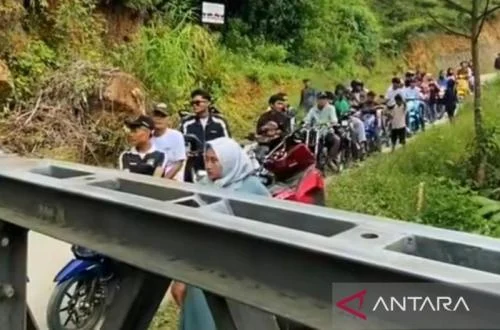
Desa Malasari, nestled within the Nanggung District of Bogor Regency, West Java, has unexpectedly emerged as a significant tourist destination during the recent Eid al-Fitr (Lebaran) holiday period. This transformation follows the completion of critical road infrastructure, specifically the concrete paving of the Jalan Nirmala, a project stretching 18.5 kilometers. The previously challenging access to this remote village, particularly during the rainy season, has been dramatically improved, leading to an unprecedented influx of visitors. On Monday, the road leading to the Nirmala tourist area witnessed traffic congestion reminiscent of the notorious Puncak Pass on a typical weekend, signaling a new era for Malasari as a regional tourism magnet. This development underscores the profound impact of strategic infrastructure investment on local economies and accessibility, turning isolated areas into vibrant hubs of activity.
The sudden popularity of Malasari during Lebaran is a testament to the pent-up demand for accessible natural attractions and the effectiveness of the infrastructure upgrade. Prior to this, Malasari was primarily known to a niche group of adventure seekers and researchers due to its proximity to the Gunung Halimun Salak National Park, a critical conservation area. Its rugged terrain and often impassable roads meant that its stunning landscapes, rich biodiversity, and cultural heritage remained largely undiscovered by the broader public. The Lebaran holiday, a period when millions of Indonesians embark on domestic travel to visit family or seek leisure, provided the perfect catalyst for Malasari to debut its newfound accessibility. Families and groups, no longer deterred by arduous journeys, now find the village an attractive option for its pristine natural environment, offering a refreshing alternative to more established and often overcrowded destinations. This surge in domestic tourism during major national holidays is a well-documented phenomenon in Indonesia, with millions seeking respite and recreation, often leading to significant economic boosts for newly accessible destinations.
Background and Historical Context of Malasari’s Isolation
For decades, Desa Malasari epitomized the challenges faced by many remote Indonesian villages. Its geographical location, characterized by undulating hills, dense forests, and rivers, rendered it naturally isolated. The existing road infrastructure was rudimentary at best, consisting mostly of unpaved tracks that would quickly degrade into muddy, impassable stretches during the monsoon season, which typically runs from October to April. This isolation had significant implications for the local community, primarily comprising farmers and plantation workers. Access to essential services such as healthcare facilities, educational institutions, and larger markets in Bogor city was severely hampered. Economic opportunities were limited, as the high cost and difficulty of transporting goods in and out of the village stifled local agricultural potential and prevented the development of a viable tourism sector, despite the area’s inherent natural beauty.
The challenging topography and lack of proper roads also posed considerable risks for residents, especially in emergencies. Medical evacuations were often prolonged and dangerous, with critical patients facing hours-long journeys over treacherous paths to reach the nearest hospital. Children faced long, difficult commutes to schools, impacting attendance and educational outcomes. While the isolation preserved much of Malasari’s natural charm and cultural authenticity, it came at the cost of socio-economic development and access to modern amenities. Various local initiatives and smaller-scale road improvement efforts had been attempted over the years, but a comprehensive, large-scale project was always beyond the scope of local resources, necessitating a higher-level governmental intervention. The vision for unlocking Malasari’s potential had long existed among local leaders and community members, but the practical means to achieve it remained elusive until recent policy shifts and funding mechanisms emerged, aligning with national priorities for equitable regional development.
The Jalan Nirmala Project: A Catalyst for Change
The transformation of Malasari is directly attributed to the construction of Jalan Nirmala, an 18.5-kilometer stretch now boasting a durable concrete surface. This project was not merely a road upgrade but a strategic intervention designed to bridge the gap between Malasari’s natural wealth and its economic potential. Bupati Bogor, Rudy Susmanto, has been a vocal proponent of this initiative, emphasizing that the road’s construction is a cornerstone of the regional government’s broader strategy to open up access to remote areas and stimulate local economic growth. The decision to pave the road with concrete, rather than asphalt, reflects an understanding of the local terrain’s demands, offering greater resilience against heavy rain, landslides, and erosion, ensuring long-term durability and reduced maintenance in a challenging mountainous environment. Concrete roads, while initially more expensive, often prove more cost-effective in the long run for such conditions due to their extended lifespan and resistance to deformation.
The planning for such an extensive infrastructure project likely involved a multi-stage process, starting with detailed topographical surveys, engineering designs, environmental impact assessments, and extensive community consultations to ensure local buy-in and address potential concerns. While specific dates for the initial conception are not detailed, the rapid execution points to a recent acceleration driven by a strategic imperative. The urgency around projects like Jalan Nirmala is often driven by central government directives aimed at equitable development, particularly in regions identified as having high potential but lacking critical infrastructure. The concrete pouring, which constitutes the initial phase of the project, signifies a substantial investment and engineering effort. Future phases are slated to include asphalting the concrete surface for a smoother ride and the installation of comprehensive drainage systems. The latter is particularly crucial for preventing water accumulation, which can damage the road and exacerbate erosion in the surrounding natural environment, thus safeguarding the longevity and sustainability of the infrastructure and mitigating environmental risks.
Funding and Accelerated Implementation: Inpres No. 1 Tahun 2025
A critical aspect enabling the rapid execution of the Jalan Nirmala project is its financing through the APBD Kabupaten Bogor 2025 (Bogor Regency Regional Budget for 2025) via a reallocation of funds. This reallocation was made possible by Instruksi Presiden Nomor 1 Tahun 2025 (Presidential Instruction No. 1 of 2025), a directive specifically aimed at accelerating regional development. While the instruction number suggests a 2025 issuance, it is common for such directives to be issued towards the end of the preceding year or early in the target year to allow for immediate implementation, essentially activating the upcoming fiscal year’s budget ahead of schedule for critical projects. This presidential instruction provides a framework for local governments to streamline budgetary processes, enabling them to quickly reallocate funds to high-priority infrastructure projects without the usual bureaucratic delays associated with annual budget cycles.
Bupati Rudy Susmanto underscored the significance of this top-down support, stating that fundamental infrastructure, particularly roads, is indispensable for improving public access to vital services such as healthcare and education, as well as facilitating economic activities. The instruction likely empowers regional authorities to bypass lengthy tender processes for certain projects, especially those deemed critical for national or regional strategic objectives, under specific conditions of urgency or strategic importance. This agility in funding and implementation is crucial for regions like Bogor, where pockets of underdevelopment persist despite overall economic growth. The use of a presidential instruction highlights a national commitment to inclusive growth, ensuring that remote communities are not left behind in the country’s development trajectory, aligning with the broader vision of Nawa Cita (Nine Priorities) for national development, which emphasizes building Indonesia from the periphery.
The Role of Karya Bakti TNI: Military Civic Mission
Further accelerating the project’s timeline and ensuring efficient execution was the implementation of the Karya Bakti TNI scheme, a military civic mission involving collaboration with Kodim 0621 (District Military Command 0621) and Korem 061 (Resort Military Command 061). This unique approach leverages the Indonesian National Armed Forces’ (TNI) engineering capabilities, discipline, and logistical prowess for civilian infrastructure projects. By deploying military personnel and equipment, the government can bypass the often-protracted public procurement and tender processes, significantly cutting down on project timelines and costs, especially in areas where civilian contractors might face more logistical hurdles or higher operational costs. The Karya Bakti TNI program, a long-standing tradition, embodies the TNI’s dual function of defense and socio-economic development, often deployed for disaster relief, community welfare projects, and infrastructure development in remote or underserved areas.
For the Jalan Nirmala project, this meant that teams of military engineers and personnel, working alongside local labor, could rapidly mobilize and execute the concrete paving with precision and efficiency. The military’s organizational structure and capacity for rapid deployment proved invaluable in tackling the challenging terrain and ensuring the project met its ambitious deadlines. The involvement of the TNI also instills a sense of national pride and collective responsibility among the local population, fostering stronger ties between the military and the civilian community. A spokesperson from Kodim 0621, speaking on condition of anonymity due to protocol, expressed pride in contributing to national development, stating, "Our personnel are trained not just for defense, but also for nation-building. This project is a testament to our commitment to the welfare of the people, ensuring critical infrastructure reaches even the most remote areas." This partnership between the Bogor Regency government and the TNI exemplifies an integrated approach to development, combining administrative foresight with operational efficiency to deliver tangible results for the community.
Economic and Social Implications for Malasari
The immediate economic impact on Desa Malasari has been profound. The surge in Lebaran visitors has translated into increased revenue for local businesses. Homestays, which previously catered to a minimal number of guests, are now experiencing full occupancy, with some villagers quickly converting spare rooms into temporary accommodations. Small warungs (food stalls) and local vendors selling snacks, beverages, and handicrafts have seen a significant boost in sales, with some reporting multiplefold increases during the holiday period. This newfound economic activity provides direct income to residents, reducing their reliance solely on agriculture, which can be vulnerable to weather fluctuations and market prices. The improved access also lowers transportation costs for agricultural produce, such as coffee, tea, and various fruits, allowing farmers to more easily bring their goods to larger markets, potentially increasing their profit margins and expanding their customer base beyond the village, thus enhancing food security and local income stability.
Beyond immediate tourism revenue, the road’s presence is expected to stimulate long-term economic development. Investment in guesthouses, restaurants, and other tourism-related services is likely to follow, creating more permanent job opportunities for locals, including roles as guides, hospitality staff, and artisans. Furthermore, enhanced accessibility to Malasari means better access to public services for its residents. Children can attend schools more regularly, benefiting from reduced travel times and safer routes, leading to improved educational attainment. Access to medical facilities in emergencies is significantly improved, reducing health risks and mortality rates. The breaking of geographical isolation also fosters greater social integration, allowing Malasari residents to connect more easily with neighboring communities and the broader urban centers, potentially leading to cultural exchange, broader perspectives for the younger generation, and access to a wider range of goods and services. The transformation is not just about tourism; it’s about lifting the overall quality of life and empowering a community that was once marginalized by its remoteness.
Environmental Stewardship and Sustainable Development Challenges
Despite the undeniable benefits of the new road, Bupati Rudy Susmanto has issued a stern warning regarding the imperative of environmental preservation. Desa Malasari is situated perilously close to a crucial conservation forest, notably the Gunung Halimun Salak National Park, which is home to diverse flora and fauna, including endangered species such as the Javan gibbon, Javan leopard, and various endemic bird species. The increased human activity, if unregulated, poses significant risks. These include potential deforestation for new developments, uncontrolled waste disposal leading to soil and water pollution, disturbance of wildlife habitats, and the degradation of natural water sources vital for both human consumption and ecosystem health. The Bupati’s cautionary words, "Jangan sampai Tuhan marah, jangan sampai alam marah. Dampaknya bisa luas kalau kita tidak jaga" (Don’t let God be angry, don’t let nature be angry. The impact can be widespread if we don’t protect it), highlight the severe consequences of ecological imbalance and the interconnectedness of human well-being with environmental health.
To mitigate these risks, a multi-faceted approach to sustainable tourism development is essential. The local government, in collaboration with national park authorities, environmental organizations, and community leaders, must establish strict zoning regulations, enforce robust waste management protocols, and actively promote eco-tourism principles. This includes educating tourists on responsible travel practices, encouraging the use of certified local guides who can share knowledge about the environment and local culture, and developing infrastructure that minimizes ecological footprints, such as proper sewage treatment systems, renewable energy sources, and sustainable building materials. Community involvement is paramount; empowering local residents to become stewards of their environment through conservation programs, waste recycling initiatives, and active participation in sustainable tourism management plans will be critical to balancing development with preservation. Environmental experts from local universities have emphasized the need for continuous monitoring and adaptive management strategies to prevent over-tourism and ecological degradation, drawing lessons from other popular but environmentally strained destinations, like parts of Puncak, to ensure Malasari’s growth is truly sustainable and its natural heritage protected for future generations.
Broader Implications and Future Outlook
The success of the Jalan Nirmala project in Malasari holds broader implications for regional development strategies across Indonesia. It serves as a compelling case study demonstrating how targeted infrastructure investment, combined with innovative implementation mechanisms like *Karya Bakti