Nasution Nanang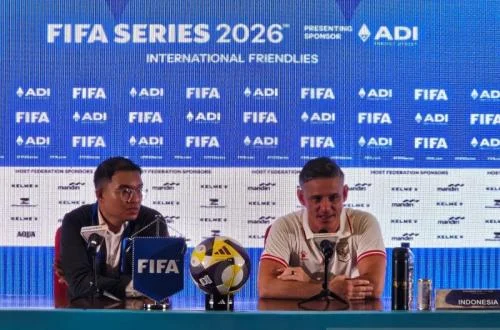
Jakarta, Indonesia – In a declaration that has reverberated across the archipelago, Indonesian national football team head coach John Herdman has unequivocally set a monumental objective: to guide the Garuda squad to the 2030 FIFA World Cup. This ambitious target, articulated following Indonesia’s commanding 4-0 victory over St Kitts and Nevis at the Gelora Bung Karno Main Stadium in Jakarta on Friday, underscores a profound commitment to reshaping the nation’s footballing destiny and fulfilling the aspirations of its 280 million citizens. Herdman’s statement comes amidst a period of renewed optimism for Indonesian football, buoyed by recent advancements in international competitions and a strategic overhaul spearheaded by the Football Association of Indonesia (PSSI).
Herdman, a coach with a proven track record of transforming footballing fortunes, particularly noted his motivation, stating, "You mentioned World Cup qualification. That is the mission. Our goal is to have 280 million reasons to wake up every day and do what we do." This powerful sentiment encapsulates the profound national significance of his quest, aiming to etch Indonesia’s name into the annals of global football history and provide an unparalleled source of national pride and unity. He emphasized the critical importance of becoming the first men’s team from Indonesia to qualify for the FIFA World Cup in the modern era, a feat that would transcend sports and create a cherished legacy for generations.
A Glimpse into Indonesia’s Footballing Past and Present Ambitions
Indonesia’s football history, while long, has been largely characterized by unfulfilled potential on the global stage. The nation’s sole appearance at the FIFA World Cup dates back to 1938, when, as the Dutch East Indies, they participated in the tournament held in France. That historical footnote, nearly a century ago, remains a poignant reminder of the immense gap between past participation and contemporary ambition. For decades, Indonesian football has grappled with myriad challenges, including inconsistent development programs, administrative issues, infrastructure limitations, and fierce competition within Asia. These factors have historically kept the Garuda squad from consistently challenging for World Cup berths, often seeing their campaigns conclude in the early qualification rounds.
However, the landscape of Indonesian football has undergone a significant transformation in recent years. The PSSI, under the leadership of Chairman Erick Thohir, has embarked on an aggressive strategy to elevate the national team’s performance. This initiative includes investing in youth development, improving coaching standards, and crucially, implementing a naturalization program to integrate players of Indonesian descent who have honed their skills in European leagues. These efforts have already yielded tangible results, with Indonesia demonstrating improved performances in various AFC competitions and making historic strides in the current 2026 FIFA World Cup qualifiers. Herdman’s arrival is seen as the culmination of these strategic efforts, bringing world-class coaching expertise and a winning mentality to a team poised for greater heights.
Herdman’s Philosophy: Building a Culture of Success
John Herdman’s coaching philosophy is firmly rooted in instilling a winning mentality and a meticulous approach to target setting. He underscored this after the St Kitts and Nevis match, explaining, "This is a small step. We set a mentality. When we targeted a 4-0 win with a clean sheet, we completed it. Not 3-0 or 2-0, but we committed to achieving the target." This statement highlights his belief in defining clear objectives and holding the team accountable for their execution, a methodology he successfully applied during his tenure with the Canadian national team.
Herdman’s track record speaks volumes. Before taking the helm of the Indonesian squad, he achieved what many considered impossible by leading the Canadian men’s national team to the 2022 FIFA World Cup in Qatar, ending a 36-year drought for the North American nation. His success with Canada was not merely about qualification; it was about transforming a team that was a perennial underachiever into a competitive force on the international stage. He achieved this through a combination of tactical innovation, player development, and, most importantly, fostering an unwavering belief within the squad. This experience makes him uniquely suited to the challenge of uplifting Indonesian football, which shares certain parallels with Canada’s prior status as a sleeping giant. His ability to cultivate a strong team culture, where every player understands their role and contributes to a collective vision, will be paramount in Indonesia’s journey towards 2030.
The Challenging Road Ahead: AFC World Cup Qualification
The path to the 2030 FIFA World Cup for Asian nations is notoriously arduous. While the exact format for 2030 is subject to FIFA’s final decisions, based on the expanded 48-team tournament, Asia is expected to receive eight direct qualification slots, with an additional inter-confederation play-off spot. This means the competition will be fierce, requiring sustained excellence over multiple qualification rounds spanning several years.
Typically, AFC World Cup qualification involves several stages:
- First Round: Preliminary knock-out matches for lower-ranked teams.
- Second Round: Group stage involving a broader pool of teams, with winners and best runners-up advancing.
- Third Round: Two groups of six teams, with top finishers directly qualifying.
- Fourth Round (Play-offs): Teams that finished just outside direct qualification compete for play-off spots.
Indonesia’s recent performance in the 2026 World Cup qualifiers provides a solid foundation but also highlights the scale of the challenge. The Garuda squad made historic progress by advancing to the Third Round of the AFC Qualifiers for 2026, an unprecedented achievement in the modern era. This significant milestone saw them navigate past teams like Vietnam and the Philippines in the Second Round, demonstrating their growing competitiveness. However, the Third Round presents an even higher echelon of opposition, typically featuring Asian football powerhouses such as Japan, South Korea, Iran, Saudi Arabia, and Australia. Their journey in the 2026 campaign, while ending before direct qualification, showcased both their potential and the demanding nature of the final qualification stages. Herdman’s task is to bridge this gap, ensuring that Indonesia can not only compete but consistently outperform these established giants over a prolonged period.
Strategic Pillars for 2030: Development, Naturalization, and Fan Power
To achieve the 2030 target, Herdman’s vision will rely on several strategic pillars:
-
Youth Development and Domestic League Enhancement: Sustained success requires a robust pipeline of local talent. The PSSI’s initiatives, such as the Garuda Select program and investment in academies, are crucial. Herdman will likely emphasize the need for the domestic Liga 1 to become more competitive, producing players who are technically proficient, tactically astute, and physically robust enough for international football. This involves upgrading coaching education, sports science, and infrastructure at the club level.
-
The Naturalization Program: The PSSI’s strategic recruitment of players of Indonesian heritage from European leagues has significantly bolstered the national squad. Players like Shayne Pattynama, Sandy Walsh, and Elkan Baggott, among others, bring invaluable experience, technical quality, and a professional mindset honed in top footballing environments. This program is not merely about quick fixes but about raising the overall standard and competitiveness of the team while inspiring local talent. Herdman will need to seamlessly integrate these players, fostering a cohesive unit that combines local passion with international professionalism.
-
Unwavering Public Support: Herdman, drawing from his Canadian experience, knows that the journey will be fraught with "ups and downs." He stressed the crucial role of the fans, stating, "I hope the fans can be with us because there will be ups and downs. I learned that in (the Canada national team) over more than five years. It is never a straight line." Indonesian football boasts one of the most passionate fan bases in the world. Their unwavering support, even during difficult periods, will be a vital psychological boost for the team. Conversely, unrealistic expectations or harsh criticism during setbacks could undermine morale. Herdman’s call for patience and sustained backing is a pragmatic acknowledgment of the long-term nature of this ambitious project.
Official Reactions and Broader Implications
The audacious declaration by John Herdman has been met with widespread support from key stakeholders. PSSI Chairman Erick Thohir has consistently articulated a vision for Indonesia to become a regional footballing powerhouse and eventually qualify for the World Cup. Herdman’s target aligns perfectly with Thohir’s strategic objectives, indicating a unified approach from the top echelons of Indonesian football. It is expected that the PSSI will provide Herdman with the necessary resources, including access to top-tier training facilities, competitive international friendlies, and continued support for the player development and naturalization programs.
The Indonesian government, through the Ministry of Youth and Sports, is also likely to throw its weight behind this national aspiration. Football is more than just a sport in Indonesia; it is a cultural phenomenon that can unite a diverse nation. A successful World Cup qualification campaign would undoubtedly lead to increased government investment in sports infrastructure, youth programs, and overall football development.
Beyond the immediate footballing implications, a 2030 World Cup qualification would have profound broader impacts:
- National Unity and Pride: It would be an unparalleled source of national pride, fostering a sense of unity and collective achievement across the vast Indonesian archipelago.
- Economic Boost: Qualification would attract significant economic benefits, including increased tourism, merchandise sales, media rights, and foreign investment in the sports sector.
- Youth Inspiration: Witnessing their national team compete on the world stage would inspire millions of young Indonesians to pursue football, potentially leading to a larger and more talented player pool in the future.
- International Recognition: It would significantly elevate Indonesia’s profile on the global stage, showcasing its potential beyond economic or political spheres.
- Regional Influence: A strong Indonesian national team would bolster the standing of Southeast Asian football within the AFC, potentially encouraging greater investment and development across the region.
Conclusion: A Long-Term Vision with Immediate Steps
John Herdman’s declaration for the 2030 FIFA World Cup is not merely an ambitious statement; it is a carefully calculated long-term vision built on a foundation of incremental progress and a culture of relentless pursuit of excellence. The 4-0 victory against St Kitts and Nevis, while a "small step," serves as a tangible example of the team’s growing capability and their coach’s methodical approach.
Herdman, who believes that with consistent hard work and full support, Indonesia can indeed achieve World Cup qualification within the next four years, has set a clear trajectory. The journey will undoubtedly be challenging, marked by highs and lows, but the strategic investments, the influx of quality players, and the unwavering passion of the Indonesian people provide a powerful impetus. For Indonesia, the dream of the 2030 FIFA World Cup is no longer a distant fantasy but a meticulously planned mission, led by a coach who has proven his ability to turn audacious dreams into historic realities. The coming years will be a testament to the collective resolve of a nation striving to leave an indelible mark on the world stage of football.