
 Lina Irawan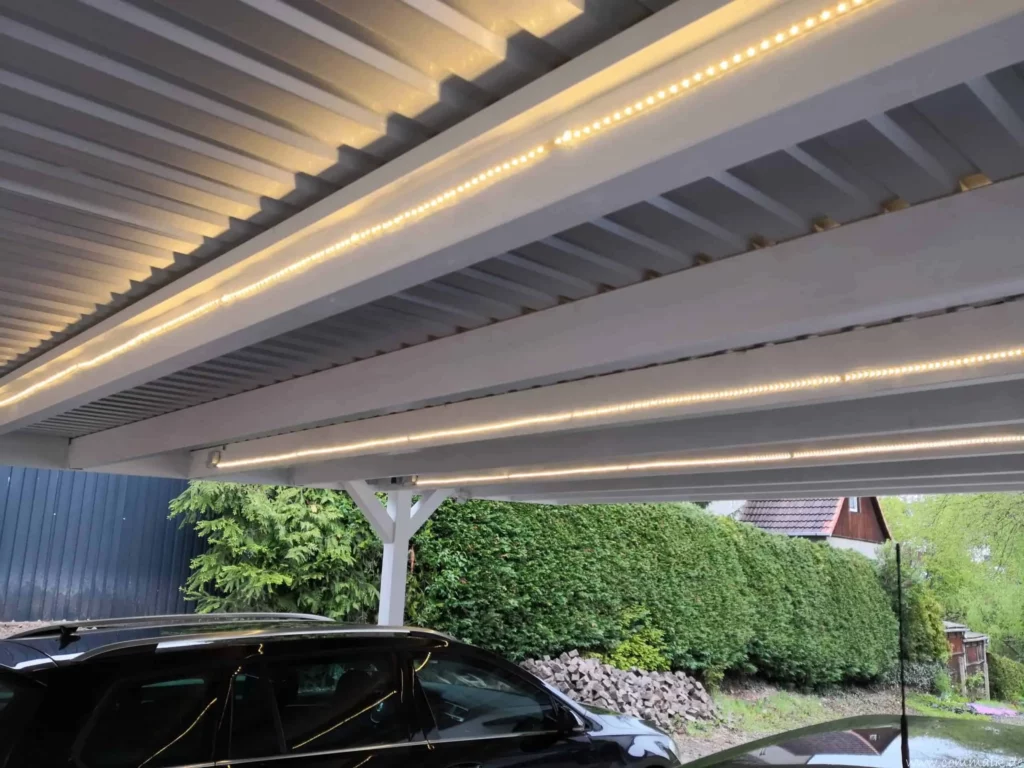
Securing residential parking areas demands more than simply investing in high-resolution camera units; it necessitates a sophisticated and often overlooked element: precisely engineered lighting. For critical details such as facial features and vehicle license plates to be clearly discernible, especially during nighttime hours, the choice and placement of lighting are paramount. Experts recommend using lights with a color temperature of 4000K (Neutral White) and a Color Rendering Index (CRI) above 85. Crucially, the light source must be positioned at least 1 meter behind or parallel to the camera lens. Improper placement, particularly installing lights directly facing the camera lens, inevitably leads to severe glare, blinding the camera’s infrared sensor, and rendering recorded footage utterly dark and unusable.
Numerous criminal investigations have stalled or failed due to surveillance footage marred by impenetrable white light flares or indistinct shadows. Homeowners frequently spend thousands on cutting-edge 4K resolution cameras, yet neglect the foundational importance of a well-executed lighting plan. The correct implementation of carport CCTV lighting dictates whether crucial reflective data, such as a perpetrator’s facial contours or vehicle details, can accurately return to the lens without distortion. This often-underestimated aspect of home security can be the deciding factor in identifying suspects, providing evidence for law enforcement, and ultimately deterring crime.
The Peril of Standard Illumination: Why Cameras Go Blind
The operational mechanics of a camera lens closely mirror those of the human eye’s pupil. The camera’s aperture automatically constricts when it detects overwhelming, bright light. This phenomenon, known as "iris closing," is a protective mechanism but detrimental to surveillance. When the camera’s aperture narrows, areas surrounding the intense light source become severely underexposed or plunged into darkness. Should an individual stand within these darkened zones, the camera will only capture a featureless black silhouette. Compounding this issue are uncontrolled reflections from highly reflective surfaces such as car paint, glass, and polished ceramic flooring, which can directly bounce light back into the lens, creating additional blind spots and glare.
Counterintuitively, simply installing high-wattage floodlights is not a viable solution. Excessive, harsh light often obliterates subtle shadow details that are vital for identification. License plate numbers, for instance, can merge indistinguishably with their background colors under overly intense illumination. A proper approach to carport CCTV lighting prioritizes measured and directed light output, focusing on targeted illumination rather than indiscriminate brightness. According to crime statistics, properties with visible, well-lit surveillance are significantly less likely to be targeted by opportunistic criminals. However, the quality of that illumination, rather than just its presence, is what truly enhances security.
The "Bright Zone" Concept in Security Lighting

Effective security lighting design operates on a principle known as the "Bright Zone" concept. This approach moves away from the notion of uniformly illuminating an entire garage or carport floor. Instead, it advocates for creating pockets of high-intensity illumination (typically around 30-50 lux) precisely at vulnerable points, while allowing surrounding areas to remain slightly dimmer. This strategic contrast in lighting is highly advantageous for modern smart camera algorithms. Features like facial recognition software rely on the subtle interplay of light and shadow—specifically, shadows around the nose and eyes—to accurately analyze and profile individuals. Without precise execution of carport CCTV lighting within these designated "Bright Zones," even the most advanced security apparatus can be rendered largely ineffective.
Zone 1: Facial Identification
Primary entry points, such as gates, pedestrian entrances, or connecting doors to the main house, fall under this critical zone. It is imperative to avoid overhead lights that cast harsh, vertical illumination. Such lighting can create an eerie, almost menacing appearance, with deep, dark shadows obscuring eyes and the lower part of the nose, making facial identification extremely difficult. Instead, wall-mounted lights positioned on either side of the entrance are recommended. The angle of illumination should be set at approximately 45 degrees, and these fixtures should be equipped with frosted glass diffusers to ensure the light spreads evenly across the facial area, providing clear, shadow-reduced visibility.
Zone 2: License Plate Capture
Cameras equipped with automatic license plate recognition (ALPR) technology are exceptionally sensitive to light conditions. The reflective material used on license plates is specifically designed to bounce light back towards its source. If the carport CCTV lighting is excessively bright and positioned directly in line with the camera, the system will only record a blinding white rectangle, rendering the plate numbers illegible. To counteract this, the light beam should be directed from an oblique angle, at least 30 degrees off-axis from the camera’s position. Additionally, selecting lights with a narrow beam spread, typically between 24 and 36 degrees, helps to focus the illumination precisely on the license plate area without causing excessive glare.
Anti-Glare Lighting Specifications for Optimal Clarity
Selecting outdoor lighting fixtures for security purposes differs significantly from purchasing standard light bulbs for general use. Opt for "deep recessed" luminaires, where the light source is set back within the fixture’s housing. This design effectively conceals the LED point source, preventing direct light from striking the camera lens frontally and minimizing glare. Further enhancement can be achieved by adding honeycomb louvers in front of the bulb. These accessories act as baffles, cutting off stray light spill that falls outside the intended focal path, ensuring light is directed only where needed.

The Crucial CRI Value
The Color Rendering Index (CRI) is a quantitative measure of a light source’s ability to reveal the true colors of objects compared to natural daylight. The scale ranges from 0 to 100, with 100 being perfect. For color CCTV cameras, which are essential for accurate forensic analysis, carport CCTV lighting with a CRI of at least 85 is mandatory. Color accuracy is pivotal for comprehensive incident reports. A perpetrator’s vehicle, originally dark blue, might appear black in footage if the carport is illuminated by cheap streetlights with a CRI below 70. This distinction can be critical in investigations, linking suspects to specific vehicles and physical descriptions.
Ideal Color Temperature
Avoid lights with an overly bluish-white spectrum (6000K and above). Blue light wavelengths are highly prone to scattering by dust and moisture vapor present in the nighttime air. This scattering effect creates a thick, hazy "white smoke" on camera, obscuring details. Conversely, excessively yellowish lights (Warm White) can blur object contrasts, making it harder for cameras to differentiate between details. The optimal color temperature for carport CCTV lighting is Neutral White, around 4000K. This range maintains visual clarity for camera capture without compromising the aesthetic appeal of the home’s facade. This balanced light spectrum provides sufficient illumination without introducing visual noise or color distortions.
Rules for Strategic Mounting Positions
Even the most technologically advanced lighting fixtures will fail if positioned incorrectly. The fundamental rule is straightforward: the camera’s location must be darker than the area it monitors. The camera functions much like an audience member in a darkened cinema, observing a brightly lit screen. Ideally, lights should be mounted approximately 1.5 meters above or directly behind the camera unit. This ensures the light beam is focused forward, illuminating the objects in front of it, rather than directly impinging upon the lens.
Managing Tilt Angles for Precision

Floodlights should not be aimed straight forward horizontally. The maximum elevation angle from the vertical wall line should be 45 degrees. Exceeding this limit causes light to spill beyond the carport area and bleed into the camera’s frame. This light bleed frequently manifests as a distracting white halo or circle in recorded video. For canopies with unconventional shapes, physical hoods or shrouds can be added to the light fixtures to precisely control the beam direction, ensuring it remains locked onto the parking floor.
Motion Sensor Light Integration
Motion-activated lights, which automatically illuminate upon detecting movement, can be an effective deterrent, startling intruders. However, their integration with CCTV requires careful consideration of the adjustment delay. Cameras typically need 1-2 seconds to adapt to drastic changes in light intensity. During this brief interval, the recording often shows blinding white glare. To mitigate this, a base layer of slightly dimmer, continuous carport CCTV lighting should be present. This allows the camera to maintain a consistent aperture setting, preventing the jarring overexposure that occurs when a motion sensor light abruptly floods the scene with intense brightness.
Harmonizing Facade and Security Lighting
The aesthetic lighting design of a front garden or facade must not conflict with security functions. For instance, ground lights illuminating stone wall textures should not inadvertently bounce light off reflective canopy materials, such as white Spandek roofing. Secondary light reflections from the canopy roof are often overlooked by homeowners but can severely disrupt the camera’s color balance and clarity. An integrated system is ideal: when a perimeter alarm is triggered, decorative lights could automatically dim or turn off, allowing the dedicated carport CCTV lighting to activate at full intensity, ensuring optimal surveillance conditions.
Camera-Friendly Terrace Lighting Options
Installing large, utilitarian street-style light poles would detract from the aesthetics of a minimalist home. Instead, leverage sleek, elongated LED fixtures discreetly hidden within recessed ceiling coves. This provides soft, diffused downward lighting that illuminates the area without creating direct glare for cameras due to its concealed position. Alternatively, short bollard lights, positioned at knee height along the car’s tire path, can effectively illuminate license plate areas from below, leaving the overhead camera lens unimpeded and free from direct light interference.

The Art of Shadow Eradication
Intruders frequently exploit dark corners of parking areas or squat behind pillars to evade detection. Even an 8-megapixel camera is rendered useless if the subject is enveloped in total darkness. The solution lies in employing a cross-lighting technique. Abandon the practice of installing a single, powerful light in the center of the ceiling. Instead, install two or three light units in opposing corners. Light from one side will effectively sweep away shadows cast by the illumination from the other side. This method of carport CCTV lighting ensures that an individual’s facial features and overall profile are clearly visible and detailed from any angle they might be recorded.
Addressing Reflections from Garage Flooring
The material of the parking area floor is often overlooked, yet its surface can reflect up to 30% of light upwards. If glossy, light-colored ceramic tiles are used, the garage floor effectively acts as a giant mirror. Overhead lights activate, their illumination bounces off the floor, and then reflects upwards into the camera. This upward glare causes the camera lens to dim the video, turning a visitor’s face into an unrecognizable black silhouette. To avoid this, opt for rough, light-absorbing materials such as Andesite stone or asphalt. If glossy ceramic tiles are already installed, reduce the intensity of the overhead carport CCTV lighting and augment it with additional light sources from the side walls.
Safeguarding Infrared Cameras
Modern security cameras are equipped with infrared (IR) LED sensors for blind night monitoring. A common issue arises when these invisible IR beams strike nearby brick walls or the edge of a canopy roof that is too close to the camera. This invisible light reflects intensely, causing portions of the recorded frame to appear brightly illuminated, as if by a flashlight, while areas further away remain completely dark. To prevent this, ensure a clear space of at least 1 meter around all sides of the camera body, free from immediate reflective surfaces.
Implementing Smart Lighting Systems

Transitioning to smart lighting systems, which allow for gradual adjustment of brightness levels, offers a significant advantage. Scenarios can be programmed via a mobile application. For instance, if a camera detects a human silhouette crossing a predefined security boundary at 2 AM, the carport CCTV lighting does not immediately activate at full brightness. Instead, the lights can be programmed to gradually ramp up from a dim 30% to a full 100% over a period of two seconds. This slow interval provides crucial time for the camera’s auto-iris lens to adapt to the changing light conditions, preventing the sudden explosion of blinding glare that often ruins initial footage.
Standard Mounting Height Guidelines
Security cameras should not be mounted excessively high, typically not exceeding 3.5 meters. Beyond this height, the camera will primarily capture only the tops of heads or hats, making identification difficult. The standard height for capturing a clear facial profile ranges from 2.4 to 2.8 meters, with the camera lens gently angled downwards. Crucially, the primary light unit must be installed at least 60 cm higher than the camera device itself. If the light source is positioned below the camera, its beam will strike airborne dust particles, causing the monitor screen to appear as if plagued by heavy "snow" or interference.
The Criticality of Regular Maintenance
A sudden decline in recorded footage quality is not always indicative of device malfunction. Spiderwebs are a primary culprit. When thin strands of web adhere to the edge of the lens, they reflect light from nearby carport CCTV lighting, causing the entire video frame to appear heavily fogged or hazy. Night insects are also attracted to light bulbs that emit warmth, drawing spiders to construct webs nearby to trap prey. To mitigate this, position the main light units at least 2 meters away from the camera device. Regular cleaning of the camera lens with specialized liquid cleaners, ideally once a month, is essential. Furthermore, periodically inspect the light beam direction to ensure it hasn’t shifted due to environmental factors like strong winds.
In conclusion, achieving robust home security through CCTV surveillance hinges on a meticulous and informed approach to lighting. By directing light with precision, eliminating dark shadow zones, and ensuring safe reflection angles, cameras can capture invaluable video data without interference, transforming a mere recording device into a powerful investigative tool. This holistic approach, integrating smart technology with thoughtful design, elevates residential security from a basic installation to a sophisticated, crime-deterring ecosystem.
This article was compiled by the expert architectural and landscape team at InteriorDesign.ID. Always consult with professional contractors before undertaking any structural changes to your residential property.








