Nila Kartika Wati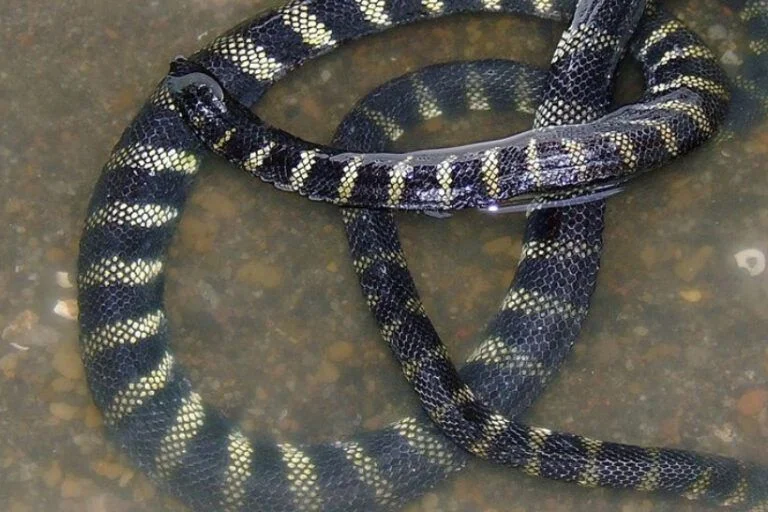
The natural world frequently conceals its most profound mysteries behind names that appear fundamentally contradictory, and nowhere is this more evident than in the heart of the Philippine archipelago. In a remarkable display of biological adaptation, a species of sea snake has defied its evolutionary heritage by abandoning the salt-laden depths of the ocean for the tranquil, freshwater confines of a volcanic crater lake. Known scientifically as Hydrophis semperi, or Garman’s sea snake, this reptile serves as a living testament to the power of environmental pressure. It stands as the only true sea snake in the world to have successfully completed an extreme evolutionary leap, transitioning entirely from a marine existence to a permanent life in the freshwater environment of Lake Taal in Batangas.
To appreciate the significance of Hydrophis semperi, one must distinguish it from other aquatic reptiles that bridge the gap between land and sea. While the Crocker’s sea snake (Laticauda crockeri) found in the Solomon Islands also resides in non-marine environments, the two species represent vastly different evolutionary paths. Crocker’s sea snake is a sea krait, an amphibious creature that retains the ability to move on land and typically inhabits brackish waters. In contrast, Garman’s sea snake is a member of the sub-family Hydrophiinae, often referred to as "true sea snakes." These are creatures that have lost the ventral scales needed for terrestrial locomotion and are physiologically designed for a life lived entirely submerged. The presence of H. semperi in Lake Taal represents a total physiological and behavioral pivot, making it a unique subject of study for evolutionary biologists worldwide.
The Geological Genesis: From Marine Bay to Volcanic Lake
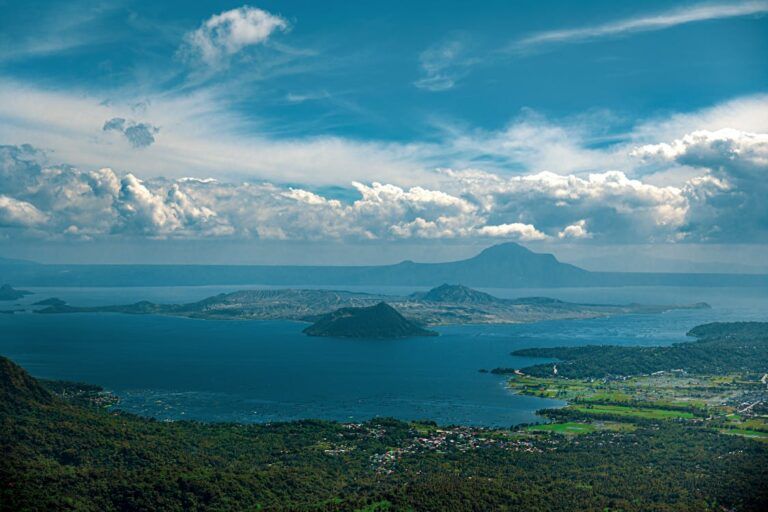
The existence of Hydrophis semperi is inextricably linked to the violent and transformative geological history of the Taal region. Located approximately 60 kilometers south of Manila, Lake Taal was not always the landlocked body of water it is today. Historically, the area was an arm of the Balayan Bay, a marine inlet that allowed free passage for various oceanic species. However, the landscape was irrevocably altered during the mid-18th century.
The year 1754 marked a turning point in the region’s ecology. A cataclysmic eruption of the Taal Volcano, which lasted for nearly seven months, ejected massive volumes of tephra and volcanic debris. This material eventually settled and blocked the channel that connected the bay to the South China Sea. This geological event effectively "walled off" the marine life present in the area at the time, including sharks, rays, and the ancestors of H. semperi. Over the ensuing centuries, consistent rainfall and the inflow of local rivers gradually diluted the trapped seawater. What was once a salty marine environment slowly transformed into a freshwater caldera lake.
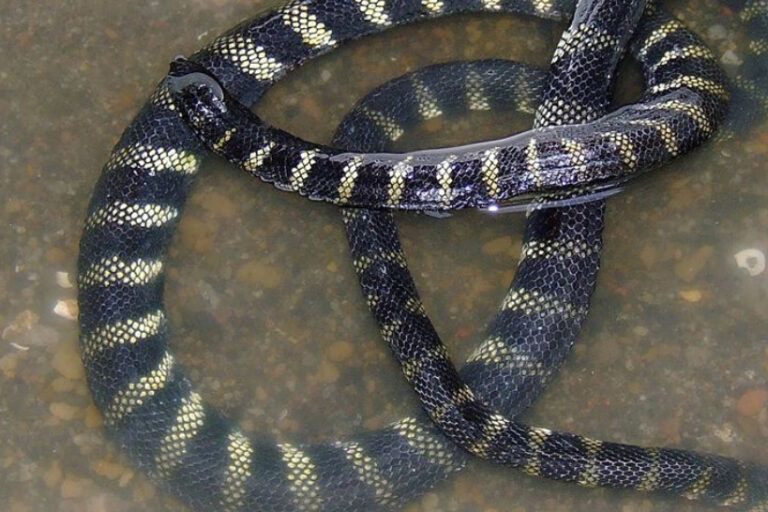
For most marine species, this change was a death sentence. However, Garman’s sea snake underwent a rapid process of adaptation. As the salinity levels dropped, the snake’s biological systems had to recalibrate. This transition required more than just a tolerance for different water chemistry; it necessitated a fundamental shift in how the animal managed its internal electrolyte balance.
Physiological Adaptations and Morphological Shifts
The most significant hurdle for any marine organism entering freshwater is the management of salt. Marine snakes possess specialized sublingual salt glands located under the tongue, which allow them to excrete excess salt concentrated from the seawater they ingest. In the case of Hydrophis semperi, research conducted on its functional morphology has revealed a fascinating evolutionary "downgrade."
Studies, including the landmark work by Rasmussen et al. (2011), indicate that while H. semperi still possesses these sublingual salt glands, they are significantly reduced in size and activity compared to their marine relatives. Because the lake water lacks the high sodium content of the ocean, the energetic cost of maintaining active salt-excreting glands became unnecessary. Evolution favored individuals with less active glands, allowing the species to conserve energy for other vital functions such as hunting and reproduction.
Genetically, H. semperi is closely related to the blue-banded sea snake (Hydrophis cyanocinctus), a common marine species found throughout the Indo-Pacific. The close genetic proximity suggests that the divergence occurred relatively recently in geological terms—likely within the last 270 years following the 1754 eruption. This rapid speciation highlights the "punctuated equilibrium" of evolution, where dramatic environmental shifts trigger accelerated biological changes.
Ecology and Survival in the Shadow of the Volcano
The life of Hydrophis semperi is dictated by the unique ecosystem of Lake Taal. Measuring roughly 234 square kilometers, the lake provides a complex habitat of rocky shores and deep volcanic troughs. The snake has become a specialized predator within this niche, primarily hunting small fish that are also endemic to the lake, such as the Taal goby (Glossogobius giuris) and various species of freshwater eels.
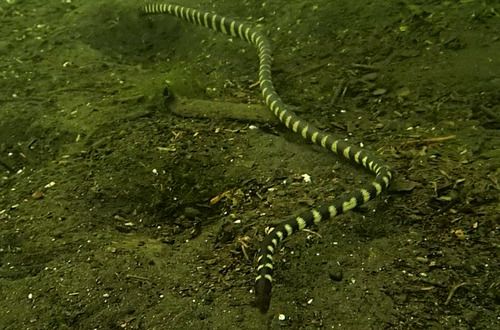
Observations of the snake’s behavior indicate that it is fully aquatic. It breathes air through its nostrils, which are equipped with valves to prevent water entry, and its tail is flattened like an oar to facilitate powerful swimming. Unlike sea kraits, which must come ashore to lay eggs, H. semperi is ovoviviparous, meaning it gives birth to live young in the water. This total independence from land is a hallmark of the Hydrophiinae subfamily and is what makes its survival in a freshwater lake so extraordinary.
However, being an endemic species confined to a single, localized habitat carries immense risks. The International Union for Conservation of Nature (IUCN) has classified Hydrophis semperi as "Vulnerable." This status is largely due to the snake’s extreme geographic restriction. Because it exists nowhere else on Earth, any localized disaster could lead to the immediate extinction of the species.
Environmental Pressures and Human Impact
The threats to Garman’s sea snake are twofold: natural and anthropogenic. Lake Taal is one of the most active volcanic sites in the world. The 2020 eruption of Taal Volcano serves as a stark reminder of the volatility of the snake’s home. Massive ashfall can alter water chemistry and turbidity, while underwater seismic activity can disrupt the delicate balance of the lake’s floor, potentially destroying the breeding and hunting grounds of the snake.
Beyond the natural hazards, human activity has placed a significant strain on the Lake Taal ecosystem. For decades, the lake has been a primary hub for aquaculture, specifically the intensive farming of tilapia. The proliferation of fish cages has led to several environmental issues:
- Eutrophication: Excess nutrients from fish feed and waste lead to algal blooms, which deplete oxygen levels in the water. This can result in massive fish kills (locally known as "kamahong"), which directly impact the snake’s food supply.
- Pollution: Agricultural runoff and untreated domestic waste from the surrounding towns in Batangas Province introduce chemicals and pathogens into the water.
- Habitat Degradation: The physical presence of thousands of fish cages limits the natural movement of the snakes and can lead to accidental entanglement.
Conservationists and local government units have expressed concern over the declining water quality of Lake Taal. While the Department of Environment and Natural Resources (DENR) has implemented various "Save Taal Lake" initiatives, including the dismantling of illegal fish cages, the balance between economic activity and ecological preservation remains precarious.
Implications for Evolutionary Biology and Conservation
The story of Hydrophis semperi is more than a biological curiosity; it is a vital case study in resilience and adaptation. It provides scientists with a rare "natural experiment" to observe how vertebrates respond to rapid environmental shifts. The snake’s ability to survive the transition from a marine to a freshwater environment suggests a level of physiological plasticity that could be crucial for understanding how other species might adapt to climate-change-induced habitat alterations.
From a conservation perspective, the snake acts as an "indicator species." Its health and population density reflect the overall ecological integrity of Lake Taal. If the population of H. semperi begins to dwindle, it serves as an early warning sign that the lake’s ecosystem is reaching a breaking point.
Protecting this unique reptile requires a holistic approach to lake management. This includes stricter regulations on aquaculture, improved waste management systems for the surrounding municipalities, and continued monitoring of the volcano’s activity. To lose Hydrophis semperi would be to lose a unique chapter of the Earth’s evolutionary history—a chapter written in the cooling waters of a Philippine volcano.
Conclusion: A Legacy of Resilience
The freshwater sea snake of Lake Taal stands as a symbol of life’s tenacity. Trapped by a wall of volcanic fire and forced to adapt to a world that was fundamentally alien to its ancestors, Hydrophis semperi did more than just survive; it thrived. It redefined what it means to be a "sea snake," proving that the boundaries between ecosystems are often more fluid than they appear. As we move forward into an era of unprecedented environmental change, the lessons learned from this small, banded inhabitant of the Taal caldera may prove invaluable in our efforts to understand and preserve the diversity of life on our planet. The continued existence of this species is a reminder that even in the most restricted habitats, nature finds a way to innovate, evolve, and endure.