Chalifah Fatihah
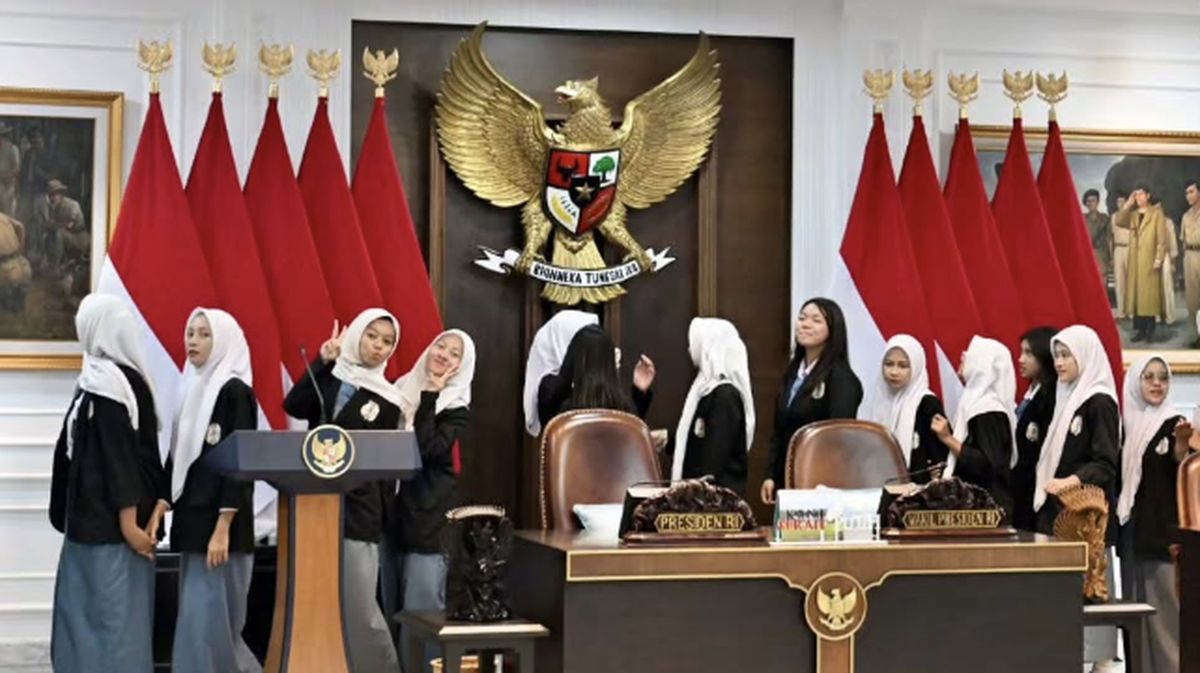
Jakarta, Indonesia – April 8, 2026 – In a significant move aimed at fostering national pride and civic engagement among the younger generation, President Prabowo Subianto has officially launched the "Istana untuk Anak Sekolah" (Palace for Schoolchildren) program. This groundbreaking initiative will now allow students from across Indonesia to visit and experience firsthand the historic and functional spaces of the Presidential Palace, an institution previously accessible to the public primarily during limited open house events.
The program, which commenced this morning, represents a direct presidential instruction to demystify the seat of Indonesian governance and bring it closer to the students who will shape the nation’s future. Secretary of the Cabinet, Teddy Indra Wijaya, announced the program’s launch, emphasizing its core objective: to cultivate a deeper understanding of government and inspire a sense of ownership over the nation’s destiny among the youth.
"This morning, under the President’s directive, we are launching the ‘Palace for Schoolchildren’ program, opening our doors to the nation’s future leaders," stated Teddy Indra Wijaya, quoting from the official release by the State Secretariat. "This initiative is designed to introduce and familiarize our young citizens with the world of governance, igniting their passion for national service and fostering a profound sense of belonging."
A New Era of Civic Education
The "Palace for Schoolchildren" program moves beyond traditional civic education by offering an immersive, experiential learning opportunity. Students will have the chance to tour the various halls and chambers where crucial state decisions are deliberated and enacted. This includes witnessing the environments where national policies are formulated, and important state dialogues take place. The program aims to bridge the gap between abstract governmental concepts and the tangible reality of how the nation is run, encouraging students to envision themselves as active participants in the country’s progress.
The inaugural session of the program saw students from SMKN 19 Jakarta become the first cohort to experience this unique educational outreach. Their visit began with an engaging discussion session at the Cabinet Secretariat, centered on the theme, "The President and the Youth: Why Policy Matters for Your Future." This interactive dialogue was designed to equip the students with an understanding of the impact of governmental policies on their lives and futures, before they embarked on their palace tour.
"Today, we engaged in a productive question-and-answer session, followed by a guided tour of the Palace," explained Teddy Indra Wijaya. "We introduced them to the nation’s history and the fundamental concepts of governance. By showing them the very places where significant national decisions are made, we aim to inspire them to set the highest possible aspirations for our country."
Integrating Palace Visits with Broader Educational Reforms
The launch of the "Palace for Schoolchildren" program is not an isolated initiative. It is strategically aligned with President Prabowo Subianto’s broader agenda for human resource development in Indonesia. Secretary of the Cabinet Teddy Indra Wijaya highlighted the program’s synergy with other key government initiatives, including the provision of nutritious school meals, school renovation and sanitation projects, digital learning enhancements, increased teacher incentives, and the continuation of the Kartu Indonesia Pintar (Smart Indonesia Card) program.
This holistic approach underscores the administration’s commitment to nurturing a well-rounded, informed, and engaged citizenry. By linking direct engagement with national institutions to tangible improvements in educational infrastructure and support systems, the government seeks to create a robust ecosystem for youth development.
Expanding the Reach: A Nationwide Endeavor
The "Palace for Schoolchildren" program is envisioned to extend its reach beyond the capital city. The Ministry of State Secretariat has indicated plans to replicate this initiative across all Presidential Palaces throughout Indonesia. This expansion will ensure that students from diverse geographical and socio-economic backgrounds have equitable access to this enriching experience. Indonesia boasts eight Presidential Palaces, each steeped in history and serving as a symbol of national heritage. The intention is to open all of them to educational tours, allowing students from Sabang to Merauke to connect with their nation’s heritage and governance.
"This activity will not be confined to the Merdeka Palace and the State Palace," Teddy Indra Wijaya elaborated. "We intend to open all eight Presidential Palaces across Indonesia to schoolchildren. This nationwide rollout will democratize access to this crucial learning experience."
Historical Context and Precedents
The concept of opening official residences to the public is not entirely new in Indonesia. Historically, the Presidential Palace has occasionally opened its doors for special occasions and public holidays, allowing citizens a glimpse into the grandeur and historical significance of these national landmarks. However, the "Palace for Schoolchildren" program marks a deliberate shift from sporadic public access to a structured, educational program specifically designed for young learners.
The initiative draws inspiration from similar programs in other countries where national heritage sites and government buildings are utilized as educational resources. By institutionalizing these visits, President Prabowo’s administration aims to create a lasting impact on civic consciousness and historical understanding among Indonesian youth. The program also reflects a broader trend in modern governance to enhance transparency and public engagement, fostering a more connected and participatory democracy.
Analysis of Implications: Building a Future-Ready Nation
The "Palace for Schoolchildren" program carries significant implications for the future of Indonesia.
- Enhanced Civic Literacy: By providing direct exposure to the mechanisms of government, the program is expected to significantly boost civic literacy among young Indonesians. This could translate into a more informed electorate in the future, capable of making well-reasoned political decisions.
- National Unity and Identity: Visiting these iconic national landmarks can foster a stronger sense of national unity and shared identity. Understanding the historical context and the continuity of governance can help bridge regional differences and cultivate a collective sense of belonging to the Indonesian nation.
- Inspiring Future Leaders: Direct interaction with the symbols and spaces of power can be a potent catalyst for inspiring future leaders. Seeing where important decisions are made might ignite a passion for public service and encourage students to pursue careers in government, policy, or diplomacy.
- Promoting Transparency and Accountability: By opening the Palace doors, the administration signals a commitment to transparency and making governance more accessible. This can build trust between the government and its citizens, laying the groundwork for greater accountability.
- Long-Term Investment in Human Capital: This program can be viewed as a strategic long-term investment in human capital. Educated and engaged youth are the bedrock of a prosperous and stable nation.
Supporting Data and Context
Indonesia, as the world’s fourth most populous country, places immense importance on nurturing its large youth demographic. As of 2023, over 40% of Indonesia’s population is under the age of 25. This demographic dividend presents a significant opportunity, but also a responsibility for the government to equip this generation with the knowledge and skills necessary to navigate a complex world and contribute to national development.
The concept of "character building" and instilling national values has always been a cornerstone of Indonesian education policy. Initiatives like this presidential program aim to augment traditional classroom learning with practical, real-world experiences. Furthermore, the emphasis on policy and governance directly addresses the need for a generation that understands the intricacies of national development and is equipped to contribute to policy discourse.
The inclusion of discussions on policy relevance for the youth is particularly pertinent in an era where global challenges, such as climate change, digital transformation, and economic volatility, demand informed and proactive citizens. By understanding how policies are shaped, students can become more effective advocates for issues they care about and more discerning consumers of political information.
Official Responses and Stakeholder Reactions (Inferred)
While direct quotes from a wide range of stakeholders are not immediately available, the underlying sentiment from educational institutions and parents is expected to be overwhelmingly positive. Educators will likely view the program as an invaluable pedagogical tool, offering a unique dimension to social studies and civics curricula. Parents, too, will likely appreciate the opportunity for their children to gain a deeper understanding of their nation’s heritage and governance.
The program’s alignment with President Prabowo’s broader human resource development strategy suggests a cohesive vision for national progress. This initiative, when coupled with tangible improvements in education, underscores a commitment to a future where every Indonesian child has the opportunity to thrive and contribute meaningfully to society.
The Ministry of Education and Culture is expected to play a crucial role in facilitating the program’s integration with school calendars and curriculum planning. Collaboration between the State Secretariat, the Ministry of Education, and local educational authorities will be key to the program’s successful and widespread implementation.
Conclusion
The launch of the "Istana untuk Anak Sekolah" program by President Prabowo Subianto marks a pivotal moment in Indonesia’s approach to civic education and youth engagement. By opening the doors of the Presidential Palace, the administration is not merely offering a tour; it is extending an invitation to the nation’s youth to connect with their history, understand their government, and envision their role in shaping Indonesia’s future. This initiative, integrated within a broader framework of human resource development, signals a forward-looking commitment to building a more informed, engaged, and inspired generation of Indonesian citizens. The success of this program will undoubtedly be measured not just in the number of students who visit, but in the enduring impact it has on their understanding of nationhood and their commitment to public service.