Nasution Nanang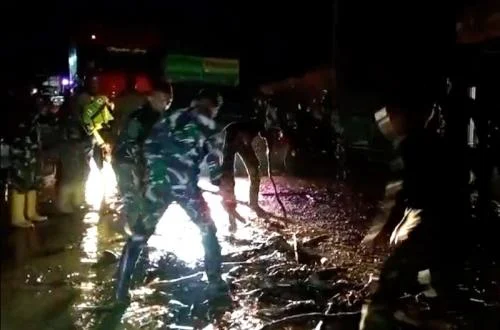
BANDA ACEH, REPUBLIKA.CO.ID – In a swift response to the persistent and destructive flooding that once again plagued Pidie Jaya Regency, Aceh, the Korem 011/Lilawangsa military command has mobilized its personnel from Kodim 0102/Pidie and Yon TP 857/GS. The deployment aims to provide critical assistance in the evacuation of residents across 13 villages, which found themselves submerged following torrential rainfall on Wednesday night, April 8th. The latest deluge, characterized by its intensity and rapid onset, has brought to the fore the enduring vulnerability of the region to hydrological disasters, prompting an urgent, multi-faceted response from military and civilian authorities alike.
The commander of Korem 011/Lilawangsa, Brigadier General TNI Ali Imran, confirmed the immediate deployment, emphasizing the comprehensive nature of the military’s engagement. Personnel are actively stationed in affected areas, tasked not only with direct evacuation efforts but also with managing traffic flow, clearing debris deposited by the floodwaters, and diligently monitoring fluctuating water levels. This proactive approach is deemed essential for anticipating and mitigating the potential impact of further extreme weather events, which remain a significant concern given the prevailing meteorological conditions. The recurring nature of these floods underscores a complex interplay of environmental factors and infrastructural challenges that demand ongoing vigilance and strategic intervention.
The recent inundation saw residential areas submerged under water depths ranging from 40 to 70 centimeters. The primary cause has been identified as exceptionally high rainfall intensity, which led to the rapid overflow of local rivers, particularly the Krueng Meureudu. A critical consequence of this flooding is the disruption to the vital Medan-Banda Aceh national highway, a key arterial route for commerce and transportation in Sumatra. While heavy trucks and larger vehicles have managed to navigate the submerged sections with caution, motorcycles and smaller passenger vehicles have been rendered unable to pass, causing significant logistical bottlenecks and impacting regional connectivity. This recurring closure of a major thoroughfare highlights the economic and social ramifications that extend beyond the immediate communities directly affected by the floodwaters.
Chronology of the Event and Immediate Response
The latest flooding episode in Pidie Jaya unfolded on Wednesday night, April 8th, following several hours of continuous, heavy downpours across the regency and its upstream catchment areas. The sheer volume of rainwater quickly overwhelmed the capacity of local river systems, most notably the Krueng Meureudu, which has a history of overflowing its banks during periods of intense precipitation. As night fell, water levels began to rise rapidly, catching many residents off guard and forcing them to scramble for safety.
By early morning, reports of widespread inundation began to filter in from various sub-districts, prompting the activation of the local disaster response mechanisms. The Korem 011/Lilawangsa, through its subordinate units Kodim 0102/Pidie and Yon TP 857/GS, initiated immediate deployment protocols. Troops were dispatched to the most severely affected villages, equipped with rescue boats and other essential equipment to assist in the evacuation of vulnerable populations, including the elderly, women, and children, to higher ground or designated temporary shelters.
Concurrent with evacuation efforts, military personnel began the arduous task of traffic management along the submerged sections of the Medan-Banda Aceh national road. This involved diverting smaller vehicles, guiding larger ones through safer passages, and ensuring that emergency services could still access critical areas. Additionally, initial assessments and debris clearing operations commenced, focusing on removing logs, mud, and other materials that obstructed roads and waterways, which are crucial for facilitating the receding of floodwaters and preventing further blockages. The round-the-clock monitoring of river levels by TNI personnel provides real-time data, enabling a more agile and informed response to the dynamic flood situation, particularly in anticipation of further rainfall.
Geographic Context and Historical Vulnerability
Pidie Jaya Regency, nestled along the northeastern coast of Aceh Province, is characterized by its low-lying coastal plains and an intricate network of rivers that drain into the Malacca Strait. This geographical configuration, while fertile and conducive to agriculture, also renders the region inherently susceptible to flooding. The regency’s primary river system, Krueng Meureudu, originates in the central Aceh highlands and flows through densely populated areas before reaching the sea. The confluence of heavy rainfall in the upstream mountainous regions and the relatively flat topography downstream creates a funnel effect, where large volumes of water rapidly accumulate, exceeding the rivers’ carrying capacity.
Historically, Pidie Jaya has been no stranger to hydrological disasters. The term "banjir berulang" (recurring floods) used in the initial reports is indicative of a deeply entrenched problem. Over the past decades, the region has experienced numerous significant flood events, often triggered by monsoonal rains or localized extreme weather phenomena. These recurring incidents have not only inflicted substantial material losses but also caused considerable social disruption, displacement, and a persistent sense of insecurity among the populace. The 2016 earthquake and subsequent recovery efforts, for instance, further complicated the region’s resilience infrastructure, potentially exacerbating the impact of subsequent natural disasters.
A critical factor contributing to Pidie Jaya’s vulnerability, as highlighted by local authorities, is the pervasive issue of river sedimentation or silting. Following previous major flood events, particularly flash floods, significant quantities of mud, sand, and debris are carried downstream, accumulating in riverbeds and drastically reducing their depth and capacity. Letkol Inf Abdul Hadi, Dandim 0102/Pidie, explicitly linked the current flooding to the "pendangkalan sungai pascabanjir bandang sebelumnya," or the shallowing of rivers subsequent to previous flash floods. This reduced capacity means that even moderate rainfall can cause rivers like Krueng Meureudu to overflow their banks, turning agricultural lands and residential areas into temporary lakes.
Beyond sedimentation, broader environmental degradation, such as deforestation in upstream catchment areas, can exacerbate the problem. Reduced forest cover leads to increased surface runoff, less soil absorption, and a faster accumulation of water in river systems, intensifying flood peaks. Inadequate urban drainage systems and the encroachment of settlements into natural floodplains also contribute to the severity and frequency of inundation. The cumulative effect of these factors transforms what might otherwise be manageable seasonal rains into devastating flood events, necessitating repeated emergency responses from agencies like the TNI.
Villages Affected and Damage Assessment
The recent floods have spread across two primary sub-districts within Pidie Jaya, Meurah Dua and Meureudu, impacting a total of 13 villages with varying degrees of severity. In Kecamatan Meurah Dua, seven villages reported significant inundation:
- Pante Beurne: Water levels reached approximately 70 cm.
- Dayah Husen: Experienced water depths of about 50 cm.
- Meunasah Mancang: Also recorded water levels around 50 cm.
- Meunasah Raya: One of the hardest-hit, with water reaching 70 cm.
- Meunasah Bie: Reported water depths of 50 cm.
- Beuringin: Saw water levels up to 60 cm.
- Geunteng: Also experienced flooding around 60 cm.
In Kecamatan Meureudu, six villages were similarly affected:
- Meunasah Lhok: Water levels peaked at 70 cm.
- Beurawang: Recorded inundation of approximately 60 cm.
- Mayang Cut: Experienced water depths of 50 cm.
- Meunasah Krueng: Another severely affected village, with water levels reaching 70 cm.
- Manyang Lancok: Reported water depths of 50 cm.
- Masjid Tuha: Experienced flooding around 40 cm.
The varying water depths, while not reaching catastrophic levels, were sufficient to disrupt daily life, render homes uninhabitable, and make roads impassable for smaller vehicles. The impact on infrastructure, particularly the national road, has been immediate and significant. The prolonged disruption to traffic flow on the Medan-Banda Aceh highway not only affects local commuters but also has broader implications for inter-provincial trade and logistics, leading to delays and increased operational costs for businesses relying on this crucial route.
Official Responses and Mitigation Strategies
The coordinated response from military and civilian agencies has been central to managing the immediate crisis. Brigadier General TNI Ali Imran of Korem 011/Lilawangsa underscored the military’s commitment to disaster relief, stating that TNI personnel would remain vigilant, not only assisting in immediate relief efforts but also continuously monitoring meteorological conditions and water levels to preempt further threats. This proactive stance is critical in a region prone to rapid changes in weather patterns.
Lieutenant Colonel Inf Abdul Hadi, Commander of Kodim 0102/Pidie, issued a stern warning and an urgent appeal to the affected communities. He advised residents to maintain a high degree of vigilance and to promptly seek safer, higher ground should water levels exhibit any signs of increasing. He also confirmed that, fortunately, despite the widespread flooding and significant disruption, there had been no reported casualties, a testament to the early warning systems and the rapid response from local authorities and the community.
Letkol Inf Abdul Hadi further elaborated on the inter-agency cooperation, confirming that a joint team comprising TNI-Polri (Indonesian National Armed Forces-National Police) and SAR (Search and Rescue) personnel had been strategically deployed to critical points and areas identified as particularly vulnerable to the floods. This collaborative framework ensures a more robust and comprehensive response, leveraging the distinct capabilities of each organization.
Crucially, Letkol Hadi also provided a candid assessment of the underlying causes and proposed long-term solutions. He directly attributed the recurring floods to the "pendangkalan sungai" or silting of the Krueng Meureudu river, a consequence of previous flash floods that deposited vast amounts of sediment, significantly reducing its carrying capacity. To address this fundamental issue, he emphasized the critical need for "normalisasi sungai" (river normalization), which would entail extensive dredging, widening, and potentially reinforcing river banks to restore and enhance the river’s ability to accommodate high volumes of water. Beyond river normalization, he also stressed the importance of routine maintenance, including the systematic cleaning of drainage channels and the removal of residual mud and debris from residential areas, which often accumulate and impede natural water flow. These recommendations highlight a shift from purely reactive emergency responses to a more proactive and preventative approach to flood management.
Broader Impact and Long-Term Implications
The recurring floods in Pidie Jaya carry significant broader implications that extend beyond immediate relief efforts. Economically, the frequent inundation disrupts agricultural cycles, damaging crops and livestock, which are primary sources of livelihood for many residents in this agrarian region. Small businesses, particularly those along the affected national highway, suffer from reduced trade and potential physical damage to their establishments. The repeated need for clean-up, repair, and potential reconstruction imposes a substantial financial burden on individual households, local government, and the national budget. The disruption to the Medan-Banda Aceh highway, a vital economic artery, leads to increased transportation costs, delays in goods delivery, and reduced connectivity, impacting regional commerce and supply chains.
Socially, the constant threat and reality of flooding create immense psychological stress and insecurity for the affected communities. Repeated displacement from homes, even if temporary, disrupts education, access to healthcare, and community cohesion. Health risks, such as waterborne diseases and skin infections, often escalate in the aftermath of floods due to contaminated water sources and inadequate sanitation. The long-term recovery process can be slow and arduous, leaving many vulnerable families struggling to regain stability.
Environmentally, the floods contribute to further erosion and sedimentation, perpetuating a cycle of river shallowing and increased flood risk. The alteration of natural landscapes and ecosystems can have lasting impacts on biodiversity and environmental health.
Addressing these pervasive challenges requires a comprehensive, multi-sectoral strategy. Beyond the immediate emergency response, long-term flood mitigation efforts are paramount. These include:
- Large-scale River Normalization Projects: Implementing significant dredging, widening, and bank reinforcement initiatives for rivers like Krueng Meureudu, requiring substantial investment and technical expertise.
- Reforestation and Watershed Management: Reforesting upstream areas to improve soil absorption, reduce surface runoff, and stabilize slopes, thereby regulating water flow more effectively.
- Improved Drainage Infrastructure: Investing in modern and robust urban and rural drainage systems that can effectively channel excess water away from populated areas.
- Early Warning Systems: Enhancing meteorological forecasting capabilities and establishing effective community-based early warning systems to provide residents with ample time for evacuation and preparedness.
- Community-Based Disaster Preparedness: Empowering local communities with knowledge and resources for self-help during flood events, including evacuation drills and the establishment of safe zones.
- Resilient Infrastructure Development: Designing and constructing buildings and infrastructure that are more resilient to flood impacts, incorporating elevated foundations and flood-resistant materials.
The involvement of the TNI in civilian disaster relief highlights the critical role of civil-military cooperation in national resilience. The military’s logistical capabilities, personnel, and discipline are invaluable in emergency situations, providing crucial support to civilian agencies. However, the ultimate responsibility for developing and implementing sustainable flood management policies rests with local and national governments, requiring sustained political will, adequate funding, and effective inter-agency coordination.
As floodwaters begin to recede in Pidie Jaya, the immediate crisis may ease, but the underlying vulnerabilities remain. The commitment of military and civilian authorities to ongoing vigilance, coupled with the urgent need for long-term strategic investments in flood mitigation, will be essential in breaking the cycle of recurring disasters and building a more resilient future for the communities of Pidie Jaya. The experience from this latest event reinforces the imperative for a holistic approach that integrates environmental protection, infrastructural development, and community empowerment to safeguard lives and livelihoods against the relentless force of nature.