Nila Kartika Wati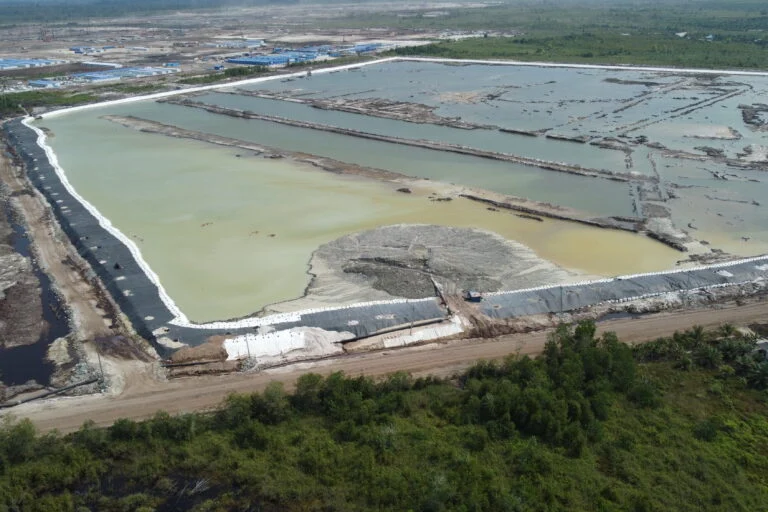
As twilight fades over the dense rainforests of North Kalimantan, the flickering glow of fireflies provides the only illumination for the residents of Harapan Maju Village. Gathered on a wooden terrace in the Mentarang District of Malinau Regency, a group of villagers speaks in hushed tones, their faces obscured by a darkness that has become a permanent fixture of their nightly lives. Despite being the involuntary hosts of one of Indonesia’s most ambitious renewable energy projects—the Mentarang Induk Hydropower Plant (PLTA)—the community of Punan Tebunyau indigenous people now lives in a state of energy poverty and economic displacement that stands in stark contrast to the government’s narrative of a "Green Industrial Revolution."
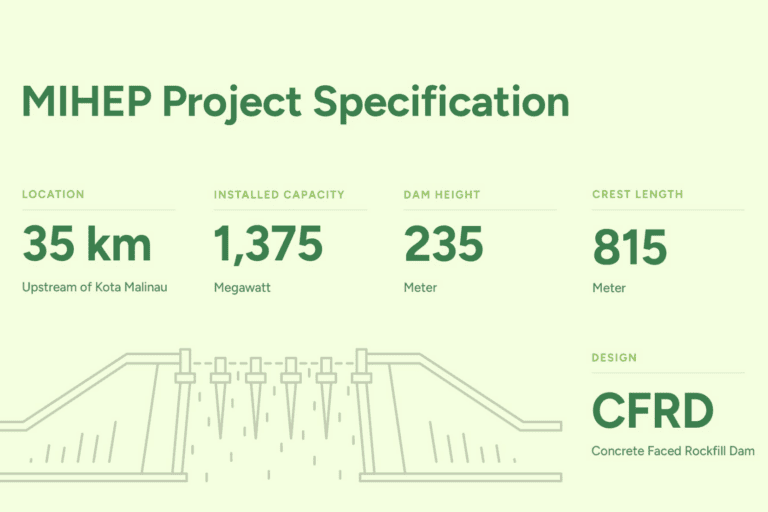
For Minggus, a resident of the Harapan Maju relocation site known as Paking, the irony of his situation is a daily burden. "The electricity has been out for about a week," he explains, sitting cross-legged in the dark. "Unless the company comes to replace the broken parts, it will stay like this." The company he refers to is PT Kayan Hydropower Nusantara (KHN), the developer of the massive dam project that forced his community to abandon their ancestral lands in Seboyo three years ago. While the dam is designed to generate 1,375 megawatts of power for industrial hubs, the 28 families relocated to Paking must rely on a communal generator that only runs from 6:00 PM to 6:00 AM—when it works at all.
A Legacy of Independence Lost: From Seboyo to Paking
The story of the Punan Tebunyau in Harapan Maju is one of forced transition from self-sufficiency to corporate dependence. Before the arrival of the PLTA Mentarang Induk project, the community resided in Seboyo, a settlement located roughly 15 minutes upstream by motorized boat. In Seboyo, life was dictated by the rhythms of the Mentarang River and the surrounding forest.
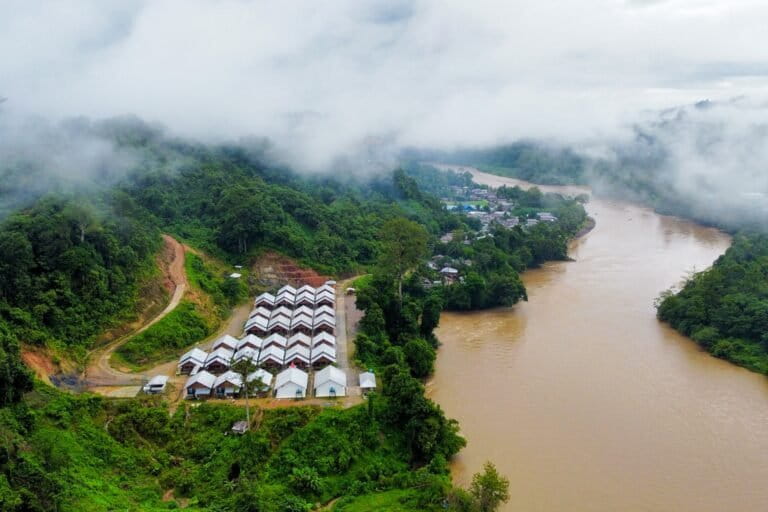
Jawi, the head of neighborhood unit RT05, recalls a time when the community controlled its own energy needs. "In Seboyo, we used private solar panels and batteries," Jawi says. "It provided light whenever we needed it. If a battery failed, we just bought a replacement or changed the battery water. We were in control." Today, that independence has vanished. The solar installations were left behind or destroyed when the village was razed to make way for the dam’s construction. In their place, the residents were moved to Paking, a resettlement area consisting of uniform wooden houses arranged in tight, urban-style rows.
The physical environment of the relocation site has also taken a toll on the villagers’ well-being. The new houses, measuring approximately 7 by 10 meters, are built with dense wooden walls that lack the ventilation of their traditional dwellings. "It’s so hot inside at night," Minggus notes. "In the forest, our houses had gaps between the floorboards and wall planks to let the breeze in. Here, everything is closed off."
The Chronology of a Mega-Project
The transformation of the Mentarang River landscape accelerated significantly on March 1, 2023, when President Joko Widodo arrived by helicopter for the project’s groundbreaking ceremony. Accompanied by high-ranking officials and corporate executives, the President laid the first stone of the Mentarang Induk Hydropower Plant, hailing it as a cornerstone of Indonesia’s transition toward a green economy.
The project is a massive undertaking managed by PT Kayan Hydropower Nusantara (KHN), a joint venture between Indonesia’s Adaro Resources, Sarawak Energy Berhad from Malaysia, and PT Kayan Patria Pratama (KPP). According to official specifications, the dam will be a concrete-faced rockfill dam (CFRD) standing 235 meters high—nearly twice the height of Jakarta’s National Monument (Monas). Once completed, it will create a reservoir covering approximately 22,604 hectares, an area nearly double the size of the city of Bogor.
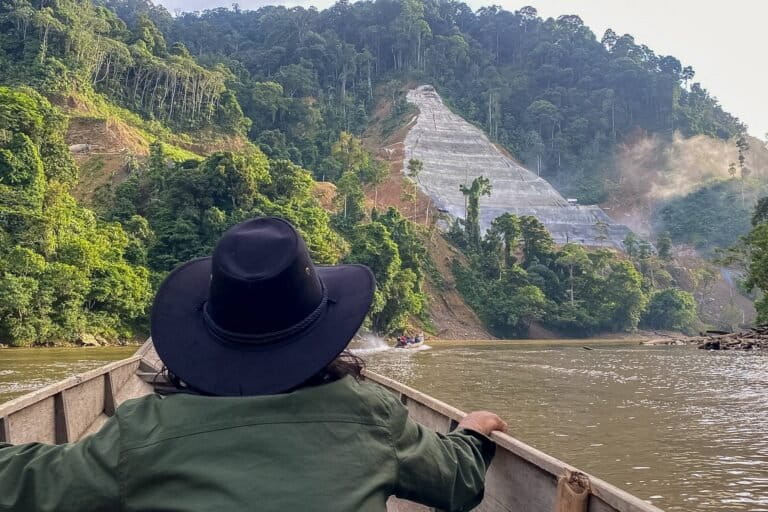
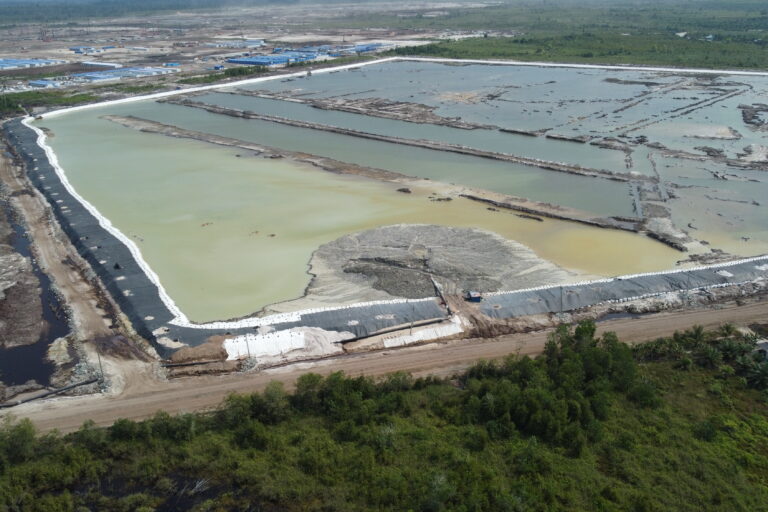
While the government views the dam as a vital power source for the Kawasan Industri Hijau Indonesia (KIHI) or the Indonesia Green Industrial Park in Bulungan, the local reality is far less polished. The village of Seboyo, once a lush forest settlement, has been reduced to a barren landscape of gravel piles, excavators, and heavy trucks. For the 27 families who watched the President’s helicopter depart that day, the "green" future promised by the state felt like a distant, exclusionary dream.
The Economic Toll of Displacement
The relocation from Seboyo to Paking has fundamentally altered the economic structure of the Punan Tebunyau community. In their ancestral lands, the forest provided almost everything: sago for food, rattan for crafts, and grounds for hunting. The river was a reliable source of fish. Today, these resources are either submerged, blocked by construction zones, or too far to reach without significant fuel costs.
"In Seboyo, I could just walk to get cassava or vegetables because they were right next to the house," Minggus says. "Here in Paking, we can’t plant what we want because the company directs everything. Now, everything requires money." The cost of living has skyrocketed as the villagers have become dependent on a market economy they were never prepared for.
To mitigate the impact, KHN initially provided a monthly compensation package consisting of Rp600,000 (approximately $38 USD) in cash and a ration of basic supplies, including 20 kilograms of rice, sugar, and coffee. However, as the project progressed, these benefits were slashed. By June 2024, the cash assistance was reduced to Rp300,000, and the rice ration was halved to 10 kilograms. The coffee and sugar disappeared entirely. "For a family of four, that money lasts maybe ten days," Minggus adds. "Then what?"
Theresia, a researcher from the Nugal Institute, has documented the worsening conditions. Her study, titled Menenggelamkan Jantung Kalimantan (Drowning the Heart of Borneo), highlights how the project has effectively criminalized or blocked traditional livelihoods. "The villagers can no longer fish freely because of the dam construction. The rice fields provided by the company as compensation have suffered crop failures," she explains. Some residents have resorted to scavenging for scrap metal or falling into debt traps just to afford basic meals.
Environmental and Social Implications: The Greenwashing Debate
The Mentarang Induk project sits at the center of a heated debate regarding "greenwashing" in Indonesia’s energy sector. While the government markets the PLTA as "clean" energy, analysts argue that the social and environmental costs tell a different story.
Wishnu Try Utomo, Director of Mining Advocacy at the Center of Economic and Law Studies (CELIOS), argues that the relocation is not merely a change of address but a "disconnection from history and the sources of life." He contends that the loss of sovereignty over land and water constitutes a form of structural violence. "This is a form of injustice where the needs of the corporation, backed by the state, override the fundamental rights of the people," Wishnu says.
Furthermore, the "green" label of the project is technically questionable. Large-scale dams in tropical regions often lead to the submergence of vast amounts of organic matter, which decomposes and releases significant amounts of methane and carbon dioxide. "If we consider the social and environmental destruction, this project is far from ‘clean,’" Wishnu argues.
There is also the issue of the energy’s destination. The PLTA is intended to power smelters in the KIHI industrial park. However, reports indicate that these industrial zones will continue to rely on coal-fired power plants (PLTU) alongside the hydropower. This "dual energy" approach has already caused international friction; some South Korean automotive giants reportedly withdrew from investment agreements in the zone after discovering that the "green" aluminum smelters would still be powered by coal.
Corporate Silence and the Path Forward
When asked to respond to the grievances of the Harapan Maju residents, PT KHN has remained largely non-committal. Dumaria Panjaitan, Public Affairs for KHN, stated via email in April 2026 that the company could not provide specific comments at this stage. "Considering the project is still in its early phases, we cannot provide a response. Once the project is in a more advanced stage of construction, we will be happy to discuss," she wrote.
For the people of Paking, "waiting for an advanced stage" is a luxury they cannot afford. Their traditional way of life is being erased in real-time, replaced by a precarious existence in a relocation camp where the lights rarely turn on. The Nugal Institute’s findings suggest that many Punan Tebunyau residents desperately want to return to their ancestral lands, or at least regain the autonomy they held before the excavators arrived.
The situation in Malinau serves as a cautionary tale for Indonesia’s broader energy transition. As the nation seeks to attract global "green" investment, the Mentarang Induk project highlights a critical flaw: a transition that sacrifices the sovereignty and livelihoods of indigenous communities cannot truly be called sustainable. For Minggus and Jawi, the "Green Economy" is not a solution—it is the force that turned their vibrant forest home into a pile of gravel and left them sitting in the dark, watching fireflies where lightbulbs should be.