Chalifah Fatihah
Jakarta, Indonesia – April 13, 2026 – The global aviation industry is grappling with a substantial increase in airfares, with airlines worldwide implementing higher ticket prices to sustain their operations amidst a sharp rise in jet fuel (avtur) costs. This global trend is directly impacting flights originating from and destined for Indonesia, leading to significant price hikes for both international and domestic round-trip tickets. The surge in avtur prices, exacerbated by geopolitical tensions in the Middle East, has pushed the cost of jet fuel to between USD 150 and USD 200 per barrel, translating to approximately Rp 2.5 million to Rp 3.4 million.
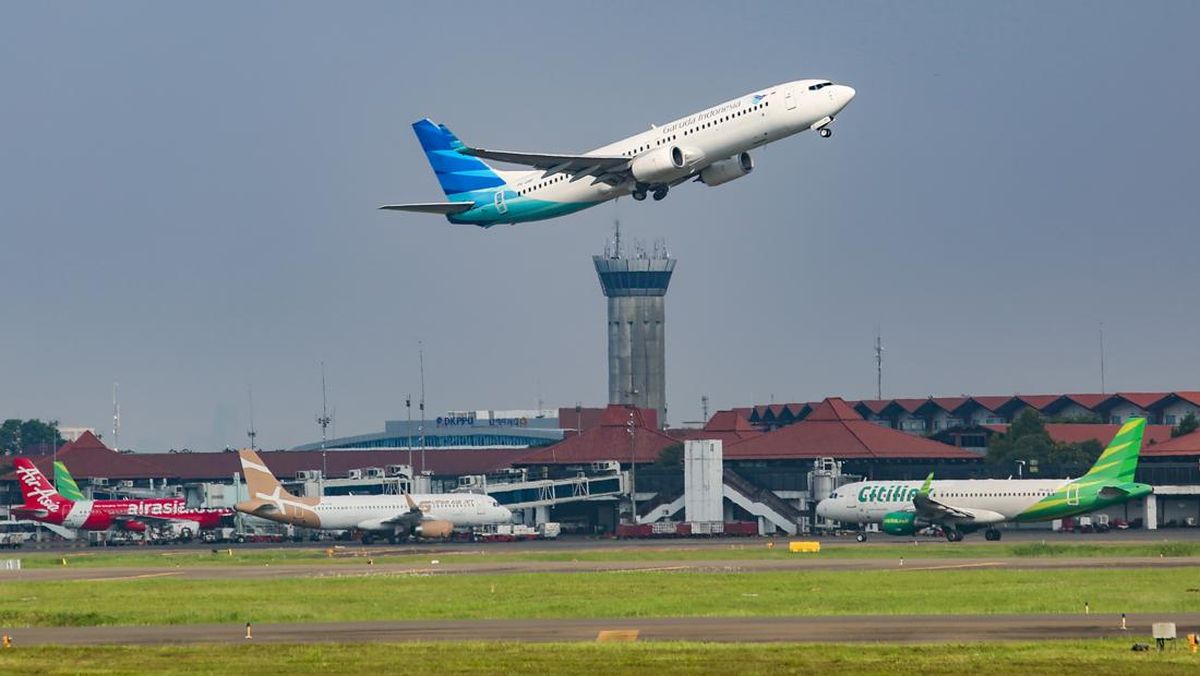
This dramatic escalation in fuel expenses has compelled airlines to adjust their pricing structures. Effective April 1, 2026, PT Pertamina (Persero), Indonesia’s state-owned energy company, announced an increase in avtur prices by as much as 72.45 percent. Consequently, the price of jet fuel at Soekarno-Hatta Airport, the primary international gateway to Indonesia, has been revised to Rp 23,551 per liter. This substantial increase in operating costs has forced airlines serving routes to and from Indonesia to implement a fuel surcharge, with some adjustments reaching up to 38 percent of the ticket price.
A Steep Climb in Airfares: Examining the Data
A comprehensive review of flight prices conducted by CNNIndonesia.com via Google Flights reveals a pronounced upward trend across both domestic and international routes. The impact is particularly evident on short-haul international destinations and key domestic corridors, affecting travel plans for the upcoming peak travel period of April 17-19, 2026.
International Routes Witness Dramatic Increases:
- Jakarta to Singapore: Round-trip fares for the Jakarta-Singapore route during the specified period are now ranging from Rp 4 million to Rp 4.3 million. This represents a significant jump from the typical pre-surge prices, which hovered between Rp 1.75 million and Rp 2.65 million. Airlines such as Batik Air are offering tickets at Rp 4.2 million, Indonesia AirAsia at Rp 4.09 million, and Scoot at Rp 4 million.
- Jakarta to Bangkok: The cost of flying from Jakarta to Bangkok, Thailand, has also seen a substantial increase. Average round-trip ticket prices now fall between Rp 6.5 million and Rp 7.8 million, a stark contrast to the usual range of Rp 3.25 million to Rp 4.85 million.
- Jakarta to Kuala Lumpur: Similarly, round-trip flights from Jakarta to Kuala Lumpur, Malaysia, are now priced between Rp 2.7 million and Rp 2.8 million. This is an escalation from the normal rates, which typically fall between Rp 1.55 million and Rp 2.3 million.
Domestic Routes Face Significant Price Hikes:
The surge in avtur prices has not spared domestic travel within Indonesia. Key domestic routes are also experiencing considerable fare increases for the April 17-19 travel window:
- Jakarta to Bali: The most dramatic increase has been observed on the popular Jakarta-Bali route. Round-trip tickets are now commanding prices between Rp 3.6 million and Rp 4 million, a significant leap from the usual Rp 1.95 million to Rp 2.45 million. Specific airline offerings include Batik Air at Rp 4.08 million, Lion Air at Rp 3.7 million, Citilink at Rp 3.69 million, and Garuda Indonesia at Rp 3.68 million.
- Jakarta to Medan: Flights between Jakarta and Medan are now priced between Rp 3.5 million and Rp 4.6 million for a round trip. This is a notable increase from the normal range of Rp 2.7 million to Rp 3.3 million. Garuda Indonesia is offering tickets at the higher end of this range at Rp 4.6 million, followed by Citilink at Rp 3.6 million, and Lion Air at Rp 3.5 million.
- Jakarta to Surabaya: The Jakarta-Surabaya route is seeing round-trip fares between Rp 2.4 million and Rp 2.5 million, up from the usual Rp 1.65 million to Rp 2.15 million. Batik Air is listing prices at Rp 2.55 million, Citilink Indonesia at Rp 2.5 million, and Lion Air at Rp 2.4 million.
- Jakarta to Makassar: Round-trip tickets for the Jakarta-Makassar route are now priced between Rp 3.4 million and Rp 3.7 million, an increase from the typical Rp 3 million to Rp 3.3 million. Batik Air has the highest offering at Rp 3.7 million, with Citilink Indonesia at Rp 3.5 million and Lion Air at Rp 3.4 million.
Geopolitical Roots of the Aviation Crisis
The current predicament in the aviation sector is deeply intertwined with escalating geopolitical tensions in the Middle East. The ongoing conflict between Iran and its adversaries, including the United States and Israel, has disrupted global oil supply chains, leading to a sharp and sustained increase in crude oil prices. Jet fuel, being a derivative of crude oil, has directly absorbed this impact, resulting in the record-high prices observed. Analysts have pointed to the volatility in the region as a primary driver, with potential for further disruptions if the conflict escalates or expands. This situation underscores the interconnectedness of global energy markets and their profound influence on industries reliant on fuel, such as aviation.
Government Intervention and Industry Response
In response to the soaring ticket prices and the potential impact on consumer purchasing power and the tourism sector, the Indonesian government has stepped in to regulate the domestic aviation market. To mitigate the burden on passengers, the government has imposed a cap on the permissible increase in domestic airfares. This cap is set within a range of 9 to 13 percent, aimed at balancing the need for airlines to cover their increased operational costs with the imperative to maintain affordability for domestic travelers.
While the government’s intervention provides a crucial safety net for domestic travel, the international sector remains largely subject to market forces and airline pricing strategies. The fuel surcharge mechanism employed by airlines is a direct reflection of the increased cost of avtur. This surcharge is designed to absorb the fluctuating price of fuel without necessitating constant adjustments to the base fare, providing a degree of predictability for both airlines and passengers, albeit at a higher overall cost.
Broader Implications for the Aviation Ecosystem
The current surge in jet fuel prices and subsequent airfare increases carry significant implications for various stakeholders within the aviation ecosystem. For passengers, the higher costs translate to reduced disposable income for travel, potentially leading to a decline in tourism and leisure travel. Businesses reliant on air cargo also face increased operational expenses, which could be passed on to consumers in the form of higher prices for goods.
Airlines, while attempting to recoup losses through surcharges and fare adjustments, are under immense pressure to maintain profitability. This could lead to a strategic review of route profitability, potential reductions in flight frequencies, or even a consolidation within the industry if smaller carriers struggle to absorb the escalating costs. The long-term sustainability of the aviation sector hinges on finding a stable equilibrium between fuel costs, ticket prices, and passenger demand.
The current situation also highlights the vulnerability of the aviation industry to external shocks, particularly those impacting energy markets. This may spur further investment in fuel-efficient aircraft technologies and the exploration of alternative aviation fuels, although these solutions often require significant lead times and substantial capital investment.
A Look Ahead: Navigating Volatility
The trajectory of avtur prices remains closely tied to the geopolitical landscape in the Middle East and global oil market dynamics. Should tensions de-escalate and supply chains stabilize, a moderation in jet fuel costs could be anticipated, potentially leading to a downward adjustment in airfares. Conversely, any further escalation or prolonged instability could result in continued upward pressure on prices.
For travelers, prudent planning and flexibility will be key. Monitoring fare trends, booking in advance where possible, and exploring alternative travel dates or routes could help mitigate the financial impact of these elevated prices. The aviation industry, meanwhile, will continue to navigate this challenging environment, seeking strategies to ensure operational resilience while adapting to the evolving cost structures. The current surge serves as a stark reminder of the critical role of stable energy prices in underpinning global connectivity and economic activity.