Chalifah Fatihah
Jakarta, CNN Indonesia — For countless Muslims worldwide, the pilgrimage to Mecca, known as the Hajj, represents a profound spiritual aspiration, a cornerstone of Islamic practice and a deeply cherished dream. However, the significant financial and physical demands associated with this fifth pillar of Islam mean that not all believers are able to fulfill this obligation within their lifetime. Recognizing this reality, Islamic scholarship has long explored acts of devotion that, while not replacing the obligatory Hajj for those who are able, offer immense spiritual rewards that can be considered equivalent to undertaking the pilgrimage or Umrah, a lesser pilgrimage. These acts of worship provide a pathway for individuals facing economic or physical constraints to still attain immense spiritual merit.
The Hajj, prescribed for all financially and physically capable Muslims at least once in their lifetime, is a journey of immense spiritual significance. It symbolizes unity, submission to Allah, and a profound personal transformation. The logistical complexities, including the substantial financial outlay for travel, accommodation, and rituals, coupled with the physical stamina required for the extensive rites performed over several days in a crowded environment, present considerable challenges for many.
However, the rich tapestry of Islamic tradition offers solace and spiritual opportunity through alternative acts of worship. These are not intended to absolve individuals of their Hajj obligation if they possess the means to perform it, but rather to acknowledge and reward the sincere devotion of those who strive to draw closer to Allah within their given circumstances. Sources such as NU Online, a prominent Islamic scholarly platform, have detailed these meritorious deeds, emphasizing their substantial spiritual benefits.
This article delves into five such acts of worship that are recognized for their profound rewards, often equated with the spiritual bounty of the Hajj and Umrah. These practices, rooted in the teachings and traditions of Prophet Muhammad (peace be upon him), offer a tangible means for Muslims to deepen their faith and earn divine favor, regardless of their ability to embark on the physical journey to the Holy Land.
1. The Dawn Prayer and Remembrance Until Sunrise
One of the most highly esteemed acts of worship, as detailed in Islamic texts, involves commencing the day with profound spiritual engagement. Performing the Subuh (dawn) prayer in congregation, followed by dedicated remembrance of Allah (dhikr) until the sun has fully risen, and concluding with two rak’ahs of voluntary prayer (Salatul Ishraq), is said to bestow rewards equivalent to a complete Hajj and Umrah.
The Prophet Muhammad (peace be upon him) is reported to have said: "Whoever performs the Subuh prayer in congregation, then sits remembering Allah until the sun rises, then prays two rak’ahs, he will have the reward of Hajj and Umrah." (Narrated by Tirmidhi). This hadith underscores the immense virtue of beginning the day with spiritual discipline and focus, dedicating the early hours to Allah’s remembrance and worship. The quietude of the early morning, coupled with the collective spiritual energy of congregational prayer, creates an environment conducive to deep reflection and connection with the Divine. The subsequent Ishraq prayer, performed shortly after sunrise, is a beautiful culmination of this period of devotion, sealing the spiritual gains of the morning.
2. Congregational Prayers and the Mid-Morning Prayer (Dhuha)
The commitment to communal worship and the performance of specific voluntary prayers also carry significant spiritual weight. Regularly attending congregational prayers, particularly the obligatory five daily prayers in a mosque, is a practice that fosters unity within the Muslim community and earns substantial divine reward. When this is combined with the performance of the Dhuha prayer, a voluntary prayer offered after sunrise and before noon, the spiritual merit is amplified.
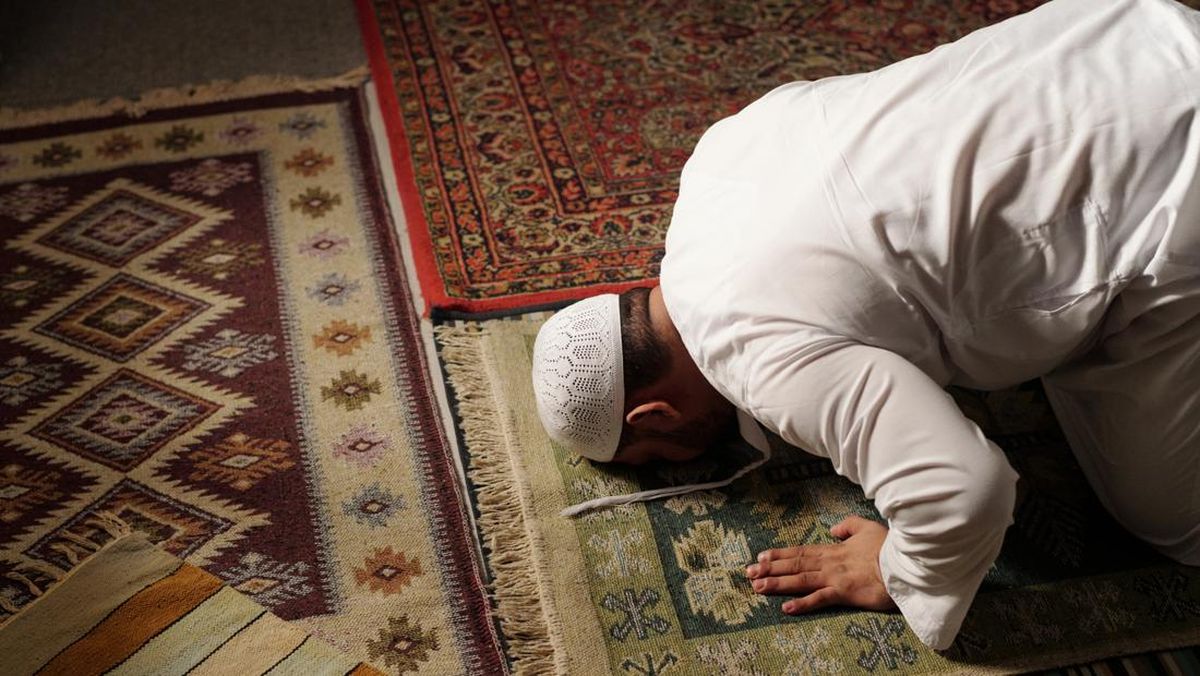
A hadith narrated by Abu Daud highlights this point: "Whoever leaves his house in a state of purity for the obligatory prayer will have the reward of Hajj. And whoever leaves his house for the Dhuha prayer will have the reward of Umrah." This tradition emphasizes that the act of walking to the mosque with the intention of performing prayer is itself an act of devotion with great reward. The Dhuha prayer, often performed when the sun’s rays are strongest, is seen as a means of seeking provision and protection from Allah, and its reward is likened to the spiritual benefits of performing Umrah. This practice encourages Muslims to be proactive in their worship, even beyond the obligatory prayers, and to seek blessings throughout their day.
3. Filial Piety and Honoring Parents
Beyond formal acts of worship within the mosque, Islam places immense importance on ethical conduct and the treatment of others, particularly family members. Among the most virtuous deeds is showing utmost kindness and respect to one’s parents. This concept, known as birr al-walidayn (filial piety), is deeply ingrained in Islamic teachings and is considered a path to immense spiritual reward.
It is narrated that showing deep reverence and obedience to one’s mother, in particular, can bring rewards equivalent to performing Hajj, Umrah, and even engaging in Jihad (striving in the path of Allah). This emphasizes that sincere service and love for those who have nurtured and sacrificed for us are acts of worship that are highly pleasing to Allah. The sacrifices parents make, from conception through to raising their children, are considered immense, and reciprocating this love and care with devotion is seen as a direct path to divine favor. This principle extends beyond mere obedience; it encompasses emotional support, financial assistance when needed, and maintaining a respectful relationship throughout one’s life.
4. Seeking and Imparting Knowledge
The pursuit of knowledge is a highly revered act in Islam, considered a lifelong endeavor for every Muslim. Stepping out with the intention of learning or teaching religious knowledge, especially by attending prayers at a mosque for this purpose, is an act that carries a reward comparable to a complete Hajj.
The Prophet Muhammad (peace be upon him) stated: "Whoever goes to the mosque only to learn or teach good, he will have the reward of a complete Hajj." (Narrated by Thabrani). This hadith underscores the profound value placed on intellectual and spiritual growth. The mosque, as a center of Islamic learning, becomes a sanctuary for those seeking to deepen their understanding of their faith. The act of actively seeking knowledge, whether through listening to scholars, reading religious texts, or engaging in discussions, is considered a noble pursuit that brings one closer to Allah. Furthermore, the act of sharing that knowledge with others, thereby benefiting the wider community, amplifies the reward. This principle highlights the dynamic nature of Islamic worship, which extends to intellectual engagement and the dissemination of wisdom.
5. Assisting Fellow Muslims
The principle of solidarity and mutual support within the Muslim community is a cornerstone of Islamic social ethics. Actively helping fellow Muslims to meet their needs is considered an act of immense virtue, with rewards that can be equated to performing Hajj and Umrah.
The narratives suggest that if one’s assistance leads to the fulfillment of a brother or sister’s need, the reward is akin to undertaking both Hajj and Umrah. Even if the need is not fully met, the sincere effort and intention to help still garner significant spiritual merit, potentially earning the reward of Umrah. This emphasizes the practical application of faith, where compassion and service to humanity are seen as direct expressions of devotion to Allah. In a world often characterized by individualism, Islam strongly advocates for a collective spirit, where the well-being of the community is a shared responsibility. Acts of charity, volunteering time and resources, and offering support to those in distress are all manifestations of this profound principle.
These five acts of worship, while distinct in their nature, share a common thread: they all cultivate a deeper connection with Allah, foster spiritual growth, and contribute to the well-being of oneself and the wider community. It is crucial to reiterate that these practices do not nullify the obligation of Hajj for those who have the means to perform it. Instead, they serve as powerful spiritual conduits, offering immense blessings and rewards to all believers who engage in them with sincerity and devotion, thereby enriching their spiritual lives and drawing them closer to the Divine presence. The ongoing pursuit of these acts can serve as a continuous source of spiritual nourishment, particularly for those whose circumstances may temporarily or permanently prevent them from undertaking the physical journey of Hajj.