Nila Kartika Wati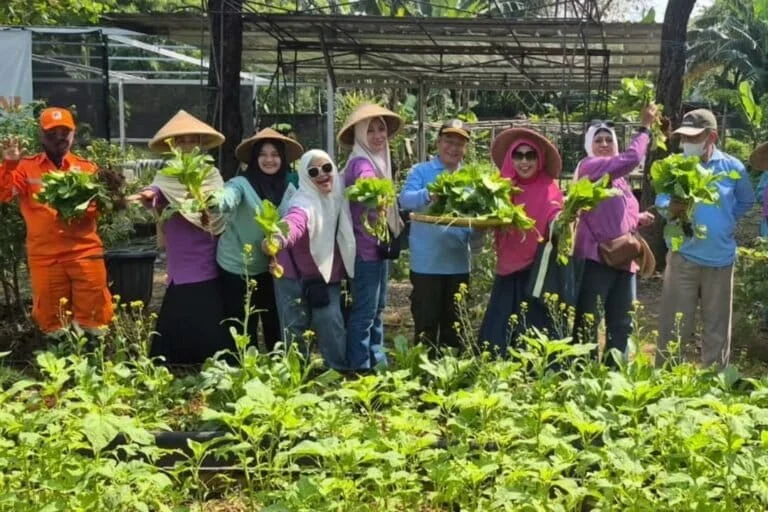
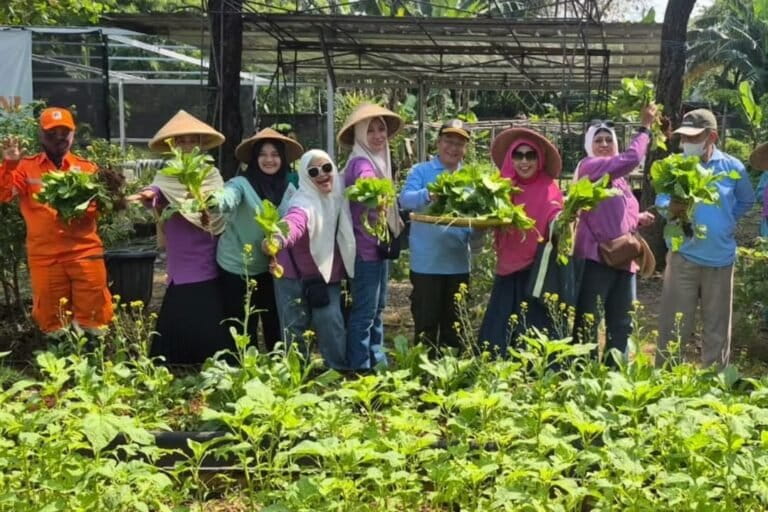
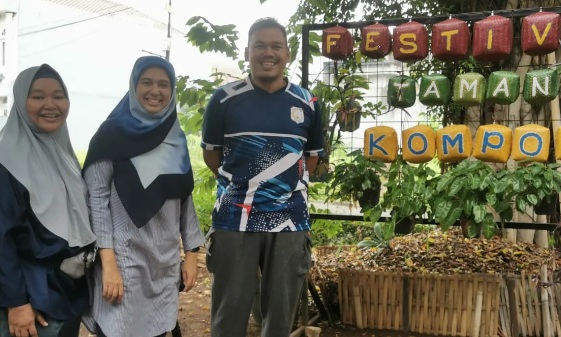
In the heart of the Penggilingan administrative village in Cakung, East Jakarta, a group of women gathered in a vibrant community garden on Monday, March 30, 2026, to harvest vegetables nourished by compost made from their own household waste. These women, members of the Taman Puspa Elok Lestari Farmers Group (RT05/RW16), represent a growing grassroots movement aimed at solving Jakarta’s systemic waste problems from the ground up. Their initiative, known as the Compost Cooperative (Koperasi Kompos), has evolved from a pandemic-era hobby into a sophisticated community-managed waste processing system that addresses both local food security and global climate concerns.
Speaking at a webinar titled "Food Crisis, Methane Gas Surges, and Indonesia’s Climate Challenges" on Thursday, March 12, 2026, Shanty Syahril, the coordinator of the Compost Cooperative, detailed how the group began its journey during the height of the COVID-19 pandemic. In February 2021, while the city was under social restrictions, residents of the RW16 neighborhood began discussing the mounting problem of household waste. What started as an informal discussion among 30 neighbors has since transformed into a structured operation that effectively intercepts organic waste before it ever reaches the city’s overburdened landfill system.
The Evolution of the Compost Cooperative: A Chronology of Local Action
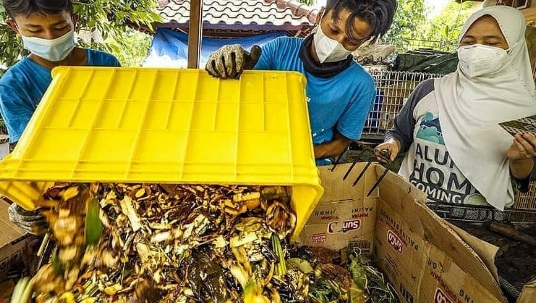
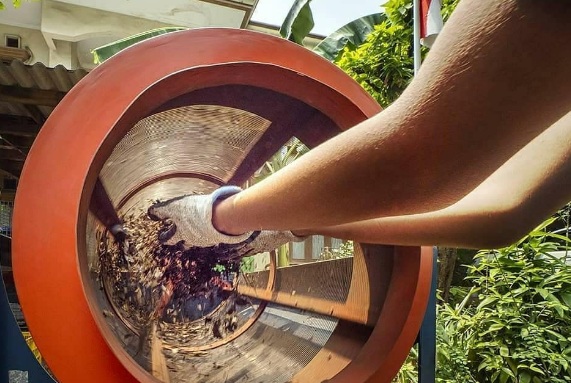
The initiative was born out of a desire to turn a nuisance—rotting kitchen scraps—into a resource. The cooperative established a system where members sort their waste at the source. Every Monday, Wednesday, and Friday, a dedicated operational team, largely composed of local youth, visits member households to collect fruit peels and vegetable scraps. This "door-to-door" service was designed by Syahril to lower the barrier to entry for residents, ensuring that even those who lacked the time or knowledge to compost themselves could participate in the circular economy.
Initially, the operation was modest, utilizing a member’s garage as a makeshift processing center. However, as the membership grew toward 100 households, the scale of the operation necessitated more space and advanced techniques. Recognizing the group’s impact, the local neighborhood association (RW) eventually provided public facility space for waste processing. To handle the increasing volume, the cooperative integrated maggot cultivation, using the larvae of the Black Soldier Fly (BSF) to consume organic waste that exceeded the capacity of their traditional composting bins.
By March 2026, the cooperative was processing between 300 and 400 kilograms of organic waste per week, totaling approximately 1.5 tons every month. Every six months, the finished compost is distributed back to the members to be used as planting media, closing the nutrient loop. Notably, the cooperative operates without direct financial incentives for its members; instead, members pay a fee to cover the wages of the youth operational team and general overhead. The primary "dividend" for members is the compost itself and the collective satisfaction of maintaining a cleaner, greener environment.
The Crisis at Bantar Gebang and the Methane Threat
The urgency of the Cakung initiative is underscored by the dire state of Jakarta’s primary waste destination: the Bantar Gebang Integrated Waste Treatment Site (TPST) in Bekasi. Spanning 110.3 hectares, Bantar Gebang receives an average of 6,500 to 7,000 tons of waste daily. The site has long been at its breaking point, a reality tragically highlighted in early March 2026 when a massive waste slide at the facility claimed seven lives. This disaster mirrored the 2005 Leuwigajah tragedy in Cimahi, which killed 157 people and led to the establishment of National Waste Awareness Day.
Agus Rusli, the Director of Waste Reduction and Circular Economy Development at the Ministry of Environment (KLH), emphasized that the crisis is not merely about space, but about the atmospheric impact of mismanagement. Organic waste, which makes up approximately 49% of Indonesia’s total waste stream, is a significant source of methane gas. As organic materials decay in oxygen-deprived environments like the "open dumping" piles at Bantar Gebang, they release methane—a greenhouse gas with a global warming potential 28 to 34 times greater than carbon dioxide over a 100-year period.
"This is a massive source of emissions," Rusli stated during the webinar. "Indonesia is currently the largest producer of food waste in Asia, generating 20 million tons annually. This happens while many of our citizens still face food insecurity and stunting. We must move away from the traditional ‘collect and dump’ model."
National Policy Shifts: Ending Open Dumping by 2030
The Indonesian government has set ambitious targets to overhaul the nation’s waste management infrastructure. Under the National Medium-Term Development Plan (RPJMN) 2025-2029, the government aims for 100% waste management coverage by 2029. A critical component of this strategy is the mandated transition away from "open dumping" to "sanitary landfills" or "controlled landfills" between 2026 and 2030.
The Ministry of Environment has already begun the process of shutting down or upgrading 343 open-dumping sites across the country. Modern sanitary landfills are designed to isolate waste from the environment with waterproof liners, leachate treatment systems, and daily soil cover, which significantly reduces methane emissions and prevents soil and water contamination.
Furthermore, the government is leaning on the private sector. Ministry of Environment Regulation No. P.75/2019 requires manufacturers, retailers, and food service providers to develop "waste reduction roadmaps." These companies are legally obligated to reduce the waste generated by their products by 30% through the implementation of 3R (Reduce, Reuse, Recycle) principles. Despite these regulations, implementation remains uneven. In Jakarta, for instance, Provincial Regulation (Pergub) No. 77/2020 mandates waste management at the neighborhood level, yet community leaders report that few neighborhoods have successfully implemented effective composting programs.
Scientific Analysis: The Invisible Danger of Microplastics
While organic waste fuels climate change, inorganic waste—specifically plastic—is creating an escalating health crisis. Research presented by the Ecological Observation and Wetlands Conservation (Ecoton) group reveals that mismanaged plastic waste is now infiltrating the human body. In 2017, Ecoton detected microplastics (particles smaller than 5 millimeters) in human feces, breast milk, urine, and blood.
The situation has worsened over the last decade. Indonesia is currently the third-largest contributor of plastic waste to the world’s oceans, trailing only India and Nigeria. On a domestic level, the National Waste Management Information System (SIPSN) reported that in 2023, Indonesia produced 31.9 million tons of waste, 7.8 million tons of which was plastic. Alarmingly, 57% of this waste is still managed through open burning, which releases toxic chemicals and microplastic fibers into the air.
Sofi Azilan Aini, a researcher at Ecoton, described the phenomenon as a "curse" of waste mismanagement. "The plastic we throw away is returning to our bodies," she warned. A collaborative study between Ecoton and Airlangga University found that 100% of women tested in Gresik, East Java, had microplastics in their blood and amniotic fluid. The most common polymers found were polyethylene and polypropylene, types used in single-use plastic bottles, bags, and cups.
The health implications are profound. Rafika Aprilianti, head of Ecoton’s Microplastic Laboratory, noted that microplastics in amniotic fluid are linked to increased levels of malondialdehyde (MDA), a biological marker for inflammation. This contamination can interfere with fetal development and organ function. Furthermore, a March 2025 study by Greenpeace and the University of Indonesia detected microplastics in human brain tissue, suggesting that these particles can cross the blood-brain barrier, potentially leading to cognitive decline and neurological dysfunction.
Broader Implications and the Path Forward
The success of the Compost Cooperative in Cakung serves as both an inspiration and a critique of the current system. Satya Budi Utama, the Urban Development and Clean Air Manager at the World Resources Institute (WRI) Indonesia, noted that while community efforts are vital, they currently represent a fraction of what is needed.
"The initiative by Shanty and her group is excellent, but it is still very small compared to the total volume of organic waste sent to landfills," Utama said. WRI Indonesia is currently assisting 500 regencies and cities in developing waste management strategies. He cited Banyumas as a success story where high levels of government support combined with community participation have significantly reduced the waste sent to landfills.
The data from WRI’s "Smart Waste Indonesia" survey across five representative cities (Solok, Mataram, Surabaya, Balikpapan, and Jakarta) shows that food waste consistently dominates the waste stream at 55%. If Indonesia is to meet its commitments under the Global Methane Pledge—which targets a 30% reduction in methane emissions by 2030—it must scale community-led models like the one in Cakung.
The path forward requires a multi-pronged approach: rigorous enforcement of producer responsibility laws, a transition to high-tech waste-to-energy and Refuse Derived Fuel (RDF) facilities for non-recyclables, and, perhaps most importantly, the cultural normalization of waste sorting at the household level. As the women of Cakung have demonstrated, waste management is not just a technical challenge for engineers; it is a social contract that begins in the kitchen and ends in the community garden. Their model proves that when residents take ownership of their waste, they don’t just reduce the burden on landfills—they build a more resilient, healthy, and connected urban society.