Nila Kartika Wati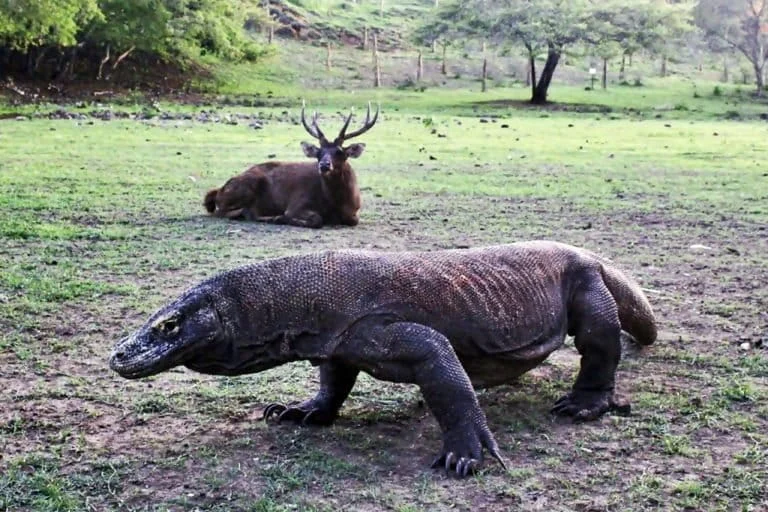
The Varanus komodoensis, known globally as the Komodo dragon, stands today not merely as a biological curiosity but as a resilient survivor of a lineage spanning over four million years, now facing an unprecedented convergence of anthropogenic and environmental threats. While these apex predators have successfully navigated prehistoric climatic shifts and the extinction of megafauna, their current existence is increasingly defined by the encroachment of modern civilization, international criminal networks, and the irreversible effects of a warming planet. In the province of East Nusa Tenggara, Indonesia, the survival of the world’s largest lizard has become a focal point of intense debate, pitting ambitious economic development and "premium tourism" projects against the fundamental requirements of ecological conservation and the rights of indigenous communities who have coexisted with the dragons for centuries.
The Evolutionary Journey from the Miocene to the Sunda Shelf
To understand the current plight of the Komodo dragon, it is necessary to examine its deep temporal roots. Contrary to earlier beliefs that the species evolved in isolation on the Indonesian islands, paleontological evidence suggests that the ancestors of the Komodo dragon originated in Australia. Fossil records indicate that large varanid lizards moved through the Indonesian archipelago during the Pliocene epoch, approximately 4 million years ago. As sea levels fluctuated during the Pleistocene, these populations became isolated on the islands of Flores, Rinca, Komodo, Padar, and Gili Motang.
The Komodo dragon’s survival into the modern era is an anomaly of natural history. While other terrestrial apex predators of the Sahul shelf went extinct following the arrival of humans and the stabilization of the current climate, the Komodo dragon persisted by adapting to the harsh, arid landscapes of the Lesser Sunda Islands. Their biology is a masterclass in opportunistic survival; they possess a complex venom system, a keen sense of chemoreception through their forked tongues, and the ability to consume up to 80 percent of their body weight in a single feeding. Furthermore, the species exhibits parthenogenesis—the ability for females to reproduce without male fertilization—a biological safeguard that has likely assisted the species in surviving periods of extreme population isolation.
The Threat of International Wildlife Trafficking
Despite their formidable nature, Komodo dragons have become vulnerable targets for the global illegal wildlife trade. In 2019, the Indonesian Ministry of Environment and Forestry, in coordination with the East Java Regional Police, intercepted a major smuggling ring that had successfully moved at least 41 Komodo dragons out of the country. These animals were reportedly sold on the international black market for prices ranging from IDR 500 million to IDR 800 million (approximately USD 35,000 to USD 55,000) per individual.
The demand for Komodo dragons is driven by private collectors and exotic pet enthusiasts, primarily in Asia and Europe. The smuggling process often involves the theft of hatchlings or juveniles from less-monitored areas of the Komodo National Park or the surrounding islands of Flores. The removal of these individuals from the wild does more than just reduce the population count; it disrupts the genetic diversity of an already localized species. Authorities have since increased maritime patrols and implemented microchipping programs for known populations, yet the vastness of the archipelago and the sophistication of smuggling networks remain significant hurdles for enforcement agencies.
Climate Change and the Shrinking Habitat
In 2021, the International Union for Conservation of Nature (IUCN) officially reclassified the Komodo dragon from "Vulnerable" to "Endangered." The primary catalyst for this shift was not immediate poaching, but the long-term projections regarding climate change. Scientific modeling suggests that rising global temperatures and subsequent sea-level rises will drastically reduce the suitable habitat for the Komodo dragon over the next 45 years.
As a species confined to low-lying coastal areas and specific altitudes on a handful of islands, the Komodo dragon has nowhere to retreat if its habitat is submerged or if the local ecosystem becomes too arid to support its prey base, which includes Timor deer, water buffalo, and wild boar. Researchers estimate that at least 30 percent of the dragon’s current habitat could be lost by 2050. Furthermore, the increasing frequency of extreme weather events in the East Nusa Tenggara region threatens the nesting sites of the dragons, which rely on specific soil temperatures and moisture levels for successful egg incubation.
The Tourism Paradox and the "Jurassic Park" Controversy
Perhaps the most contentious issue facing the species today is the Indonesian government’s strategy to transform Komodo National Park into a "world-class" luxury tourism destination. In 2020, a photograph went viral globally, showing a Komodo dragon facing off against a large construction truck on Rinca Island. The image became a symbol of the "Jurassic Park" project—a multi-million dollar infrastructure development aimed at building an expansive tourist information center, elevated decks, and luxury amenities.
The government’s rationale is centered on economic growth and the "premiumization" of the park. By increasing entry fees—a proposal that reached as high as USD 250 at one point—and limiting visitor numbers, officials argue they can generate higher revenue with a lower environmental footprint. However, conservationists and UNESCO have expressed grave concerns. In 2021, UNESCO’s World Heritage Committee requested a revised environmental impact assessment (EIA) for the projects on Rinca Island, noting that the infrastructure could potentially impair the "Outstanding Universal Value" of the site.
The tension reached a boiling point in 2022 when local tourism workers and residents of Labuan Bajo went on strike to protest the government’s price hikes and the perceived privatization of the park’s management. Critics argue that the infrastructure projects prioritize corporate interests and high-spending tourists over the actual biological needs of the dragons and the livelihoods of local communities.
The Human Element: The Ata Modo and Local Stewardship
Central to the narrative of the Komodo dragon is the Ata Modo, the indigenous people of Komodo Island. For generations, the Ata Modo have lived alongside the dragons, viewing them not as dangerous monsters but as "sebae" or siblings. This cultural connection is a cornerstone of the island’s social fabric and has historically contributed to the protection of the species.
However, modern conservation policies have frequently marginalized these communities. The establishment of the Komodo National Park in 1980 imposed restrictions on traditional hunting and land use, and recent development plans have sparked fears of forced relocation or the loss of traditional livelihoods. Experts argue that excluding local communities from conservation management is a strategic error. Successful "community-based conservation" models suggest that when local people have a stake in the protection of an ecosystem, poaching decreases and environmental stewardship increases. The current friction between the central government and the local population represents a significant risk to the long-term stability of the park’s management.
Chronology of Key Events in Komodo Conservation
- 1980: Komodo National Park is established to protect the species and its habitat.
- 1991: UNESCO declares Komodo National Park a World Heritage Site.
- 2019 (March): Indonesian authorities dismantle a smuggling ring attempting to sell 41 Komodo dragons abroad.
- 2020 (October): The viral "Dragon vs. Truck" photo sparks international outcry over infrastructure development on Rinca Island.
- 2021 (September): The IUCN officially changes the status of the Komodo dragon from "Vulnerable" to "Endangered."
- 2022 (August): Widespread protests and strikes occur in Labuan Bajo over proposed massive increases in park entry fees.
- 2023: UNESCO continues to monitor the impact of tourism infrastructure, emphasizing the need for rigorous environmental oversight.
Analysis of Implications and the Path Forward
The survival of the Komodo dragon is a litmus test for Indonesia’s ability to balance rapid economic development with its international environmental obligations. The current situation suggests that a purely top-down, profit-oriented approach to tourism is unsustainable and risks damaging the very attraction it seeks to commodify. If the infrastructure on Rinca Island leads to habitat fragmentation or alters the behavior of the dragons—making them more accustomed to human presence or dependent on artificial environments—the species’ wild nature will be fundamentally compromised.
Furthermore, the legal and policy conflicts between provincial authorities and the central government in Jakarta create an atmosphere of uncertainty. A unified national strategy is required—one that prioritizes the biological integrity of the Varanus komodoensis while integrating the socio-economic needs of the Ata Modo and other local residents.
To ensure the "last naga" does not vanish, conservation efforts must move beyond the boundaries of the national park. While the populations within the park are relatively stable, the Komodo dragons living on the island of Flores receive far less protection and are more vulnerable to habitat loss and human-wildlife conflict. Strengthening the protected status of these "outside" populations is critical for maintaining the genetic health of the species.
In conclusion, the Komodo dragon is a relic of an ancient world that has found itself at the center of modern geopolitical and environmental crises. Its future depends on more than just the absence of hunters; it depends on the mitigation of global climate change, the ethical management of tourism, and the respect for the human communities that have served as its guardians for centuries. The suaka, or sanctuary, that remains is indeed the final fortress for this iconic predator, and its loss would signify a failure of global conservation efforts to protect one of the most unique evolutionary lineages on Earth.