Nila Kartika Wati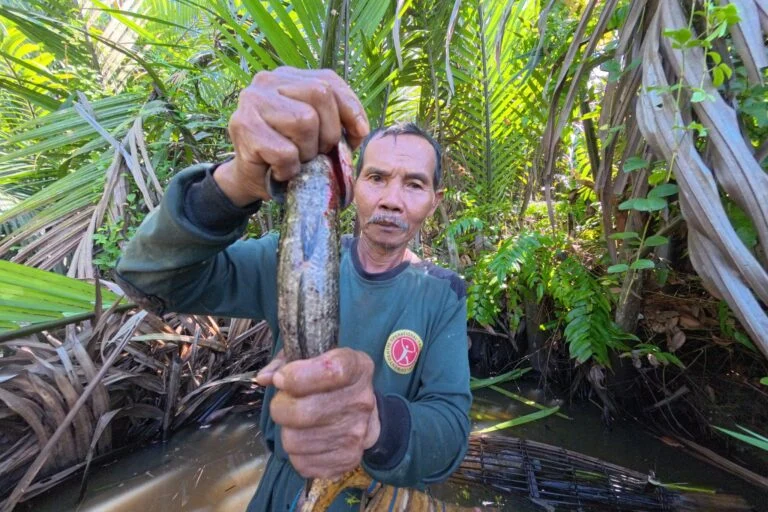
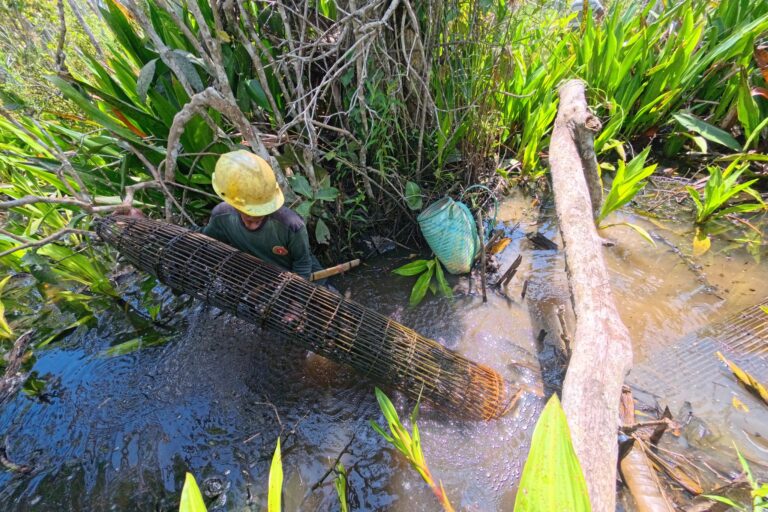
Amir Hasan, a 65-year-old fisherman who has spent decades navigating the waters of Kotabaru, South Kalimantan, recently found himself staring at empty traps, a stark symbol of the escalating ecological crisis in the region. Of the ten lukah—traditional bamboo fish traps—he had meticulously set across two different swamp locations within the Bekambit Asri Transmigration Settlement Unit (UPT), nearly all were empty. For a man whose livelihood depends on the rhythm of the tides and the health of the marshlands, the sight was devastating. Despite the traps remaining in perfect physical condition, the vibrant aquatic life that once filled them has been replaced by an infestation of invasive golden apple snails, while the prized local species have all but vanished.
After leaving his gear for over a month, Amir’s total haul consisted of only ten small-to-medium-sized haruan (striped snakehead, Channa striata) and kerandang (occellated snakehead, Channa pleurophthalma). This meager catch represents a catastrophic decline compared to just a few years ago, when the same traps would be half-full within only three days. The collapse of the local fishery has become so severe that many of Amir’s peers have abandoned the profession entirely, unable to justify the physical and financial toll of a trade that no longer yields a livable return. This localized economic depression is a direct reflection of the broader environmental transformation occurring in the Pulau Laut Timur District, where the expansion of coal mining interests has begun to rewrite the geography of the land and sea.
The Disruption of Natural Waterways and Ecosystems
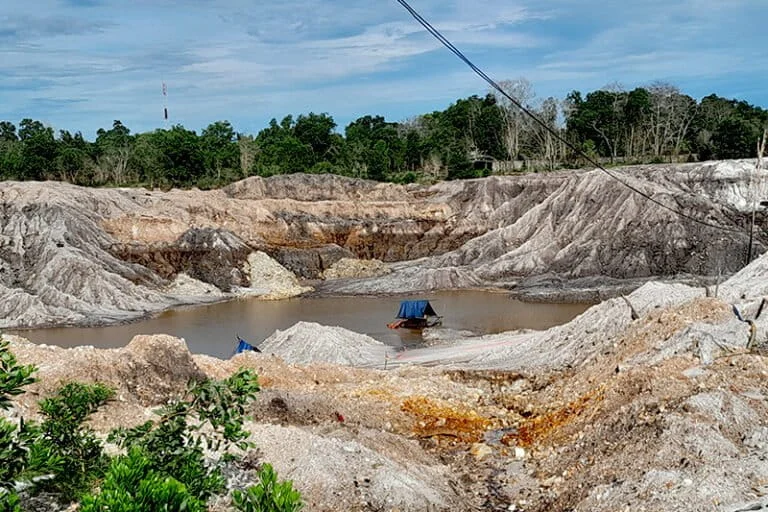
The roots of this decline are tied to the operations of PT Sebuku Sejaka Coal (SSC). Residents and environmental advocates point to the large-scale diversion of natural river systems within the company’s Mining Business License (IUP) area as the primary catalyst for the ecosystem’s failure. These rivers, which once served as the vital circulatory system for the region’s wetlands, regulated the ebb and flow of tides that are essential for the breeding and survival of freshwater and brackish fish species. By altering these paths to facilitate mining infrastructure, the natural pulse of the swamp has been silenced, leading to stagnant conditions that favor pests over native fish populations.
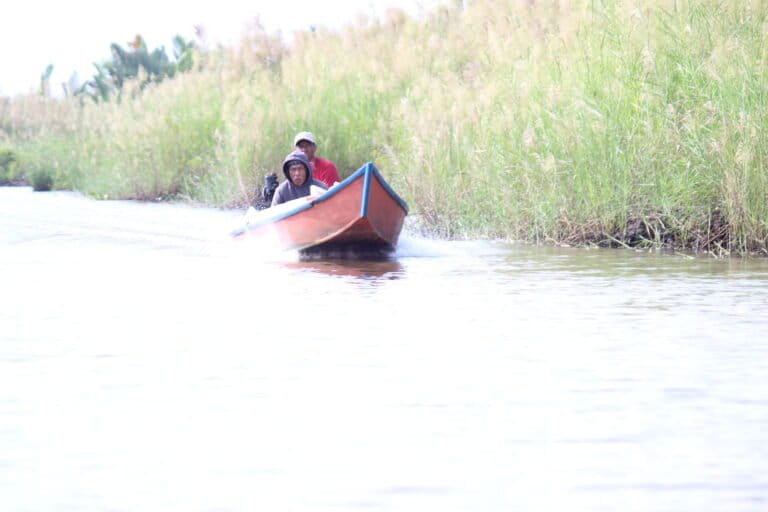
Historically, the Bekambit area was renowned as a regional hub for inland fishing, attracting recreational anglers and commercial buyers from as far away as Banjarmasin. The abundance of fish was a point of pride for the transmigrant community that settled there in the 1990s. Today, that reputation is fading. Beyond the biological impact, the physical modification of the landscape has severed traditional water transportation routes. Fishermen who once used these streams as highways to reach their fishing grounds now find their paths blocked by mining dikes and redirected channels.
This loss of access has forced fishermen to take significantly longer, more circuitous routes to reach the remaining viable fishing spots. The economic consequences are immediate: operational costs have doubled. Amir Hasan notes that a trip that previously required only two liters of fuel now demands at least four. With fuel prices hovering around Rp12,000 per liter in local markets, the math of survival is becoming increasingly impossible for traditional harvesters.
Coastal Aquaculture and the Impact of Blasting
The environmental fallout extends to the eastern coast, where brackish water aquaculture farmers face a different set of challenges. Ali, a local farmer who manages ponds for milkfish, crabs, and shrimp, reports that the construction of massive circular dikes within the mining concession has disrupted the delicate balance of salt and freshwater circulation. These dikes, designed to protect mining pits from inundation, have effectively turned the surrounding community lands into a catchment basin.
During periods of high tide or heavy rainfall, the areas outside the company’s dikes are prone to severe flooding. To prevent their own ponds from being swallowed by the rising water, farmers have been forced to manually heighten their dikes by at least 30 centimeters over the past few years—a labor-intensive and costly temporary fix. Furthermore, the proximity of the mining pits to residential and farming areas has introduced the hazard of "blasting" or industrial explosions.
According to Ali, the vibrations and dust from these explosions are felt acutely at guard posts and ponds located less than a kilometer from the mine. The seismic shocks have caused structural failures in the farmers’ dikes, leading to cracks and total breaches that allow expensive stocks of shrimp and fish to escape. One farmer, Kadir, reportedly saw his entire pond system ruined by these activities. Despite attempts to seek compensation or assistance from PT SSC, residents claim their grievances have largely been ignored, leaving them to feel powerless against the corporate giant.
The Collapse of a Regional Food Barn
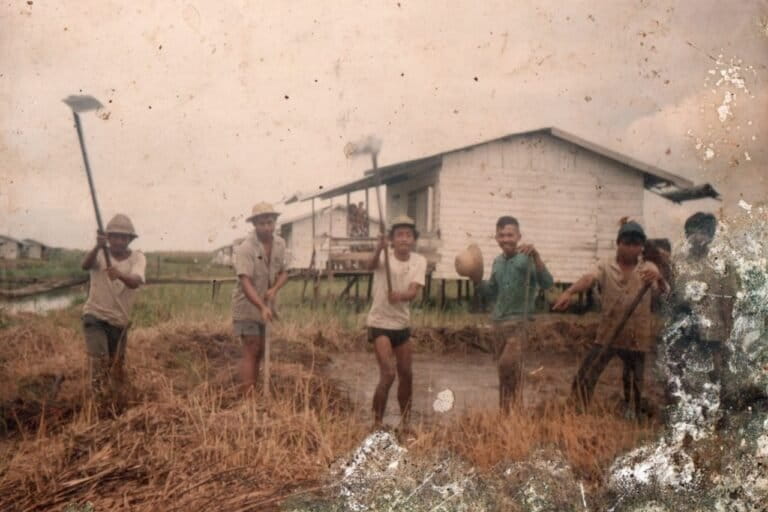
The crisis is not limited to the water. On land, the Pulau Laut Timur District is grappling with the potential permanent loss of its status as a "lumbung pangan" or regional food barn. For the past three years, farmers in the Bekambit Asri area have struggled to plant even a single crop of rice. The land, which was once highly productive through independent community management, is now frequently submerged under deep, standing water for extended periods.
Saleh, a 63-year-old farmer who arrived in the area as part of the transmigration program in 1995, explains that while natural flooding occurred in the past, the water would always recede quickly enough to allow for planting. Now, the water remains deep and stagnant, a phenomenon he attributes to the company’s water management structures. "If we force ourselves to plant, the roots end up growing on the stalks because of the constant soaking," Saleh says, describing the agricultural failure that has become the new normal.
Selamet Haryanto, chairman of the local combined farmers’ group (Gapoktan), provides a grim data-driven perspective on the decline. The area originally boasted approximately 226 hectares of prime rice-growing land, capable of producing up to 7.5 tons of raw grain per hectare, or roughly 5 to 6 tons of rice per harvest. With the ability to harvest twice a year, the area was a powerhouse of food security. Today, the active farming area has shrunk to 180 hectares, and even that land is largely unproductive due to constant waterlogging. The loss of productivity has led to a rise in unemployment among farmers, many of whom have sold off livestock—their "savings accounts"—just to cover the losses of consecutive failed planting seasons.
Corporate Defense and Social Responsibility Programs
In response to the growing chorus of complaints, PT Sebuku Sejaka Coal (SSC), through its Corporate Social Responsibility (CSR) representative Hilmy Abdullah, maintains that the company is actively working to mitigate its impact. Since 2025, the company has implemented the "Desa Mitra Mandiri" (Independent Partner Village) program. This initiative aims to provide alternative livelihoods for those affected by mining operations, specifically focusing on aquaculture.
In Bekambit Asri, the company has organized 15 fishermen into a group practicing biofloc technology for tilapia cultivation. In neighboring Bekambit, they are encouraging the farming of haruan (snakehead), arguing that cultivating the fish in ponds is a necessary step to anticipate the decline of wild populations. Hilmy asserts that these programs have already yielded several successful harvests and are designed to ensure that locals have income sources that are independent of the natural river cycles, which he admits have been altered.
Regarding the agricultural sector, the company offers a different interpretation of the land’s failure. PT SSC claims that their soil testing indicates high acidity and low nutrient levels in the "Ring 1" area surrounding the mine, suggesting the land was never ideal for farming without intensive chemical intervention. While the company says it remains open to developing integrated farming programs, they emphasize that these require further study and a selection of "binaun" (mentored) farmers who are willing to follow the company’s technical guidance.
Structural Inequality and the "Resource Curse"
The situation in Kotabaru has drawn sharp criticism from Dwi Putra Kurniawan, Chairman of the South Kalimantan Regional Board of the Indonesian Farmers’ Union (SPI). He argues that the conflict in Pulau Laut Timur is a classic example of the social inequality inherent in the extractive industry. While mining permits generate significant revenue for the state and corporate shareholders, the local communities often bear 90% of the environmental and social costs while receiving less than 10% of the benefits.
Kurniawan highlights a disturbing paradox: Kotabaru, a district rich in coal and corporate activity, continues to struggle with high rates of stunting among children. He links this directly to environmental degradation. When the local "supermarket"—the rivers and the rice fields—is destroyed, the community loses its access to fresh, high-protein food. This forced transition to a less nutritious diet, combined with the loss of income, creates a long-term health crisis that CSR programs cannot easily fix.
The SPI also critiques the use of CSR as a "buffer" or alibi to mask the permanent destruction of the environment. Kurniawan points out that CSR is a legal obligation, not a substitute for responsible environmental management. He argues that providing fish seeds and plastic tanks (biofloc) does not compensate for the destruction of a self-sustaining natural ecosystem that has supported generations. The union is calling for a comprehensive evaluation of mining policies in South Kalimantan, urging the government to prioritize food sovereignty and environmental restoration over short-term mineral extraction.
Chronology of the Conflict and Future Outlook
The tension in Kotabaru is further complicated by a tangled web of land rights and administrative freezes. The Ministry of Energy and Mineral Resources (ESDM) had previously placed a temporary freeze on PT SSC’s operations due to ongoing agrarian conflicts involving transmigration lands. The overlap between mining concessions and areas designated for human settlement and agriculture has created a legal "gray zone" where residents feel their land titles are being undermined by industrial interests.
As the community looks to the future, the sentiment is one of weary desperation. For people like Ali and Amir Hasan, the primary concern is not a temporary handout or a CSR project, but the restoration of their "ruang hidup"—their living space. They seek long-term accountability, such as the permanent fortification of dikes or the fair acquisition of lands that have been rendered unusable by mining activity. Without a significant shift in how the government and corporations balance extraction with ecology, the once-thriving communities of Pulau Laut Timur face a future where their traditional way of life is relegated to history, buried under the weight of the coal industry.