Nila Kartika Wati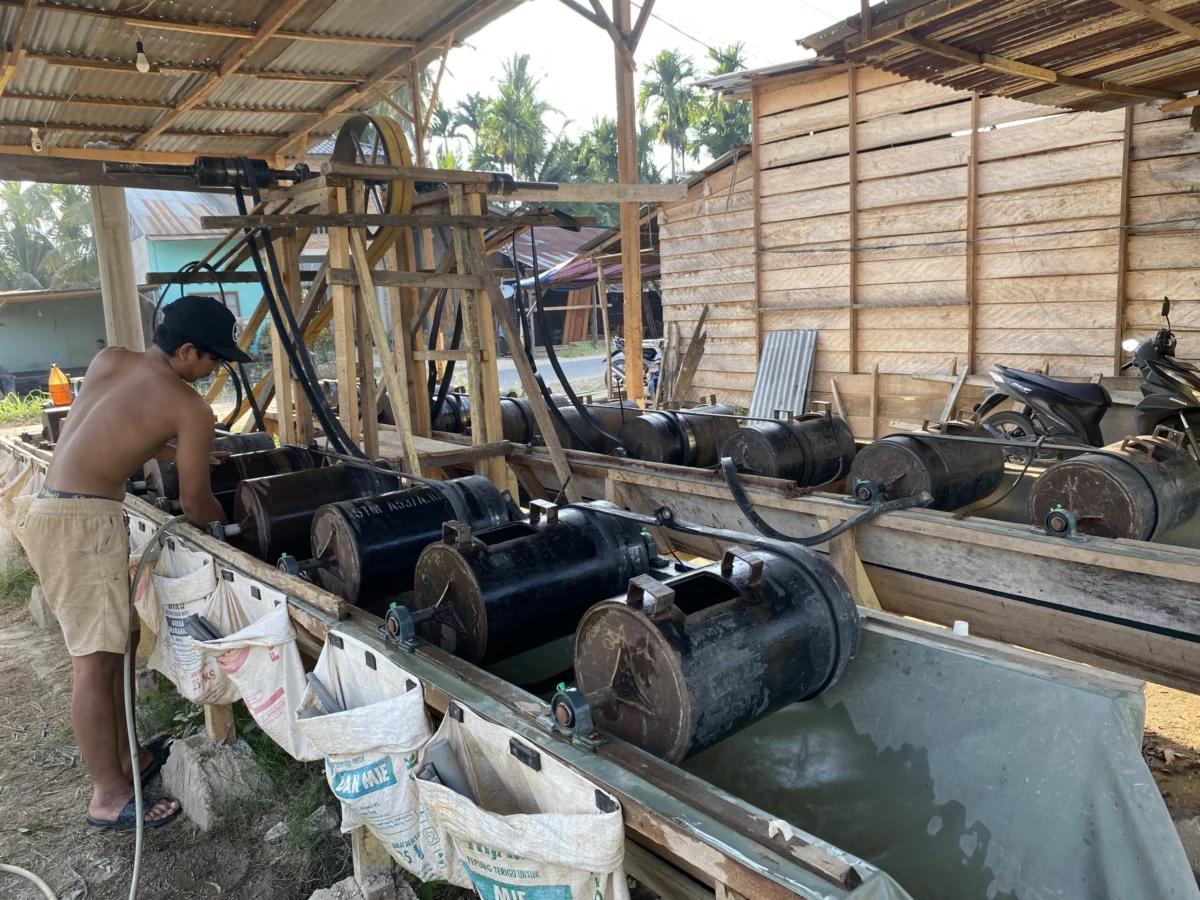
The persistent expansion of illegal gold mining operations, locally known as Penambangan Emas Tanpa Izin (PETI), in the Mandailing Natal (Madina) Regency of North Sumatra has evolved from a localized economic activity into a full-scale environmental and public health catastrophe. For over a decade, these unregulated operations have systematically dismantled the region’s ecological integrity, leaving behind a trail of contaminated waterways, decimated forests, and a harrowing legacy of neurological disorders and birth defects among the local populace. Despite sporadic law enforcement interventions, the scale of the degradation suggests a systemic failure in governance, as mercury—a potent neurotoxin—continues to saturate the primary water sources for thousands of residents.
A Decade of Toxic Accumulation: The Scientific Evidence
The severity of the contamination in Mandailing Natal is not merely anecdotal; it is backed by a series of longitudinal studies conducted over the past twelve years. Syarifah Ainun, a permanent member of the Chemical Engineering Degree Region Sumatera, has been at the forefront of monitoring water quality in the region’s most vital river systems. Her initial research in 2014 focused on the Batang Gadis River, a primary artery for the local community used for drinking, bathing, and irrigation. Even then, the findings were alarming, indicating that the water quality had deteriorated to a point where it was medically unfit for human contact.
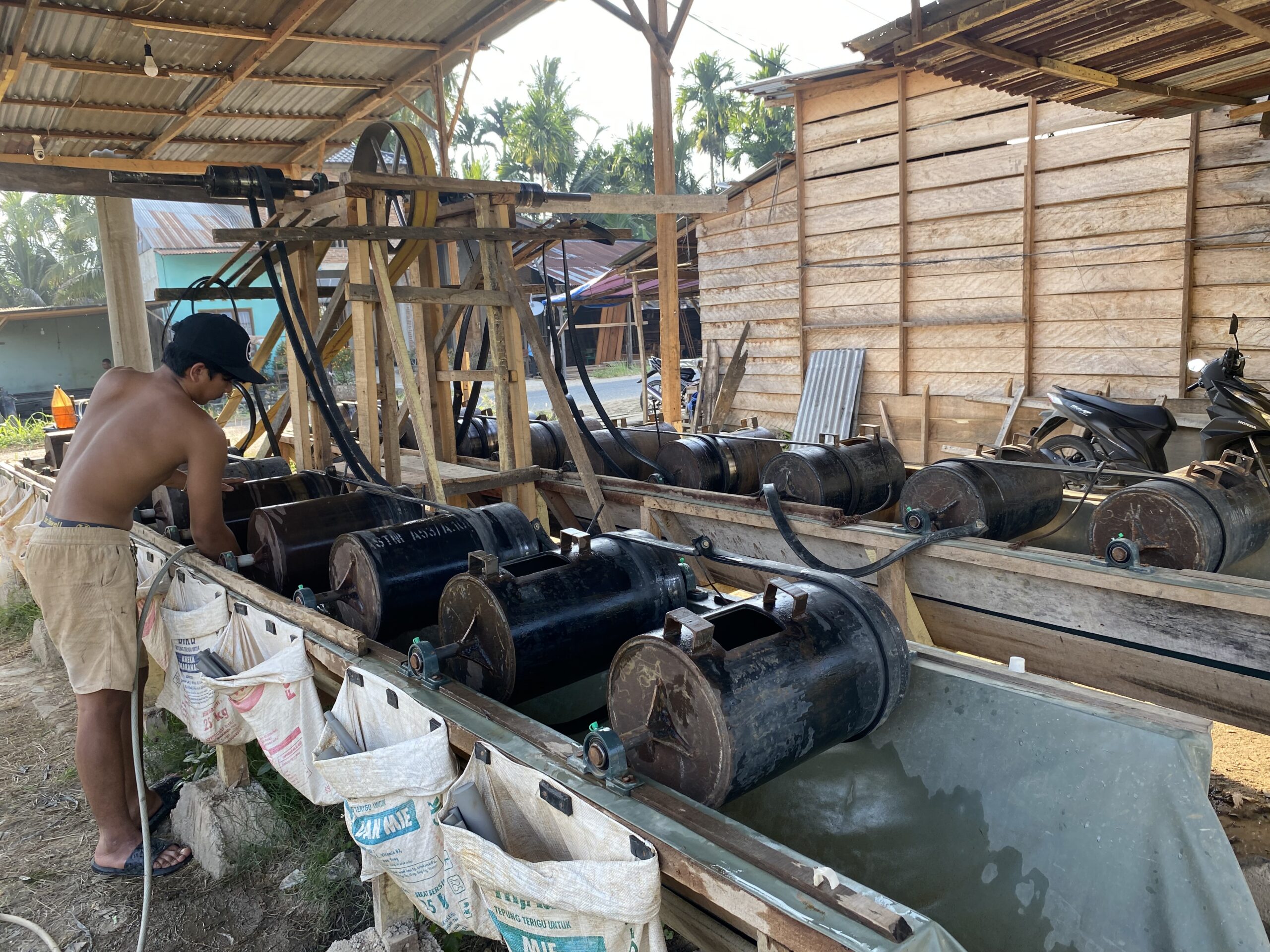
Laboratory tests conducted in 2014 revealed that the water contained hazardous levels of heavy metals, including mercury, lead, arsenic, cadmium, copper, nickel, and zinc. These elements are direct byproducts of the "glundung" process—a traditional method where gold ore is crushed in rotating drums and mixed with liquid mercury to form an amalgam. Once the gold is extracted through heating, the residual slurry, laden with mercury, is frequently discharged directly into open environment media, primarily rivers.
By late 2024, Ainun expanded her research to encompass seven major rivers across the Madina Regency: the Batang Gadis, Tanoman, Batang Natal, Simalagi, Aek Namora, Muara Sipongi, and Aek Kapesong. The results of this comprehensive audit were staggering. In almost every instance, mercury concentrations far exceeded the government’s safety threshold of 0.025 milligrams per liter (mg/L).
Mapping the Contamination: River-Specific Data Points
The 2024-2026 data sets illustrate a terrifying "gradient of toxicity" that extends kilometers away from the actual mining sites. The following findings highlight the saturation of mercury in the local hydro-ecosystem:
- Batang Gadis River: At a distance of only five meters from gold processing sites, mercury levels were recorded at 1.24 mg/L. Even at a radius of two kilometers downstream, the concentration remained at 0.11 mg/L—nearly five times the legal safety limit.
- Tanoman River: This waterway showed the highest peak concentration at 1.26 mg/L near the source of discharge. At a distance of 2.5 kilometers, the levels barely dipped to 0.029 mg/L, still exceeding safe parameters.
- Simalagi River (Huta Bargot): Samples taken five meters from processing units showed 1.08 mg/L of mercury. One kilometer away, the concentration was 0.11 mg/L.
- Aek Namora: Testing revealed 1.16 mg/L at the 10-meter mark and 1.01 mg/L at a one-kilometer radius, indicating a lack of natural dilution in the stream.
- Muara Sipongi and Aek Kapesong: Both rivers mirrored these trends, with Muara Sipongi recording 1.20 mg/L near mining activity and Aek Kapesong showing 1.22 mg/L even at a 500-meter distance.
These figures represent a public health "time bomb." Because mercury is an element that does not break down, it bioaccumulates in the food chain. Fish in these rivers ingest the methylmercury, which is then consumed by humans, leading to much higher internal concentrations than those found in the water alone.
The Physiological Toll: Mercury and the Human Body
The health implications of such high mercury exposure are catastrophic. Angelika Edyt Chariewicz, a biomolecular expert from Poland, notes that the World Health Organization (WHO) classifies mercury as one of the top ten chemicals of major public health concern. Mercury has no known biological function in the human body; it is purely a poison.
According to Chariewicz’s research published in the National Library of Medicine, even low-level chronic exposure can lead to long-term neurological and chromosomal damage. The toxin targets the central nervous system, leading to tremors, memory loss, and cognitive dysfunction. Furthermore, it is a known cause of endothelial dysfunction, kidney failure, liver damage, and various forms of cancer. Because mercury is corrosive and easily crosses the blood-brain barrier, the damage it inflicts is often irreversible.
In Mandailing Natal, the threat is particularly acute for pregnant women. Mercury is a potent teratogen, meaning it can cross the placental barrier and interfere with fetal development. The consequences of this are already visible in the local population, where a cluster of rare birth defects has been documented over the last decade.
A Generation at Risk: Documented Birth Defects
Azura Borotan, a researcher for the "for Madina" advocacy group, has meticulously tracked the human cost of the mining boom. Between 2017 and 2019, at least six cases of severe congenital disabilities were recorded in the regency. These included babies born with gastroschisis (intestines protruding outside the body) and anencephaly (infants born without parts of the brain and skull).
While definitive medical causality is difficult to prove without expensive longitudinal genetic mapping, the circumstantial evidence is overwhelming. Of the cases tracked by Borotan’s team, four of the mothers had worked directly in illegal mining operations during their pregnancies, handling mercury daily. The other two were housewives who lived downstream and relied entirely on contaminated river water for their daily needs.
The scale of the crisis may be even larger than official records suggest. In 2019, then-Governor of North Sumatra, Edy Rahmayadi, stated that at least 12 infants had been born with deformities linked to mercury exposure. By 2022, further reports emerged of infants born with abnormal physical proportions. The lack of a centralized medical registry for these cases has allowed the true magnitude of the "Minamata-like" scenario in Madina to remain partially obscured.
Ecological Devastation and the Loss of Biodiversity
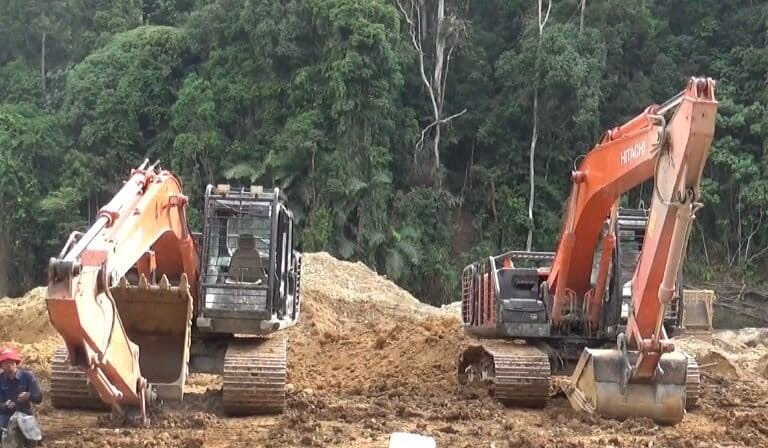
Beyond the chemical poisoning of the water, the physical landscape of Mandailing Natal is being hollowed out. Data from "for Madina" for the period of 2022–2024 identifies 79 hectares of forest land that have been completely destroyed by illegal mining. The destruction is spread across several districts: Batang Natal (12 ha), Batang Gadis (17 ha), Kotanopan (20 ha), Huta Bargot (11 ha), Muara Sipongi (10 ha), and Ulupungkut (9 ha).
Newer satellite imagery and field surveys from 2025–2026 indicate that the destruction is accelerating and moving into new territories, including the border between Madina and Tapanuli Selatan. In this newer window, an additional 10.21 hectares were lost in the border region, while Batang Gadis lost another 28 hectares.
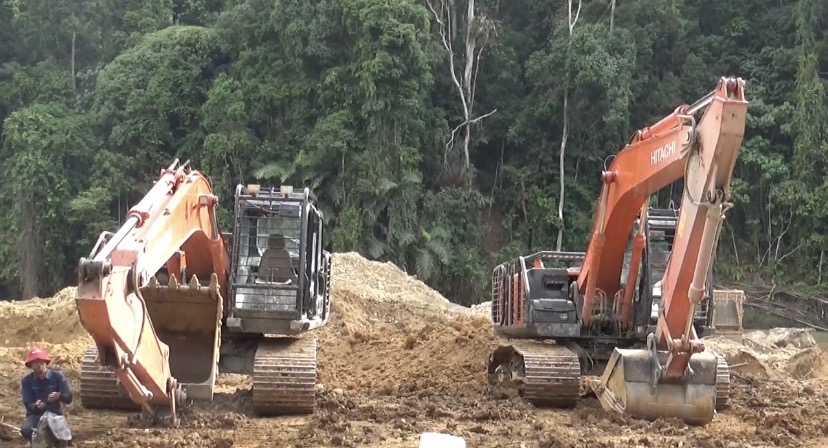
The use of heavy machinery in these operations has led to the literal narrowing of riverbeds. As miners excavate riverbanks and dump silt into the water, the natural flow is disrupted. This not only destroys the habitat for aquatic life but also increases the frequency and severity of flash floods. When the river’s capacity to hold water is reduced by sedimentation, even moderate rainfall can lead to devastating floods for downstream villages.
Human-Wildlife Conflict: An Unintended Consequence
The encroachment of illegal mines into deep forest territories has also triggered a surge in human-wildlife conflict. Andi Sinaga of the Forum Investigator Zoo Indonesia points out that the forests of Madina are critical habitats for the Sumatran tiger, sun bears, pangolins, and tapirs. As mining noise and deforestation drive these animals out of their natural ranges, they are forced into closer proximity to human settlements.
The timeline of incidents is telling. In May 2024, a grandmother was killed in a suspected Sumatran tiger attack. This was followed by a series of sun bear attacks in September 2025 and February 2026. Sinaga notes that these attacks almost always occur in areas adjacent to active illegal mining sites. The displacement of apex predators is a clear indicator of an ecosystem in the final stages of collapse.
The Governance Gap and the Path Forward
Despite the overwhelming evidence of environmental and physical harm, the response from local and national authorities has been criticized as inadequate. While the police and military have conducted raids—securing heavy equipment and arresting low-level laborers—the "pemodal" or financiers behind these operations often remain untouched.
Syarifah Ainun describes the situation as a "collective negligence" (kecerobohan berjamaah). She argues that the persistence of these mines for over a decade, despite the known health risks, suggests that economic interests are being prioritized over human lives. The "cat-and-mouse" game played between miners and law enforcement has done little to stop the flow of mercury into the Batang Gadis and its tributaries.
The crisis in Mandailing Natal serves as a grim case study in the dangers of unregulated extractive industries. To avert a total regional collapse, experts argue that the government must move beyond sporadic raids and implement a comprehensive restoration plan. This would require:
- Strict Enforcement of the Minamata Convention: Indonesia is a signatory to this global treaty to phase out mercury use, yet its application in small-scale mining remains weak.
- Health Interventions: Immediate medical screening for residents in high-risk zones and specialized care for children affected by heavy metal poisoning.
- Economic Transition: Providing alternative livelihoods for the thousands of residents who currently see illegal mining as their only path out of poverty.
- Environmental Remediation: Large-scale efforts to dredge contaminated sediment and reforest the nearly 130 hectares of lost woodland.
As the data from 2026 suggests, the window for intervention is closing. Without a fundamental shift in how the region’s natural resources are managed, Mandailing Natal risks becoming a permanent sacrifice zone, where the pursuit of gold has cost the population its health, its environment, and its future.