Nila Kartika Wati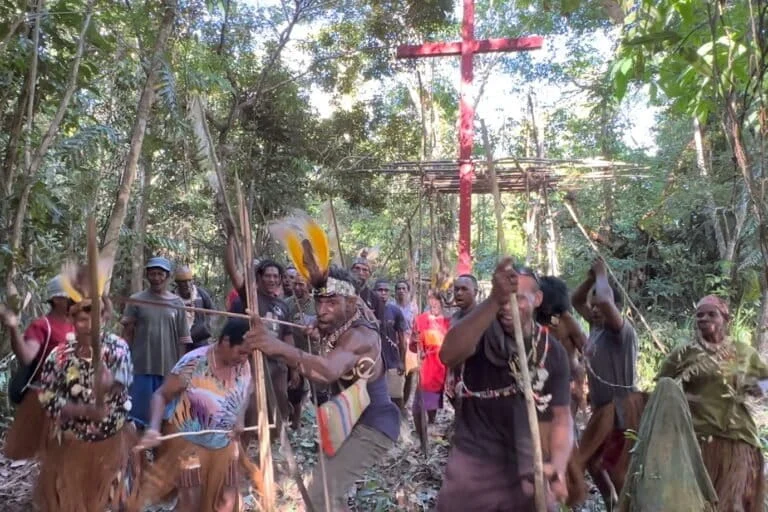
The landscape of Merauke, South Papua, is currently the epicenter of a profound struggle between state-led industrial ambitions and the ancestral rights of the region’s indigenous populations. At the heart of this conflict are indigenous women like Alowesia Kwerkujai, a resident of Blandin Kakayo Village in the Jagebob District, who has become a symbol of resistance against the encroachment of National Strategic Projects (PSN). For Kwerkujai and her community, the land is not a mere commodity or a plot for industrial development; it is a "living space"—a complex ecosystem providing food, medicine, building materials like bamboo and rattan, and the very foundation of their cultural identity. As the Indonesian government accelerates its food and energy security initiatives, the resulting land acquisitions by corporations such as PT Murni Nusantara Mandiri (MNM) have triggered a wave of environmental destruction, social fragmentation, and militarized intimidation.
The Human Cost of Industrial Expansion
Alowesia Kwerkujai’s refusal to surrender even a "single inch" of her ancestral land to PT MNM highlights a growing rift between local communities and the central government’s development narrative. Since 2024, Alowesia and her husband, Vincen Kwipalo, have maintained a consistent stance against corporate activity and the forced eviction of indigenous holdings. Their resistance, however, has come at a significant personal cost. The couple reports frequent pressure from security forces and a distressing breakdown in social cohesion within their village.
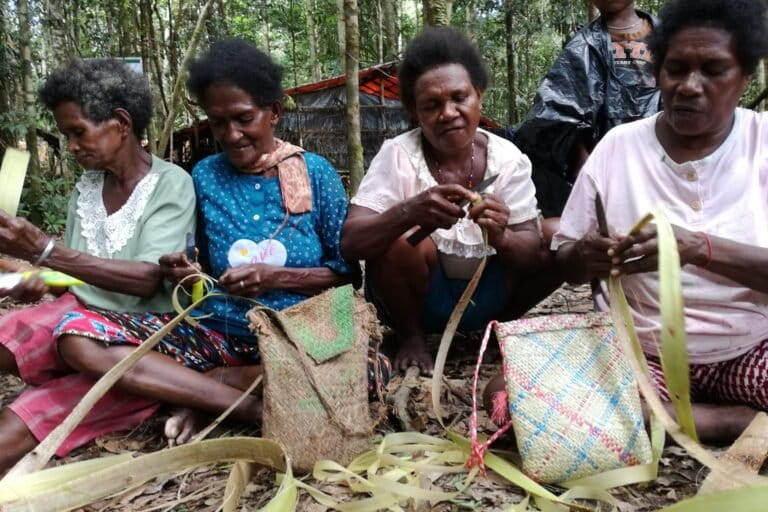
The presence of the sugarcane company has reportedly sparked horizontal conflicts, as neighbors and relatives—some influenced or incentivized by the corporation—attempt to persuade holdouts like Alowesia to sign over their land. This strategy of "divide and rule" has begun to erode the traditional social fabric of the clans, replacing communal harmony with suspicion and resentment. Alowesia’s narrative is one of emotional and physical exhaustion; she describes weeping late at night at the sound of heavy machinery operating near her home, signaling the relentless advance of the project.
Corporate Footprint and Environmental Impact
PT Murni Nusantara Mandiri (MNM) holds a massive concession totaling 52,395 hectares in the region. According to data compiled by the Yayasan Pusaka Bentala Rakyat, an organization dedicated to indigenous rights and forest protection, the company’s expansion has been rapid. In 2024, the company cleared 105 hectares, a figure that surged to 8,384 hectares by 2025. This rapid land clearing has fundamentally altered the local environment, particularly the hydrological systems that the indigenous people depend on for survival.
The Yop River, which serves as a vital artery for the community to access the forest and harvest fish, has been severely impacted. The upstream areas of the river fall within the company’s concession. Previously, this region was a rich mosaic of natural forests, wetlands, eucalyptus and acacia savannas, swamps, and peatlands. However, the large-scale removal of forest cover has significantly reduced the land’s water absorption capacity. This has led to increased flooding and the siltation of traditional fishing grounds. Local residents report that the water now overflows into marshes, making it nearly impossible to catch fish or navigate the waterways as they did for generations.
Systematic Failures in Consent and Transparency
The grievances in the Jagebob District are echoed in the Malind District, where Rufina Gebze of Onggari Village faces a similar threat. Gebze only learned that her ancestral lands were included in the corporate concession maps through the Legal Aid Institute (LBH) Papua in 2023. This revelation underscores a critical failure in the implementation of Free, Prior, and Informed Consent (FPIC), an international standard intended to protect indigenous rights during large-scale development projects.
According to Gebze, there was no prior notification or consultation from either the government or the company regarding the planned takeover of ulayat (ancestral) land. The community’s lack of awareness regarding the "mapping out" of their own territory suggests a top-down approach to development that bypasses the very people it claims to benefit. In response, the five major clans of Onggari have turned to traditional and spiritual forms of protest. They have installed "red crosses" and "sasi" (customary prohibitions) across their forests—sacred markers indicating that the land is closed to outsiders. Gebze’s defiance is rooted in a deep religious and ancestral conviction: "God gave this land not to be destroyed. In religion, it is strictly forbidden to destroy God’s creation."
The Militarization of the "Food Estate"
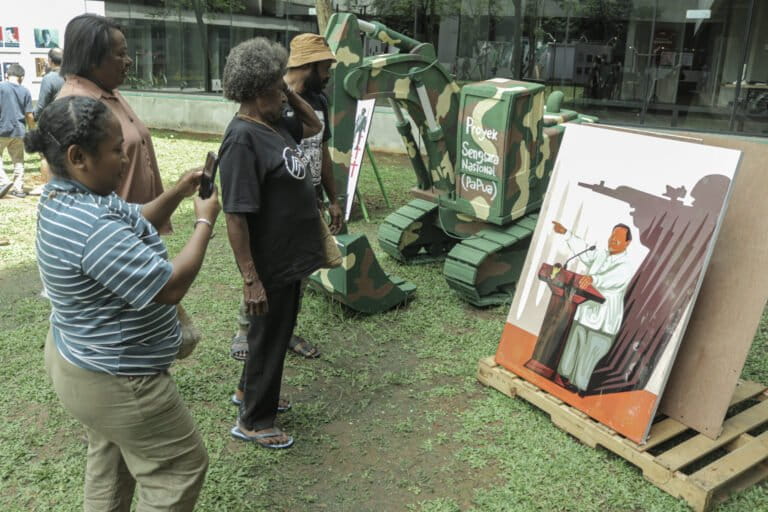
A significant factor exacerbating the fear and tension in South Papua is the increasing presence of the Indonesian military (TNI) to safeguard National Strategic Projects. Under the administration’s current security and development framework, the military’s role has expanded from traditional defense to "territorial development" and "food security." This shift has seen the establishment of numerous new military outposts and battalions in proximity to industrial concessions.
During the tenure of the Ministry of Defense under Prabowo Subianto, five Infantry Battalions for Border Security (Yonif PDR) were formed. These have since evolved into Territorial Development Infantry Battalions (Yonif TP). In South Papua alone, two Yonif TP units are active, specifically tasked with overseeing the Food and Energy PSN in Merauke. Collectively, there are approximately 29 TNI AD infantry battalions stationed across Papua, with each unit comprising roughly 450 personnel.
While the government frames this deployment as a necessary measure for national stability and project security, indigenous residents perceive it as a tool of intimidation. Reports of military personnel protecting corporate assets while suppressing local dissent have become common. When approached for comment on these concerns, officials from the Army Information Service (Kadispenad) and the TNI Headquarters Information Center (Kapuspen) have largely declined to provide detailed responses, citing jurisdictional boundaries.
Cultural Preservation as a Form of Resistance
In the face of overwhelming corporate and state power, indigenous Papuan women are diversifying their methods of resistance. Beyond physical protests and legal reports to the National Commission on Human Rights (Komnas HAM) and the Ministry of Human Rights, a movement of "cultural maintenance" has emerged.
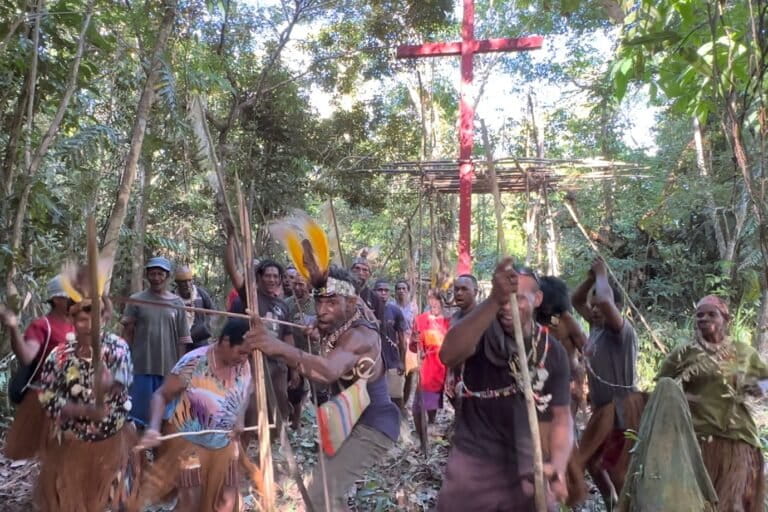
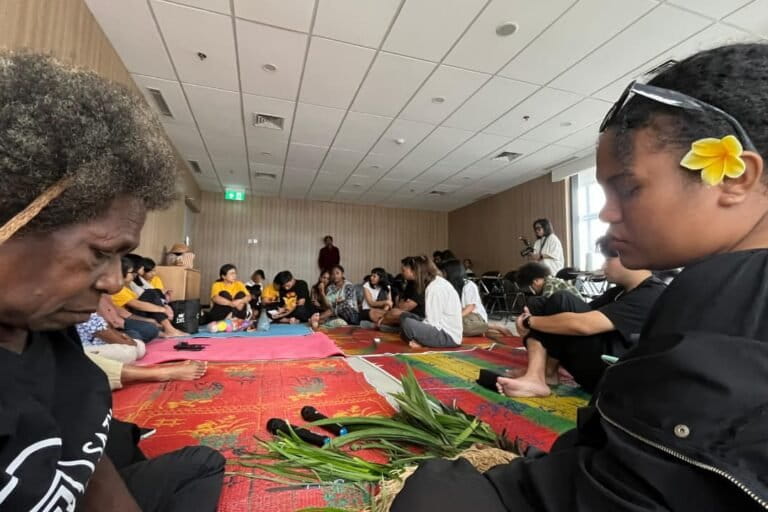
Rosita Tecuari, Chairperson of the Namblong Indigenous Women’s Organization (ORPA), and her colleague Regina Bay have established the Namblong Cultural School. This initiative is designed to fill the educational gaps left by state schools, focusing on indigenous history, land boundaries, and traditional ecological knowledge. By taking the younger generation into the forest to explain clan territories and the significance of specific flora and fauna, they are conducting a form of "community patrolling" that doubles as cultural education.
Furthermore, the Namblong community has challenged the state’s economic narrative by forming their own indigenous-led company, PT Yombe Namblong Nggua (YNM). While the government often justifies corporate concessions by citing tax revenue, Rosita points out that YNM has also been contributing taxes to the Jayapura Regency since 2024. The difference, she argues, is the model of management. "We, the indigenous people, can manage our ancestral forests without cutting down trees, without causing harm to the community, and without hurting the hearts of our people," she stated. This model offers a direct alternative to the extractive, large-scale industrial approach favored by the PSN.
Broader Implications and Socio-Environmental Analysis
The situation in Merauke represents a microcosm of the broader challenges facing Indonesia as it attempts to balance economic growth with human rights and environmental sustainability. The Merauke Integrated Food and Energy Estate (MIFEE) and its subsequent iterations under the PSN banner have long been criticized by environmentalists and human rights advocates for ignoring the complex socio-ecological realities of Papua.
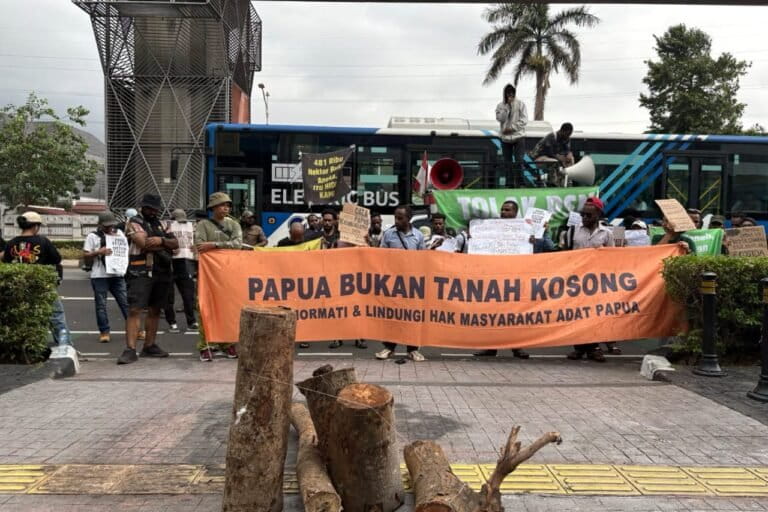
From a factual standpoint, the transformation of diverse ecosystems into monoculture sugarcane and rice plantations poses several long-term risks:
- Loss of Biodiversity: The conversion of savanna and wetlands into industrial fields destroys the habitats of endemic species and reduces the overall biological resilience of the region.
- Food Insecurity for Locals: While the project is branded as a "food estate" for national security, it often results in "food poverty" for locals who lose access to traditional hunting and gathering grounds.
- Climate Vulnerability: The drainage of peatlands for agriculture releases massive amounts of carbon dioxide, undermining Indonesia’s international climate commitments.
- Social Displacement: The influx of transmigrant workers and military personnel can lead to the marginalization of indigenous Papuans, potentially fueling further civil unrest.
The activism of women like Alowesia, Rufina, and Rosita highlights that the "Papua problem" is not merely one of security or economics, but one of dignity and the right to self-determination over ancestral domains. Their struggle suggests that for development to be truly "strategic" and "national," it must first secure the consent and cooperation of the people who have served as the land’s custodians for millennia. Without a fundamental shift toward the FPIC principles and a reduction in the militarized approach to land management, the conflict in Merauke is likely to intensify, leaving a legacy of environmental ruin and social discord.