Nila Kartika Wati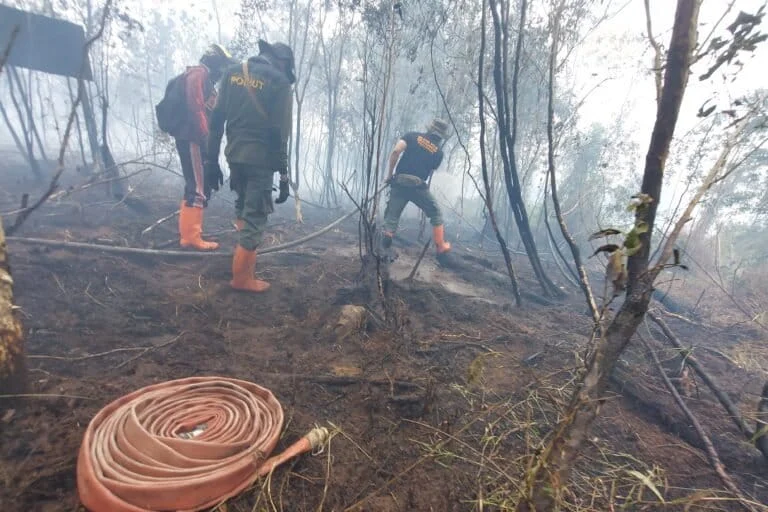
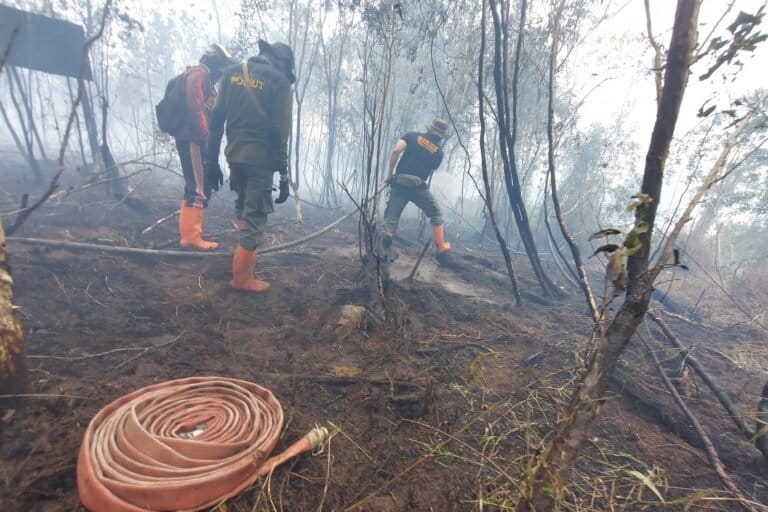
The Indonesian government has issued a high-level alert following a catastrophic surge in forest and land fires during the first quarter of 2026, driven by the onset of an exceptionally powerful climate phenomenon dubbed "Godzilla El Niño." Data released by the Ministry of Forestry and the Ministry of Environment reveals that the scale of the crisis has already eclipsed previous years, necessitating a radical shift in national mitigation strategies. Between January and March 2026, the Ministry of Forestry recorded 55,324.2 hectares of burned land, a figure that represents a massive escalation compared to the same period in 2025, when only approximately 1,000 hectares were affected. This twentyfold increase in fire intensity has triggered emergency protocols across several provinces, as satellite data from the Terra Aqua system shows a tripling of high-confidence hotspots, reaching over 700 points in early April.
The current crisis is being fueled by a significant warming of sea surface temperatures in the central and eastern Pacific Ocean. This El Niño event is projected to be one of the most intense on record, prompting Minister of Environment Hanif Faisol Nurofiq to adopt the "Godzilla" moniker to describe its destructive potential. Unlike 2025, which benefited from the cooling and dampening effects of the La Niña phenomenon, 2026 faces a "double threat" of extreme heat and prolonged drought. President Prabowo Subianto has issued direct mandates to all relevant ministries and regional heads to implement "extreme mitigation" measures to prevent a repeat of the ecological and economic disasters seen in 1997 and 2015.
The Escalating Crisis: A Statistical Overview of Early 2026
The geographical distribution of the fires indicates that the island of Borneo and the central portions of Sumatra are currently the hardest hit. West Kalimantan leads the nation in total burned area, with 25,420.73 hectares destroyed in just three months. Riau follows with 8,555.37 hectares, while the Riau Islands have recorded 4,167.78 hectares. These figures are particularly alarming given that the traditional peak of the dry season—usually occurring between July and September—has not yet arrived.
The Ministry of Environment notes that the 55,324 hectares burned in early 2026 is a staggering departure from the 359,619 hectares recorded during the entirety of 2025. "If our readiness level in 2025 was at a baseline of one, our alertness for 2026 must be increased twentyfold," Minister Hanif stated during the National Coordination Meeting for Forest and Land Fire Control in early April. He emphasized that the government can no longer rely on the natural buffers provided by previous climate cycles.
Meteorological Projections: The Science Behind "Godzilla El Niño"
The Head of the Meteorology, Climatology, and Geophysics Agency (BMKG), Teuku Faisal Fathani, has provided a somber outlook for the remainder of the year. According to BMKG’s analysis of Seasonal Zones (ZOM), approximately 46.5% of Indonesia’s territory will experience an earlier-than-average start to the dry season. In many regions, the drought is arriving weeks ahead of the 30-year climatological average.
Furthermore, the duration of the 2026 dry season is expected to exceed normal parameters in 57% of the country. Crucially, 64% of Indonesia will see rainfall levels significantly below the normal threshold. This lack of precipitation, combined with the projected positive phase of the Indian Ocean Dipole (IOD), will likely lead to record-breaking temperatures and humidity drops. The IOD, often referred to as the "Indian Ocean’s El Niño," works in tandem with the Pacific phenomenon to strip the archipelago of moisture, creating a "tinderbox" effect across the nation’s forests.
The BMKG warns that the peak of this national drought will likely span from July to October 2026. This extended window of vulnerability poses a severe threat to food security, water supplies, and the structural integrity of carbon-rich ecosystems.
Peatlands Under Siege: The Critical Carbon Frontier
One of the most significant concerns for environmental experts is the state of Indonesia’s peatland ecosystems. Peatlands are vital for climate regulation due to their ability to hold up to 13 times their dry weight in water. However, once drained or dried out by prolonged heat, they become highly flammable and nearly impossible to extinguish, as fires can smolder meters below the surface for months.
Data from the monitoring group "Pantau Gambut" indicates that 23,546 hotspots have already been detected within Peat Hydrological Units (KHG) since the start of the year. The jump is astronomical: from 141 hotspots in December 2025 to 12,942 in March 2026 alone. Of these hotspots, 15,424 were identified in Protected Peat Ecosystems (FEG Lindung), while 8,122 were found in Peat Cultivation Areas (FEG Budidaya).
Putra Saptian, a campaigner for Pantau Gambut, explained that the high number of hotspots in protected zones is particularly dangerous. "Protected peat usually has deeper layers. When these burn, the carbon emissions released into the atmosphere are far greater than those from shallower cultivation zones," he noted. The provinces with the highest concentration of peat hotspots mirror the areas with the most extensive fire damage: Riau with 8,930 points and West Kalimantan with 8,842 points.
Corporate Accountability and the Concession Gap
The recurring nature of these fires has once again brought the role of corporate concessions into the spotlight. Analysis by the Indonesian Forum for the Environment (Walhi) identified 11,189 high-confidence hotspots across the country, with a significant portion located within or immediately adjacent to corporate-controlled land. Specifically, 1,351 hotspots were found within the concessions of 15 major companies.
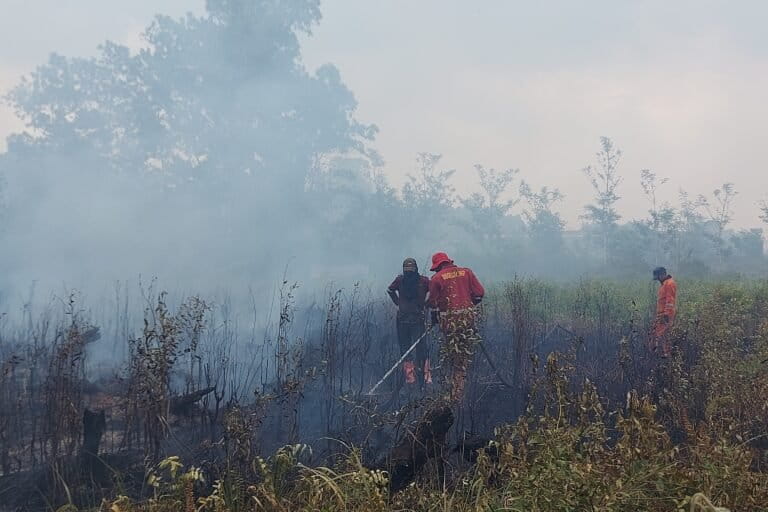
The breakdown provided by Walhi includes:
- 699 hotspots within or near five major oil palm concessions.
- 285 hotspots within or near five Wood Forest Product Utilization (PBPH) concessions.
- 367 hotspots within or near five mining concessions.
Uli Arta Siagian, Walhi’s National Executive Campaign Coordinator, argued that these figures demonstrate a systemic failure in land management and law enforcement. "The fact that fires continue to recur within these concessions suggests that legal instruments like the HGU (Right to Cultivate) and IUPHHK (Timber Forest Product Utilization Permit) are not being used to ensure fire-safe land management," she stated. Walhi is calling for the government to demand greater accountability from corporations, noting that the financial burden of extinguishing these fires often falls on the state through the national budget (APBN).
Government Response and Mitigation Strategies
In response to the "Godzilla" threat, Minister of Environment Hanif Faisol Nurofiq has instructed regional governors to immediately declare a state of "Emergency Alert" (Siaga Darurat). This legal status is essential for the rapid mobilization of personnel, equipment, and federal funding.
A primary focus of the 2026 mitigation plan is the restoration of peatland hydrology. The Ministry has ordered the massive construction of "canal blockings" to raise the water table in dried-out peat areas. "We are closing the canals created by plantation companies to ensure the peat remains saturated," Hanif explained. Furthermore, plantation owners have been warned to maintain strict groundwater levels or face severe legal repercussions.
Minister of Forestry Raja Juli Antoni has also appealed to the public and the private sector to cease all land-clearing activities involving fire. "The community must be more self-aware and cautious. Land clearing through burning in a year like this will have immediate and catastrophic consequences," he warned.
Economic and Fiscal Implications
The cost of inaction—or even delayed action—is projected to be immense. Historical data shows that during the 2015 El Niño crisis, Indonesia spent approximately 500 billion IDR on fire suppression, yet suffered billions of dollars in economic losses due to health crises, school closures, and disrupted air travel. In more recent years, weather modification (cloud seeding) alone has cost between 1.3 trillion and 3 trillion IDR annually.
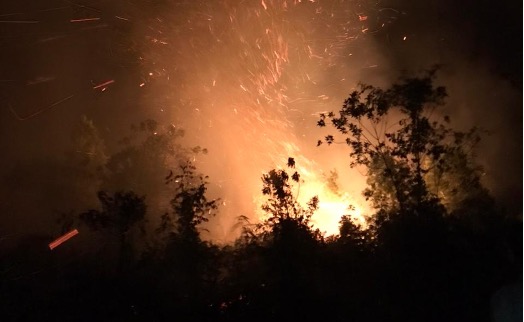
For 2026, the National Disaster Management Agency (BNPB) has a budget of 491 billion IDR, with an additional 4.63 trillion IDR in Ready-to-Use Funds (DSP). Experts warn that if the "Godzilla El Niño" persists until October, these funds may be insufficient to cover the costs of water bombing, cloud seeding, and ground-level firefighting across 31 provinces.
Long-term Ecological Impact and the Path Forward
Beyond the immediate threat of smoke and haze, the 2026 fires jeopardize Indonesia’s international climate commitments. The country’s "Forestry and Other Land Use (FOLU) Net Sink 2030" target relies heavily on preventing peatland fires and reducing deforestation. A massive fire season could effectively reset years of progress in carbon sequestration.
Environmental advocates are using this crisis to push for the "Peatland Ecosystem Protection Bill" (RUU Perlindungan Ekosistem Gambut). They argue that the current fragmented regulations allow for overlapping interests that prioritize short-term economic gain over long-term climate resilience. "Without a holistic, legally binding national framework, the structural issues that lead to these fires will continue to shift the fiscal and ecological burden onto the public," said Putra Saptian.
As Indonesia enters the most dangerous months of the 2026 calendar, the eyes of the international community are on the archipelago. The success or failure of the government’s "extreme mitigation" strategy will not only determine the air quality for millions of citizens in Southeast Asia but will also serve as a critical test of the nation’s ability to navigate the increasingly volatile realities of a warming planet. The "Godzilla El Niño" is no longer a distant forecast; it is a present reality that demands an unprecedented national response.