Nila Kartika Wati
Every April 6, Indonesia commemorates National Fishermen’s Day, a date intended to honor the contributions of the millions who brave the seas to provide the nation’s primary source of protein. However, for the country’s small-scale and traditional fishers, the occasion has become a somber reminder of their increasing marginalization. Despite the symbolic celebrations, the reality on the ground—or rather, on the water—reveals a community trapped in a cycle of structural poverty, exacerbated by aggressive infrastructure projects, a worsening climate crisis, and a legal framework that remains largely unimplemented.
The struggle of the traditional fisher is no longer just about the unpredictability of the catch; it is a battle for the right to exist in a rapidly industrializing maritime landscape. As the Indonesian government pushes for "Blue Economy" initiatives and massive coastal defenses, those at the bottom of the economic ladder find themselves squeezed out of their ancestral fishing grounds and left vulnerable to the volatile forces of nature.
The Mirage of Legal Protection and the Implementation Gap
Susan Herawati, the Secretary-General of the People’s Coalition for Fisheries Justice (Kiara), emphasizes that National Fishermen’s Day should serve as a critical momentum for the state to move beyond rhetoric toward genuine empowerment. Central to this is the legal recognition of the identity of traditional fishers, including the often-overlooked role of women in the fishing industry.
"There must be legal certainty regarding the recognition and protection of the rights to the identity of both male and female fishers," Herawati stated. She argued that true empowerment requires a holistic approach: improving processing capabilities for catches, strengthening local institutions, providing accessible capital, and, crucially, increasing the capacity of fishers to mitigate the impacts of climate change.
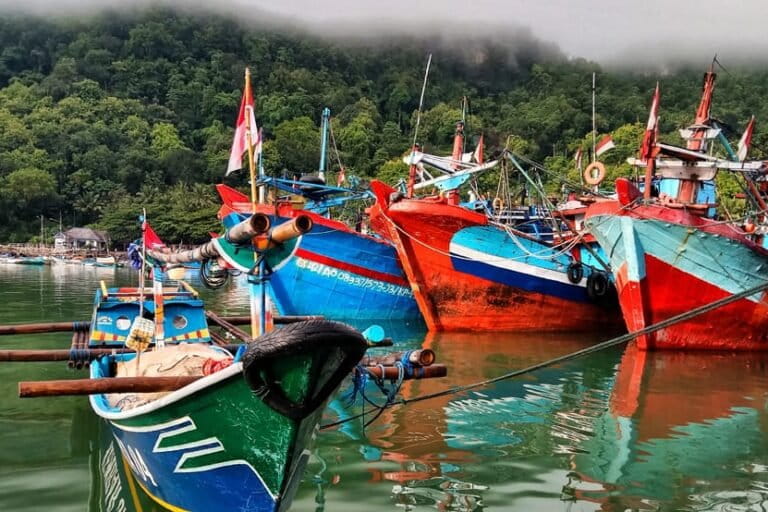
The legal cornerstone for this protection already exists in the form of Law No. 7 of 2016 concerning the Protection and Empowerment of Fishers, Fish Farmers, and Salt Farmers. This law was heralded as a landmark achievement a decade ago, promising thirteen mandates for protection and five for empowerment. Yet, according to Parid Ridwanuddin, the Coastal and Marine Director of Auriga Nusantara, the law has largely failed in its implementation.
"The government remains focused on ‘state property rights’ and ‘private property rights,’ while ‘common property rights’—the very foundation of traditional fishing—are consistently ignored," Ridwanuddin explained. The absence of necessary derivative regulations and technical guidelines means that the mandates of the 2016 law remain on paper, failing to translate into insurance coverage, safety equipment, or fuel subsidies for those who need them most.
A Multidimensional Crisis: Economics, Ecology, and Policy
The challenges facing Indonesia’s maritime community are not isolated incidents but part of a "multidimensional crisis." Didin Komarudin, Chairman of the Capture Fisheries Technology and Management Study Program at IPB University, notes that small-scale fishers are facing a convergence of economic, ecological, social, and policy-driven pressures.
Ecologically, fish stocks in many traditional fishing zones have plummeted due to over-exploitation by industrial fleets and habitat destruction. Economically, the rising cost of fuel (BBM) has made many fishing trips a net loss for small boat operators. Socially, these communities lack basic access to health and safety nets.
Komarudin identifies four primary drivers of this complexity:
- High Exploitation Rates: Industrial fishing has led to a significant decline in Fish Resource (SDI) stocks.
- Climate Change: Unpredictable weather patterns and increased storm frequency have rendered traditional knowledge of "fishing seasons" obsolete.
- Access Inequality: A widening gap exists between the resources available to small-scale fishers and those granted to large-scale corporate entities.
- Misaligned Policies: Government programs, such as quota-based fishing and zoning, often fail to account for the reality that small fishers, limited by their vessels, cannot simply move to deeper, more distant waters.
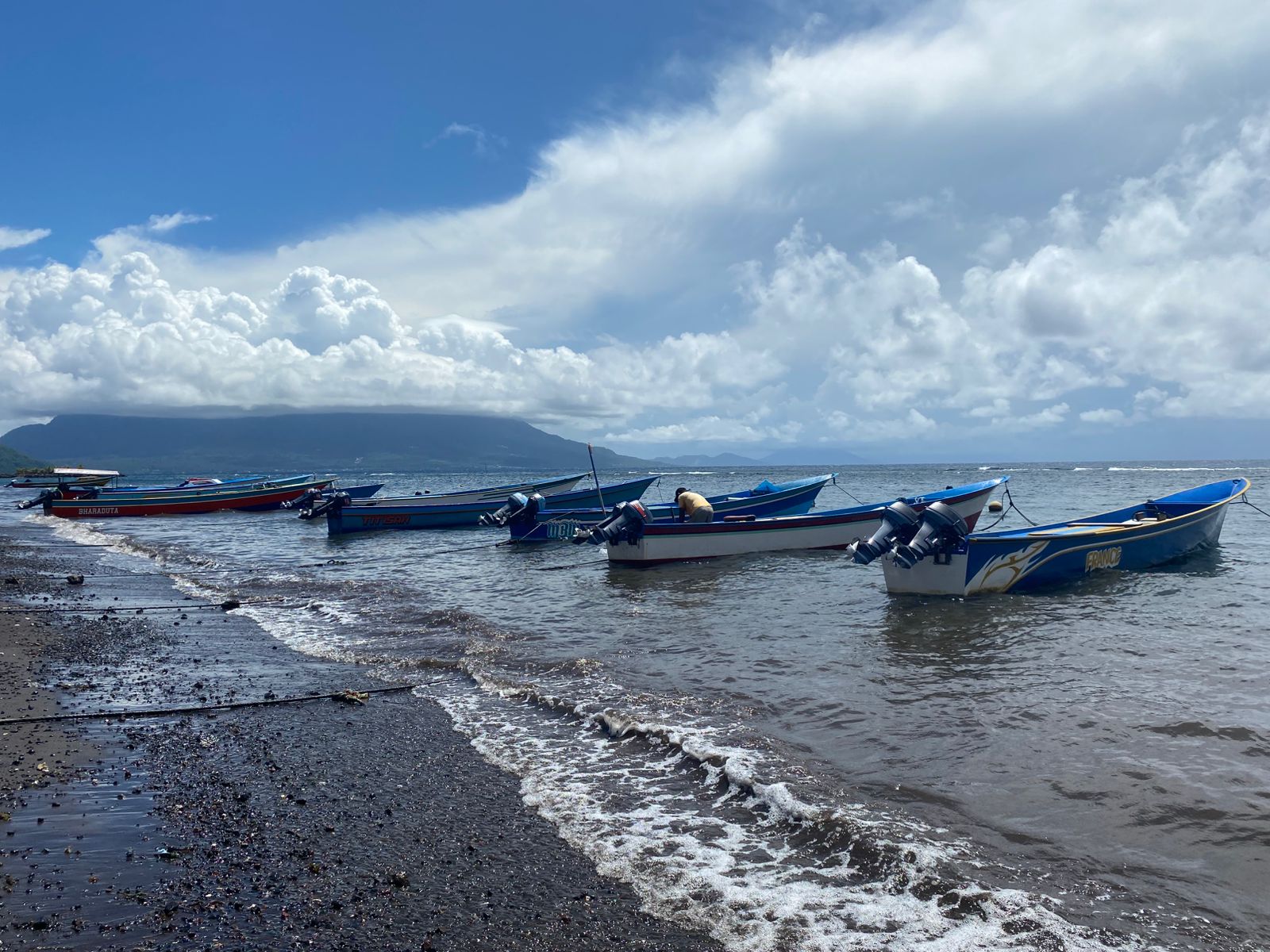
The spatial conflict is particularly acute. Traditional fishers generally operate within four miles of the shore due to the small size of their vessels. However, this coastal strip is increasingly crowded by tourism developments, conservation zones, industrial ports, and infrastructure projects. This "ocean grabbing" forces small fishers into direct competition with each other in ever-shrinking territories.
The Giant Sea Wall: Maladaptation or Solution?
One of the most contentious issues highlighted by advocates is the proposed Giant Sea Wall (GSW) project along the northern coast (Pantura) of Java. While the government frames the wall as a necessary defense against rising sea levels, environmentalists and fisher advocates view it as a form of "maladaptation."
Herawati points out that in Jakarta, the GSW project is unlikely to stop the sea from encroaching on the land. Instead, it may exacerbate the problem by failing to address the root cause: land subsidence. "The government should focus on stopping the sinking of the land by strictly regulating groundwater extraction and restoring the mangrove green belts," she argued.
Furthermore, the GSW project appears to conflict with Article 35 of Law No. 27 of 2007 on the Management of Coastal Areas and Small Islands, which prohibits activities that cause significant damage to coastal ecosystems. For fishers, the wall represents a physical and economic barrier that severs their connection to the sea, destroying the very ecosystems that sustain their livelihoods.
Climate Change and the Devastating 2026 Season
The early months of 2026 have already demonstrated the lethal intersection of climate change and poverty. Dani Setiawan, General Chair of the Indonesian Traditional Fishermen’s Association (KNTI), reported that extreme weather in January 2026 affected 95% of fishers across 350 coastal villages.
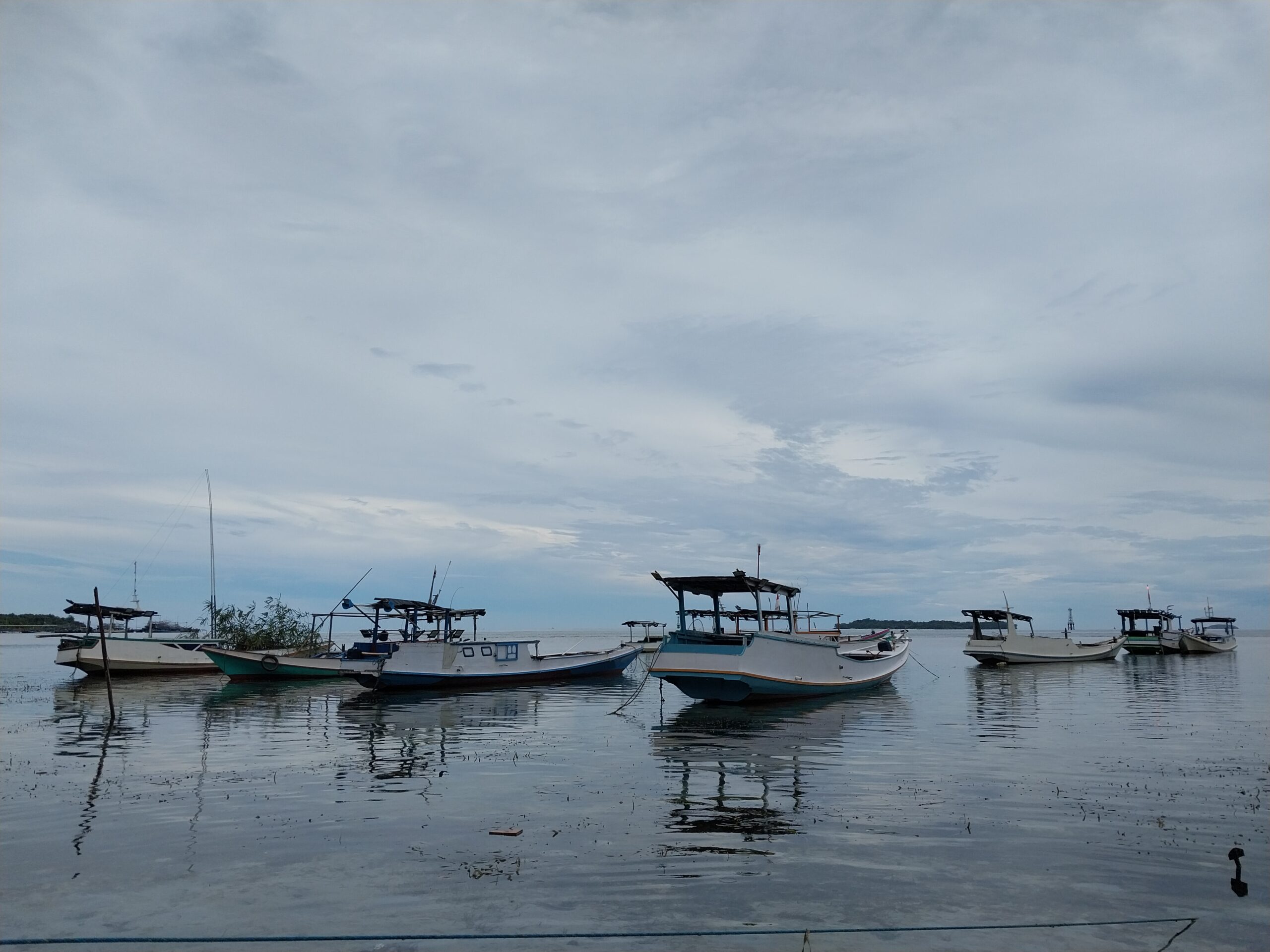
The data is staggering: 63% of these fishers were forced to stop going to sea entirely due to high waves and gale-force winds. This led to an average income drop of 50% in regions like West Java, Maluku, and Sulawesi. The situation was made more desperate by the fact that government-funded climate insurance and safety equipment programs had largely been discontinued since 2021.
Mida Saragih, a campaigner for Coastal and Marine Protection at Walhi, warns that the long-term impacts of this climate instability extend far beyond individual income. "When fishers cannot go to sea, it threatens national food security and the mobility of coastal residents," she said. Saragih urged the state to provide "climate certainty" through policies that directly address the immediate needs of fishers during periods of forced inactivity.
Structural Poverty and the Influence of Oligarchy
A recurring theme among experts is that the poverty of Indonesia’s fishers is not cultural—a result of a lack of effort—but structural. Parid Ridwanuddin of Auriga Nusantara argues that the current political and economic system is heavily influenced by oligarchical interests that prioritize macro-economic growth and Non-Tax State Revenue (PNBP) over local welfare.
"In spatial planning discussions, the narrative of justice for fishers is almost always absent. It is always about the ‘Blue Economy’ and PNBP," Ridwanuddin remarked. He noted that even basic data regarding the number and location of traditional fishers remains inaccurate, making it nearly impossible for aid programs to be effectively targeted.
The "Blue Economy" strategy, as currently implemented, is often criticized for being a rebranding of industrial exploitation. By focusing on large-scale investments and industrial-scale quotas, the government risks further disenfranchising the small-scale sector, which actually employs the vast majority of the maritime workforce and operates with a significantly lower carbon footprint than industrial fleets.

Recommendations for a Just Maritime Future
To break the cycle of marginalization, experts and advocates are calling for a fundamental shift in how Indonesia manages its seas. The recommendations focus on several key areas:
- Immediate Implementation of Law 7/2016: The government must finalize and enact the necessary derivative regulations to ensure that the 13 protection mandates and 5 empowerment mandates are functional.
- Data Sovereignty: There is an urgent need to clean up and synchronize fisher data to ensure that subsidies, insurance, and aid reach those who meet the "traditional" and "small-scale" criteria.
- Technology-Based Support: Strengthening weather information systems and fishing ground mapping using satellite data can help fishers adapt to climate change.
- Empowerment Through Cooperatives: Instead of focusing on individual aid, the government should foster local cooperatives and "fisher villages" (Kampung Nelayan) to give communities more collective bargaining power and better processing facilities.
- Evaluating the Giant Sea Wall: Infrastructure projects must undergo rigorous, transparent environmental and social impact assessments that prioritize ecosystem restoration over concrete barriers.
- Gender Inclusivity: Recognizing women as "fishers" in official documentation is essential for them to access the same insurance and capital benefits as their male counterparts.
As National Fishermen’s Day concludes, the message from Indonesia’s coastal communities is clear: they do not need more ceremonies; they need the political will to enforce the laws already on the books. Without a shift toward a justice-based maritime policy, the traditional Indonesian fisher may soon become a relic of the past, swallowed by the twin tides of climate change and industrial expansion. The health of Indonesia’s oceans and the food security of its people depend on the survival and prosperity of these small-scale guardians of the sea.