Lina Irawan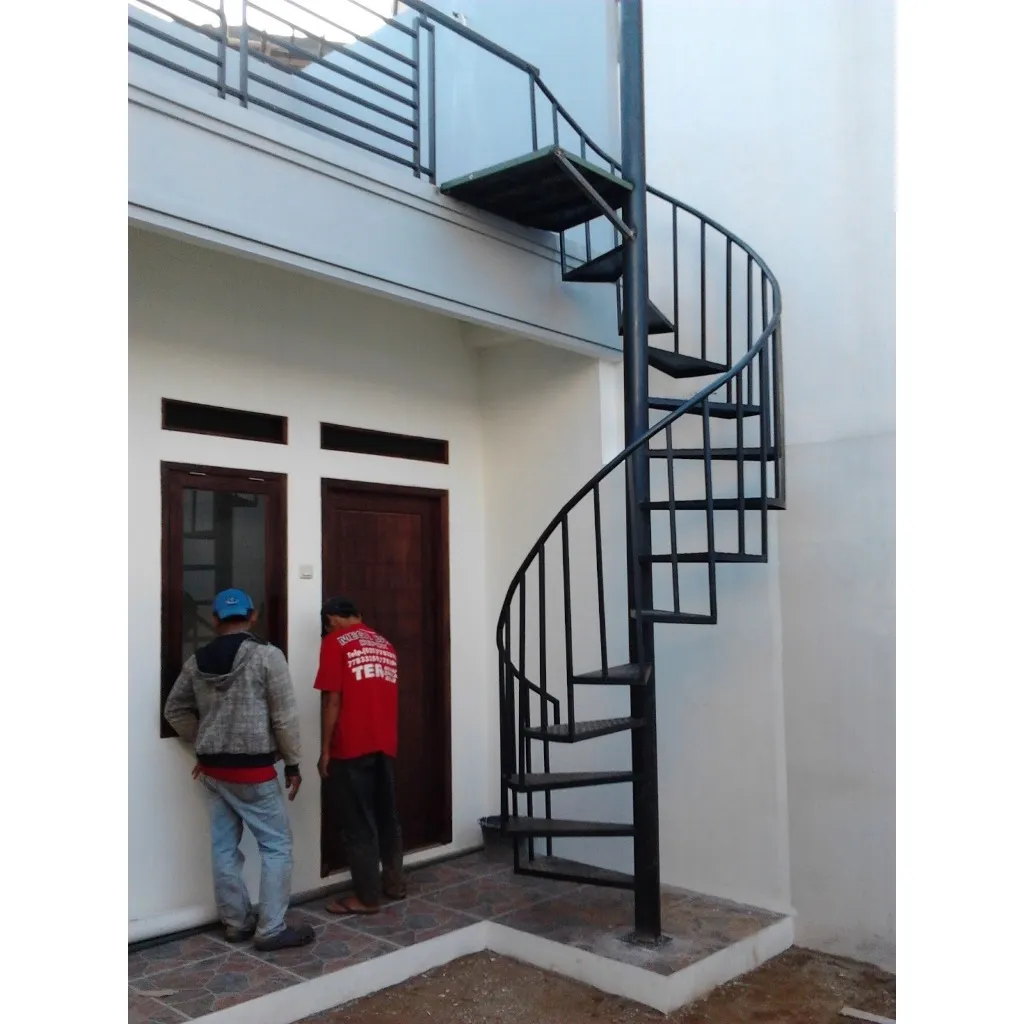
InteriorDesign.ID – Steel spiral stairs represent a quintessential solution for vertical access in environments constrained by space. Their distinctive circular geometry allows for a significantly smaller footprint compared to traditional straight staircases, making them an increasingly popular choice in urban dwellings and compact architectural designs. This innovative design, where the entire load is concentrated on a central column, necessitates robust material selection, with steel emerging as the preferred choice for its inherent strength and slender profile. Beyond their functional advantages, the dynamic, sculptural form of spiral stairs, particularly when constructed from exposed metal, injects a striking industrial character into any interior.

At InteriorDesign.ID, we frequently incorporate these elegant helical structures into our projects. However, before committing to a spiral steel staircase, it is imperative for homeowners and developers to thoroughly consider the technical specifications, safety protocols, and daily comfort aspects that define their long-term viability and user satisfaction.
Anatomy of the Helical Ascent: Understanding Spiral Stair Construction

Unlike their linear counterparts, spiral stairs rely on a centralized support system. The foundational component is a thick steel central pole, or center column, which serves as the primary structural anchor. The individual steps, known as treads, are ingeniously designed as wedge-shaped segments – narrowest near the central column and progressively widening towards the outer edge. This asymmetrical configuration is crucial, allowing the treads to wrap seamlessly around the central axis, forming the characteristic helical ascent. The precision of this design is paramount for both structural integrity and aesthetic flow.
The Enduring Appeal and Practicality of Steel Spiral Stairs

The growing demand for efficient space utilization, particularly in densely populated urban centers, has propelled steel spiral stairs into the spotlight. Their ability to conserve floor area without sacrificing vertical connectivity makes them an invaluable asset in a variety of settings.
- Optimized Footprint for Compact Living: The most compelling advantage of spiral stairs is their unparalleled efficiency in space utilization. They can fit into areas as small as 1.5 x 1.5 meters, freeing up substantial floor space on the lower level that would otherwise be consumed by a lengthy straight staircase. This characteristic is particularly beneficial in apartments, small homes, and commercial spaces where every square meter is valuable. Studies indicate that spiral stairs can reduce the required floor area by as much as 50-70% compared to conventional designs, a critical factor in urban planning and modern architectural trends focusing on efficiency.
- Aesthetic Versatility and Dynamic Character: Visually, the swirling form of a spiral staircase breaks the monotony of rigid architectural lines, introducing a sense of movement and artistry into a room. When fabricated from steel, particularly with exposed metal finishes, they embody a sleek, modern industrial aesthetic. This versatility allows them to complement a range of interior design styles, from minimalist and contemporary to rustic and avant-garde. The open design also facilitates the flow of natural light, preventing the stairwell from becoming a dark, enclosed space.
- Structural Integrity and Material Efficiency: Steel, renowned for its high strength-to-weight ratio, is an ideal material for spiral stair construction. Its ability to bear significant loads while maintaining a relatively slender profile is essential for the central column, which supports the entire structure. This material efficiency contributes to the overall minimalist appeal and ensures long-term durability.
Historical Context: From Fortresses to Modern Homes

The concept of spiral stairs is far from new. Early examples can be traced back to ancient times, with notable appearances in medieval castles where their clockwise ascent (for right-handed defenders) offered a tactical advantage. Historically, they were also used in bell towers, lighthouses, and libraries where space was at a premium. Their evolution into modern residential and commercial applications reflects a continuous adaptation to architectural challenges, proving their enduring functional and aesthetic relevance across centuries. The modern steel spiral staircase, however, leverages advanced fabrication techniques and material science to offer greater precision, strength, and design flexibility than its historical predecessors.
Navigating the Challenges: Practical Considerations and Design Solutions

While offering significant benefits, steel spiral stairs also present unique challenges that must be addressed during the planning and construction phases.
- Logistical Hurdles for Large Items: The inherent compactness that defines spiral stairs also creates a primary practical limitation: moving large furniture or appliances between floors. Items such as mattresses, sofas, or large cabinets are often impossible to maneuver up a spiral staircase. Consequently, these stairs are frequently designated as secondary access routes to areas like lofts, attics, rooftops, or mezzanines. If a spiral staircase is intended as the sole access point, alternative methods for furniture transport, such as hoisting through a window or using specialized lifting equipment, must be considered.
- Acoustic Properties and Mitigation: The resonant nature of steel means that footfalls on thin metal treads can generate significant noise, creating an echo chamber effect. This acoustic challenge requires proactive solutions during fabrication.
- Increased Plate Thickness and Stiffeners: Utilizing thicker steel plates (e.g., 4mm or more) for treads can significantly reduce vibration and dampen sound. Further enhancing this, the addition of cross-bracing or stiffeners on the underside of each tread provides structural rigidity, preventing flex and minimizing resonant vibrations.
- Rubber Dampening Pads: Incorporating rubber pads between the steel treads and their supporting brackets can effectively interrupt sound transmission. Rubber’s viscoelastic properties absorb kinetic energy from footsteps, preventing it from propagating through the metal structure and into the central column.
- Solid Wood Overlay: For a premium solution, cladding the steel treads with solid hardwood (e.g., teak or merbau) 2-3 cm thick offers excellent acoustic dampening. The density of wood not only mutes metallic sounds but also introduces a warmer, more inviting aesthetic and a more comfortable walking surface.
- Corrosion Vulnerability and Protective Finishes: Exposed steel is susceptible to rust, particularly in humid environments or outdoor installations. A meticulous anti-corrosion treatment process is non-negotiable for longevity.
- Thorough Surface Preparation and Epoxy Primer: Before any paint application, the steel must be meticulously prepared, typically through sandblasting or sanding, to remove mill scale, oils, and other contaminants. This is followed by an application of epoxy primer, which creates a robust barrier, sealing the metal’s pores and promoting strong adhesion for subsequent topcoats. Without proper priming, the finish coat is prone to peeling and premature failure.
- Durable Topcoats: For an industrial aesthetic, matte black or dark grey polyurethane (PU) paint offers excellent scratch resistance and durability compared to standard oil-based paints. A superior, albeit more expensive, option is powder coating, where a dry powder is electrostatically applied and then cured under high heat, forming a hard, resilient, and uniform finish that provides exceptional corrosion resistance. For outdoor spiral stairs, especially in coastal or high-humidity areas, marine-grade anti-corrosion paints are recommended for maximum protection.
Ergonomics and Safety: Designing for Secure Ascent

The unique geometry of spiral stairs demands careful attention to ergonomic design and safety features to ensure comfortable and secure daily use.
- Optimal Diameter for User Comfort: A common mistake is to design a spiral staircase with an excessively small diameter in an attempt to save even more space. Diameters below 120 cm can lead to users frequently bumping their shoulders against the central pole, making the ascent uncomfortable and potentially hazardous. For residential use, a diameter of 130 cm to 150 cm is generally recommended to allow sufficient elbow room and comfortable passage. Where space permits, a diameter of 160 cm provides an even more generous and user-friendly experience.
- Riser Height and Tread Width: The vertical rise (riser) of each step on a spiral staircase tends to be slightly steeper than on a straight stair. An ideal riser height falls between 17 cm and 20 cm. Exceeding 21 cm can quickly lead to leg fatigue and increase the risk of stumbling. Crucially, the tread width at the "walking line" – the area most commonly trodden, typically about 30 cm from the outer edge – should be a minimum of 25 cm to provide a stable and comfortable footing. The tapering nature of the treads means users must consistently step on the wider outer section; the narrow inner portion poses a tripping hazard, especially for children or the elderly.
- Structural Specifications: Central Pole and Treads: The central pole, being the primary load-bearing element, must be constructed from heavy-gauge, seamless steel pipe or thick SCH (schedule) steel. A minimum diameter of 4 inches (10 cm) with a wall thickness of 3-4 mm is recommended. A thinner pole will result in noticeable sway, compromising stability and eventually weakening welded connections. For the treads, a minimum thickness of 3 mm for checker plate (bordes) or solid steel plate is advised to ensure rigidity and a non-slip surface, especially for outdoor applications.
- Railing and Baluster Security: Given the visually deceptive nature of tapered treads, a robust and continuous handrail system is essential for safety.
- Handrail Height: The main handrail should be installed at a height of 90 cm to 100 cm from the nose of the tread. It must extend continuously from the bottom to the top floor, providing uninterrupted support. Round-profile materials, such as steel pipes or wooden dowels, are preferred for handrails as they offer a comfortable and secure grip.
- Baluster Spacing and Design: Vertical balusters (or pickets) should be spaced no more than 10 cm apart to prevent small children from squeezing through. Horizontal bars should be avoided as they can inadvertently create a ladder effect, inviting children to climb. Expanded metal mesh or perforated panels can also be used to fully enclose the side of the staircase, offering maximum safety and a distinct aesthetic.
Strategic Placement: Maximizing Functionality and Flow

The permanent nature of a spiral staircase necessitates careful consideration of its placement within a building.
- Corner Integration: Corners are often the most advantageous locations, allowing the staircase to remain unobtrusive and minimize disruption to central circulation paths. Walls on two sides provide visual integration and additional structural bracing. The direction of the spiral’s rotation should be calculated to ensure that the final step aligns naturally with the intended direction of travel.
- Mezzanine and Loft Access: Spiral stairs are perfectly suited for accessing mezzanines in loft apartments or homes with high ceilings. Their minimal footprint preserves the open layout of the main living area below, contributing to a sense of spaciousness.
- Rooftop and Utility Access: They are also a practical choice for accessing utility areas such as laundry rooms or rooftops. For outdoor installations, checker plate treads are highly recommended for their anti-slip properties in wet conditions, and a marine-grade anti-corrosion paint system is crucial for durability against weather elements.
Economic Considerations: Investment and Value

The cost of fabricating a steel spiral staircase typically depends on various factors, including design complexity, material specifications, and the chosen finish.
- Standard Specifications: For a standard steel spiral staircase (e.g., 130 cm diameter, 3 mm thick treads, basic primer and oil paint finish), the cost in Indonesia generally ranges from IDR 1,500,000 to IDR 2,500,000 per vertical meter. This figure usually encompasses material costs, welding, and installation.
- Premium Specifications: Opting for higher-end specifications, such as a double-helix design, thicker steel for enhanced rigidity, powder coating for superior durability, or solid hardwood overlays for treads, can significantly increase the investment. Premium options might range from IDR 3,500,000 to IDR 5,000,000 or more per vertical meter. It is always advisable to request a detailed breakdown of material types, thicknesses, and finishing processes from the fabricator to ensure transparency in budgeting.
Broader Impact and Future Outlook

The steel spiral staircase is more than just a means of vertical transportation; it is a design statement and a testament to clever spatial planning. In an era where urban density continues to increase and homes are becoming more compact, the demand for innovative, space-saving architectural elements like spiral stairs will only grow. Their ability to combine robust functionality with striking aesthetics makes them a key component in sustainable urban living and modern interior design philosophies. As material science and fabrication techniques continue to advance, we can expect even more versatile, durable, and aesthetically diverse spiral staircase designs in the future, further solidifying their place in contemporary architecture.
With appropriate material specifications, meticulous attention to acoustic dampening, and adherence to stringent safety standards, a steel spiral staircase can transform a constrained space into a visually captivating, highly functional, and secure circulation area for everyday use.