Eko Sulistyo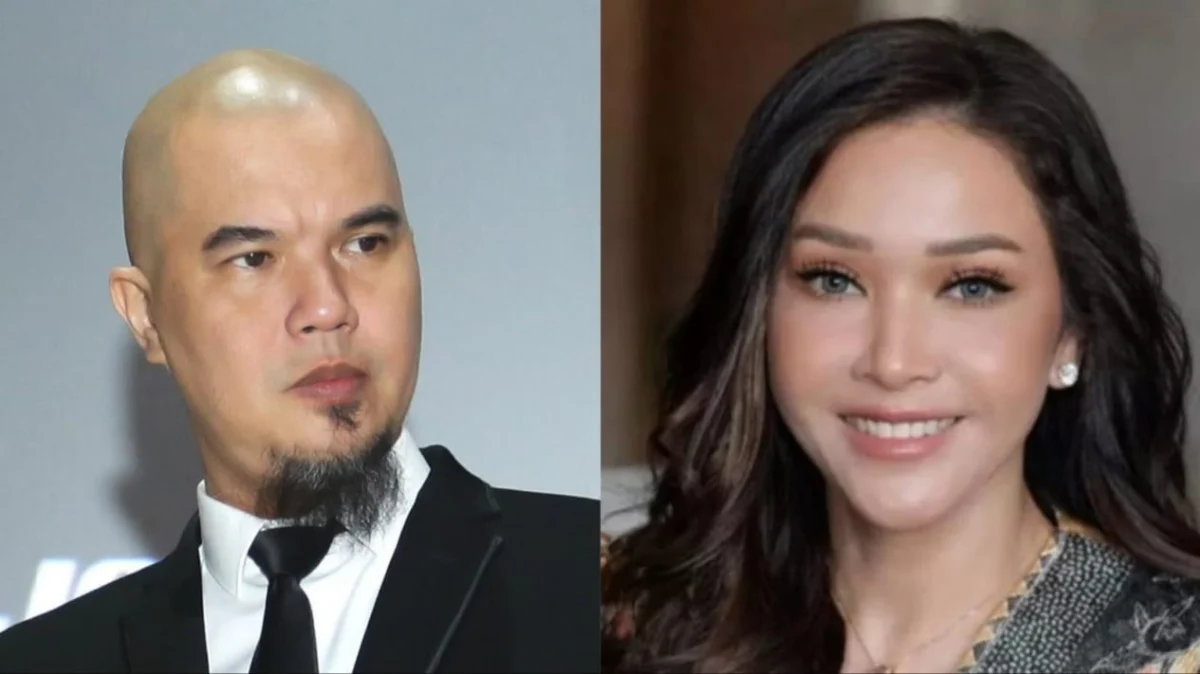
The Indonesian entertainment landscape has been once again jolted by the resurgence of a long-standing domestic narrative involving three of its most prominent figures: Ahmad Dhani, Maia Estianty, and Mulan Jameela. The latest wave of public discourse was triggered by recent provocative statements made by Ahmad Dhani, the frontman of the legendary rock band Dewa 19, regarding the circumstances surrounding his 2008 divorce from Maia Estianty. Rather than providing closure to a chapter that has remained a fixture of tabloid interest for nearly two decades, Dhani’s remarks have reignited a firestorm of criticism and prompted a digital excavation of past events.
The controversy reached a boiling point when Dhani publicly alleged that Maia Estianty had been involved in an undisclosed relationship with a high-ranking executive of a major television station during the final years of their marriage. This accusation, presented without contemporary evidence, was met with immediate skepticism and backlash from the Indonesian public. Social media platforms, particularly X (formerly Twitter) and Instagram, became battlegrounds for debate, with many netizens accusing Dhani of "playing victim" and attempting to rewrite the history of a separation that many still associate with his own alleged infidelity.
The Re-emergence of the "Ratu" Clarification Video
As the debate intensified, the digital community responded by circulating a vintage video clip that offers a stark contrast to the current atmosphere of animosity. The footage, which originally aired in the mid-2000s and recently went viral via the X account @pedas_manis, features Maia Estianty and Mulan Jameela sitting side-by-side during a press conference. At the time, the two were the faces of the immensely successful duo Ratu, and rumors of a rift—specifically regarding Dhani’s involvement with Mulan—were beginning to dominate the headlines.
In the recording, a remarkably composed Maia Estianty is seen addressing the media, actively attempting to shield both her husband and her musical partner from public scrutiny. "Today we want to clarify that there is no need for further conflict, because basically, there is nothing wrong between us. You can see now that Mulan and I are here, and we are fine," Maia stated in the video, which was dated for redistribution on May 3, 2026.
The video further captures Maia emphasizing that the relationship between Mulan Jameela and Ahmad Dhani was strictly professional. She urged the public and the media to cease the speculation that was threatening the harmony of the group and her family. For modern viewers, this archival footage serves as a poignant reminder of Maia’s historical efforts to maintain grace under pressure, a trait that has largely defined her public persona in the years following the divorce.
Historical Context: The Rise and Fall of an Era
To understand the weight of this current controversy, one must look back at the cultural impact of Ahmad Dhani and Maia Estianty’s partnership. Married in 1996, the couple was once considered the "power couple" of the Indonesian music industry. Dhani was the mastermind behind Dewa 19, while Maia proved her own musical prowess by forming Ratu in 2003.
The group Ratu underwent a significant transformation in 2005 when Mulan Jameela (then known as Mulan Kwok) replaced the original vocalist, Pinkan Mambo. Under Maia’s mentorship and Dhani’s production influence, Ratu became a commercial juggernaut, producing hits like "Teman Tapi Mesra" (Friends but Close) and "Lelaki Buaya Darat" (Womanizer). However, the professional success was soon overshadowed by rumors of a clandestine relationship between Dhani and Mulan.
The ensuing legal battle for divorce was one of the most publicized and acrimonious in Indonesian history. Filed in 2007 and finalized in 2008, the divorce involved complex disputes over child custody for their three sons—Al Ghazali, El Rumi, and Dul Jaelani—and allegations of domestic restrictions. For years, Mulan Jameela was labeled by the public as the "third party," a narrative that has persisted despite her subsequent marriage to Dhani and their long-term domestic life.
Chronology of the Conflict and Key Milestones
The timeline of this saga provides a clearer picture of how a private domestic dispute evolved into a decades-long public obsession:
- 1996: Ahmad Dhani and Maia Estianty marry, becoming a central pillar of the Jakarta music scene.
- 2003: Maia forms Ratu, initially with Pinkan Mambo.
- 2005: Mulan Jameela joins Ratu. The group reaches the height of its popularity.
- Late 2006: Rumors of marital discord between Dhani and Maia begin to surface in celebrity news outlets.
- 2007: Maia Estianty officially files for divorce. The process is marred by public accusations and a struggle for the couple’s residence.
- 2008: The South Jakarta Religious Court officially grants the divorce.
- 2009: Reports emerge of a secret marriage ("nikah siri") between Ahmad Dhani and Mulan Jameela, which is later confirmed.
- 2018: Maia Estianty marries businessman Irwan Mussry, signaling a new chapter in her life and a perceived "victory" in the eyes of her supporters.
- 2024–2026: Periodic statements by Ahmad Dhani continue to revisit the reasons for the 2008 split, often contradicting the established public narrative.
Public Sentiment and Social Media Reaction
The reaction to Dhani’s latest claims has been overwhelmingly critical. On platforms like X and TikTok, users have utilized the viral "clarification video" to argue that Maia Estianty was a victim of betrayal who tried to save the reputations of those who would eventually hurt her. The term "playing victim" has trended alongside Dhani’s name, as observers note that his accusations against Maia come at a time when she has largely moved on and achieved significant personal and professional success.
Data from social media monitoring tools indicates that the "Team Maia" sentiment remains strong among the Indonesian public, particularly among women who view her as a symbol of resilience. Conversely, the stigma surrounding Mulan Jameela and Ahmad Dhani’s early relationship appears to be a shadow they have yet to fully escape, despite their efforts to present a united family front over the last decade.
Analysis of the "Playing Victim" Narrative
Psychological and media analysts suggest that the persistence of this story is rooted in the "archetypes" the three individuals represent in Indonesian pop culture. Maia is often cast as the "patient wife" (istri yang sabar), while Mulan is cast as the "intruder" (pelakor), and Dhani as the "unpredictable patriarch."
Dhani’s decision to bring up Maia’s alleged past relationship with a TV executive is seen by some analysts as a strategic move to balance the "moral scales." By accusing Maia of her own indiscretions, Dhani may be attempting to mitigate the long-standing narrative that he was the sole antagonist in the marriage’s failure. However, in the age of digital archives, such attempts often backfire, as the public can easily retrieve old interviews and footage that contradict new claims.
Statements and Reactions from Involved Parties
While Maia Estianty has not issued a direct formal response to Dhani’s recent specific allegations, her social media activity often reflects a philosophy of "moving on" and focusing on her current happiness with Irwan Mussry. In past interviews, she has stated that she has forgiven the past but chooses to keep a distance to maintain her peace of mind.
Sources close to the family suggest that the three sons—Al, El, and Dul—have navigated the complexities of their parents’ relationship with varying degrees of difficulty over the years. Now adults, they maintain relationships with both parents, often acting as buffers in the public eye. However, the constant re-emergence of these scandals inevitably places them in an uncomfortable position.
Mulan Jameela, now a member of the Indonesian House of Representatives (DPR RI), has largely remained silent on this specific flare-up, focusing instead on her political career and her role as a mother. This silence is often interpreted as a strategy to avoid further fueling a fire that has burned for nearly twenty years.
Broader Impact on the Entertainment Industry
The ongoing saga between Dhani, Maia, and Mulan serves as a case study in the longevity of celebrity scandals in the digital age. It highlights how "digital footprints"—such as the viral clarification video—can be weaponized or used as a shield decades after the fact.
Furthermore, this controversy underscores the shift in how the Indonesian public consumes celebrity news. There is a growing demand for "receipts" and historical consistency. The fact that a video from 2006 can influence a narrative in 2026 demonstrates that for public figures, the past is never truly buried; it is merely waiting to be re-uploaded.
As of this report, the tension remains high in the digital sphere. While Ahmad Dhani continues to be a respected figure for his musical contributions to the nation, his personal life remains a polarizing topic that frequently overshadows his artistic legacy. The "Ratu" era, once a symbol of musical innovation, has unfortunately become a permanent footnote to one of the most enduring domestic dramas in Indonesian history. For now, the public remains captivated by the contrast between the calm Maia Estianty of the past and the vocal Ahmad Dhani of the present, ensuring that this story will likely continue to evolve for years to come.