Bambang Pamungkas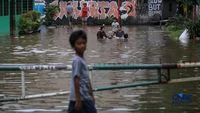
The American space agency, NASA, has issued a stark warning regarding significant indicators that could precipitate a global crisis in the coming decades, primarily driven by an accelerating rise in global sea levels. This phenomenon, projected to become increasingly massive by the end of the century, poses an existential threat to hundreds of millions worldwide, with Indonesia, particularly its capital Jakarta, identified among the most vulnerable regions. According to recent scientific projections, including those cited by Sciencing and reported by CNBC Indonesia, sea levels are anticipated to climb by 3 to 6 feet, or approximately 0.9 to 1.8 meters, by the year 2100. This alarming forecast is largely attributed to anthropogenic climate change, which is unequivocally accelerating the melt rate of polar ice sheets and glaciers, alongside the thermal expansion of ocean waters. The profound implications of this rise extend far beyond environmental concerns, threatening to displace vast populations, destabilize economies, and reshape coastlines globally.
The Alarming Projections from NASA and the Science Behind the Surge
NASA’s extensive Earth observation programs, utilizing an array of satellites like the TOPEX/Poseidon, Jason series, and the more recent Sentinel-6 Michael Freilich, provide precise measurements of global sea-level rise. These missions have consistently shown an upward trend, with the rate of increase accelerating over the past few decades. The latest projections underscore a critical threshold that could be reached within the lifetime of current generations. This anticipated rise is not uniform globally; regional variations are influenced by factors such as ocean currents, land subsidence, and gravitational effects from melting ice sheets.
The primary drivers of this accelerated sea-level rise are well-understood by the scientific community. Firstly, thermal expansion accounts for a significant portion. As the ocean absorbs more heat from the atmosphere due to rising global temperatures, the water molecules expand, occupying a larger volume. The world’s oceans have absorbed over 90% of the excess heat trapped by greenhouse gases, leading to measurable thermal expansion. Secondly, the melting of glaciers and ice sheets contributes a substantial volume of freshwater to the oceans. Greenland and the Antarctic ice sheets, in particular, hold enough ice to raise global sea levels by several tens of meters if they were to melt completely. While such a catastrophic scenario is not expected within the century, even partial melting of these massive ice bodies, coupled with the ongoing retreat of mountain glaciers worldwide, adds significantly to the oceanic volume. The Intergovernmental Panel on Climate Change (IPCC), the leading international body for assessing climate change, has consistently highlighted these mechanisms in its comprehensive assessment reports, providing increasingly refined projections that underscore the urgency of the situation. The scientific consensus is robust: human activities, primarily the emission of greenhouse gases, are the dominant cause of the observed warming and subsequent sea-level rise.
The Dual Threat to Jakarta: A City on the Brink
Among the cities facing the most immediate and severe consequences is Jakarta, the sprawling capital of Indonesia. The city is grappling with a formidable dual threat: the global phenomenon of sea-level rise compounded by an alarming rate of land subsidence. Jakarta has been identified as one of the fastest-sinking cities in the world, with certain areas experiencing land decline at an astonishing rate of up to 17 centimeters (approximately 6.7 inches) per year. This rapid subsidence is primarily driven by excessive groundwater extraction to meet the demands of its burgeoning population and industrial activities. As underground aquifers are depleted, the land above them compacts and sinks. This geological vulnerability is exacerbated by Jakarta’s inherent geography; much of the city is situated on a low-lying plain, parts of which were historically marshland.
Furthermore, Jakarta’s intricate network of 13 major rivers, all flowing into the Java Sea, makes nearly the entirety of its urban expanse highly susceptible to both fluvial (riverine) and tidal flooding, alongside the encroaching sea-level rise. The confluence of these factors creates a precarious environment where daily high tides can inundate coastal neighborhoods, and even moderate rainfall can lead to widespread urban flooding. The saltwater intrusion into freshwater aquifers, a direct consequence of rising sea levels and land subsidence, further degrades the city’s potable water supply, creating a vicious cycle that pushes residents to extract even more groundwater, accelerating the sinking process.
Historical Precedent and Government Response: The Relocation of the Capital
The threat to Jakarta is not merely a futuristic projection; its signs have been palpable for decades. The catastrophic floods of 2007 serve as a grim reminder of the city’s extreme vulnerability. That event resulted in an estimated 80 fatalities and caused economic damages soaring into hundreds of millions of US dollars, equivalent to trillions of Indonesian rupiah. Such recurring disasters have imposed immense social and economic burdens on the city, disrupting livelihoods, damaging infrastructure, and straining public services.
The escalating risks of flooding and land subsidence have been a pivotal factor, among others, in the Indonesian government’s momentous decision to relocate the national capital. In 2022, the ambitious project to establish Nusantara (IKN) in East Kalimantan began, with the explicit aim of creating a new, sustainable, and resilient capital city. The relocation represents a proactive, albeit monumental, effort to mitigate the profound threats posed by climate change and environmental degradation to Jakarta. While the move offers a potential long-term solution for the administrative heart of the nation, it leaves Jakarta, with its 10 million-plus inhabitants, still confronting its environmental challenges, necessitating massive infrastructure projects and adaptive strategies to protect its residents and economy. The proposed "Giant Sea Wall" or "Great Garuda" project, a massive coastal barrier aimed at protecting Jakarta, remains a subject of intense debate regarding its environmental impact, cost, and long-term effectiveness.
Global Hotspots: Cities on the Brink
The predicament faced by Jakarta is mirrored in numerous other major coastal cities across the globe, each grappling with unique vulnerabilities compounded by the overarching threat of rising sea levels.
-
Alexandria, Egypt: This historic city, a jewel of the Mediterranean, faces an imminent threat. Projections indicate that approximately 30% of Alexandria’s urban area could be submerged by 2050. Such a scenario would lead to the displacement of an estimated 1.5 million people and severely disrupt the fertile agricultural lands of the Nile Delta, a critical food basket for Egypt and the wider region. The city’s low elevation and the erosion of its coastal defenses exacerbate its vulnerability.
-
Miami, United States: Situated on a porous limestone bedrock, Miami is particularly susceptible to saltwater intrusion and rising tides. With an average elevation of only about 1.8 meters (6 feet) above sea level, roughly 60% of the city is projected to be at risk of inundation by 2060. Extensive coastal development, often on reclaimed land, has further amplified its exposure to storm surges and permanent inundation. The city is already investing heavily in pumps, raised roads, and improved drainage systems, but these are often considered temporary measures against a relentless rise.
-
Lagos, Nigeria: Africa’s largest city and a bustling economic hub, Lagos is experiencing land subsidence at rates exceeding 7.6 centimeters (3 inches) per year in some areas, compounded by its low-lying coastal geography. The city is routinely battered by severe floods, disrupting infrastructure, displacing communities, and impeding economic activity. Rapid and often unplanned urbanization, coupled with inadequate drainage systems, exacerbates the impact of rising water levels.
-
Dhaka, Bangladesh: The capital of Bangladesh, a country highly vulnerable to climate change impacts, is steadily sinking at a rate of approximately 1.3 centimeters (0.5 inches) annually. This subsidence, largely due to groundwater extraction and natural compaction of deltaic soils, combined with rising sea levels and intense monsoon rains, leads to increasingly frequent and devastating floods. The low-lying delta region is home to millions, many of whom are already climate migrants.
-
Yangon, Myanmar: While also facing flood risks from its coastal location and major rivers, Yangon’s vulnerability is uniquely compounded by its proximity to the active Sagaing fault line. This geological instability raises the specter of increased subsidence or even catastrophic sinking events triggered by seismic activity, in addition to the long-term threat of sea-level rise.
-
Bangkok, Thailand: The vibrant capital of Thailand is another major Asian city experiencing significant land subsidence, with its coastline receding by more than 1 kilometer (0.6 miles) per year in some stretches. Experts warn that a substantial portion of Bangkok could be submerged within the next century if current trends persist. Over-extraction of groundwater, similar to Jakarta, is a primary driver of subsidence, making the city a prime example of human-induced vulnerability.
-
Kolkata, India: Located on the Hooghly River delta, Kolkata is highly susceptible to flooding. A major flood in 2024, affecting a quarter of a million people, served as a stark warning. In a worst-case scenario of accelerated sea-level rise and extreme weather events, more than 10 million people in and around the Kolkata metropolitan area could face displacement. The city’s aging infrastructure and high population density further complicate adaptation efforts.
-
Manila, Philippines: The capital of the Philippines is sinking at an alarming rate, exceeding 10 centimeters (4 inches) per year in some districts, significantly higher than the global average. This rapid subsidence is predominantly caused by the unsustainable extraction of groundwater for residential and industrial use. The destruction of protective mangrove forests along the coast has also stripped the city of its natural defenses against storm surges and rising tides, leaving its densely populated areas exposed.
-
Megalopolis Guangdong-Hong Kong-Macau: This incredibly dense and economically vital region in southern China, encompassing some of the world’s largest port cities and manufacturing hubs, is projected to experience sea-level rise of up to 1.5 meters (5 feet) within the next century. The combined effects of rising seas, land subsidence in delta areas, and increasing intensity of typhoons pose an immense threat to its critical infrastructure, vast populations, and global supply chains.
Socio-Economic and Environmental Implications: A Cascade of Crises
The implications of accelerating sea-level rise are far-reaching, triggering a cascade of socio-economic and environmental crises.
- Mass Displacement and Migration: Hundreds of millions of people residing in low-lying coastal areas will face forced displacement, leading to internal and international migration flows. This will exert immense pressure on receiving communities, potentially exacerbating social tensions, resource scarcity, and humanitarian challenges.
- Economic Devastation: Coastal infrastructure, including ports, power plants, transportation networks, and residential areas, represents trillions of dollars in assets that are directly threatened. Loss of tourism revenue, damage to agricultural lands due to saltwater intrusion, and disruption of trade routes will inflict severe economic blows on affected nations.
- Food and Water Insecurity: Productive agricultural lands, particularly in fertile river deltas like the Nile, Mekong, and Ganges-Brahmaputra, are highly vulnerable to saltwater intrusion, reducing crop yields and threatening food security. Freshwater resources will also be contaminated by encroaching seawater, exacerbating water scarcity for drinking and irrigation.
- Ecosystem Loss: Coastal ecosystems such as mangrove forests, coral reefs, and wetlands serve as natural buffers against storms and provide critical habitats for biodiversity. Rising sea levels and increased ocean acidification threaten these vital ecosystems, diminishing their protective capacity and leading to significant biodiversity loss.
- Increased Disaster Risk: Higher sea levels amplify the impact of storm surges, making coastal communities more susceptible to catastrophic flooding during extreme weather events. The frequency and intensity of such events are also projected to increase with climate change, creating a compounding risk.
Mitigation and Adaptation Strategies: A Global Imperative
Addressing the global sea-level crisis requires a two-pronged approach: aggressive mitigation to curb greenhouse gas emissions and robust adaptation strategies to cope with the inevitable changes.
Mitigation: The scientific community and international bodies like the IPCC consistently emphasize the need for drastic and immediate cuts in global greenhouse gas emissions to limit global warming to well below 2°C, preferably to 1.5°C, above pre-industrial levels. This involves a rapid transition away from fossil fuels to renewable energy sources, enhancing energy efficiency, promoting sustainable land use, and developing carbon capture technologies. Every fraction of a degree of warming avoided translates to a slower rate of sea-level rise and more time for adaptation.
Adaptation: Even with stringent mitigation efforts, some level of sea-level rise is unavoidable due due to past emissions. Therefore, adaptation is critical. Strategies include:
- Coastal Defenses: Building hard infrastructure like seawalls, dikes, and barrages (e.g., the proposed Jakarta Giant Sea Wall, Dutch Delta Works). These are costly and can have ecological impacts, but may offer localized protection.
- Nature-Based Solutions: Restoring and protecting natural coastal ecosystems such as mangroves, coral reefs, and salt marshes. These provide cost-effective and ecologically beneficial defenses against storm surges and erosion.
- Managed Retreat: In some highly vulnerable areas, planned relocation of communities and infrastructure away from the coast may be the most pragmatic long-term solution. This is a socially and economically challenging strategy but can prevent greater losses in the future.
- Early Warning Systems and Preparedness: Enhancing disaster preparedness, early warning systems, and emergency response capabilities for coastal communities.
- Sustainable Urban Planning: Integrating sea-level rise projections into urban planning, land-use policies, and infrastructure development to build more resilient cities. This includes regulating groundwater extraction to mitigate land subsidence.
A Call to Action
NASA’s latest warnings, coupled with the stark realities faced by cities like Jakarta, Alexandria, and Miami, underscore the urgent need for a concerted global response. The scale of the challenge demands unprecedented international cooperation, significant financial investment, and bold political will. Failure to act decisively will lead to unparalleled humanitarian crises, economic disruptions, and environmental degradation, fundamentally altering the geography and habitability of vast swathes of our planet. The window of opportunity to implement effective mitigation and adaptation strategies is rapidly closing, making the current decade critical for safeguarding the future of coastal communities worldwide.