Bambang Pamungkas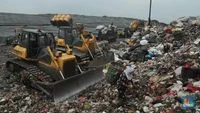
Jakarta, Indonesia’s sprawling capital, is embarking on a monumental effort to transform its severe waste crisis into a sustainable energy solution, marked by the formal collaboration between the Badan Pengelola Investasi Daya Anagata Nusantara (BPI Danantara) and the Provincial Government of DKI Jakarta. This strategic partnership, solidified through the signing of a Memorandum of Understanding (MoU) on Monday, May 4, 2026, aims to develop a series of Waste-to-Energy (WTE) facilities, a critical step toward alleviating the city’s overwhelming garbage problem and setting a precedent for urban sustainability across the archipelago. The urgency of the situation was underscored by Coordinating Minister Zulkifli Hasan during the MoU signing ceremony at Graha Mandiri Jakarta, highlighting the issue’s "emergency" status and the direct involvement of President Prabowo Subianto, who has reportedly been monitoring Jakarta’s waste management challenges closely.
The scale of Jakarta’s waste problem is staggering, with daily refuse generation exceeding 9,000 tons. A vast majority, approximately 87%, of this colossal volume is currently transported to the Bantar Gebang landfill in Bekasi, an integrated waste management facility that has long surpassed its operational capacity. Minister Hasan painted a vivid picture of the landfill’s precarious state, describing it as a "mountain of waste" towering to the height of a 16 to 17-story building. This dire situation has not only pushed the environmental limits of Bantar Gebang but also created significant public health and social challenges for the surrounding communities. The relentless accumulation of waste generates vast quantities of methane gas, a potent greenhouse gas contributing to climate change, alongside leachate, a toxic liquid that contaminates soil and groundwater. The constant flow of waste vehicles contributes to air pollution and traffic congestion, while the informal economy of waste pickers at the site operates under hazardous conditions.
The Genesis of an Emergency: Jakarta’s Waste Predicament
Jakarta, a megacity home to over 10 million people, faces an ongoing battle with waste management, a challenge compounded by rapid urbanization, increasing consumption patterns, and insufficient infrastructure. For decades, the Bantar Gebang landfill has served as the primary, albeit increasingly strained, receptacle for Jakarta’s municipal solid waste. Opened in 1989, it was originally designed for a much smaller population and waste volume. Its current state, as described by Minister Zulkifli Hasan, is a stark reminder of the consequences of delayed action and over-reliance on traditional landfilling methods. The sheer volume of waste arriving daily means that the landfill’s operational life is continually shortened, pushing authorities to seek urgent alternatives.
The environmental and social ramifications extend far beyond the landfill’s boundaries. Air quality in surrounding areas is often compromised by the odors and particulate matter emanating from the site. Local communities grapple with health issues linked to pollution, and the presence of such a massive waste dump often depresses land values and hinders local development. Moreover, the long-distance transportation of waste from Jakarta to Bantar Gebang incurs substantial logistical costs and contributes to carbon emissions, creating a complex web of interconnected problems that demand a comprehensive, integrated solution. The "darurat" or emergency status declared by Minister Hasan is not merely rhetoric but a reflection of the profound and multifaceted crisis impacting the capital’s sustainability and livability.
Presidential Mandate and Policy Imperatives
The direct involvement of President Prabowo Subianto in Jakarta’s waste crisis signifies the issue’s elevation to a national priority. Such high-level attention often signals a concerted push for accelerated action and resource allocation, aiming to overcome bureaucratic hurdles that have historically plagued large-scale infrastructure projects in Indonesia. The President’s reported frequent inquiries about Bantar Gebang underscore a commitment to resolving this persistent challenge, recognizing that a clean and sustainable capital is crucial for national image and public welfare.
This renewed impetus is firmly anchored in a critical regulatory framework: Presidential Regulation (Perpres) No. 109 Year 2025. This regulation is specifically designed to expedite the handling of urban waste emergencies through the deployment of waste-to-energy technologies. Perpres 109/2025 provides the legal and administrative backing necessary to streamline project development, including land acquisition, permitting processes, and financial mechanisms, which are often major impediments. Its primary objective is to facilitate the transition from conventional landfilling to advanced WTE methods, transforming waste from an environmental burden into a valuable resource, specifically electricity. This policy represents a significant shift in national waste management strategy, emphasizing resource recovery and circular economy principles. The regulation is expected to provide incentives for private sector participation and ensure regulatory certainty, critical factors for attracting the substantial investments required for WTE infrastructure.
A Strategic Alliance: BPI Danantara and DKI Jakarta
The collaboration between BPI Danantara and the DKI Jakarta Provincial Government is pivotal for the successful implementation of this ambitious WTE program. BPI Danantara, as the Investment Management Agency for Daya Anagata Nusantara, is positioned as a key state-owned entity tasked with managing and channeling investments into strategic national projects that align with Indonesia’s long-term development goals. Its involvement signifies a robust financial and technical backing for the WTE initiative, ensuring that the project benefits from sound investment principles and professional oversight. The agency’s mandate likely includes mobilizing capital, conducting feasibility studies, selecting appropriate technologies, and overseeing project execution to ensure efficiency and transparency. This partnership model aims to leverage the financial muscle and investment expertise of BPI Danantara with the local governance and operational capabilities of the DKI Jakarta Provincial Government.
The DKI Jakarta Provincial Government, on its part, brings essential local knowledge, regulatory authority, and the critical mandate for urban planning and public services. Its role will encompass identifying suitable land, facilitating community engagement, managing waste collection logistics, and integrating the WTE facilities into the city’s broader infrastructure network. The synergy between a national investment body and the provincial government is designed to create a robust framework that can navigate the complexities of large-scale infrastructure development, from securing permits to ensuring public acceptance and operational sustainability. This collaborative approach is intended to mitigate risks, accelerate project timelines, and ensure that the WTE plants are well-integrated into Jakarta’s urban fabric and serve its energy needs effectively.
Waste-to-Energy: Technological Solutions and Global Precedents
Waste-to-Energy technology offers a promising pathway to address Jakarta’s waste woes. While various WTE technologies exist, incineration with energy recovery is the most common and mature. This process involves burning municipal solid waste at high temperatures to generate steam, which then drives turbines to produce electricity. Other advanced WTE technologies include gasification and pyrolysis, which convert waste into synthetic gas or oil that can be used as fuel. The selection of the most appropriate technology for Jakarta will depend on factors such as waste composition, desired energy output, environmental regulations, and economic viability.
Globally, numerous cities have successfully implemented WTE solutions to manage their waste and generate clean energy. Singapore, for instance, a compact island nation with limited landfill space, relies heavily on WTE plants to process almost all its incinerable waste, significantly reducing the volume sent to its offshore landfill. European countries like Denmark, Sweden, and Germany have integrated WTE facilities into their circular economy models, where waste is first sorted for recycling, and residual waste is then converted into energy, contributing to their renewable energy portfolios. These examples demonstrate that with advanced emission control technologies, modern WTE plants can operate efficiently while meeting stringent environmental standards, transforming waste into a valuable resource rather than just a disposal problem. However, robust monitoring and public trust are crucial for successful implementation, particularly in densely populated areas.
Proposed Sites: Bantar Gebang and Tanjungan Kamal Muara
Gubernur DKI Jakarta has proposed two strategic locations for the new PSEL facilities: Bantar Gebang and Tanjungan Kamal Muara. The choice of Bantar Gebang is particularly symbolic and impactful. Transforming a portion of the existing, overflowing landfill into a modern WTE plant would represent a profound shift in its function, from a symbol of environmental degradation to a beacon of sustainable energy production. This approach would not only reduce the need for new landfill expansion but also offer a potential pathway for remediating the existing waste mountain over time. However, developing a WTE plant at Bantar Gebang comes with its own set of challenges, including managing the existing waste, addressing the social impacts on surrounding communities and waste pickers, and ensuring robust environmental safeguards.
Tanjungan Kamal Muara, located in North Jakarta, offers a different set of advantages. Its coastal location could facilitate the transport of waste by sea, potentially easing the burden on Jakarta’s congested road network. Proximity to existing industrial zones or power grids could also simplify electricity distribution. This location might also be less densely populated than areas immediately surrounding Bantar Gebang, potentially easing land acquisition and community engagement processes. However, coastal development for such facilities also requires careful consideration of environmental impacts on marine ecosystems and potential risks from rising sea levels. Both sites will require extensive environmental impact assessments, transparent public consultations, and state-of-the-art design to ensure they are integrated safely and effectively into their respective environments.
Economic and Environmental Benefits: A Dual Dividend
The development of WTE facilities in Jakarta promises a dual dividend of significant economic and environmental benefits. Economically, the projects are expected to stimulate investment, create thousands of jobs during construction and operation, and foster local expertise in advanced waste management technologies. By generating electricity, these plants will contribute to Indonesia’s energy security, reducing reliance on fossil fuels and potentially stabilizing electricity prices. The revenue generated from electricity sales can also contribute to the financial sustainability of waste management operations, reducing the burden on municipal budgets. Furthermore, successful WTE projects could attract further foreign direct investment in green technologies and infrastructure, positioning Indonesia as a leader in sustainable urban development in Southeast Asia.
Environmentally, the benefits are even more profound. WTE plants dramatically reduce the volume of waste sent to landfills, extending the lifespan of existing sites like Bantar Gebang and minimizing the need for new ones. This directly translates to reduced land use for waste disposal. More importantly, converting waste to energy helps mitigate climate change by avoiding methane emissions from decomposing organic waste in landfills, which is a greenhouse gas far more potent than carbon dioxide. While WTE plants do produce CO2, modern facilities with advanced emission controls are designed to minimize pollutants and often achieve a net reduction in greenhouse gas emissions compared to landfilling. The projects will also improve local environmental quality by reducing leachate contamination, air pollution from open burning, and the proliferation of disease vectors associated with uncontrolled waste dumps. The shift towards WTE aligns with Indonesia’s broader commitments to the Paris Agreement and its national climate targets, showcasing a tangible step towards a greener economy.
Challenges and the Road Ahead
Despite the strong political will and strategic partnerships, the path to successful WTE implementation in Jakarta is fraught with challenges. The sheer scale of the required investment is immense, likely necessitating a blend of public funding, private sector investment through public-private partnerships (PPPs), and potentially international financing. Securing these funds and ensuring transparent procurement processes will be crucial.
Technological selection is another critical aspect. Jakarta’s waste stream is often characterized by high organic content and moisture, which can impact the efficiency of certain WTE technologies. Careful planning, pilot projects, and detailed waste characterization studies will be essential to select the most robust and appropriate technology. Public acceptance and addressing "Not In My Backyard" (NIMBY) concerns are paramount. Engaging local communities through transparent communication, addressing health and environmental concerns, and demonstrating the benefits of modern WTE plants will be vital to gain social license to operate. Public education campaigns about waste segregation at the source will also be critical, as cleaner, more sorted waste streams lead to more efficient WTE operations and reduced emissions.
Finally, establishing a robust regulatory and monitoring framework will be essential to ensure that the WTE plants operate in an environmentally sound manner, adhering to strict emission standards and managing ash residues responsibly. The timeline for such large-scale infrastructure projects is often extensive, and maintaining momentum and political commitment throughout the development and operational phases will be key to realizing the full potential of Jakarta’s waste-to-energy vision.
A National Benchmark and Future Outlook
Coordinating Minister Zulkifli Hasan’s assertion that Jakarta’s success in managing its waste through WTE projects will serve as a "benchmark" for the entire nation underscores the profound significance of this initiative. If Jakarta, with its unique complexities and immense waste generation, can successfully implement these projects, it will provide a powerful template and proof of concept for other Indonesian cities grappling with similar challenges. Many urban centers across Indonesia face escalating waste crises, and Jakarta’s experience will offer invaluable lessons in terms of policy, technology, financing, and community engagement.
This ambitious program is more than just a local solution; it is a critical component of Indonesia’s broader sustainable development agenda. By transforming waste into a resource, the country takes a significant step towards a circular economy, enhances energy security, and contributes to its climate change mitigation efforts. The WTE initiative positions Jakarta, and potentially Indonesia, as a regional leader in innovative urban environmental management. The eyes of the nation, and indeed the international community, will be watching closely as Jakarta embarks on this transformative journey, hoping that the mountains of waste will indeed give way to a cleaner, greener, and more energetic future.