Nila Kartika Wati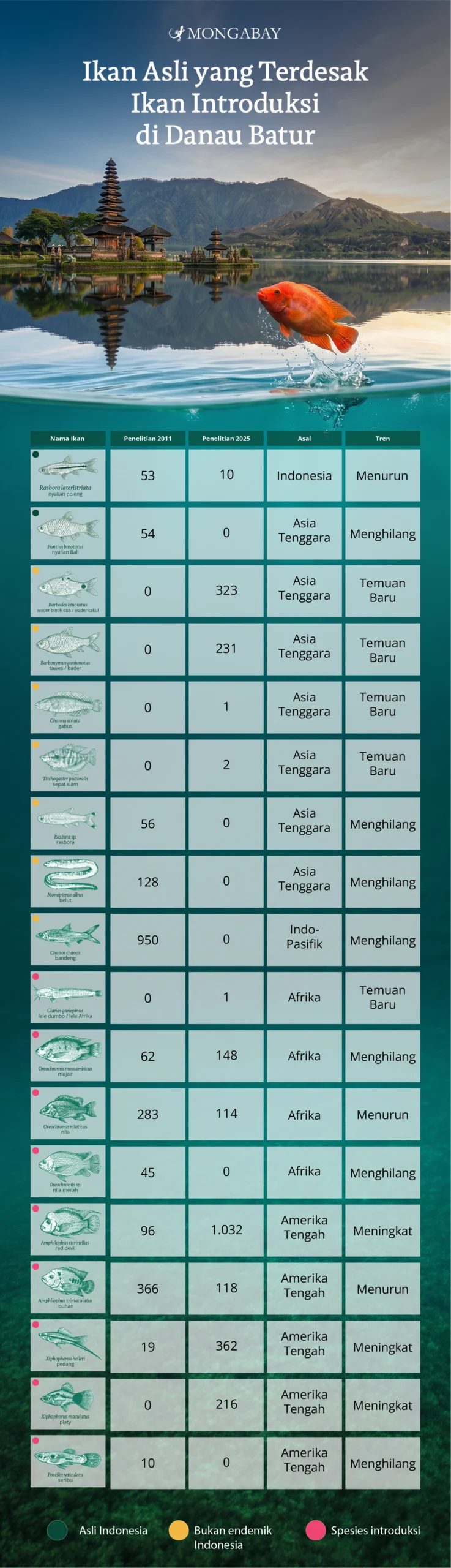
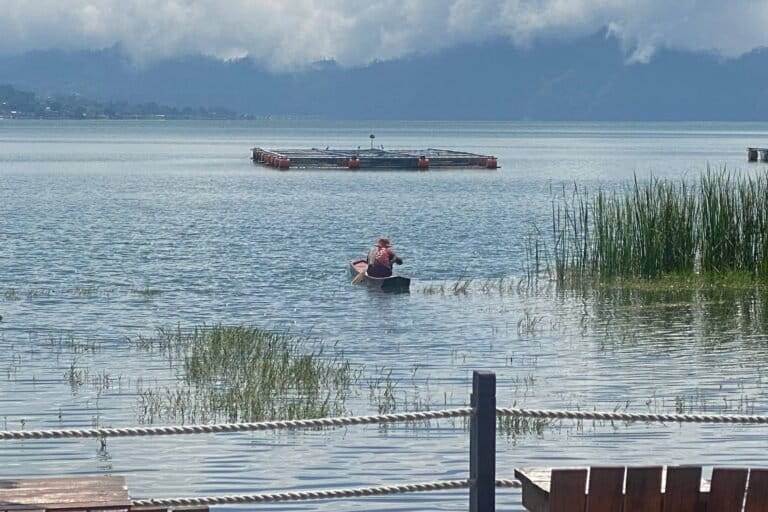
Made shook his head in frustration as he cast his fishing line into the tranquil yet troubled waters of Lake Batur. He had brought three fishing rods today, harboring a modest hope of catching tilapia or mujair to sustain his family. He cast once, twice, three times—and then many more. Each time the line pulled, the result was the same: the bright, aggressive scales of the "Red Devil" fish. For Made, a third-generation fisherman from Songan Village in Kintamani, Bangli, the sight of this fish has become a symbol of economic ruin. Standing on the Pura Jati pier on a humid Thursday, he lamented the state of the waters that have sustained his lineage for over thirty years.
The ecological crisis unfolding in Lake Batur is not merely a local anomaly but a stark warning of how invasive species can dismantle entire aquatic ecosystems and the communities that depend on them. Since 2022, the occupation of fishing, once a reliable source of income for thousands in the Kintamani highlands, has ceased to be viable. Made, like many of his peers, has been forced to transition into life as a farm laborer, using his spare time to fish only as a form of "pelipur lara"—a way to soothe the grief of a lost profession.
The Rise of an Ecological Predator
The Red Devil fish (Amphilopus citrinellus) is not native to Indonesian waters. Originating from the freshwater lakes of Nicaragua and Costa Rica in Central America, it was initially introduced to Indonesia as an ornamental aquarium fish. However, its attractive appearance masks a predatory nature. Equipped with sharp teeth and a high tolerance for environmental changes, the Red Devil is a formidable survivor. It adapts rapidly to fluctuating water temperatures and oxygen levels, and more importantly, it breeds with a speed that local species cannot match.
These traits have earned the Red Devil a place on the list of dangerous invasive species. According to a 2015 study titled "The Impact of Invasive Red Devil Fish on Fish Diversity in Inland Public Waters in Indonesia," the spread of this species is a primary factor in the projected extinction of approximately 87 indigenous Indonesian fish species. The crisis is not limited to Bali; similar invasions have been documented in major reservoirs and lakes across the archipelago, including Waduk Jatiluhur, Cirata, Saguling, Darma, Wadas Lintang, Kedung Ombo, Sermo, Sentani, and the iconic Lake Toba.
In Lake Batur, the invasion reached a tipping point around 2022. Fishermen recall a time, not long ago, when the nyalian (Rasbora sp.), a local fish of great cultural and ecological importance, was abundant. Today, the nyalian has virtually vanished from the catch, replaced by a monoculture of predators.
A Timeline of Decline: From Biodiversity to Monoculture
The transformation of Lake Batur’s biodiversity did not happen overnight. It is the result of decades of human intervention and the unintended consequences of industrializing the lake’s resources.
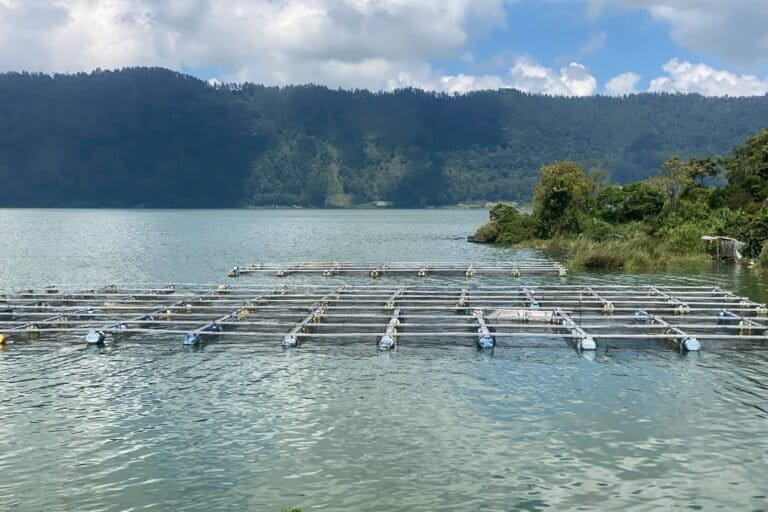
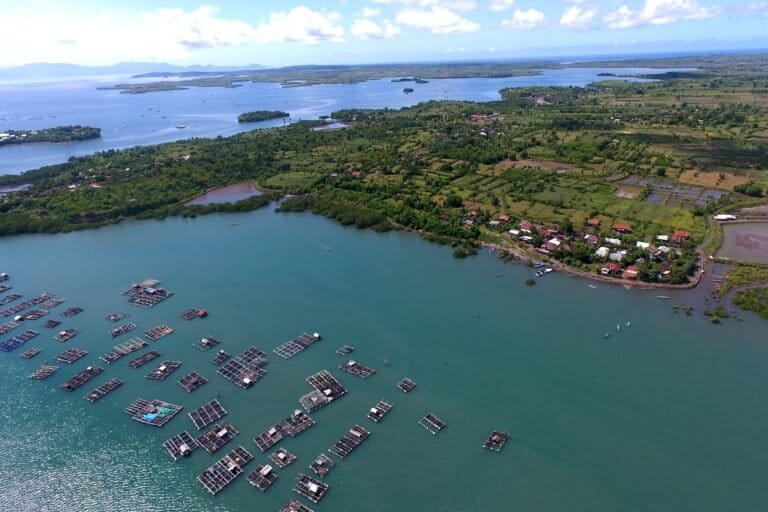
The chronology of the decline can be traced back to 2001, when Floating Net Cage (KJA) aquaculture was first introduced to the lake. Initially seen as a revolutionary economic driver, the KJA system allowed residents to supplement their farming income. By 2011, the activity had become massive. Research indicates that by the mid-2010s, there were approximately 12,200 KJA plots in Lake Batur—significantly exceeding the lake’s estimated carrying capacity of 10,047 plots.
Gde Raka Angga Kartika, a researcher from the Faculty of Marine Affairs and Fisheries at Udayana University, notes that even before the COVID-19 pandemic, the lake’s fish population was already dominated by "introduced" species—those brought in by humans for economic gain. These included Nile tilapia (Oreochromis niloticus) and various types of carp and catfish. While these species provided immediate financial benefits, they fundamentally altered the lake’s ecological balance.
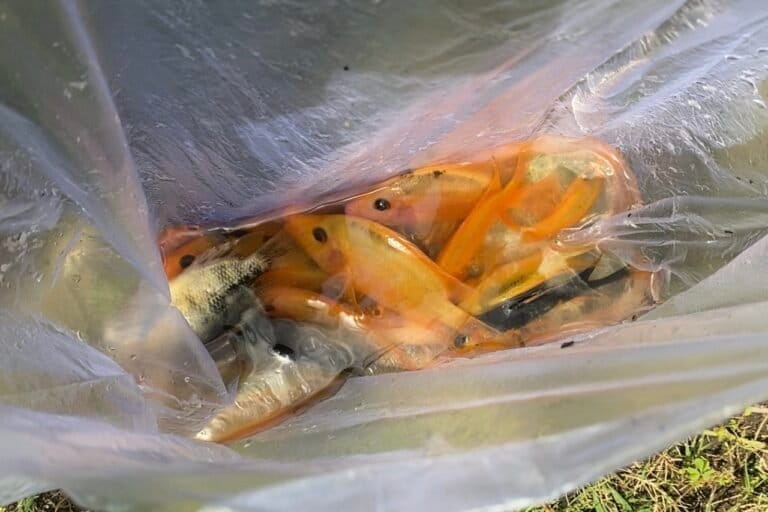
The Red Devil likely entered the system as a "hitchhiker." When KJA operators purchase fish seeds (larvae) from suppliers, often in Java, the water bags can accidentally contain the eggs or larvae of other species. While the probability of such an event is low, the sheer volume of seed introduction over twenty years made an invasion almost inevitable. Additionally, the practice of "merilis" or releasing aquarium fish into the wild by well-meaning but uninformed citizens has exacerbated the problem.
Scientific Evidence of a Collapsing Ecosystem
The data supporting the claims of local fishermen is staggering. A 2025 study by the Institute for Research and Community Service (LPPM) at Udayana University revealed that the Red Devil population in Lake Batur had increased by a shocking 975% compared to data from 2011. In numerical terms, the population density surged from a baseline index of 96 to 1,032 within fourteen years.
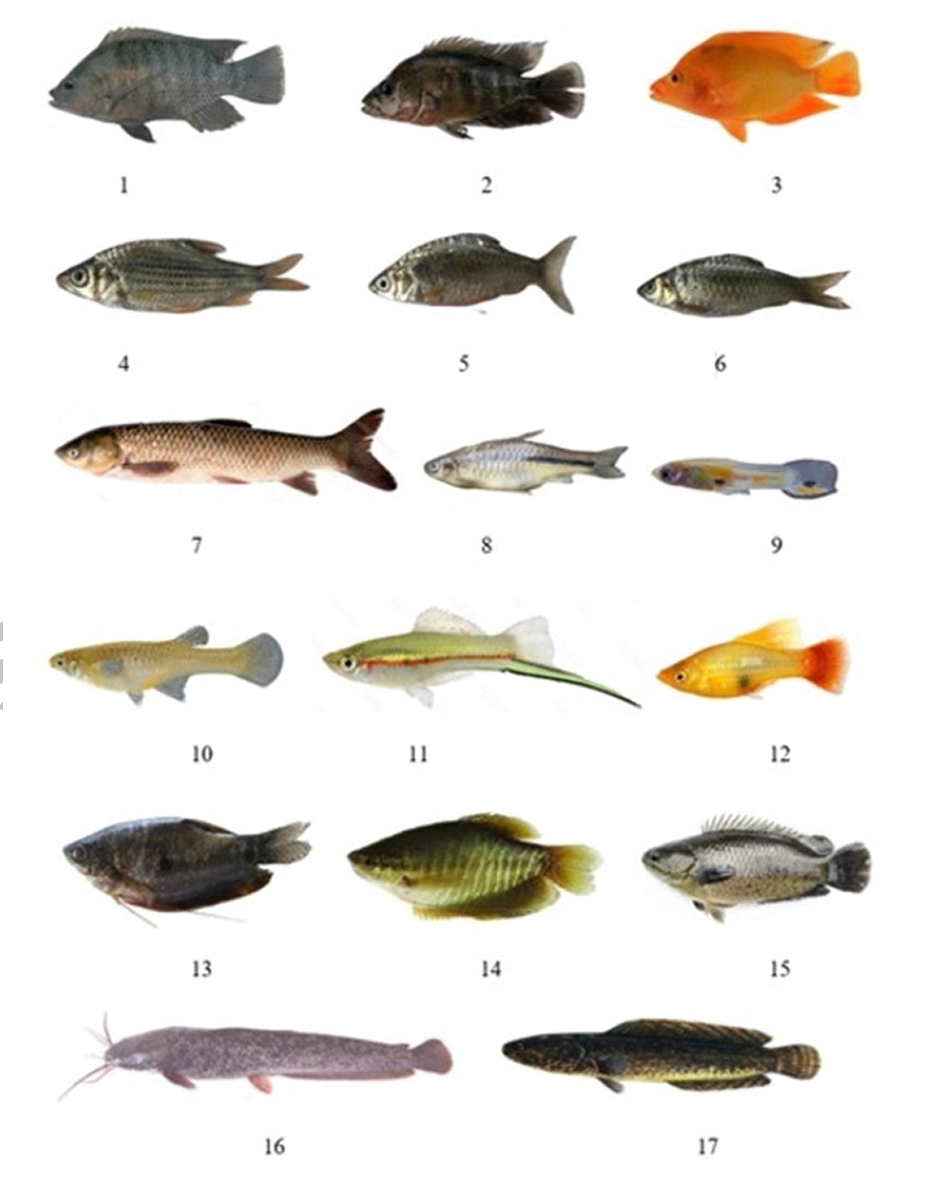
Comparative studies between 2011 and 2022/2025 highlight a grim trend. In 2011, researchers Sentosa and Wijaya found 12 types of introduced fish, with Nile tilapia being the most dominant (making up 63% of the population). By 2022, a study by Rudhy Gustiano and colleagues identified 17 species in the lake, but only six were native to Indonesia. Crucially, two previously common species—the milkfish (Chanos chanos) and the swamp eel (Monopterus albus)—could no longer be found at all.
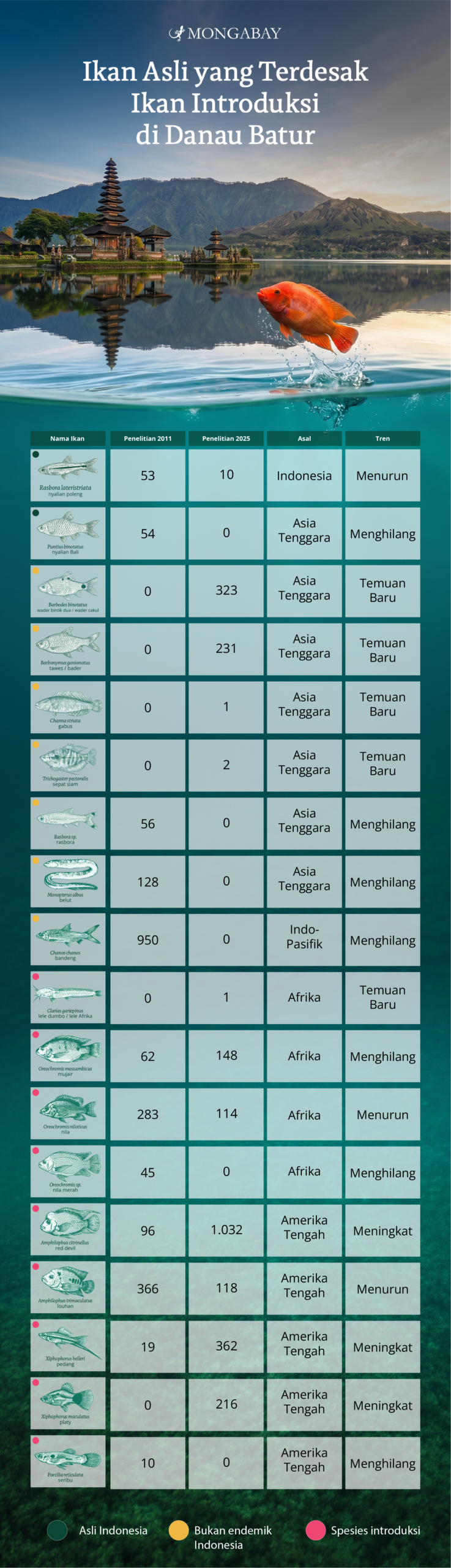
The current "fish pyramid" in Lake Batur has been flipped. The Red Devil, as an omnivorous predator, competes with local fish for food and directly consumes the larvae and eggs of native species. Because local species like the nyalian have a low stress tolerance, the presence of an aggressive competitor prevents them from breeding effectively, leading to a rapid population collapse.
Economic Devastation and the "Buruh Tani" Shift
For the people of Trunyan and Songan, the Red Devil is not just an ecological nuisance; it is a financial catastrophe. Ketut Juliana, a former fisherman from Trunyan Village, shared a harrowing account of the species’ impact. In 2021, he abandoned fishing entirely after a decade of struggle.
"At first, we were happy to see them because they were colorful," Juliana recalled. "But now there are billions of them, and they are a nightmare."
The sheer biomass of the Red Devil population is difficult to comprehend. Juliana recounted an afternoon four years ago when he cast his nets hoping for a few tilapia for dinner. The net felt impossibly heavy. When he pulled it toward his small boat, he saw a shimmering mass of red. He had caught an estimated 300 kilograms of Red Devils in a single haul. The weight was so great that his net—which should have lasted two years—ripped apart, and his small boat nearly capsized. He lost the fish, and more importantly, he lost a Rp 600,000 investment in his gear.
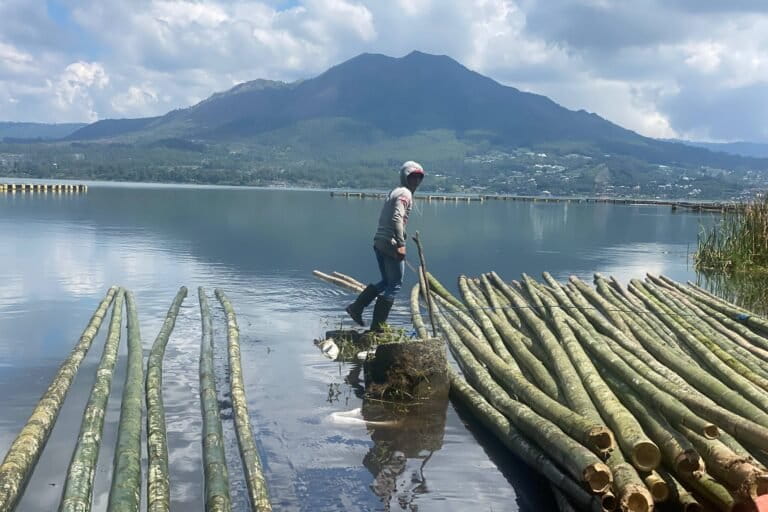
Furthermore, the Red Devil has proven to be a physical threat to the aquaculture infrastructure. The fish have been observed "gnawing" at the bamboo structures of the floating cages. Traditionally, a bamboo KJA could last 20 years; now, due to the damage caused by these fish, they must be replaced every five years, costing operators upwards of Rp 10 million per cycle.
Unlike tilapia or mujair, the Red Devil has almost no market value. Its flesh is sparse, and its body is dominated by sharp bones, making it difficult to consume. While tilapia can fetch high prices in Bali’s markets, the Red Devil is sold for a pittance—roughly Rp 2,000 per kilogram—primarily to be ground down into animal feed or fertilizer. For a fisherman, the effort required to catch them far outweighs the financial return.
Government Intervention: Mass Capture and Incentives
In response to the growing outcry from the Batur community, the Bali Provincial Department of Marine Affairs and Fisheries (DKP), in collaboration with the Bangli Regency government, has initiated a mass culling program.
Ida Ayu Putu Riastini, a fisheries supervisor at DKP Bali, explained that the first coordinated capture took place in February, netting two tons of Red Devils in a single day. The strategy is based on the findings of Udayana University, which identified the western part of the lake—rich in hot springs and aquatic vegetation—as the primary breeding ground for the invasive species.
The government has implemented an incentive system, paying fishermen Rp 2,000 per kilogram of Red Devil caught. This is not a "purchase price," as the fish is technically a prohibited biological entity, but rather an "incentive for removal." Every Friday, the collected fish are transported to a Fish Processing Unit (UPI) in Jembrana to be converted into fish meal. So far, over 18 tons have been removed from the Abang Batudinding area alone.
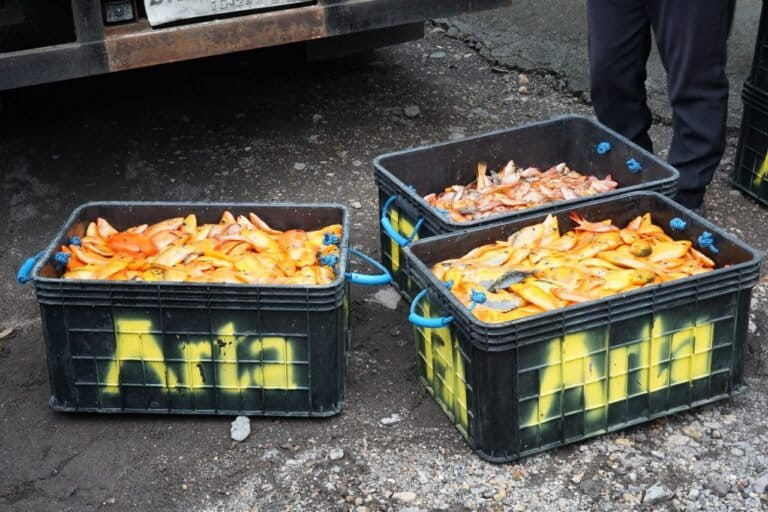
However, the program faces challenges. Fishermen argue that the Rp 2,000 incentive is too low to cover the costs of fuel and the wear and tear on their nets. There is also the logistical difficulty of scaling the operation to cover the entire 16-square-kilometer surface of the lake.
Analysis: A Path Toward Ecological Recovery?
The "Red Devil" crisis in Lake Batur serves as a case study in the fragility of island ecosystems. Researchers like Raka Angga Kartika argue that while mass capture is currently the only viable tool, it is a short-term fix. "Using a predator to eat the Red Devil is not an option, because that predator would likely eat everything else too," Raka explained.
The long-term solution requires a fundamental shift in how Indonesia manages its inland waters. The 2025 Udayana University study recommends several critical interventions:
- Strict Quarantine Protocols: Implementing rigorous monitoring for all biological matter entering the Lake Batur basin, particularly for KJA seed supplies.
- Public Education: A massive campaign to discourage the release of ornamental fish into natural waterways.
- Selective Fishing: Encouraging the use of specific gillnet sizes (1.0 to 2.0 inches) that target the smaller Red Devils while allowing larger, surviving native fish to pass.
- Restocking Native Species: Once the Red Devil population is stabilized, the government must invest in breeding and releasing endemic species like the nyalian Bali to reclaim their niche.
- Economic Innovation: Developing higher-value uses for the Red Devil catch, such as processed snacks (keripik) or organic liquid fertilizer, to make the culling process more financially attractive for locals.
The plight of Made and Juliana is a reminder that environmental neglect has a human face. As the Red Devil continues to dominate the depths of Lake Batur, the cultural identity of the Kintamani fishermen hangs in the balance. Without a sustained, multi-governmental effort to restore the lake’s natural equilibrium, the "Devil" may well remain the permanent master of Bali’s largest volcanic lake.