Nila Kartika Wati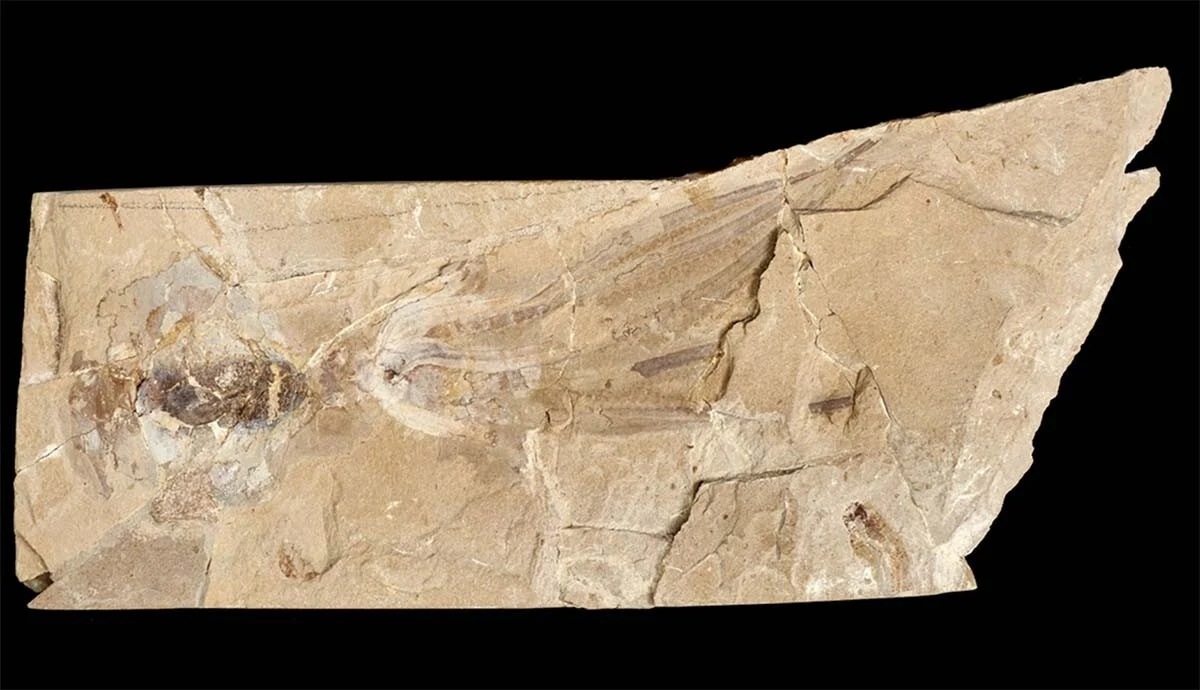
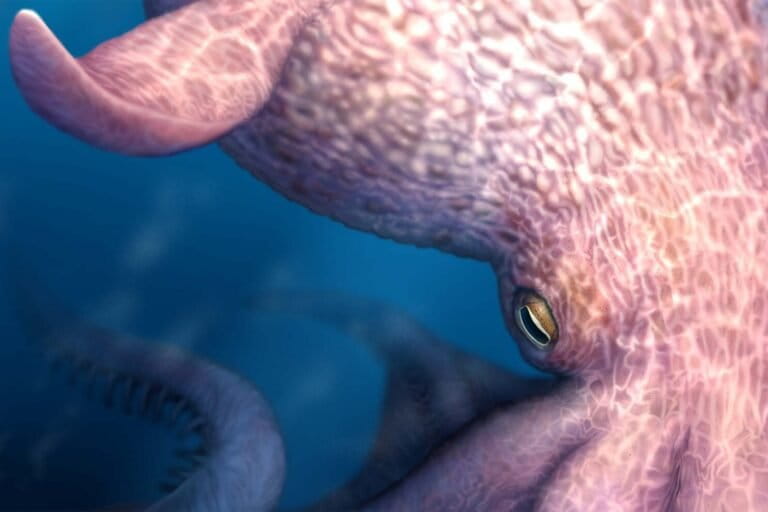
The ancient North Pacific Ocean, during the twilight of the Mesozoic Era, was home to a marine titan that challenges modern understanding of invertebrate evolution and predator-prey dynamics. Long before the rise of the great whales, the waters of the Late Cretaceous were prowled by Nanaimoteuthis haggarti, a finned octopus of the order Cirrata whose scale was previously thought impossible for a non-colonial invertebrate. According to a landmark study led by Shin Ikegami of Hokkaido University, in collaboration with the Natural History Museum in London, this prehistoric cephalopod reached staggering lengths of 7 to 19 meters. At its upper estimation, N. haggarti would have been comparable in size to a modern adult sperm whale (Physeter macrocephalus), firmly establishing it as one of the largest and most formidable predators in the history of Earth’s oceans.
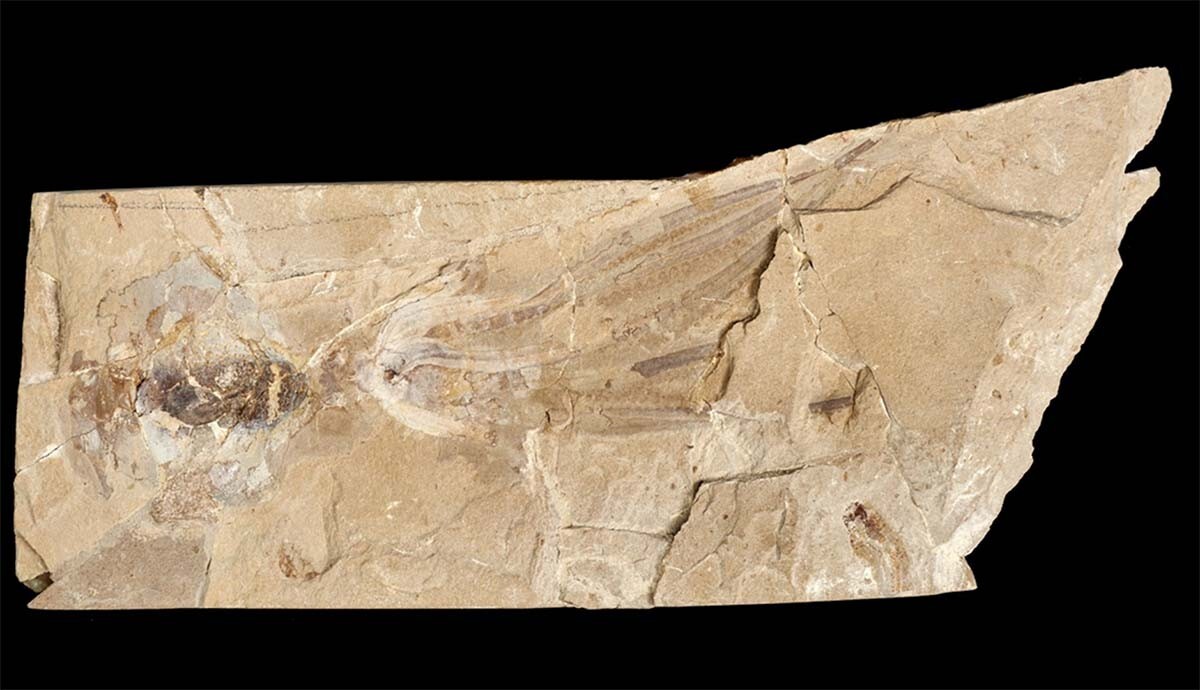
The research, published on April 23, 2026, in the prestigious journal Science, is the culmination of years of meticulous analysis of 27 fossilized jaw specimens recovered from geological formations in Canada and Japan. These fossils provide a rare window into the biology of soft-bodied organisms, which seldom leave a trace in the stratigraphic record. The discovery of N. haggarti and its slightly smaller relative, Nanaimoteuthis jeletzkyi, refutes the long-held scientific assumption that apex predatory niches in the open ocean have been exclusively reserved for vertebrates, such as marine reptiles, large fish, and later, cetaceans.
The Methodology of Reconstructing a Giant
Reconstructing the dimensions of an animal that lacks a skeleton is one of the most significant challenges in paleontology. Unlike dinosaurs, whose bones provide a structural map of their size, octopuses are composed almost entirely of soft tissue that decomposes rapidly after death. To overcome this, the research team focused on the "beak"—the chitinous mandibles that serve as the only hard parts of the octopus anatomy.
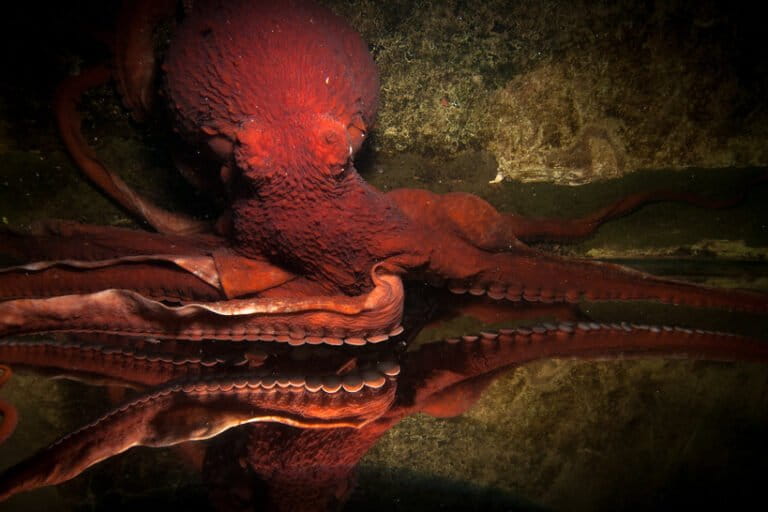
By applying advanced morphometric analysis to the 27 fossilized beaks found in the Nanaimo Group of British Columbia and various sites in Hokkaido, Japan, the researchers established a scaling ratio. They compared the fossilized jaw structures to those of modern cephalopods, including the Giant Pacific Octopus and the elusive deep-sea Cirrate octopuses. Zoe Hughes, the curator of fossil cephalopods at the Natural History Museum and a co-author of the study, noted that the dimensions of the beaks were unprecedented. "Most Cretaceous octopuses we are familiar with were roughly the size of a human palm," Hughes explained. "Finding a jaw of this magnitude indicates an animal that operated on a completely different ecological scale."
The upper estimates of 19 meters include the mantle and the elongated tentacles characteristic of the Cirrata order. This size places N. haggarti well beyond the dimensions of the modern Giant Squid (Architeuthis dux), making it a true heavyweight of the Cretaceous seas.
Ecological Dominance and the Battle with Mosasaurs
The Late Cretaceous was an era of "marine monsters," dominated by mosasaurs—reptilian predators that could reach lengths of 17 meters. For decades, it was assumed that mosasaurs were the unchallenged rulers of the North Pacific. However, the data regarding N. haggarti suggests a more complex power structure. The giant octopus likely occupied a similar ecological niche to the mosasaur, creating a scenario of intense interspecific competition.
Evidence of the octopus’s predatory habits is etched into the fossils themselves. The jaw specimens show significant signs of wear and tear, suggesting that N. haggarti frequently engaged with "hard-shelled" prey. During this period, the oceans were teeming with ammonites and large prehistoric fish with thick scales. The sheer crushing power required to breach such defenses points to a predator with immense muscular strength and a highly specialized diet.
Furthermore, the study posits that these giant octopuses were not merely passive hunters. Given their size and the energy requirements of such a large body, they would have been active pursuers, utilizing their fins for stability and speed in the deep-water columns of the ancient Pacific. This puts them in direct competition with the largest marine reptiles of the age for the same high-calorie food sources.
Cognitive Sophistication and the Discovery of "Handedness"
One of the most startling revelations of the Ikegami study concerns the intelligence of N. haggarti. Upon examining the wear patterns on the right and left sides of the fossilized beaks, the team noticed a distinct lack of symmetry. In many specimens, one side of the jaw showed significantly more erosion than the other.
This phenomenon is known as behavioral lateralization, or more commonly, "handedness." In the modern world, this trait is typically associated with high-functioning vertebrates, including humans, primates, and dolphins. It indicates a specialized neural organization where one side of the brain takes dominance for specific tasks. In the case of N. haggarti, this suggests that the octopus had a preferred way of manipulating prey or a specific "strike" orientation, implying a level of cognitive complexity and learned behavior that is rare in the fossil record.
"This isn’t just about size; it’s about sophistication," said lead researcher Shin Ikegami. "To find evidence of lateralization in an invertebrate from 75 million years ago suggests that the ancestors of modern octopuses had already developed the complex nervous systems that make today’s cephalopods so remarkably intelligent."
Evolutionary Paradox: From Titans to Dumbo Octopuses
The taxonomic reclassification of the Nanaimoteuthis genus has provided a surprising link to the modern day. Initially, these giants were thought to be related to the "vampire squid" (Vampyroteuthis infernalis), a distinct lineage of cephalopods. However, the 2026 study definitively places them within the order Cirrata, or finned octopuses.
This classification creates a striking evolutionary narrative. The direct modern descendants of these Cretaceous titans are the "Dumbo octopuses" (Grimpoteuthis). While N. haggarti was a 19-meter apex predator that could likely take down large marine reptiles, its modern relatives are small, soft-bodied creatures measuring only 20 to 30 centimeters, living in the extreme depths of the ocean as gentle scavengers or predators of small invertebrates.
The transition from a dominant apex predator to a specialized deep-sea resident is an example of evolutionary downsizing, likely driven by changing ocean temperatures and the collapse of high-energy food webs following the end of the Cretaceous. The study also highlighted Nanaimoteuthis jeletzkyi, a smaller relative that lived between 100 and 72 million years ago, measuring 3 to 8 meters. Together, these species show that for nearly 30 million years, giant octopuses were a mainstay of the global marine hierarchy.
The Mystery of the Extinction Timeline
The fossil record for N. haggarti and N. jeletzkyi ends abruptly approximately 72 million years ago. This date is significant because it precedes the Cretaceous-Paleogene (K-Pg) mass extinction event—the cataclysmic asteroid impact that wiped out the non-avian dinosaurs—by roughly 6 million years.
The disappearance of these giants from the fossil record remains a subject of intense debate. One theory suggests that they did not go extinct at that time but rather moved into deeper oceanic trenches where the conditions for fossilization are virtually non-existent. Another possibility is that a localized shift in ocean chemistry or temperature in the North Pacific led to a decline in the large-bodied prey they relied upon, forcing a lineage-wide reduction in size that eventually led to the smaller Cirrate octopuses we see today.
The lack of soft-tissue fossils makes it difficult to determine if a specific disease or a new competitor, such as early predatory sharks or different lineages of marine reptiles, drove them to the brink. However, the 27 beaks analyzed provide a clear end-point in the strata, suggesting a significant ecological shift occurred long before the asteroid hit.
Scientific Implications and Future Research
The identification of Nanaimoteuthis haggarti as a 19-meter predator fundamentally alters the narrative of Mesozoic marine life. It proves that the "arms race" of the Cretaceous was not limited to vertebrates. Invertebrates, through the cephalopod lineage, reached the pinnacle of size and intelligence, competing head-to-head with the most famous sea monsters of prehistory.
The research team plans to expand their search for fossils to other regions of the "Pacific Ring of Fire," hoping to find more specimens that might offer clues about the animal’s internal anatomy. There is also the slim but tantalizing possibility of finding a Lagerstätte—a sedimentary deposit that exhibits extraordinary fossil preservation—where soft tissue might have been replaced by minerals.
"We have only scratched the surface of what the Cretaceous oceans were hiding," Zoe Hughes concluded. "If an octopus the size of a whale could go unnoticed by science for over a century, it makes you wonder what other giants are still waiting to be discovered in the deep time of our planet’s history."
This discovery serves as a reminder of the fluidity of evolution. The story of Nanaimoteuthis is a testament to the versatility of the cephalopod form, which has survived multiple mass extinctions by adapting from the terrifying giants of the North Pacific to the small, ear-finned curiosities of the modern abyss. As marine paleontology moves forward, the giant octopus of the Cretaceous will stand as a symbol of the hidden complexity and unexpected scale of life in Earth’s ancient oceans.