Nila Kartika Wati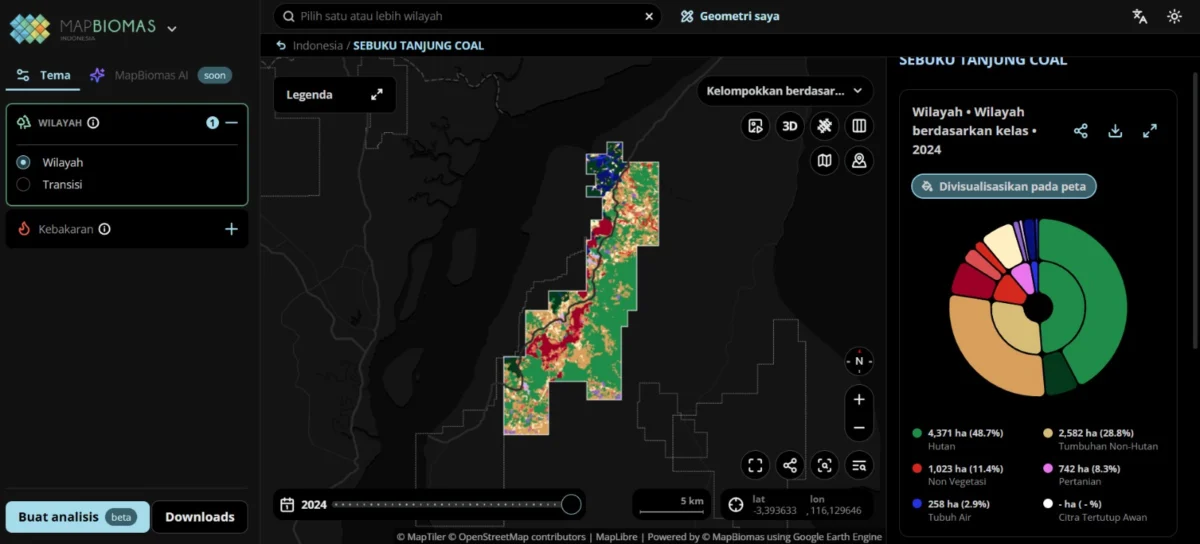
The administrative landscape of land management in Kotabaru Regency, South Kalimantan, has descended into a state of chronic disorder, as a series of land-grabbing allegations against coal mining operations expose deep-seated systemic failures. While the Regional Office of the National Land Agency (Kanwil BPN) has previously faced scrutiny for the unilateral cancellation of 717 transmigration land titles (SHM), new reports indicate that the encroachment of community-owned land by mining interests continues unabated. The conflict highlights a predatory intersection between corporate expansion, bureaucratic stagnation, and the marginalization of local landowners who find their legal protections evaporating in the face of industrial demand.
The Ruined Investment of Megasari Village
The case of Haris Fadillah and Yoni Gunawan, a married couple from Megasari Village in the North Pulau Laut District, serves as a poignant illustration of the human cost of these land disputes. In 2020, the couple invested heavily in a 2.8-hectare plot of land, purchasing it for IDR 110 million while it was still under "segel" (sealed/village-recognized) status. Their vision was to transform the land into a productive agricultural asset, planting 350,000 porang (Amorphophallus muelleri) seedlings, along with dozens of pine and banana trees.

To fund this ambitious project, the couple secured a bank loan of IDR 2.7 billion, using their family home and land in Banjarbaru as collateral. The investment was calculated with precision; porang, a high-value export commodity used in food and industrial applications, was expected to yield a harvest within four years that would comfortably settle their debts. By early 2023, the plantation was thriving, with the porang plants showing exceptional growth.
However, the couple’s aspirations were shattered when PT Sebuku Tanjung Coal (STC) claimed that a significant portion of their land fell within the company’s Mining Business License (IUP) area. According to Yoni, the first communication from the company arrived via text message in October 2022. This revelation came as a shock, as Yoni had been attempting to upgrade her land status from "segel" to a formal Ownership Certificate (SHM) through the BPN since 2021. Despite paying all required taxes and administrative fees in 2022, the BPN process remained inexplicably stalled—a delay Yoni now suspects was orchestrated to accommodate the mining company’s interests.
Unilateral Clearing and the Financial Abyss
As the dispute escalated, PT STC offered a compensation package that the landowners deemed insulting. The company’s internal valuation estimated the 2.32-hectare affected area at IDR 107 million for the land and IDR 407.7 million for the crops, totaling approximately IDR 514.7 million. Yoni rejected the offer immediately, pointing out that the cost of the porang seedlings alone—purchased at IDR 3,000 each for 350,000 plants—amounted to over IDR 1.05 billion. This figure did not include the wages for 27 laborers over six months, ongoing maintenance costs, fertilizer, or the interest on their massive bank loan.
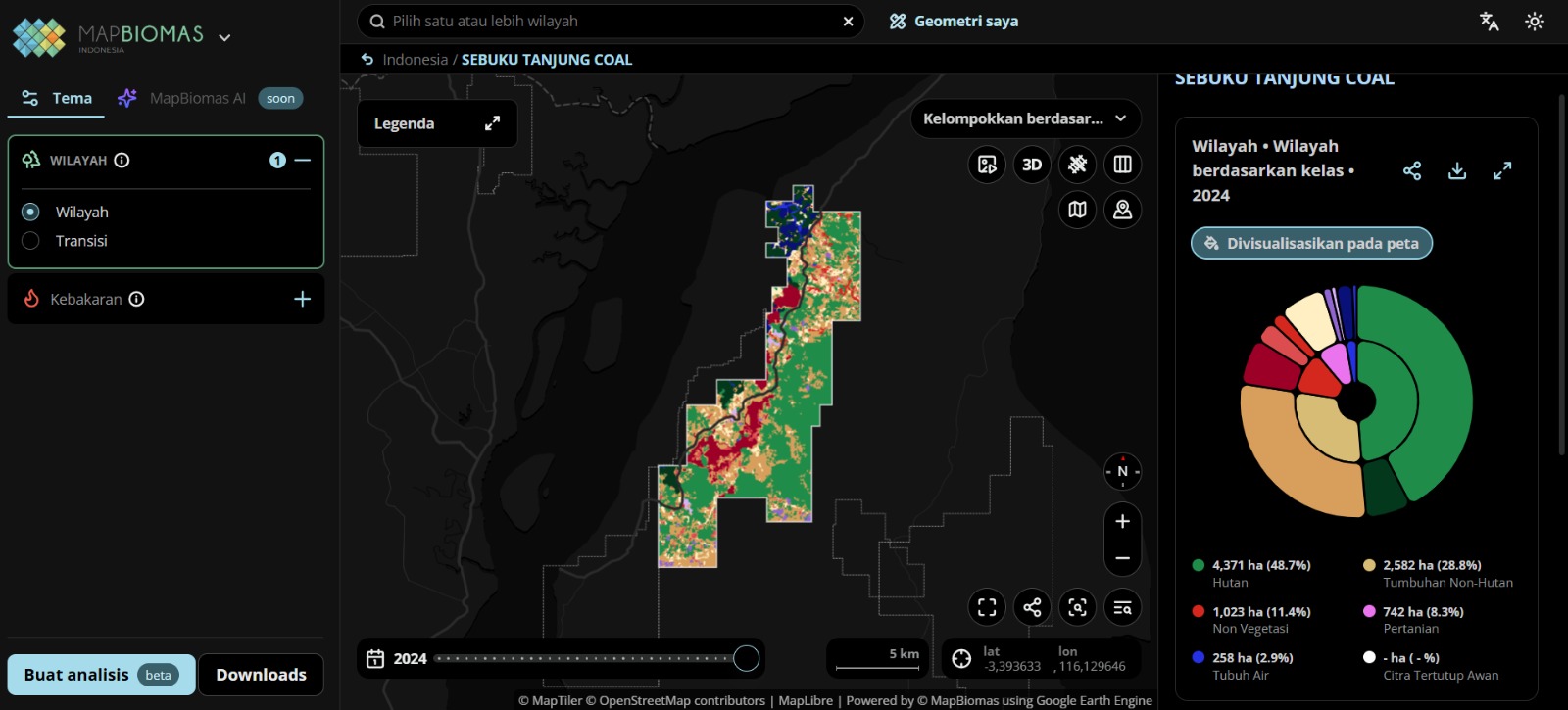
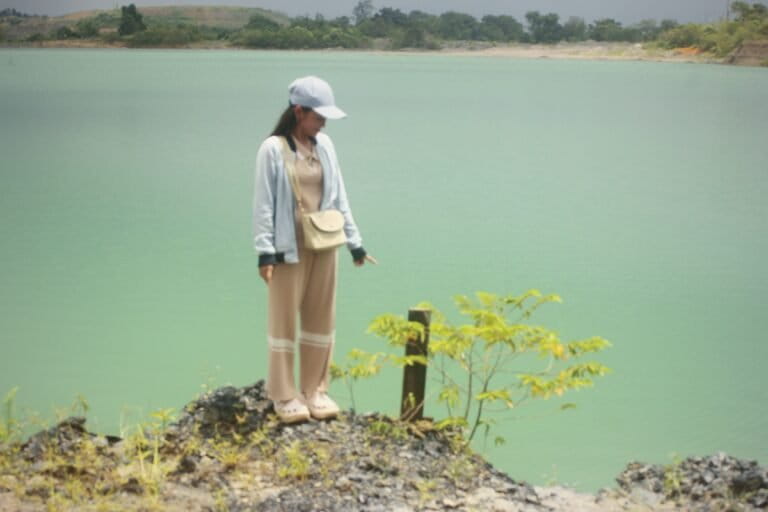
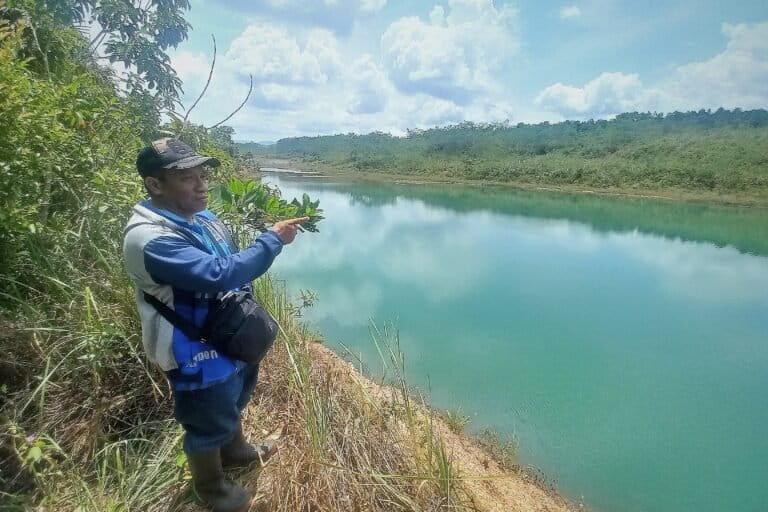
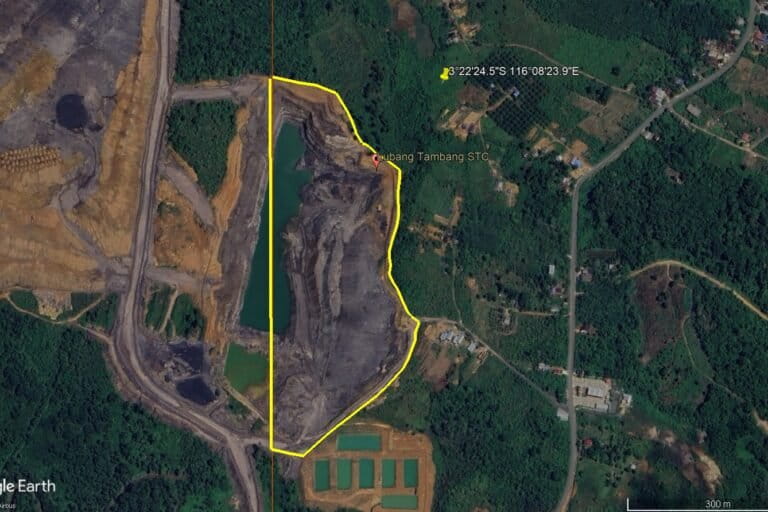
Disregarding the lack of a compensation agreement, PT STC allegedly proceeded with unilateral land clearing in 2024. The thriving porang plantation was razed to the ground to make way for coal extraction. A year later, having extracted the resources, the company moved on, leaving behind a massive, water-filled pit spanning approximately 1,507 square meters—a common environmental scar known locally as a "void."
The aftermath has been catastrophic for the family. While Yoni finally received her SHM in January 2026 after intense legal pressure on the BPN, the land area had shrunk to 2.4 hectares and remained a ruined mining site. With their source of income destroyed and the bank loan in default, their family home is now facing auction. They are trapped in a cycle of debt and displacement, a direct consequence of a mining operation that prioritized extraction over existing property rights.
The Selaru Incident: Forgery and Deception
The pattern of land grabbing extends to Selaru Village, where residents Anton Timur and Abdul Muthalib have faced a similar ordeal. Unlike Yoni, these two landowners had held formal SHM titles since 2015 for their respective one-hectare plots. They had utilized the land for fruit orchards and livestock. In 2021, PT STC arrived, claiming the land was part of their concession under a Right to Use Certificate (SHP).
The legal hierarchy in Indonesia, governed by the Basic Agrarian Law (UUPA), clearly dictates that an SHM (Ownership Right) is the highest form of land title, far outweighing an SHP or a mining license. Despite this, the company allegedly ignored the residents’ superior legal standing. During a mediation session at the Pulau Laut Tengah Police Station on April 21, 2021, the local police chief reportedly guaranteed that no land clearing would occur until a settlement was reached. Tragically, the landowners discovered that while they were at the police station for mediation in the morning, the company’s heavy machinery was already excavating their land by the afternoon.
The conflict took a darker turn during legal proceedings in July 2025. It was revealed that the company’s internal documentation for the land contained a forged signature of the Village Secretary, Abdul Ghani. Furthermore, the documents erroneously listed Ghani as the Village Head—a position he never held. Despite this evidence of fraud, the landowners found themselves the targets of criminalization. A third party, Nilawati, reported Anton and Abdul to the police for alleged document falsification, forcing the men to flee to Jakarta briefly to seek protection from members of the National Parliament.
A Timeline of Regulatory Failure
The legal struggle to hold PT STC accountable is mired in a complex history of shifting permits and judicial interventions. The company’s IUP was originally issued in 2010 by the Kotabaru Regent. In 2018, the Governor of South Kalimantan, Sahbirin Noor, attempted to revoke the permits for STC and its affiliates due to environmental and social concerns. However, the company engaged high-profile legal counsel, including Yusril Ihza Mahendra, and successfully sued to have the permits reinstated via the Administrative Court (PTUN).
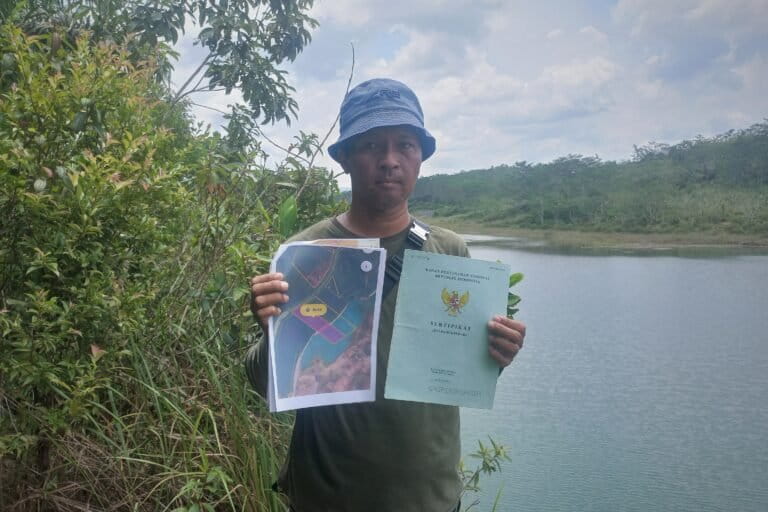
In 2020, as mining authority shifted from regional to central government, companies were required to undergo a permit alignment process. Legal experts, including Hafizh Halim, the attorney representing the Kotabaru victims, suggest that STC may have bypassed critical procedures during this transition. Under the Mining Law (UU Minerba), specifically Articles 135 through 138, a mining company is legally obligated to settle all land rights and reach agreements with landowners before commencing operations. An IUP is merely a permit to conduct business; it does not grant ownership of the surface land.
The issuance of SHP titles to mining companies on top of existing community SHM titles is described by legal advocates as "legal acrobatics" facilitated by the "land mafia" within the BPN. By creating a situation where two sets of certificates exist for the same plot, the state creates a "civil dispute" that allows companies to continue operations while the landowners are tied up in years of expensive litigation.
Systemic Implications and the Failure of Agrarian Reform
The crisis in Kotabaru is not an isolated incident but a reflection of a national trend. Roni Septian, Head of Advocacy at the Consortium for Agrarian Reform (KPA), notes that the mining sector was one of the largest contributors to land dispossession in Indonesia in 2025. The KPA recorded at least 46 major agrarian conflicts in the mining sector covering 58.9 thousand hectares, impacting over 11,000 families.
The root of the problem lies in the "top-down" nature of mining permits. Licenses are often granted in Jakarta or provincial capitals based on maps that fail to account for actual land use on the ground. When a company receives an IUP, it often treats the land as a blank slate, ignoring the farms, homes, and legal titles of the people living there. This approach effectively treats the rural population as "squatters" on their own ancestral or legally purchased land.
Furthermore, the criminalization of dissent has become a standard corporate strategy. In 2025 alone, over 400 farmers were reportedly criminalized for resisting land evictions. In Kotabaru, the police and the BPN have been accused of "passing the buck," with the police referring victims to the BPN, and the BPN claiming they are waiting for instructions from the central government, all while the mining companies continue to excavate.
Conclusion: The Need for Accountability
As of late 2026, the victims in Kotabaru remain in a state of legal and financial limbo. Despite reporting the matter to the Ministry of ATR/BPN and the Ministry of Energy and Mineral Resources (ESDM) in Jakarta, no concrete action has been taken to restore the land or provide fair compensation. The BPN Kotabaru has remained silent, and the mining company has not responded to formal inquiries regarding the allegations of forgery and unilateral clearing.
The situation underscores the urgent need for a Presidential-led Agrarian Reform Body with the authority to override corrupt local bureaucracies and resolve overlapping land claims. Without such an intervention, the "Ownership Certificates" held by Indonesian citizens are little more than paper promises, easily shredded by the machinery of the mining industry. For the people of Kotabaru, the "black gold" beneath their feet has brought nothing but poverty, debt, and the destruction of their livelihoods, serving as a grim reminder of the high cost of unregulated industrial expansion.