Nila Kartika Wati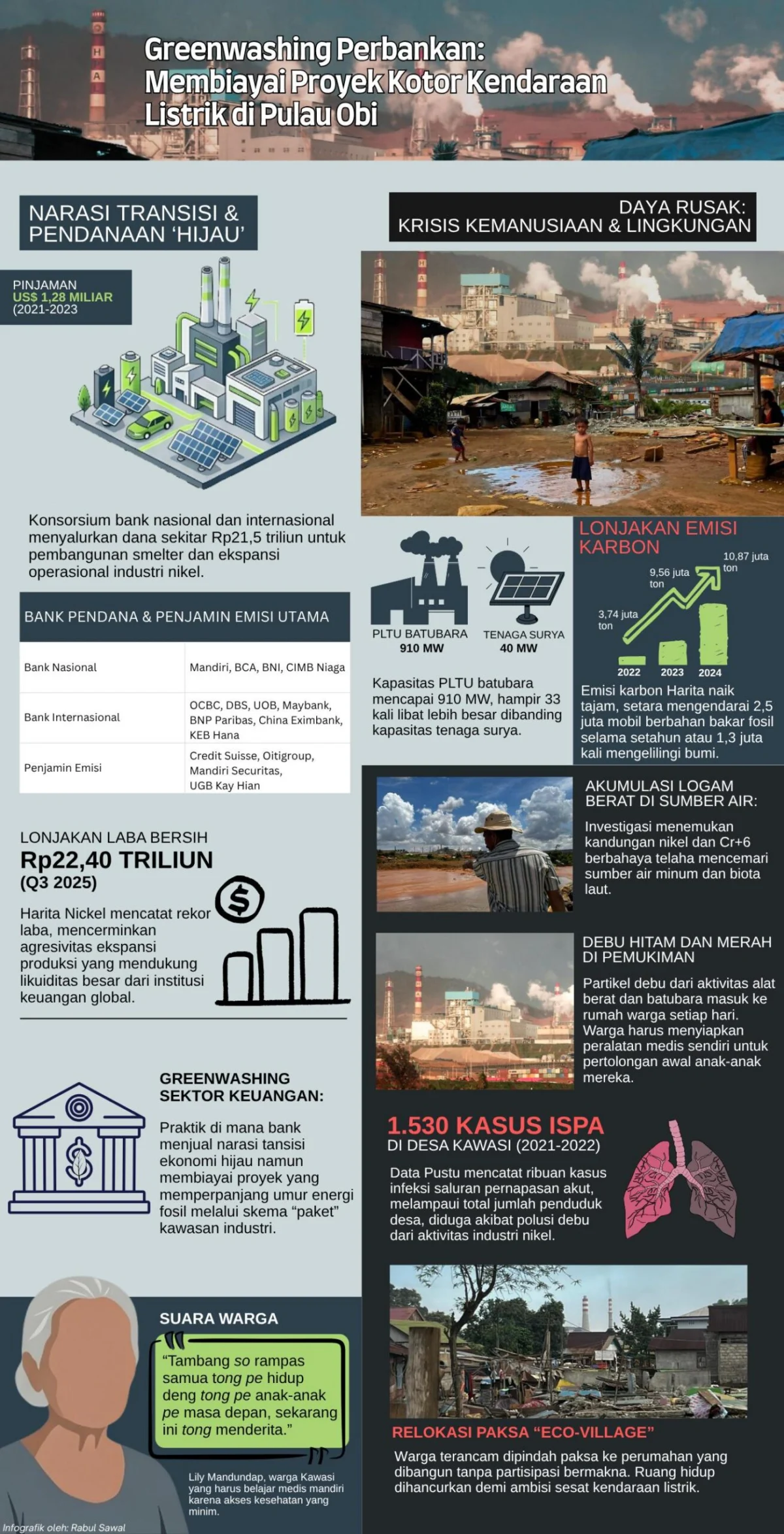
For ten-year-old Pingkan, the simple act of breathing has been a struggle for nearly a decade. Her first severe respiratory attack occurred when she was only 18 months old, sending her mother, Lily, into a state of panic as she desperately sought medical help in the remote village of Kawasi, located in the Obi District of South Halmahera, North Maluku. At the local sub-health center (Pustu), the necessary medication was unavailable, and the nearby corporate clinic turned them away because Pingkan’s father was not a mining employee. While Pingkan survived that initial crisis, her life has since been defined by a recurring cycle of shortness of breath and chronic illness, a condition mirrored by hundreds of other residents living in the shadow of one of Indonesia’s largest nickel mining and processing operations.
Lily’s home has effectively been transformed into a makeshift pharmacy. Inside a dedicated cabinet, she keeps a supply of IV drips, syringes, and a nebulizer—tools she taught herself to use to provide emergency care when Pingkan’s asthma or Acute Respiratory Infection (ISPA) flares up. The environmental transformation of Kawasi has been massive and, for many residents, devastating. "It is very dusty here," Lily explained during an interview in April. "Dust from the roads, from heavy machinery, from the mines, from the coal—it is all here." As Pingkan grew older, Lily began substituting synthetic drugs with herbal remedies like turmeric, ginger, and honey, fearing the long-term effects of chemical overdose on her daughter’s developing body.
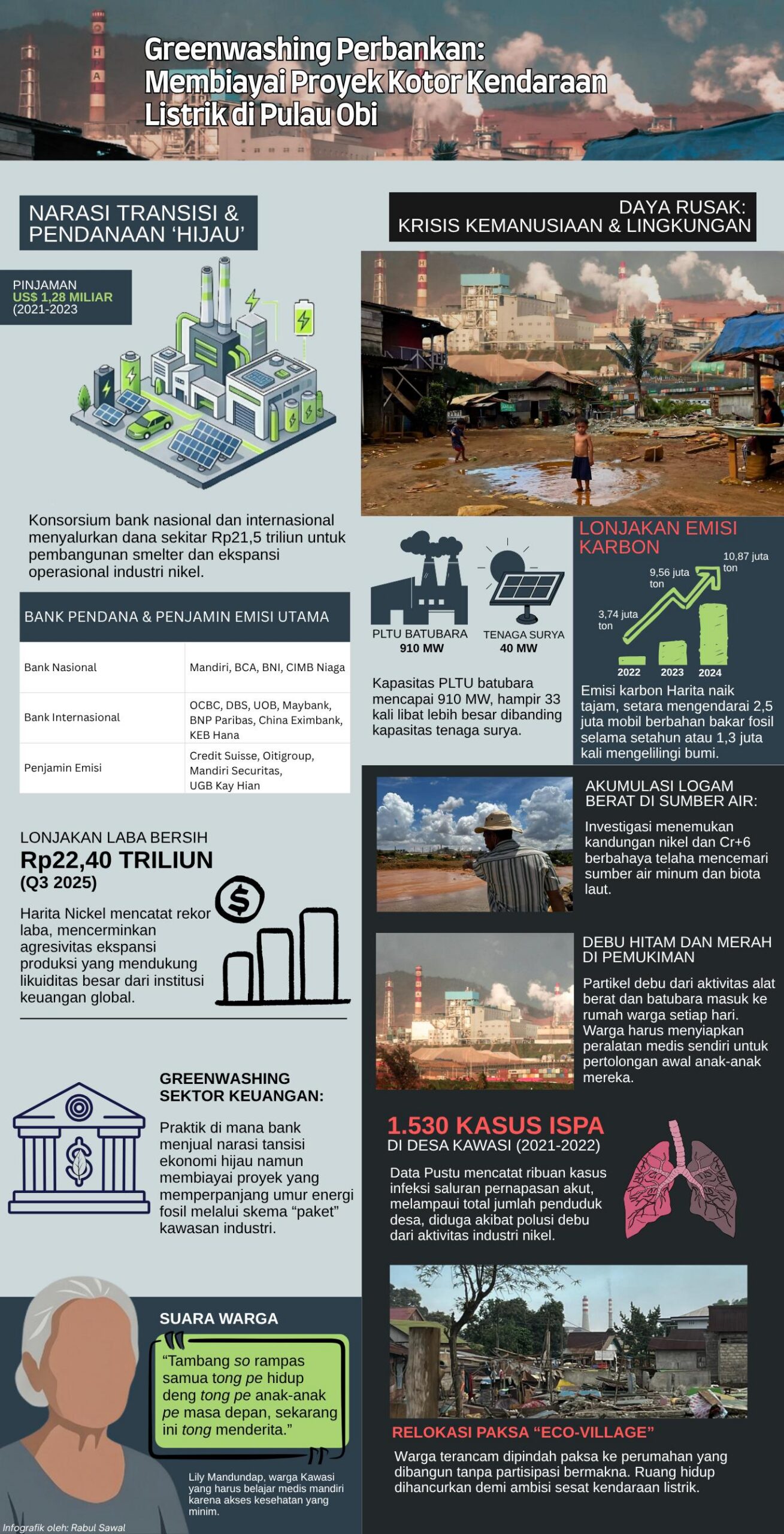
The health crisis in Kawasi is not an isolated family grievance but a documented public health emergency. Data from the Kawasi health unit recorded 1,530 cases of ISPA between 2021 and 2022 alone. This figure is staggering when compared to the village’s population, which stood at approximately 1,120 residents in 2022. The statistics suggest that many residents, particularly children, suffer from multiple infections annually. In 2022, the health unit recorded 567 cases of ISPA among children aged one to five years. Another resident, Sarbanun Lewer, reported that her four grandchildren suffer from chronic coughs and respiratory distress. One of them, a six-month-old infant, was recently diagnosed with bronchitis. "The dust mixes and enters the house," Sarbanun said, describing the red and black soot that settles on roofs and kitchenware daily.
The Nickel Boom and the National Strategic Project
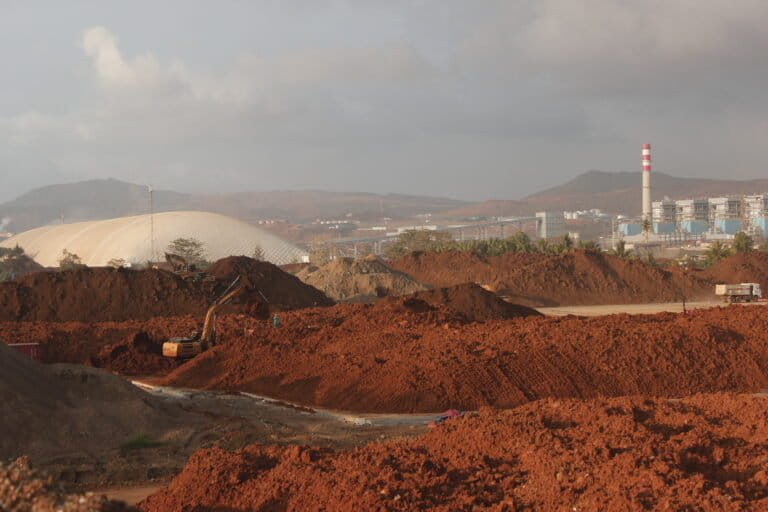
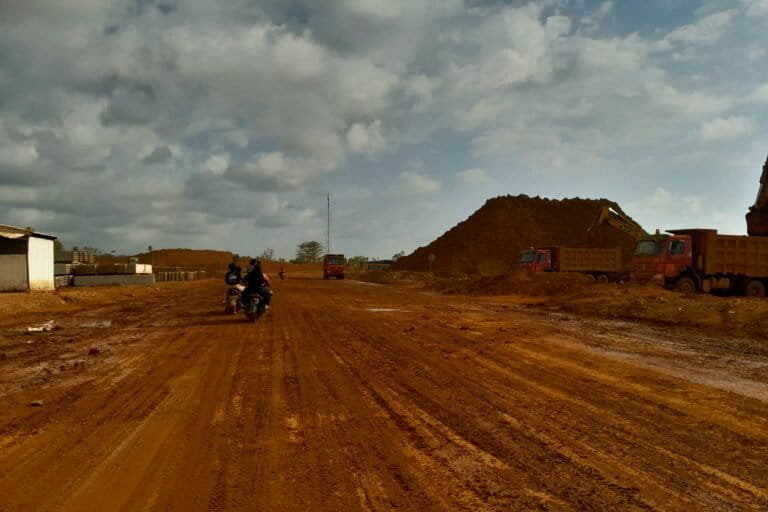
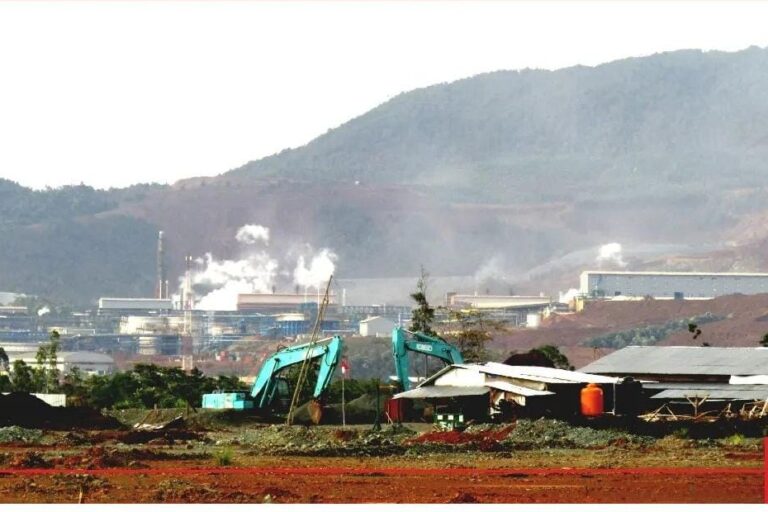
The source of this environmental shift is largely attributed to the rapid expansion of PT Trimegah Bangun Persada (TBP), also known as Harita Nickel, a subsidiary of the Harita Group. Since being designated as a National Strategic Project (PSN) by the Indonesian government in 2020, Harita’s operations on Obi Island have expanded exponentially. The company controls a concession area of over 11,500 hectares, where it mines nickel and operates massive smelting facilities. These plants produce ferronickel for the stainless steel industry and, more recently, Mixed Hydroxide Precipitate (MHP), a critical raw material for the lithium-ion batteries that power the global electric vehicle (EV) revolution.
The financial success of Harita Nickel has been historic. By the third quarter of 2025, the company reported a net profit of approximately Rp22.40 trillion. This surge in wealth, however, stands in stark contrast to the deteriorating quality of life for the people of Kawasi. Organizations such as the Mining Advocacy Network (Jatam) have documented a litany of ecological and social impacts resulting from Harita’s operations, including the destruction of marine ecosystems, the contamination of water sources with heavy metals like hexavalent chromium (Cr6+), forced evictions, and the criminalization of vocal residents.
The Paradox of "Clean" Energy Powered by Coal
One of the most significant contradictions of the Obi Island nickel project is its heavy reliance on fossil fuels to produce "green" minerals. Despite the global marketing of EVs as a solution to climate change, the processing of nickel in Kawasi is powered almost entirely by captive coal-fired power plants (PLTU). Research by Trend Asia and Market Forces indicates that Harita’s captive coal capacity on Obi Island reached 910 megawatts, with plans to expand to 1,670 megawatts. In contrast, the company’s renewable energy capacity is a mere 40 megawatts of solar power—less than 3% of its total energy mix.
This dependence on coal has caused the company’s carbon footprint to skyrocket. Harita’s carbon emissions reportedly tripled from 3.74 million tons in 2022 to 10.87 million tons in 2024. To put this in perspective, the 2022 emissions alone were equivalent to four times the total annual emissions of the nation of Timor-Leste. By 2024, the emissions were comparable to the exhaust of 2.3 million cars driving continuously for a year.
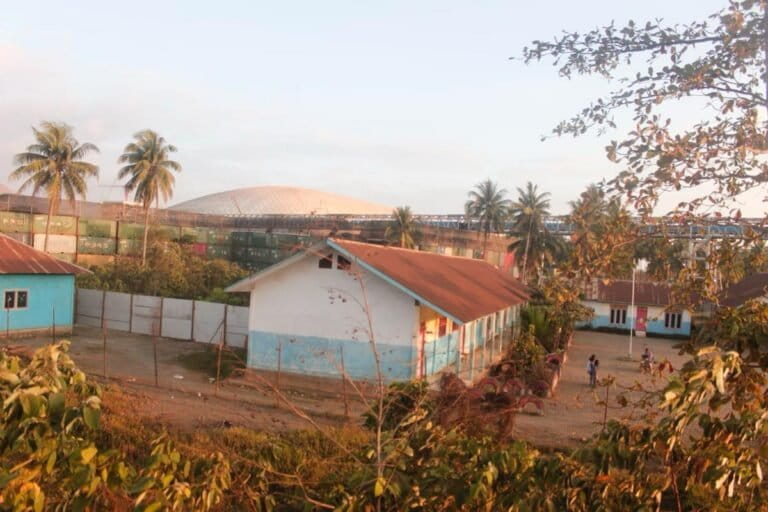
The physical proximity of coal infrastructure to civilian life is equally alarming. Samsir Lawedi, a 51-year-old resident, noted that a massive coal storage dome sits just 200 meters from residential areas and a mere ten steps away from a local school building. While students were recently relocated to a new "Eco-Village" housing complex built by the company, the legacy of exposure remains.
Corporate Defense and Structural Challenges
In response to these allegations, Harita Nickel maintains that public health is a top priority. Klaus Oberbauer, Sustainability Manager at Harita Nickel, stated in April 2026 that the company has established public grievance channels to address health complaints. While acknowledging that ISPA cases are high on Obi Island, Oberbauer argued that the disease is influenced by various factors, including weather conditions, housing quality, and population density, rather than industrial activity alone. He pointed out that high ISPA rates are also found in regions without mining operations, describing the issue as a structural problem of limited healthcare access in Eastern Indonesia.
To mitigate environmental impacts, the company claims to have implemented advanced emission control technologies, such as electrostatic precipitators (ESP) in power plant chimneys, which they assert can filter up to 98.8% of dust particles. They also cite the construction of enclosed coal storage domes and regular road watering as measures to suppress fugitive dust. Furthermore, Harita has set a long-term goal to achieve net-zero emissions before 2060, though they admit that the remote location of Obi Island makes a full transition to renewable energy technically challenging at this stage.
The Role of Global Finance and Greenwashing Accusations
The expansion of the Obi Island industrial complex has been fueled by billions of dollars in financing from major domestic and international banks. Reports from Trend Asia and Market Forces reveal a complex web of credit syndications and "green" bonds involving institutions such as Bank Central Asia (BCA), Bank Mandiri, BNI, OCBC, DBS, and BNP Paribas. Between 2021 and 2023 alone, loans to Harita-linked companies totaled at least US$1.28 billion (Rp21.5 trillion).
Environmental advocates have labeled this financing as a form of "greenwashing." Novita Indri, an energy campaigner at Trend Asia, criticized banks for using "green" labels to fund nickel projects that remain tethered to coal power. Many of these banks are members of the Net Zero Banking Alliance, yet they continue to provide the liquidity necessary for high-emission industrial expansion. Bhima Yudhistira, Executive Director of the Center of Economic and Law Studies (Celios), noted that banks often fund these projects as "packages," allowing them to claim alignment with Environmental, Social, and Governance (ESG) standards while ignoring the coal-heavy reality of the supply chain.
"The claim of electric vehicles as clean energy becomes pseudo-science if we do not look at the entire supply chain," Yudhistira argued. He emphasized that banks are not passive actors; they understand the risks of coal but often prioritize the high returns of the nickel sector over lower-margin renewable energy investments.
Ecological Justice and the Burden on Women
The crisis in Kawasi also has a distinct gender dimension. Astuti N. Kilwouw, Executive Director of Walhi North Maluku, described the situation as "structural ecological crime." She noted that women bear the brunt of environmental degradation, as they are traditionally responsible for domestic health and water management. When children fall ill with ISPA or skin diseases from contaminated water, it is the women who must provide care, often while suffering from the same pollutants themselves.
"In the long run, women will bear the risk of accumulated pollution exposure," Kilwouw warned. "It is not just ISPA, but chronic diseases resulting from daily inhalation and consumption of chemicals from nickel processing."
As the global demand for "green" minerals intensifies, the village of Kawasi serves as a cautionary tale. The transition to a low-carbon future for the Global North is currently being subsidized by the health and environment of communities in the Global South. For Lily and her daughter Pingkan, the promise of a cleaner world remains a distant irony, obscured by the very dust of the revolution meant to save the planet. The struggle for breath in Kawasi is a stark reminder that without stringent oversight and a genuine shift away from fossil-fuel-dependent processing, the "green" transition may leave a trail of ecological and human destruction in its wake.