Eko Sulistyo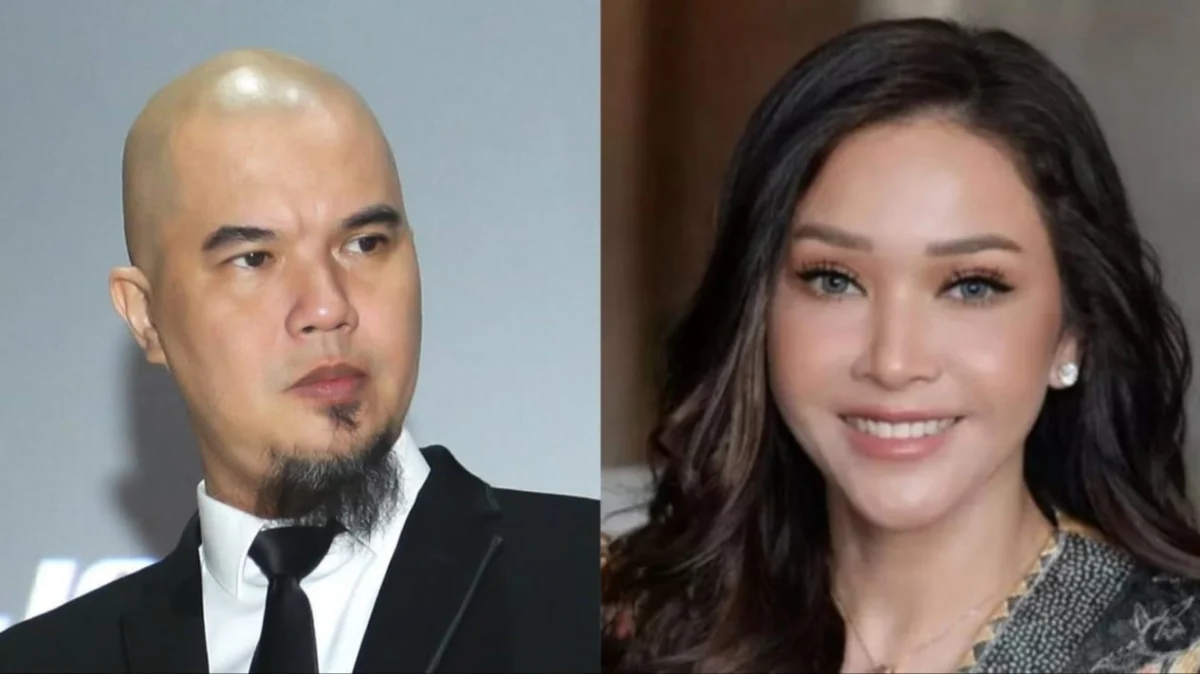
Maia Estianty, the prominent Indonesian musician, producer, and television personality, has once again captured the attention of the digital sphere following a series of contemplative posts on her official Instagram account. On Monday, May 11, 2026, the artist shared a photograph of herself during her tenure as a judge on the popular talent search program, Indonesian Idol. While the image showcased her signature elegant aesthetic, it was the accompanying caption—a philosophical reflection on human nature and spiritual discipline—that ignited a firestorm of commentary and speculation across various social media platforms. In a landscape often dominated by superficial celebrity updates, Maia’s message regarding internal struggle and the definition of true success resonated deeply with her millions of followers, while simultaneously reopening old wounds regarding her highly publicized past with her former husband, Ahmad Dhani.
The post, which was uploaded late in the evening, featured a meticulously composed caption that many observers interpreted as a masterclass in stoic grace. Maia wrote that a person’s greatest enemy is not another individual, but rather themselves when they lack the guidance of faith and self-control. She further elaborated that the ultimate form of victory is not found in the subjugation of others, but in the mastery of one’s own impulses and ego. This message, emphasizing "kemenangan sejati" or true victory, arrived at a time when the Indonesian entertainment industry has been abuzz with renewed discussions regarding the historical friction between Maia and Ahmad Dhani, a narrative that has persisted in the public consciousness for nearly two decades.
The Philosophical Core of the Social Media Post
The specific wording used by Maia Estianty reflects a broader trend in her public persona, which has shifted significantly over the last decade toward themes of empowerment, resilience, and spiritual maturity. By stating that "the heaviest enemy of man is not others, but himself when he is far from the control of faith," Maia tapped into a universal sentiment that transcends the specifics of celebrity gossip. Her assertion that "victory is not always about defeating others—but when someone can defeat themselves," suggests a prioritized focus on internal peace over external conflict.
This approach is consistent with the public image Maia has cultivated since her marriage to businessman Irwan Mussry in 2018. She has frequently used her platform to discuss the importance of "moving on" and finding happiness through forgiveness and self-improvement. However, the timing of this particular post led many netizens to believe that the message was more than just a general piece of wisdom; it was perceived as a subtle response to recent developments in the ongoing saga of her relationship with her ex-husband.
A History of Public Friction: The Contextual Timeline
To understand why a seemingly neutral philosophical post would cause such a stir, one must look at the long and complex history between Maia Estianty and Ahmad Dhani. The pair, who were once the "power couple" of the Indonesian music industry in the late 1990s and early 2000s, underwent a very public and acrimonious divorce that concluded in 2008. The separation was marked by allegations of infidelity, domestic disputes, and a prolonged legal battle over the custody of their three sons: Ahmad Al Ghazali, Ahmad El Jallaludin Rumi, and Abdul Qodir Jaelani.
Following the divorce, the narrative was further complicated by Ahmad Dhani’s subsequent marriage to Mulan Jameela, who had previously been Maia’s partner in the musical duo Ratu. This betrayal became a cornerstone of Indonesian pop culture history, framing Maia as the resilient survivor and Dhani and Mulan as the antagonists in a real-life drama that has never truly faded from the headlines. Despite years of relative silence or professional distance, the tension between the two parties has a tendency to resurface whenever one party mentions the past in interviews or on social media.
In the weeks leading up to Maia’s May 2026 post, Ahmad Dhani had reportedly participated in several high-profile interviews where he revisited the circumstances of their 2008 divorce. While Dhani has often claimed to have moved past the drama, his recent comments—which allegedly included critiques of how the separation was handled and insights into their former domestic life—served to reignite public interest. For a segment of the audience, Maia’s post about "not needing to defeat others" was a direct, albeit sophisticated, rebuttal to Dhani’s recent media appearances.
Public Reaction and the "Classy" Archetype
The digital response to Maia’s post was instantaneous. Within hours, the comment section of @maiaestiantyreal was flooded with thousands of messages from fans and fellow celebrities. The prevailing sentiment among her supporters was one of admiration for her perceived "classiness." Many users praised her for not engaging in a "war of words" or stooping to the level of public mudslinging. One netizen noted that "true strength is shown through silence and self-reflection," while another commented that Maia’s ability to remain calm in the face of provocation is what sets her apart from other public figures.
However, the reaction was not entirely uniform. Some social media analysts and observers pointed out that by posting such a pointed message during a time of renewed controversy, Maia was still participating in the narrative, even if she was doing so through the lens of moral superiority. This "sub-tweeting" or "sub-posting" culture allows celebrities to address rumors and rivals without naming them directly, thereby maintaining a level of plausible deniability while still signaling their stance to their loyal fan base.
Analytical Perspective: The Power of Narrative Control
From a public relations standpoint, Maia Estianty’s strategy is a textbook example of narrative control. By framing her response in the context of faith and self-mastery, she positions herself as the "bigger person." This not only protects her brand as a sophisticated and mature woman but also reinforces the public’s sympathy toward her. In the eyes of the Indonesian public, Maia has successfully transitioned from a victim of a broken marriage to a symbol of female empowerment and success.
Supporting data from social media engagement metrics suggests that this "inspirational" content performs significantly better for Maia than direct confrontation would. Posts that focus on her business ventures, her happy marriage to Irwan Mussry, or her philosophical musings consistently garner higher "like" counts and more positive sentiment scores than posts that could be interpreted as defensive. By focusing on "conquering the self," Maia effectively silences the noise of external criticism by making it appear irrelevant to her personal growth.
Broader Implications for Indonesian Celebrity Culture
The ongoing fascination with the Maia-Dhani dynamic speaks to a larger phenomenon in Indonesian society: the enduring power of the "broken home" narrative and the subsequent "redemption" arc. The public’s investment in Maia’s life is not just about her music or her role on Indonesian Idol; it is about the emotional journey of a woman who "lost everything" and built a better life from the ashes.
Furthermore, this incident highlights the role of social media as the modern-day arena for conflict resolution—or escalation. In previous decades, such disputes would play out in "infotainment" television programs with weeks of delay. Today, a single Instagram caption can set the tone for the national conversation within minutes. The speed at which fans connect the dots between a philosophical quote and a 20-year-old divorce demonstrates the deep-seated cultural memory of the Indonesian audience.
Conclusion: The Resilience of a Public Icon
As of May 12, 2026, Maia Estianty has not issued any further clarification regarding the intent behind her post, nor has she responded to the specific comments linking her words to Ahmad Dhani. This silence is consistent with her established pattern of letting her initial statements stand on their own merit. Whether the post was a deliberate "sindiran" (allusion/satire) or a genuine moment of spiritual reflection, its impact remains the same: it has solidified her status as a figure of resilience and wisdom in the eyes of the public.
For Ahmad Dhani, the situation serves as a reminder of the challenges of revisiting a controversial past in an era where the "opposing party" has a direct and powerful line of communication to the masses. As both individuals continue their respective careers—Dhani with his musical legacy and political aspirations, and Maia with her business empire and television presence—the shadow of their former union continues to loom large. However, if Maia’s latest message is any indication, she has found a way to navigate that shadow by focusing on the light of her own self-discipline and faith, proving that in the court of public opinion, the most effective weapon is often a well-chosen word and a calm demeanor.