Nila Kartika Wati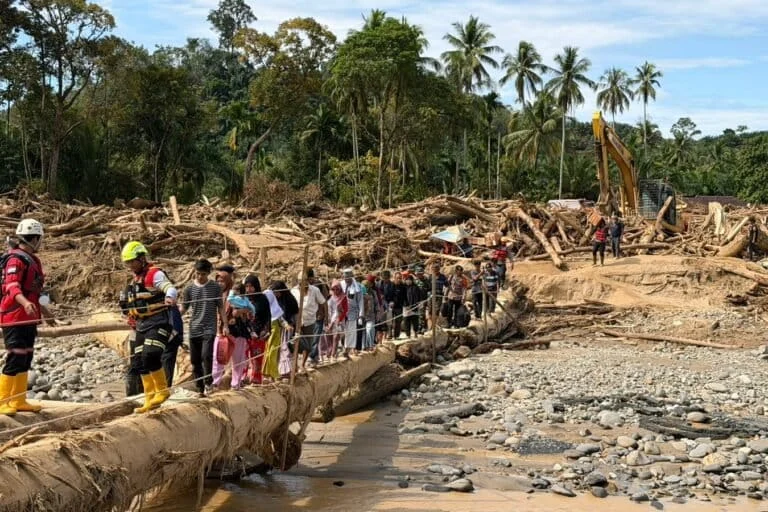
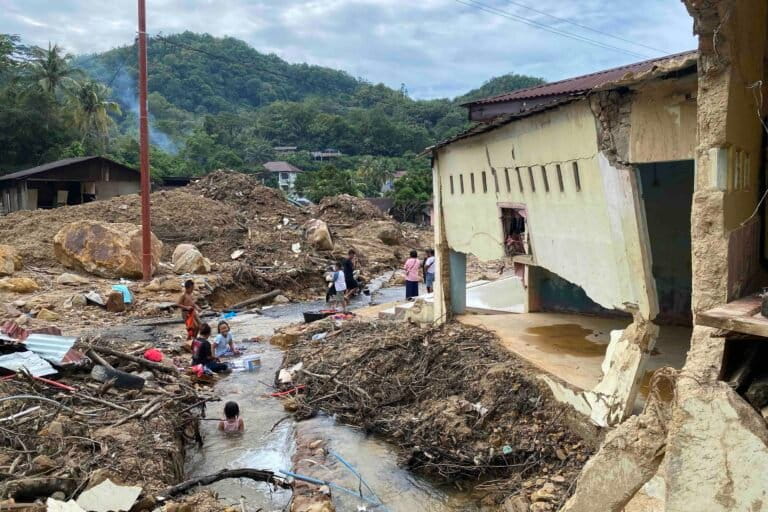
Six months have passed since the devastating hydrometeorological disasters swept through various regions of Sumatra, yet the path to recovery remains fraught with uncertainty for thousands of displaced residents. Despite the initial emergency response efforts, the fundamental rights of those affected—ranging from secure housing and clean water to functional infrastructure—remain unfulfilled. The slow pace of rehabilitation has raised significant concerns among environmentalists, economists, and social advocates, who warn that the current trajectory of recovery is not only sluggish but also risks repeating the same ecological mistakes that triggered the catastrophe.
The disaster, which peaked in late 2025, left a trail of destruction across Aceh, North Sumatra, and West Sumatra. Today, the scars on the landscape are matched by a deepening socio-economic crisis. Agricultural lands, the backbone of the local economy, remain buried under silt or destroyed by landslides, while critical access roads to remote plantations have yet to be repaired. This stagnation has prompted a chorus of experts to demand a fundamental shift in how the government approaches post-disaster restoration, moving away from reactive measures toward a comprehensive, restorative economic model.
The Economic Toll and the Funding Gap
According to research conducted by the Center of Economic and Law Studies (Celios), the total economic loss resulting from the Sumatra disaster has reached a staggering Rp68.67 trillion. This figure accounts for the destruction of infrastructure, loss of agricultural productivity, and the long-term disruption of local supply chains. In contrast, the National Disaster Management Agency (BNPB) has estimated that the total budget required for comprehensive recovery stands at approximately Rp51.82 trillion. This massive funding gap highlights the scale of the challenge facing both regional and central governments.
Bhima Yudhistira, the Executive Director of Celios, argues that the recovery effort must prioritize "ecological restoration as an economic epicenter." He suggests that restoring degraded watersheds (DAS) and stabilizing landslide-prone areas could serve as a massive engine for local employment. "We have seen that traditional agricultural sectors, particularly coffee and coconut plantations, showed remarkable resilience during the floods," Yudhistira noted. "This should serve as a compass for the government in redrawing the regional economic roadmap."
Yudhistira has also proposed a bold budgetary shift to facilitate this recovery. He suggested that the government should consider reallocating 20% of the "Free Nutritious Meal" (MBG) program budget—a flagship national initiative—to specifically fund the rehabilitation of community-owned farmlands. By rebuilding production centers for coffee and coconut, complete with downstream processing facilities and low-cost local logistics networks, the government could secure the long-term stability of Sumatra’s food and labor markets.
Chronology of Environmental Degradation
The disaster did not occur in a vacuum but was the culmination of years of systemic environmental mismanagement. Analysis from the Madani Berkelanjutan Foundation reveals a disturbing trend of natural forest loss across the three hardest-hit provinces over the last four years.
In Aceh, natural forest loss peaked between 2023 and 2024, reaching 9,200 hectares. West Sumatra saw a brief decline in deforestation in 2022, only for it to surge again to 5,600 hectares by 2024. North Sumatra has shown a consistent upward trajectory in forest loss, nearly doubling from 2,800 hectares in 2020 to 5,000 hectares by mid-2024. This steady erosion of the natural canopy has left the landscape unable to absorb high-intensity rainfall.
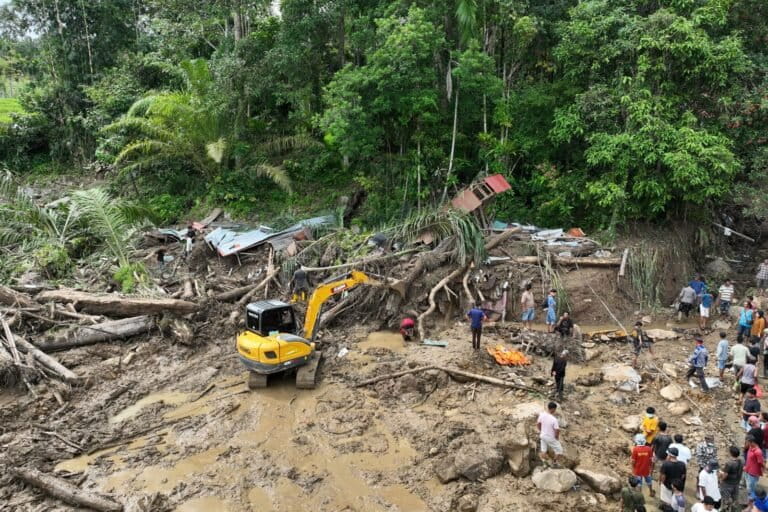
Nadia Hadad, Executive Director of Madani Berkelanjutan, emphasized that the current state of Sumatra’s forests is "priming the land for future catastrophes." Currently, approximately 6.85% (389,000 hectares) of forest and land in Aceh is classified as "critical" or "highly critical," primarily within the Krueng and Wampu Sei Ular watersheds. In West Sumatra, the situation is even more dire, with 16.28% (689,000 hectares) of land in a critical state, particularly in the Agam Kuantan and Batang Hari watersheds. North Sumatra faces a similar crisis, with 10.74% (778,000 hectares) of land classified as critical across the Asahan Berumun, Indragiri Rokan, and Wampu Sei Ular basins.
"Extractive industry permits are being forced into protected areas," Hadad stated. "This isn’t just about extreme weather; it’s about a landscape that has been rendered fragile because it was stripped bare for concessions."
Policy Mismatches and Extractive Pressures
A significant point of contention in the recovery process is the perceived "policy mismatch" between land-use concessions and ecological recovery zones. Critics argue that the government’s response remains purely reactive and fails to address the root causes of the disaster. There have been reports of mining or logging permits being revoked only for the same land to be handed over to new entities for continued exploitation, rather than being designated for restoration.
"That isn’t recovery; that’s just an administrative transfer," Hadad remarked. This lack of transparency regarding "beneficial ownership"—the individuals who actually profit from these concessions—has made it nearly impossible to conduct rigorous compliance audits.
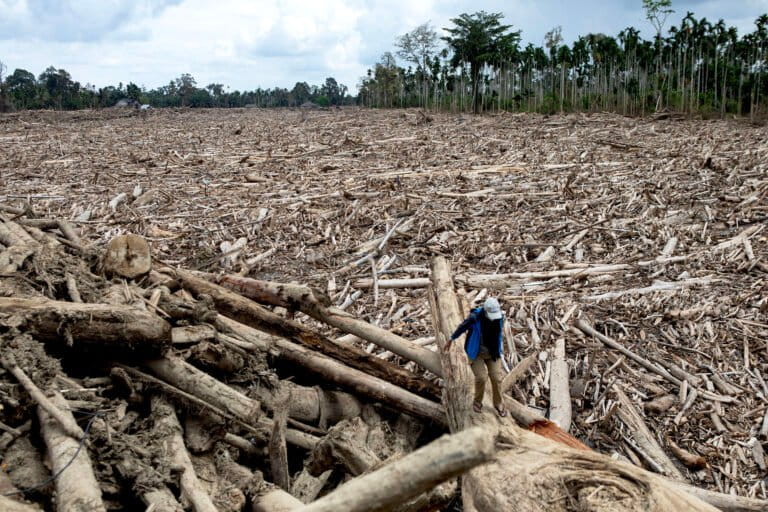
Furthermore, bizarre proposals have emerged from some government circles, such as the commercialization of disaster-related mud or the conversion of devastated areas into monoculture oil palm plantations. Experts warn that if the post-flood economy is handed back to extractive industries, the region is simply "scheduling the next disaster."
The impact of this mismanagement is already being felt in the global financial markets. Indonesia’s ESG (Environmental, Social, and Governance) ratings have faced downward pressure, with Morgan Stanley Capital International (MSCI) downgrading certain Indonesian indices. The freezing of some transactions on the Indonesia Stock Exchange (IHSG) serves as a stark warning that the international community is beginning to factor environmental risk into economic valuations.
The Governance Crisis and Human Rights
The disaster has also sparked a debate about the quality of Indonesian democracy and the role of corruption in land-use planning. Erry Riyana Hardjapamekas, Chairman of the Indonesian Anti-Corruption Coalition, asserted that the roots of the Sumatra disaster lie in "corruptive governance." He argued that permits are frequently issued without considering the environmental carrying capacity of the land.
Emil Salim, a veteran economist and former Minister of the Environment, echoed these sentiments, stating that the thousands of lives lost and displaced are the "cost of a flawed development model." He urged the government to learn from these errors and fix the system that allows air, soil, and water flow to be so catastrophically disrupted for short-term gain.
From a social justice perspective, Wahyu Eka Setyawan of the Indonesian Forum for the Environment (Walhi) noted that recovery must be grounded in Law No. 32/2009 on Environmental Protection and Management. He emphasized that the "restorative economy" must directly empower the people. "People don’t cut down trees because they hate the forest; they do it because they are forced to choose between survival and death," Setyawan said. He called for a roadmap that prioritizes Non-Timber Forest Products (HHBK) and protects the management rights of local and indigenous communities.
A Call for a Permanent Moratorium
As the six-month mark passes, the demand for a permanent moratorium on extractive activities in critical watersheds has moved from the fringes of environmental activism to a central requirement for regional stability. Experts agree that without a shift toward transparency, strict compliance audits, and a genuine focus on community-led restoration, Sumatra will remain caught in a cycle of disaster and debt.
The narrative of the Sumatra disaster is one of human interference in the delicate causality of the earth’s systems. Premana Wardayanti Premadi, a prominent scientist from the Bandung Institute of Technology (ITB), reminded the public that the earth requires time to heal and that technology cannot always provide a fix for ecological collapse. Similarly, Damayanti Buchori of IPB University warned against oversimplifying the role of forests as mere sources of state revenue. "The forest is a library of life and a source of inspiration," she said. "We must stop treating it as a sacrifice zone for extractive industries."
The future of Sumatra now depends on whether the government will heed these warnings or continue with a "business as usual" approach that prioritizes industrial logistics over the lives and livelihoods of its citizens. As it stands, the recovery remains a "hollow promise" for many, and the clouds of the next monsoon season bring with them the shadow of a preventable repeat of history.