Azin Asro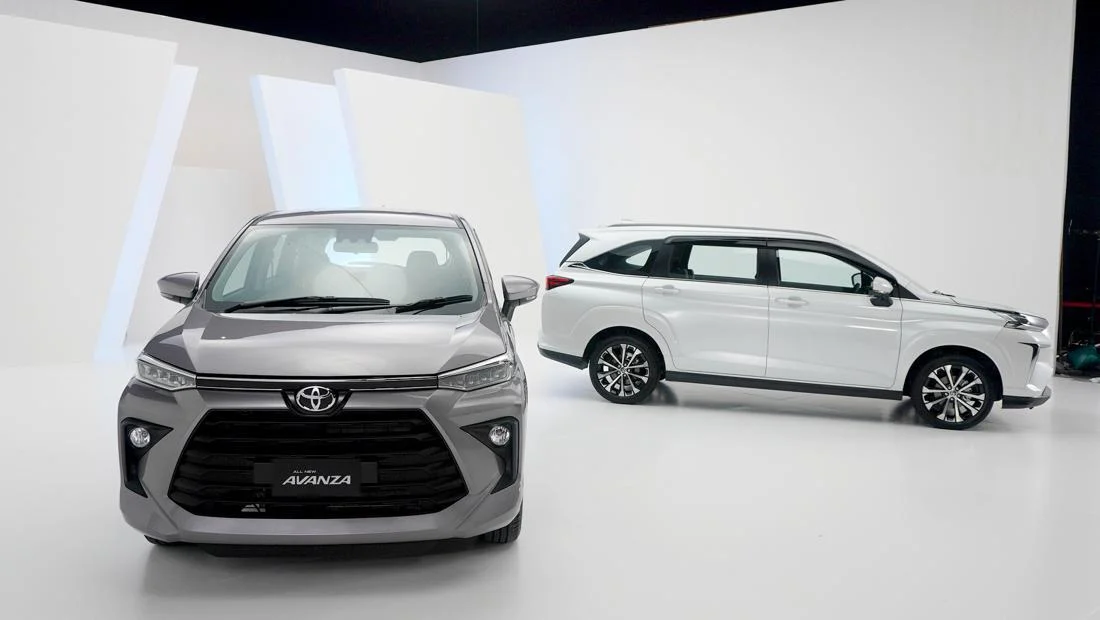
The Toyota Avanza has long been a cornerstone of the Indonesian automotive landscape, consistently securing its position as one of the nation’s top-selling vehicles. Recent data indicates that this trend remains robust, with the Avanza frequently appearing in the top ten list of the most sought-after cars in the Republic of Indonesia. As the automotive market evolves, consumer preferences within the Avanza lineup have shown a distinct lean toward specific engine capacities and transmission types, reflecting the changing needs of the Indonesian driving public. Currently, the Avanza is offered in two primary engine configurations—the 1.3-liter and the 1.5-liter variants—both of which are available with either a five-speed manual transmission or a Continuously Variable Transmission (CVT).
Analysis of Sales Distribution and Consumer Trends
According to the latest figures compiled by the Association of Indonesia Automotive Industries (Gaikindo), a clear hierarchy has emerged among the four primary configurations of the Avanza. Throughout the 2025 calendar year, the 1.5-liter variant proved to be the significantly more popular choice among Indonesian buyers. Total distribution for the Avanza 1.5L reached 21,738 units during that period. In contrast, the 1.3-liter variant saw a distribution of 14,473 units. During 2025, the most successful sub-model was the Avanza 1.5L equipped with a CVT, highlighting a growing preference for comfort and ease of use in increasingly congested urban environments.
However, the data from the first trimester of 2026 suggests a nuanced shift in buyer behavior. While the 1.5-liter engine continues to outsell the 1.3-liter version, the manual transmission variant of the 1.5L has surged to the top of the sales charts. Between January and April 2026, the distribution of the Avanza 1.5L manual reached 4,091 units. This was followed by the 1.5L CVT at 3,343 units. The 1.3-liter variants trailed behind, with the 1.3L CVT moving 2,345 units and the 1.3L manual accounting for 2,214 units. This resurgence of the manual transmission in the 1.5L segment suggests a strong demand from regional markets outside of Jakarta, where manual gearboxes are often preferred for their perceived durability and control in varied topographical conditions.
Technical Specifications: 1NR-VE vs. 2NR-VE
The performance gap between the two engine options is a primary driver for the 1.5L variant’s market lead. The Avanza 1.3L is powered by the 1NR-VE engine, a four-cylinder DOHC unit with a displacement of 1,329 cc. This engine features a bore and stroke of 72.5 mm x 80.5 mm. It is engineered to deliver a maximum power output of 98 PS at 6,000 rpm and a peak torque of 12.4 kgm at 4,200 rpm. While these figures are adequate for city commuting and offer commendable fuel efficiency, they are often viewed as the entry-level choice for budget-conscious families or fleet operators.
On the other hand, the Avanza 1.5L utilizes the more robust 2NR-VE engine. This powerplant has a displacement of 1,496 cc, achieved through a longer stroke of 90.6 mm while maintaining the same 72.5 mm bore as its smaller sibling. The 1.5L engine produces a more substantial 106 PS at 6,000 rpm and a maximum torque of 14 kgm at 4,200 rpm. The additional power and torque are particularly valuable when the vehicle is fully loaded with seven passengers and luggage, a common use case for the "Million People’s Car" in Indonesia.
Dimensional Differences and Ground Clearance
While the exterior design language of the 1.3L and 1.5L variants remains largely identical, a closer inspection of the technical specifications reveals significant differences in dimensions and stance. These physical variations are not merely aesthetic but have practical implications for vehicle handling and utility.
The Avanza 1.5L stands taller than the 1.3L version, with an overall height of 1,700 mm compared to the 1.3L’s 1,665 mm. This difference is largely attributed to the wheel and tire configurations and suspension tuning. Furthermore, the 1.5L variant offers a superior ground clearance of 205 mm, whereas the 1.3L variant sits at 195 mm. In a country where seasonal flooding and uneven road surfaces are common, the extra 10 mm of ground clearance provided by the 1.5L model is a significant selling point for many consumers.
There are also slight variations in the wheel track. The Avanza 1.3L features a front tread of 1,515 mm and a rear tread of 1,510 mm. Conversely, the 1.5L variant has a slightly narrower front tread of 1,505 mm and a rear tread of 1,500 mm. These minor adjustments are likely made to accommodate the different wheel offsets and tire widths used across the trim levels to ensure optimal stability and turning radius.
Historical Context and the Evolution of the Avanza
The Toyota Avanza first debuted in Indonesia in late 2003 and quickly revolutionized the market by offering an affordable, reliable, and spacious Multi-Purpose Vehicle (MPV). For over two decades, it has maintained its status as a market leader, surviving numerous economic shifts and the entry of various competitors.
A pivotal moment in the Avanza’s chronology occurred in late 2021 with the launch of the third-generation model. This version marked a radical departure from its predecessors by transitioning from a rear-wheel-drive (RWD) ladder-frame chassis to a front-wheel-drive (FWD) monocoque structure based on the Daihatsu New Global Architecture (DNGA). This shift allowed for a significantly more spacious interior, improved fuel efficiency, and the introduction of advanced safety features like Toyota Safety Sense (TSS). The current sales data for 2025 and 2026 reflects the continued success of this FWD platform, as consumers have embraced the improved ride quality and modern technology it offers.
Market Implications and Industry Reaction
Industry analysts suggest that the preference for the 1.5L variant reflects an aspirational shift in the Indonesian middle class. While the 1.3L remains a viable "value-for-money" option, the 1.5L is increasingly viewed as the standard for family transport. "The data shows that consumers are willing to pay a premium for the 1.5-liter engine because it offers a more versatile driving experience, especially for long-distance travel and holiday ‘mudik’ trips," noted an automotive market researcher.
Representatives from PT Toyota-Astra Motor (TAM) have historically emphasized that their product lineup is designed to cater to the diverse needs of the Indonesian archipelago. While official statements regarding the 2026 data focus on production efficiency, it is clear that Toyota’s strategy involves maintaining a strong presence in both engine segments to ensure that no part of the market is left underserved. The high volume of 1.5L manual transmissions in early 2026 also indicates a strong demand from the fleet and commercial sectors, which often favor manual gearboxes for their lower maintenance costs and perceived reliability in rugged terrain.
Broader Impact on the Indonesian Automotive Sector
The continued dominance of the Avanza has broader implications for the Indonesian automotive industry. As a locally manufactured vehicle with high domestic component content (TKDN), the Avanza’s success directly supports the local supply chain and thousands of jobs in the manufacturing sector. Its sales performance serves as a barometer for the overall health of the Indonesian economy; when Avanza sales are high, it generally indicates strong consumer confidence and purchasing power within the middle-income bracket.
Furthermore, the competition in the LMPV (Low Multi-Purpose Vehicle) segment remains fierce. Rivals such as the Mitsubishi Xpander, Suzuki Ertiga, and Hyundai Stargazer continue to vie for market share. However, Toyota’s extensive service network and the Avanza’s legendary resale value remain formidable barriers to entry for competitors. The shift toward the 1.5L engine also pushes competitors to refine their own higher-displacement offerings, driving innovation across the entire segment.
Conclusion and Future Outlook
As Indonesia moves further into 2026, the Toyota Avanza appears poised to retain its crown as a market leader. The preference for the 1.5L engine, combined with a surprising resilience in manual transmission sales, provides a fascinating look into the psyche of the Indonesian motorist. While urban buyers gravitate toward the convenience of CVT, the demand for manual power in the 1.5L segment proves that traditional driving preferences remain strong in many parts of the country.
With its blend of practicality, updated technology, and a variety of configurations to suit different budgets and needs, the Avanza continues to fulfill its role as the definitive Indonesian family car. Moving forward, the industry will be watching closely to see if the trend toward higher displacement continues or if future fluctuations in fuel prices and the potential introduction of more affordable hybrid or electric alternatives will once again shift the landscape of the "Million People’s Car." For now, the 1.5L Avanza stands as the clear favorite, bridging the gap between entry-level utility and premium family comfort.