Eko Sulistyo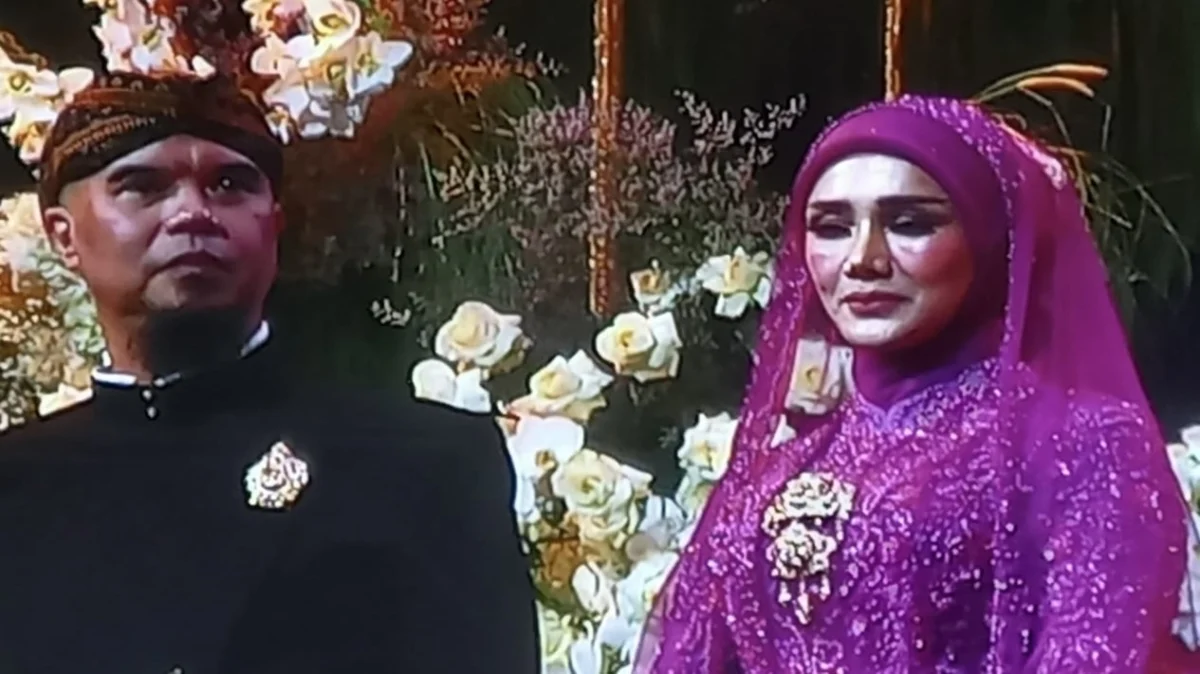
The domestic life of prominent Indonesian musician and member of the House of Representatives (DPR RI), Ahmad Dhani, alongside his wife, Mulan Jameela, has once again become the center of public discourse following a series of candid revelations. In a recent interview conducted by fellow entertainment figures Andre Taulany, Gading Marten, and Desta, the Dewa 19 mastermind openly admitted that his marriage to Mulan Jameela once reached a critical breaking point where divorce was seriously considered. This admission, shared during an appearance on the Taulany TV YouTube channel, has provided a rare glimpse into the private struggles of a couple that has largely maintained a front of stability and solidarity since their union in 2009.
The conversation, which initially began with a lighthearted tone typical of the "The Prediksi" circle, shifted toward a more somber and reflective atmosphere when Dhani touched upon the fragility of his household. While the couple is frequently seen as a cohesive unit in both the political and entertainment spheres, Dhani’s statement suggests that their path to domestic harmony was fraught with significant internal challenges. The revelation has sparked widespread discussion regarding the dynamics of celebrity marriages and the pressures of maintaining a public-facing relationship while navigating personal ideological shifts.
The Context of the Revelation: Taulany TV and the New Era of Celebrity Discourse
Ahmad Dhani’s disclosure occurred on May 21, 2026, during a podcast session that has since gone viral across various social media platforms. Speaking to Andre Taulany, Dhani stated unequivocally that he and Mulan were "almost divorced." He elaborated that such a drastic consideration does not emerge in a vacuum, suggesting that the "triggers" within the household at that time were fundamentally unhealthy.
This type of open confession marks a significant shift in how Indonesian celebrities manage their public personas. Historically, high-profile figures relied on traditional infotainment programs to manage their narratives. However, the rise of artist-led YouTube channels like Taulany TV has created a space for more nuanced, long-form storytelling. In this setting, Dhani felt comfortable enough to bypass the usual PR-vetted responses, offering instead a blunt assessment of his marital history. According to Dhani, the decision to potentially part ways was the result of a cumulative breakdown in communication and a clash of temperaments that had become unsustainable.
Historical Background: A Marriage Forged in Controversy
To understand the weight of Dhani’s recent admission, one must look back at the origins of his relationship with Mulan Jameela. Ahmad Dhani was previously married to musician Maia Estianty, with whom he had three sons: Al, El, and Dul. Their divorce in 2008 was one of the most highly publicized and contentious legal battles in the history of the Indonesian entertainment industry. Mulan Jameela, who was Maia’s partner in the musical duo Ratu, was often cast by the public as a central figure in the dissolution of that marriage.
Dhani and Mulan officially married in 2009, though they kept the union relatively private for several years. For over a decade, the couple faced intense public scrutiny and social media backlash. Despite the external pressure, they appeared to remain steadfast, eventually having two children together, Safeea Ahmad and Muhammad Ali. Over time, the narrative surrounding the couple shifted from scandal to one of political and familial partnership, especially as both transitioned into roles within the Gerindra Party and eventually secured seats in the DPR RI. The recent admission of a near-divorce, therefore, shatters the perceived "us-against-the-world" invincibility that had come to define their public image.
Chronology of the Conflict: Rebellion and the Struggle for Authority
During the interview, Dhani identified a specific period of "rebellion" on Mulan’s part as a primary source of friction. He described a phase where Mulan was "rebellious" and difficult to direct, which conflicted with Dhani’s established views on household hierarchy. Dhani, known for his assertive and often polarizing personality, has long advocated for a traditional structure where the husband serves as the primary authority figure.
The timeline of this friction appears to coincide with a period of significant transition for the family, likely during Mulan’s spiritual journey or "hijrah," and their burgeoning political careers. Dhani noted that the household environment had become "toxic," a term he used to describe the atmosphere that led them to the brink of separation. "Until we decided we wanted to separate, it meant there was an unhealthy trigger at home," Dhani remarked, though he stopped short of detailing the specific incidents that led to the crisis.
The resolution of the conflict, according to Dhani, came when Mulan underwent a change in perspective. He claimed that the marriage was saved because Mulan "realized how to be a woman" and acknowledged his position as the head of the family. "Mulan realized… I am the man," Dhani stated. This comment has drawn both support from those who value traditional family structures and criticism from those who view it as a reinforcement of patriarchal dominance.
Sociological Analysis: Gender Roles and the "Hijrah" Phenomenon
The dynamics described by Ahmad Dhani reflect broader sociological trends in Indonesia, particularly the intersection of celebrity culture, traditional values, and the "hijrah" movement. Mulan Jameela’s public transformation—from a pop star known for her eclectic fashion to a hijabi politician—is a prime example of this movement. In many cases, this spiritual shift involves a re-evaluation of one’s role within the family, often moving toward more conservative interpretations of marital duties.
Data from the Central Bureau of Statistics (BPS) indicates that divorce rates in Indonesia have seen a steady increase over the last decade, with "irreconcilable differences" and "economic factors" being the leading causes. However, for high-profile couples like Dhani and Mulan, the stakes are heightened by their political affiliations. As representatives of the people, their personal lives are often viewed as a reflection of their moral standing. By resolving their conflict through a return to traditional roles, they align themselves with a significant portion of their conservative voter base.
Political Implications for Two Members of Parliament
Both Ahmad Dhani and Mulan Jameela are currently active in the political sphere, representing the Gerindra Party in the DPR RI. Their ability to maintain a stable marriage is not just a personal matter but a professional one. In the landscape of Indonesian politics, family values are a cornerstone of a candidate’s viability.
The revelation of a past crisis, framed as a challenge they successfully overcame, serves a dual purpose. First, it humanizes them, showing that even "power couples" face relatable domestic struggles. Second, it reinforces Dhani’s image as a strong, decisive leader—a persona he cultivates both in the recording studio and the legislative halls. For Mulan, the narrative of "realizing her role" complements her political image as a woman who balances modern leadership with traditional family commitment.
Public and Media Reaction
The reaction to Dhani’s interview has been polarized. On social media platforms such as X (formerly Twitter) and Instagram, netizens have debated the merits of Dhani’s "man of the house" philosophy. Supporters argue that his clarity on roles is what has kept the marriage together for 17 years, while critics suggest that such a narrative minimizes Mulan’s agency and places the burden of marital success solely on the wife’s compliance.
Entertainment analysts suggest that this disclosure may be a strategic move to "clear the air" regarding long-standing rumors of domestic instability. By controlling the narrative through a friendly medium like Taulany TV, Dhani is able to address the "toxic" period on his own terms, ensuring that the conclusion of the story is one of triumph and reconciliation rather than ongoing dysfunction.
Conclusion: A Resilient Partnership in the Public Eye
Despite the past turbulence that nearly led to the dissolution of their marriage, Ahmad Dhani and Mulan Jameela today present a united front. They are frequently seen attending state functions, musical performances, and family gatherings with a level of synchronicity that suggests the "unhealthy triggers" of the past have been managed.
Dhani’s willingness to discuss the "near-divorce" highlights a growing trend of transparency among Indonesia’s elite. It serves as a reminder that the public personas of celebrities and politicians are often carefully constructed veils that hide the complexities of real-life relationships. As they continue their tenures in the DPR RI and their respective careers in the arts, the story of their survival as a couple remains a compelling case study in the endurance of marriage under the unrelenting glare of the spotlight. The resolution of their crisis, rooted in a shared understanding of their domestic roles, appears to have solidified their partnership for the foreseeable future, proving that even the most high-profile "toxic" situations can be navigated through personal evolution and mutual agreement.