Eko Sulistyo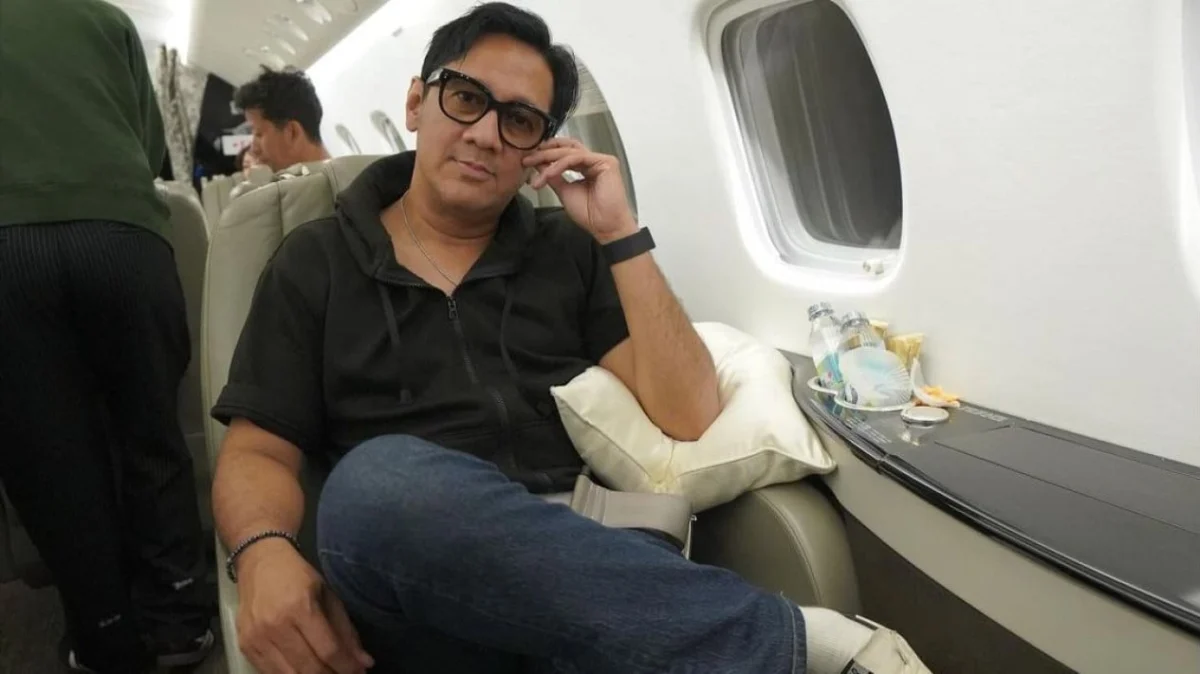
Prominent Indonesian entertainer and television personality Andre Taulany has found himself at the center of public discourse following a series of revelations regarding the domestic arrangements at the residence of his former wife, Rien Wartia Trigina, popularly known as Erin. On Thursday, April 30, 2026, Taulany addressed the media in the Warung Buncit area of South Jakarta, providing a measured response to the burgeoning controversy surrounding allegations of mistreatment of domestic workers (Asisten Rumah Tangga or ART) that have recently surfaced involving his ex-wife. While Taulany maintained a cautious and neutral stance regarding the specific accusations, his admission that he continues to provide the financial means for the household staff’s salaries has sparked significant interest and debate across social media platforms and news outlets.
The controversy erupted after reports began circulating on social media alleging that domestic staff at Erin’s residence had been subjected to various forms of mistreatment. As the news gained traction, the public looked to Taulany for clarification, given his long-standing reputation as a "family man" and his high-profile career as a comedian, host, and musician. However, during his press encounter, Taulany emphasized his distance from the situation, stating that he was not fully apprised of the details of the allegations. He expressed a desire to remain uninvolved in the polemic to avoid exacerbating an already sensitive situation, noting that he had only learned of the developments through digital reports and third-party information rather than direct communication with his former spouse.
Financial Responsibility and Household Management
In a surprising turn of events, Taulany disclosed that despite the dissolution of their marriage and their separate living arrangements, he remains the primary source of funding for the domestic staff employed at Erin’s home. This revelation provides a rare glimpse into the post-divorce financial dynamics of one of Indonesia’s most famous former couples. Taulany explained that while he does not manage the day-to-day operations of the household or supervise the staff directly, the responsibility for their remuneration still rests on his shoulders. He clarified the mechanism of this arrangement, stating that he transfers the necessary funds to Erin, who then distributes the salaries to the respective employees.
This arrangement highlights a complex intersection of legal obligations and personal choices. In many high-profile Indonesian divorces, the provision of alimony and child support is standard, but the continued payment of household staff for a former spouse’s independent residence is often seen as an act of significant financial support. Taulany’s decision to maintain this responsibility suggests a commitment to ensuring the stability of the environment in which his children reside, as Erin’s home serves as a primary base for their offspring. However, this link also places Taulany in a precarious position when controversies arise regarding the management of that same household staff.
Chronology of the Controversy and Media Reaction
The timeline of the current controversy began in late April 2026, when several anonymous accounts on social media platforms began sharing testimonies purportedly from former domestic workers. These accounts alleged a pattern of verbal abuse and unfavorable working conditions at Erin’s residence. By April 28, the stories had been picked up by mainstream infotainment outlets, leading to a surge in public scrutiny. Erin, who has previously been the subject of social media controversies due to her outspoken nature, became the primary target of public criticism.
On April 30, 2026, during a public appearance in South Jakarta, Andre Taulany was confronted by journalists seeking his perspective. His response was characterized by a distinct lack of insider knowledge. He stated, "I really don’t want to comment, I’m very sorry. Because I don’t know and I haven’t heard the news updates myself. So, I can’t say anything." He further admitted that his knowledge of the situation was limited to what had been reported in the media, confirming that there had been no formal discussion within the family regarding the legal or social implications of the allegations at that time.
The media’s focus on Taulany stems from his immense popularity and the contrast between his public persona—often seen as humble and professional—and the more polarizing public image of his former wife. As the news cycle progressed, the focus shifted from the allegations themselves to Taulany’s continued financial involvement, with many netizens praising his perceived "gentlemanly" behavior for continuing to provide for the household staff despite the separation.
Contextual Background: The Taulany-Erin Relationship
To understand the weight of these developments, it is necessary to look at the history of Andre Taulany and Erin’s relationship. The couple married in 2005 and were long considered one of the most stable pairs in the Indonesian entertainment industry. Over nearly two decades, they raised three children and built a significant brand around their family life. However, rumors of marital strife began to surface in the early 2020s, culminating in a highly publicized divorce process that took place between 2024 and 2025.
Throughout their marriage and subsequent separation, Erin often found herself at the center of digital storms. In 2019, she faced legal scrutiny over social media posts that were deemed offensive by certain political factions. Taulany, at the time, stood by her, often acting as a mediator between his wife’s private actions and his very public career. The current allegations regarding the treatment of domestic workers are seen by some critics as a continuation of a pattern of controversial behavior, while supporters argue that the claims lack concrete evidence and may be motivated by personal grievances.
The Legal Landscape of Domestic Work in Indonesia
The allegations against Erin arrive at a time when the rights of domestic workers (ART) are a subject of intense national debate in Indonesia. For years, advocacy groups have pushed for the passage of the Domestic Worker Protection Bill (RUU PPRT), which aims to provide a clear legal framework for the rights and obligations of both employers and employees in a domestic setting. Currently, domestic workers in Indonesia often operate in a legal gray area, lacking the same protections afforded to formal sector workers under the Manpower Law (UU Ketenagakerjaan).
Supporting data from labor advocacy groups suggests that domestic workers are particularly vulnerable to abuse due to the private nature of their workplace. Statistics from the National Commission on Violence Against Women (Komnas Perempuan) indicate that reports of mistreatment of domestic workers remain a significant concern, with issues ranging from unpaid wages to physical and psychological abuse. In high-profile cases like the one involving Erin, the public reaction often serves as a proxy for the broader societal frustration regarding the lack of formal labor protections for the millions of Indonesians employed as domestic helpers.
Legal experts note that if the allegations against Erin were to move into a formal legal phase, the burden of proof would lie with the accusers. However, the reputational damage in the "court of public opinion" can be swift. Taulany’s decision to distance himself from the specifics while confirming his role as the "paymaster" creates a unique legal and ethical scenario: while he is not the employer in practice, he is the employer in financial fact.
Public Sentiment and Social Media Impact
The reaction on platforms such as X (formerly Twitter) and Instagram has been divided. One segment of the public has criticized Erin, citing the allegations as a sign of "celebrity entitlement." Conversely, another segment has cautioned against jumping to conclusions without verified evidence or official statements from the alleged victims.
Taulany’s involvement has largely been viewed through a sympathetic lens. His refusal to "throw his ex-wife under the bus" while maintaining his financial responsibilities has been interpreted by many as a sign of maturity. However, some social media analysts argue that by continuing to fund the household without overseeing the conditions, Taulany inadvertently remains connected to any potential mismanagement. This case serves as a prime example of how celebrity personal lives in Indonesia are inextricably linked to their public "selling power" and brand endorsements.
Broader Implications for High-Profile Figures
The situation involving Andre Taulany and Erin underscores the complexities of maintaining a public image in the face of private controversies. For Taulany, whose career is built on relatability and humor, any association with domestic abuse—even by proxy—carries a risk of brand dilution. The entertainment industry in Indonesia is increasingly sensitive to social justice issues, and advertisers often distance themselves from figures embroiled in labor or human rights scandals.
Furthermore, this incident highlights the challenges of "de-coupling" in the age of social media. Even after a legal divorce is finalized, the actions of a former spouse can continue to haunt a public figure, especially when children and shared financial obligations are involved. Taulany’s careful choice of words—repeatedly apologizing and stating "I don’t want to comment"—is a classic crisis management strategy designed to minimize his "surface area" in the controversy.
Future Outlook and Resolution
As of the end of April 2026, no formal police reports have been publicly confirmed regarding the alleged mistreatment at Erin’s residence. The situation remains in a state of flux, with the public waiting to see if the domestic workers involved will come forward with formal grievances or if the matter will be settled privately.
Andre Taulany has expressed hope that the situation will be resolved amicably. "I hope this problem can be finished well soon without causing prolonged polemics," he added before concluding his statement to the press. For now, the entertainer continues his professional duties, including his various television programs and digital content creation, while the shadow of the controversy remains a topic of significant public interest.
The case serves as a poignant reminder of the power of social media to bring private household matters into the national spotlight and the enduring complexities of celebrity life in the digital age. Whether this leads to a broader discussion on the rights of domestic workers in elite households or remains a localized tabloid fixture depends on the developments in the coming weeks and the potential involvement of legal authorities. For Andre Taulany, the path forward involves a delicate balance of fulfilling his financial duties to his family while shielding his professional reputation from the fallout of his former wife’s domestic controversies.