Tyo Susilo
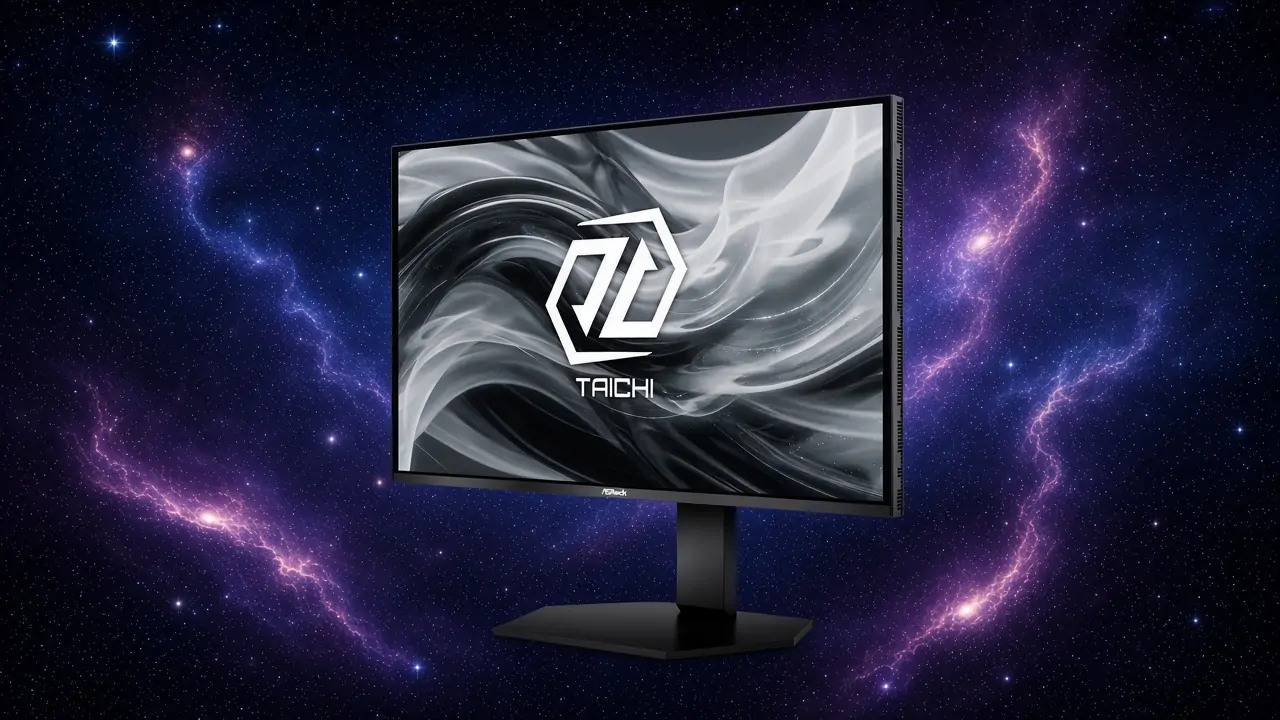
ASRock, globally recognized for its reliable PC components ranging from motherboards to graphics cards, has officially announced the expansion of its display hardware portfolio with the introduction of the Taichi gaming monitor series. Building upon its established presence in the gaming monitor market through the Phantom Gaming and Challenger series, the company is now stepping into the ultra-enthusiast tier by incorporating cutting-edge OLED panel technologies. Initially teased during the Consumer Electronics Show (CES) earlier in the year, the Taichi lineup has matured into a distinct family of three high-performance 27-inch displays, tailored to satisfy the diverse demands of professional content creators, hardcore gamers, and competitive esports athletes.
Unveiling the Taichi Lineup: Three Distinct OLED Powerhouses
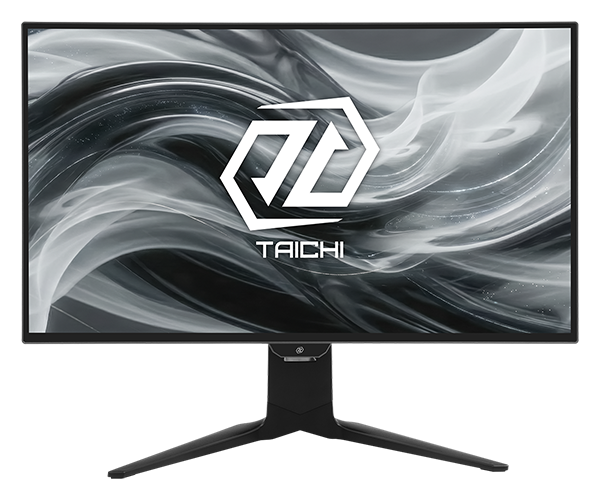
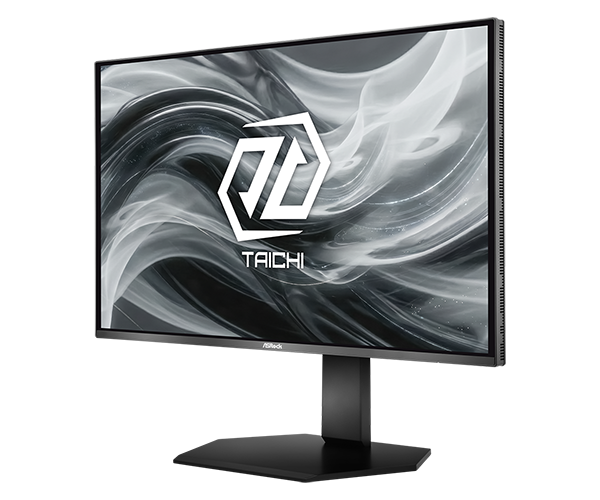
The newly revealed Taichi series comprises three unique models: the TCO27USA, the TCO27QXA, and the TCO27QXB. Each unit utilizes advanced OLED architectures to target specific performance metrics, distinguishing themselves through a mix of ultra-high resolutions, blazing-fast refresh rates, and innovative dual-mode capabilities.
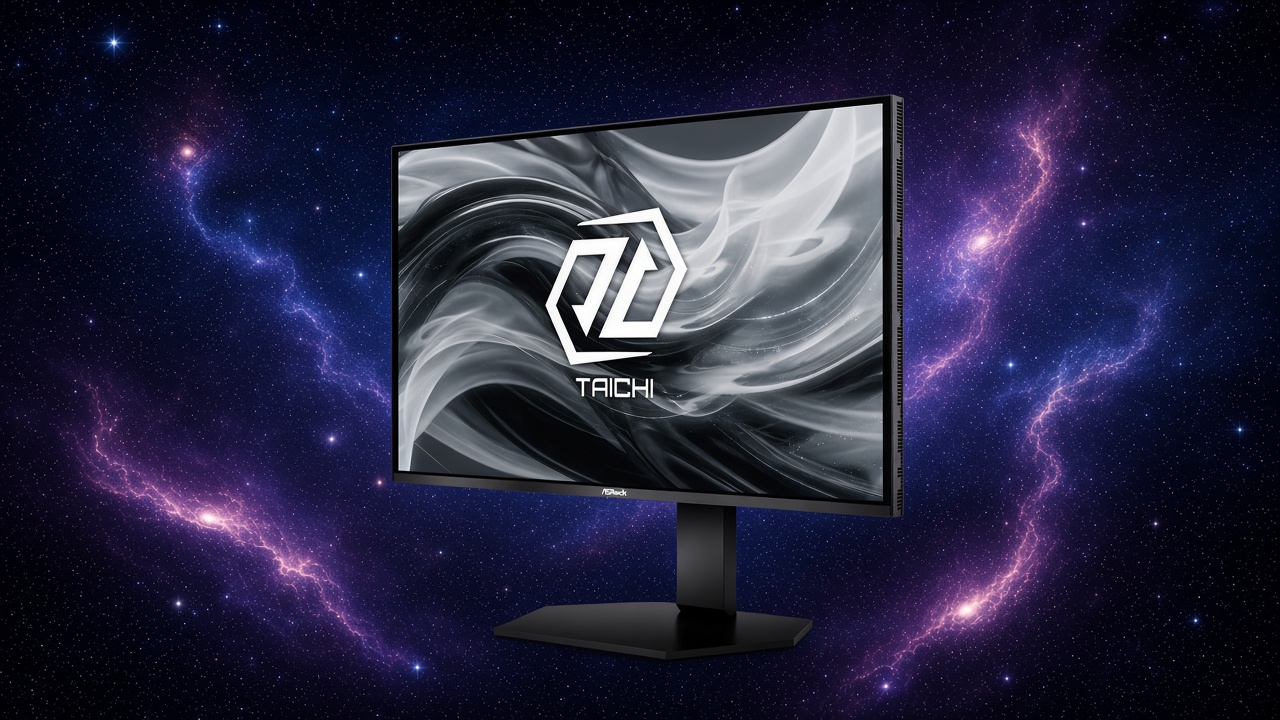
At the summit of visual fidelity sits the ASRock Taichi TCO27USA. Designed primarily for users who refuse to compromise between crisp resolution and OLED contrast, this model features a 4K UHD Penta Tandem OLED panel. Operating at a native 240Hz refresh rate, the TCO27USA caters to both immersive single-player gaming and color-critical workflows.
For the competitive gaming segment, ASRock introduced the Taichi TCO27QXA. This model scales the resolution down to QHD (2560 x 1440) to accommodate an exceptional 500Hz refresh rate, powered by a state-of-the-art QD-OLED panel.
The most technologically extreme entry in the trio, however, is the Taichi TCO27QXB. Utilizing a Tandem WOLED panel, this display introduces a versatile dual-mode operational framework. Users can toggle between a sharp QHD resolution at 540Hz for detailed motion clarity or drop down to a standard HD resolution to unlock an unprecedented 720Hz refresh rate. This dual-mode functionality redefines the boundaries of high-refresh-rate gaming displays, giving competitive players the ultimate flexibility depending on the tactical demands of the title they are playing.

Technical Specifications and Deep-Dive Performance Metrics
A closer examination of the hardware specifications reveals that ASRock has engineered these monitors to compete directly with established flagship displays from top-tier monitor manufacturers.
The TCO27USA model emphasizes color accuracy and panel responsiveness alongside its 4K resolution. It boasts an instantaneous response time of 0.03ms (GtG), virtually eliminating motion blur and ghosting—a common artifact in older liquid crystal displays. Furthermore, the monitor achieves a wide color gamut coverage of 99% DCI-P3, maintaining a Delta E color accuracy rating of under 2. This makes the TCO27USA a dual-purpose powerhouse capable of transitioning seamlessly from competitive gaming sessions to professional video editing and photo retouching. To support the massive bandwidth requirements of uncompressed 4K video at high refresh rates, ASRock has equipped the monitor with two DisplayPort 2.1 UHBR20 ports and two HDMI 2.1 ports boasting a 48Gbps transmission rate.
The TCO27QXA pivots toward high-speed motion handling. By utilizing a QHD QD-OLED panel, it achieves VESA DisplayHDR True Black 500 certification, providing striking contrast ratios and deep, ink-like blacks characteristic of self-emissive organic light-emitting diodes. Meanwhile, the TCO27QXB pushes luminance thresholds even further, claiming a peak HDR brightness of up to 1,500 nits, while its stablemates, the TCO27USA and TCO27QXA, achieve a respectable peak HDR brightness of 1,000 nits.
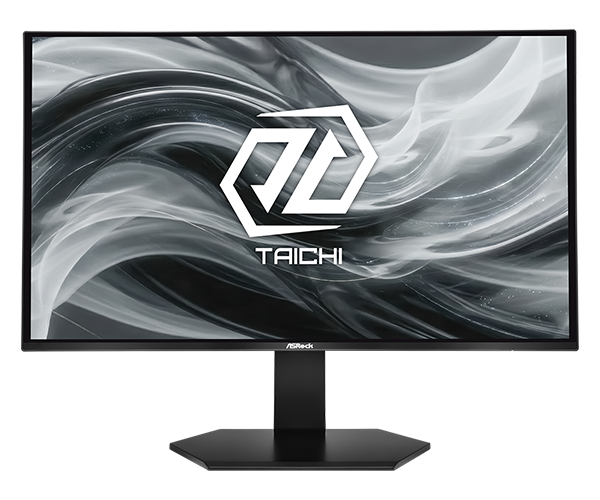
To ensure smooth, tear-free gaming experiences across all three models, ASRock has integrated AMD FreeSync Premium Pro synchronization technology. Practicality has also been factored into the design phase; the inclusion of built-in KVM (Keyboard, Video, Mouse) switch functionality allows users to control multiple systems with a single peripheral set. Connectivity is further streamlined via a multi-functional USB Type-C port that supports up to 65W Power Delivery, enabling users to charge laptops and mobile devices directly through the monitor while transmitting display signals.
Chronology of Development and Market Evolution
ASRock’s journey into the standalone display market has been steady and calculated. Historically known as a powerhouse in the motherboard and graphics card sectors—frequently partnering with AMD and Intel—the company diversified its hardware portfolio in recent years by introducing the Phantom Gaming and Challenger monitor lines. These earlier iterations successfully captured market share in the mid-range and mainstream segments.
The conceptual groundwork for the Taichi brand’s expansion into displays was laid earlier in the year at CES, where ASRock first previewed its ambitions to build ultra-premium OLED screens. The September rollout marks the formal realization of that roadmap, transforming early prototypes into a cohesive trio of market-ready products. By leveraging advanced panel technologies such as Penta Tandem OLED, QD-OLED, and Tandem WOLED, ASRock has signaled its intent to bypass incremental upgrades and compete directly at the bleeding edge of monitor technology.
Industry Implications and Strategic Positioning
The introduction of the Taichi monitor series carries significant implications for ASRock’s brand identity and its positioning within the broader PC hardware ecosystem. Historically, the "Taichi" moniker has represented ASRock’s highest tier of motherboards and graphics cards, characterized by robust power delivery phases, premium aesthetic designs, and enthusiast-grade features. Bringing this branding to monitors indicates that the company is aiming squarely at high-net-worth enthusiasts and professional gamers who demand flagship-tier hardware.
From a market perspective, the adoption of DisplayPort 2.1 UHBR20 across these high-end displays aligns with the broader industry shift toward next-generation GPU connectivity. As graphics cards increasingly adopt higher bandwidth outputs, monitors equipped to handle uncompressed signals at high resolutions and refresh rates will become essential for future-proofing high-end desktop configurations.
Furthermore, the inclusion of cutting-edge features like 720Hz dual-mode operation and 1,500 nits peak brightness places pressure on traditional display giants, forcing competitors to accelerate their own OLED development roadmaps. The convergence of professional-grade color accuracy with esports-level refresh rates suggests that the traditional boundary separating workstation displays from gaming monitors is continuing to blur.
Pricing and Availability Outlook
As of the official product announcements, ASRock has not yet disclosed specific pricing structures or global rollout dates, though official product support pages are already live on the company’s website. Industry analysts predict that given the inclusion of state-of-the-art OLED panels, advanced connectivity standards like DisplayPort 2.1 UHBR20, and premium build configurations, the Taichi series will position itself firmly in the luxury hardware tier.
As the tech community awaits official retail announcements, the debut of the Taichi monitor line underscores ASRock’s successful evolution from a component specialist into a comprehensive lifestyle and performance hardware ecosystem.