Nila Kartika Wati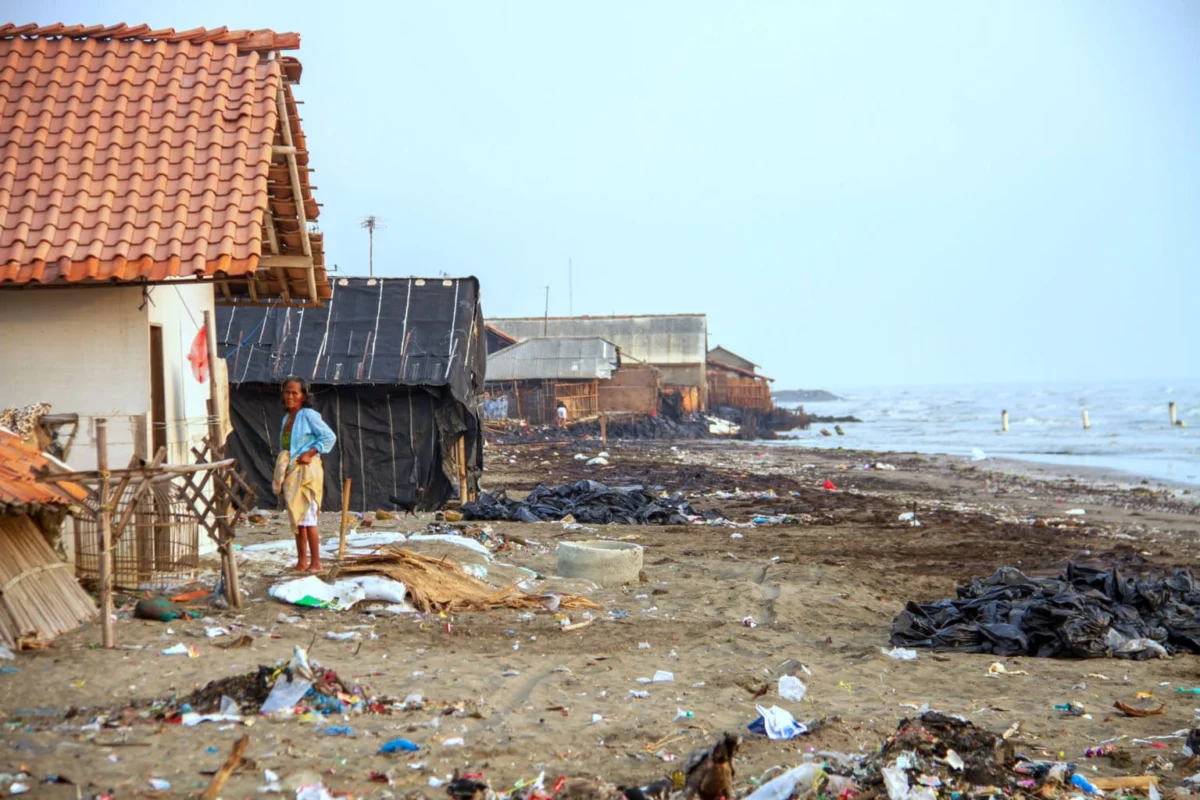
The Northern Coast of Java, colloquially known as the Pantura, is currently grappling with an environmental crisis of unprecedented proportions, as new data reveals that more than 65.8 percent of its coastline is undergoing severe erosion. According to the National Research and Innovation Agency (BRIN), this degradation spans a vast geographical stretch from Serang Regency in Banten to Situbondo Regency in East Java. This phenomenon is not merely a localized issue but a systemic failure of coastal stability driven by a combination of geological vulnerability, climate change, and poorly managed anthropogenic activities. As the sea encroaches further inland, the socio-economic fabric of Indonesia’s most populous island is being reshaped, with entire villages, vital infrastructure, and thousands of hectares of productive land disappearing beneath the waves.
The Geological Vulnerability of the Northern Coast
The severity of the erosion in the Pantura region is deeply rooted in its unique geological composition. Tubagus Solihuddin, a senior researcher at BRIN’s Center for Climate and Atmospheric Research, explains that the majority of the northern coast is composed of pluvial and deltaic deposits. From a geological standpoint, these sediments are classified as "unconsolidated," meaning they have not yet compacted into solid rock. This lack of structural integrity makes the shoreline exceptionally susceptible to the abrasive force of ocean waves and currents.
Furthermore, the topography of the Pantura exacerbates this vulnerability. The region is characterized by a low-relief morphology, consisting primarily of lowlands with elevations rarely exceeding ten meters above sea level. In many areas, the elevation is even lower, placing them at the direct mercy of tidal fluctuations. While BRIN noted that accretion—the accumulation of new land—is occurring along 34.2 percent of the coast, this gain is often overshadowed by the aggressive rate of loss elsewhere. Interestingly, the research indicates that erosion is now occurring even in deltaic areas that were historically known as centers of natural sedimentation.
The shift from sedimentation to erosion in these deltas is a clear indicator of disrupted ecological processes. Naturally, rivers carry sediment from the highlands to the coast, replenishing the deltas and maintaining the shoreline. However, this cycle has been severed by human intervention. Tubagus points to canalization, the diversion of river paths, and the construction of massive dams in the upstream regions as the primary culprits. By trapping sediment behind concrete walls or redirecting it away from natural outlets, these projects have effectively starved the coast of the "raw materials" it needs to defend itself against the sea.
Human Intrusion and the Submergence of Communities
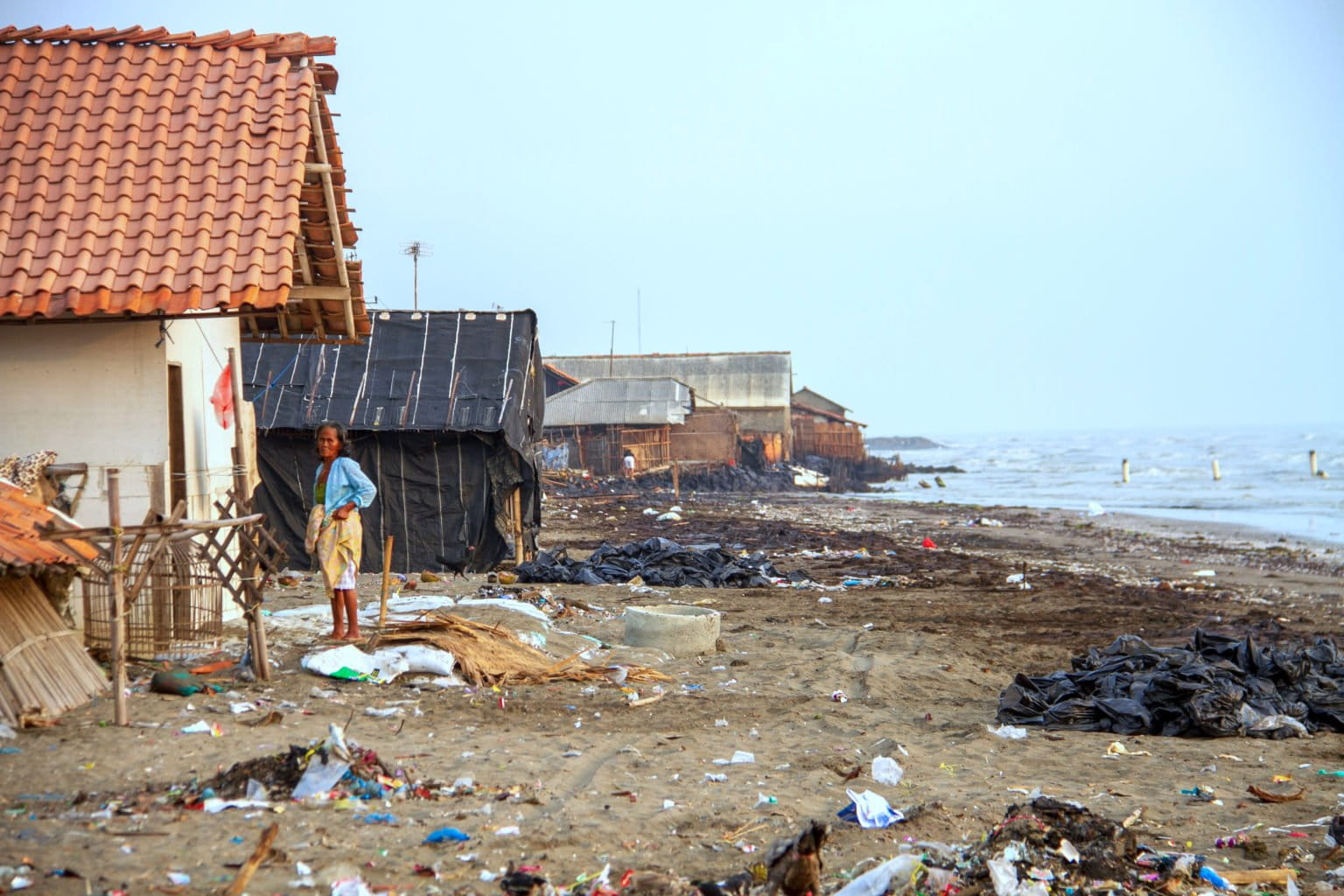
The consequences of this environmental decay are no longer theoretical; they are a daily reality for millions of residents. In Muara Gembong, Bekasi Regency, the sea has advanced up to four kilometers into what was once dry land. This saltwater intrusion has not only permanently submerged public infrastructure and residential areas but has also devastated the local economy. More than 1,000 hectares of aquaculture ponds (tambak), which serve as the primary source of livelihood for the community, have been rendered useless by the rising tides.
The situation is equally dire in other parts of the coast. In Tanjung Pontang (Serang), Legonkulon (Subang), and Demak (Central Java), the ocean has marched inland by five to six kilometers. In these regions, the landscape has been transformed into a ghost of its former self, with rice paddies and historic settlements now sitting several feet underwater. The loss of these lands represents a significant blow to national food security, as the Pantura has traditionally been one of Indonesia’s most productive agricultural corridors.
The Triple Threat: Sea Level Rise, Subsidence, and Groundwater Extraction
The Pantura faces a "triple threat" that creates a compounding effect of disaster: the simultaneous occurrence of sea-level rise (SLR), land subsidence, and coastal erosion. BRIN’s data shows that the average rate of sea-level rise in the region is approximately 0.41 to 0.42 centimeters per year. While this might seem marginal, the cumulative impact is staggering. Between 1993 and 2025, the total rise in sea level is projected to reach 15.5 centimeters.
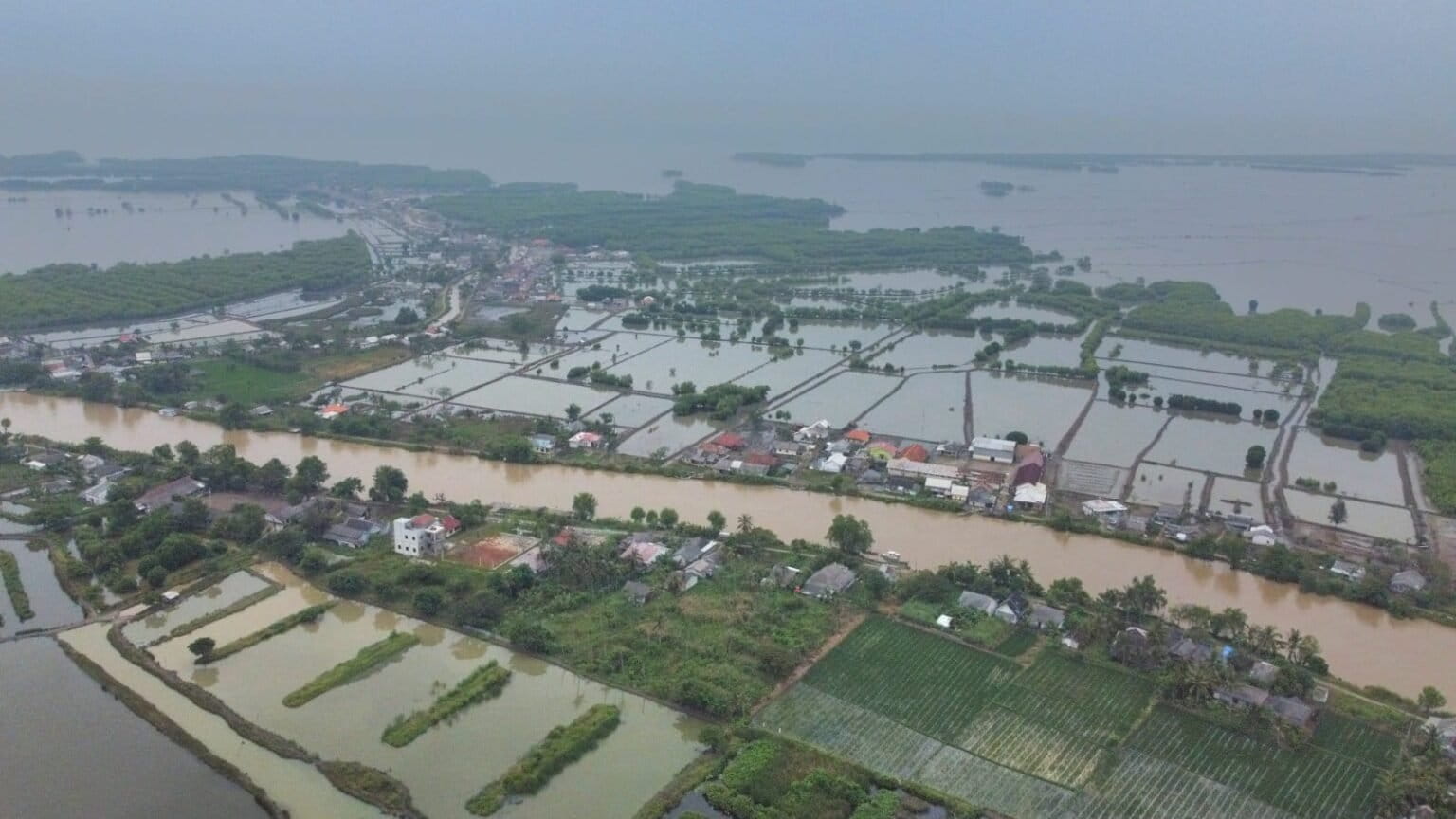
However, the rising sea is only half of the problem; the land itself is sinking. Land subsidence is perhaps the most critical factor in the rapid inundation of the Pantura. In Demak, the ground is sinking at a rate of 16 centimeters per year—the highest recorded rate in the region. This is followed closely by Jakarta at 15 centimeters and Sidoarjo at 14 centimeters.
Agung Syetiawan, a researcher at BRIN’s Center for Geoinformatics Research, identifies the massive and unregulated exploitation of groundwater as the primary driver of this subsidence. As the population grows and industrial activities expand, the demand for fresh water has skyrocketed. Because the municipal water supply often fails to meet this demand, residents and industries resort to drilling deep wells. This extraction empties the subterranean aquifers, causing the overlying layers of unconsolidated sediment to collapse and compress, which manifests as sinking land at the surface. This creates a permanent state of flooding, known locally as rob, which is no longer dependent on high tides but has become a permanent feature of the geography in places like Tangerang, Bekasi, and North Jakarta.
The Ecological Buffer: The Decline of Mangrove Forests
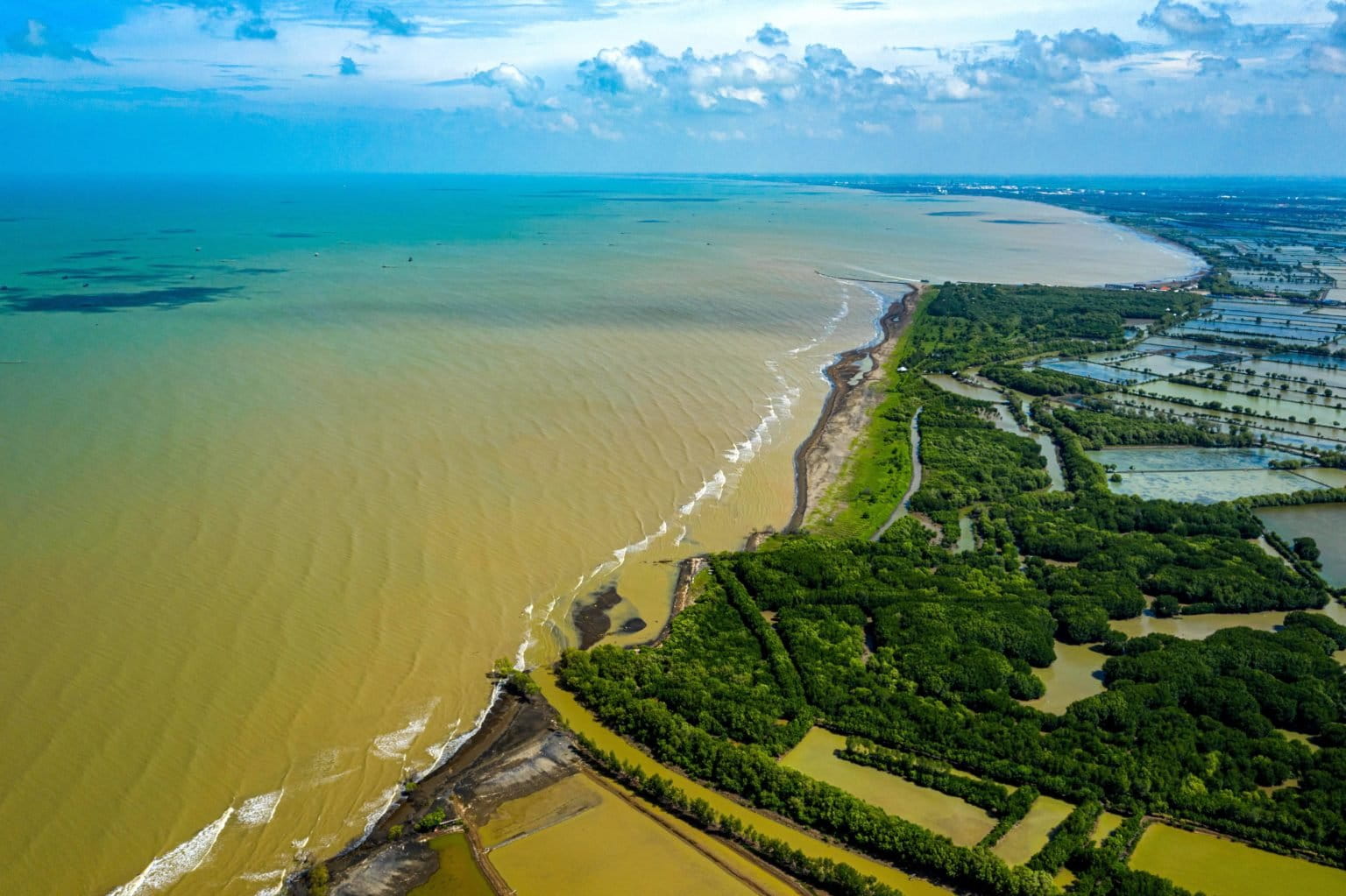
Historically, mangrove forests served as the natural frontline of defense for the Pantura, trapping sediment and breaking the energy of incoming waves. Today, these ecosystems are in a state of collapse. Frida Sidik, an expert in mangrove ecology at BRIN, warns that the dynamic nature of the current coastal degradation is making it nearly impossible for mangroves to survive.
As the shoreline retreats and the land sinks, the specific conditions required for mangrove growth—such as water depth and salinity balance—are being disrupted. When the erosion is too rapid, the mangroves are literally uprooted or drowned before they can adapt. Frida emphasizes that restoring these forests is not as simple as haphazardly planting new saplings. Each coastal segment has unique morphological characteristics; a mangrove species that thrives in one area may fail completely in another.
Furthermore, the "sediment starvation" caused by upstream dams means that even if mangroves are planted, they lack the mud and silt necessary to build their root systems. Many restoration projects fail because they do not account for these geological realities, leading to a waste of resources as young trees are swept away by the first major storm. Frida argues that there is a dangerous misconception that new plantations can immediately replace the ecological functions of lost, mature forests. In reality, mangroves require decades of stable conditions to reach an optimal growth state where they can effectively protect the coast.
A Landscape Transformed by Engineering
The human response to this crisis has largely been reactive, focusing on hard engineering solutions. Approximately 25.9 percent of the Pantura coastline, totaling 513.4 km, has been modified by man-made structures. These include seawalls, breakwaters, groins, jetties, and massive reclamation projects. These structures are concentrated in major urban and industrial hubs such as Jakarta, Cirebon, Semarang, and Surabaya.
While these structures provide temporary protection for high-value assets, they often worsen the problem for neighboring areas. By blocking the natural flow of longshore currents, seawalls can trap sediment in one area while accelerating erosion in another. This "neighbor-beggar" effect has turned the Pantura into a patchwork of concrete and chaos, where the construction of a pier in one district might lead to the disappearance of a beach in the next.
Geologically, the Pantura’s 1,668.7 km stretch is a complex mosaic. While 84.1 percent consists of Holocene sediments (gravel, sand, and mud), there are also segments of volcanic rock (7.6 percent), sedimentary rock (4.6 percent), and crystalline or igneous rock (3.6 percent). The resilience of any given stretch of coast depends entirely on these underlying materials. Muddy and mangrove-dominated coasts, which make up 47.8 percent of the region, are the most vulnerable to the current trends of subsidence and erosion.
The Path Forward: Data-Driven Governance and Integrated Management
The complexity of the Pantura’s problems is systemic, meaning that isolated interventions are doomed to fail. M. Rokhis Khomarudin, Head of BRIN’s Geoinformatics Research Center, stresses that the only way to halt the destruction is through the adoption of advanced technology and geospatial data. Policy decisions must be rooted in scientific reality rather than short-term economic gain.
To save what remains of the northern coast, researchers advocate for a comprehensive strategy that includes:
- Strict Groundwater Regulation: Ending the over-extraction of groundwater is the only way to slow land subsidence. This requires the government to provide reliable alternative water sources for both citizens and industry.
- Strategic Mangrove Rehabilitation: Moving away from "ceremonial" planting toward scientifically backed restoration that considers local sediment supply and coastal morphology.
- Upstream-Downstream Integration: Planning for dams and river diversions must account for the sediment needs of the coast.
- Tailored Engineering: Recognizing that there is no "one-size-fits-all" solution. Some areas may require hybrid "green-gray" infrastructure, while others may need to be designated for managed retreat.
The ongoing degradation of the Pantura is a stark reminder of the imbalance between economic development and ecological preservation. Without a fundamental shift in how the region is managed—balancing the needs of the economy with the non-negotiable laws of geology and climate—the "Great Post Road" region of Java may eventually find itself entirely reclaimed by the Java Sea. The scientific data is clear: the clock is ticking for the Pantura, and the window for effective intervention is closing rapidly.