
 Tyo Susilo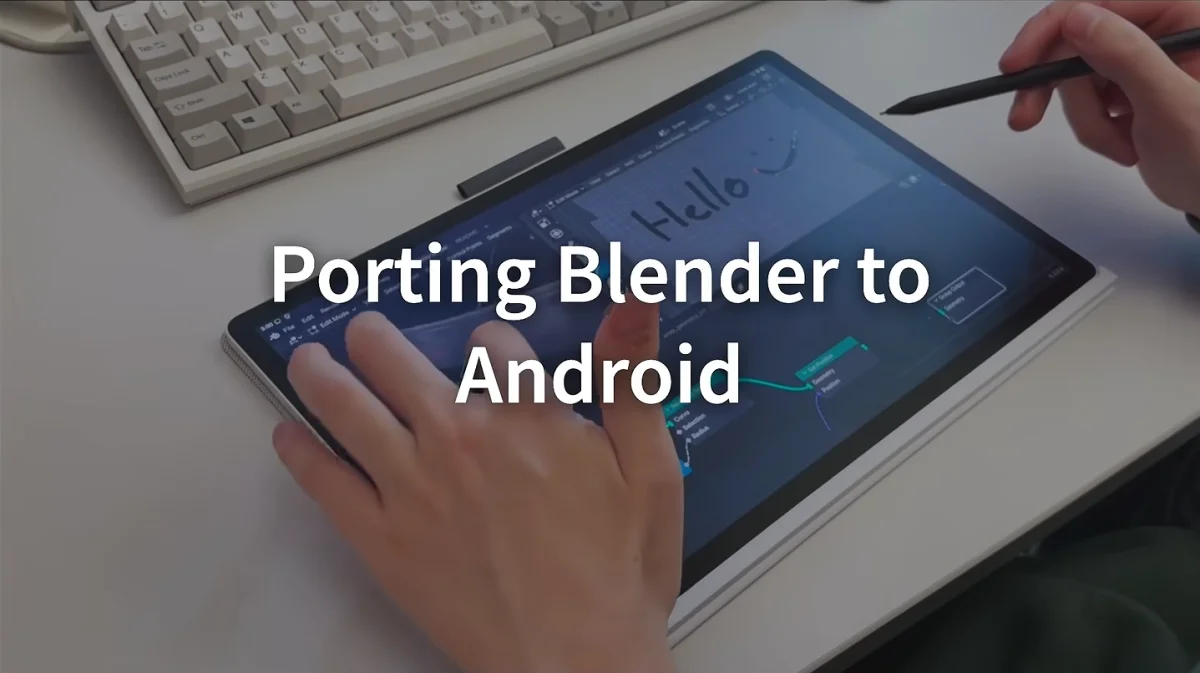
The landscape of mobile 3D content creation is poised for a significant transformation following the announcement by the Blender Foundation that its industry-standard open-source 3D creation suite is officially being ported to Android tablets. Unveiled during the annual Blender Conference 2026, the development marks a major milestone for digital artists, animators, and designers who rely on portable hardware. According to project representatives, the Android iteration of Blender is slated for a commercial release during the first half of 2027, bridging the gap between desktop-grade 3D production and mobile computing.
For decades, Blender has served as a cornerstone of the computer graphics industry, offering a comprehensive feature set encompassing modeling, rigging, animation, simulation, rendering, compositing, and motion tracking. Traditionally anchored to desktop and workstation operating systems such as Windows, macOS, and various Linux distributions, the software’s expansion into the mobile ecosystem signals a broader industry shift toward mobile workstation viability. The announcement has generated considerable enthusiasm within the digital art community, particularly among professionals and hobbyists utilizing high-performance Android slate devices.
Comprehensive Demonstration and Development Roadmap at Blender Conference 2026
The official unveiling took place during a nearly one-hour technical presentation at the Blender Conference 2026, where core developers showcased early builds of the software running natively on Android hardware. The comprehensive session provided attendees and online viewers with an in-depth look at the technical architecture required to adapt a complex desktop application for mobile processors and operating systems.
Developers detailed the engineering challenges overcome during the initial porting phase, outlining a clear roadmap leading up to the targeted launch window in the first half of 2027—spanning from January to June. Furthermore, the Blender Foundation has made an early alpha APK demo available for testing purposes, allowing developers and early adopters to examine the current state of the software, evaluate touch-based workflows, and provide valuable feedback to the core engineering team.
A Surprising Turn of Events Regarding Mobile Tablet Support
The timeline for the Android release has introduced an unexpected dynamic into the mobile graphics market, notably outpacing the development timeline for Apple’s iPad ecosystem. In 2025, the Blender Foundation officially acknowledged that native development for Apple’s iPad was underway. However, progress on the iPad version has faced delays, and a definitive release schedule for iOS and iPadOS remains unconfirmed.
The rapid progression of the Android port has therefore surprised industry analysts, many of whom anticipated that Apple’s unified hardware and software ecosystem—coupled with the widespread adoption of the iPad Pro in creative industries—would yield a mobile version of Blender first. Instead, the open-source community’s collaboration with hardware manufacturers and Android’s flexible ecosystem has accelerated the timeline for Google-powered tablets, positioning Android as the initial pioneer for mainstream professional 3D desktop software on mobile hardware.
Redefining the User Interface: Transitioning from Shortcuts to Touch and Stylus

Adapting a software suite as complex as Blender to a mobile tablet environment presents substantial interface and control hurdles. Historically, Blender’s efficiency has relied heavily on an extensive system of keyboard shortcuts combined with three-button mouse navigation. Translating these robust input methods to a mobile form factor required a paradigm shift in user experience (UX) and interface (UI) design.
During the Blender Conference 2026 demonstration, developers highlighted how the application has been optimized for touch-screen interaction. Rather than relying on traditional peripheral devices, the interface incorporates contextual radial menus, on-screen gesture controls, and panel configurations designed specifically for finger navigation.
Crucially, the integration of active stylus support is central to the mobile Blender experience. Precision tasks such as mesh sculpting, texture painting, and retopology demand sub-millimeter accuracy that fingers alone cannot provide. By leveraging advanced stylus technologies commonly found in modern flagship Android tablets—offering high pressure sensitivity and low latency—artists will be able to perform intricate digital sculpting comparable to traditional desktop graphics tablet setups.
Hardware Evolution and the Rise of Professional Android Tablets
The decision by the Blender Foundation to target Android tablets is underpinned by significant hardware advancements within the Android ecosystem over recent years. High-end Android tablets are no longer viewed merely as devices for media consumption, web browsing, and casual gaming. Modern flagship slates are equipped with powerful multi-core system-on-chips (SoCs), advanced graphics processing units (GPUs), high-density RAM configurations, and vibrant high-refresh-rate OLED displays.
These technical specifications provide the necessary computational headroom to handle moderate 3D scenes, real-time viewport rendering, and complex asset management. By bringing a native, uncompromised version of Blender to these devices, the software transforms high-end Android tablets into legitimate, standalone mobile workstations. Professionals can now review projects on-site, perform on-the-go blockouts, or execute detailed sculpting sessions without needing to carry a bulky laptop.
Broader Implications for the 3D Industry and Creative Workflows
The introduction of Blender to Android tablets carries far-reaching implications for the computer graphics industry, educational institutions, and independent creators. Historically, entering the field of 3D design required a significant financial investment in a dedicated desktop computer or a high-end gaming laptop. The democratization of hardware through powerful, increasingly accessible tablets—paired with Blender’s status as a free, open-source application—significantly lowers the barrier to entry for aspiring artists worldwide.
In educational settings, schools and training programs operating on mobile device integration can now incorporate professional-grade 3D pipelines into their curricula without requiring expensive computer labs. For professional studios, mobile Blender integration facilitates seamless pipeline flexibility, enabling supervisors and artists to make rapid adjustments to assets while away from their primary desks.
As the development team works toward the targeted release window in the first half of 2027, the global 3D community will closely monitor beta releases and community feedback. With early builds already functional and public demonstration phases underway, the transition of professional 3D content creation from the desktop to the palm of the hand represents a transformative leap forward for digital artists utilizing Android hardware.








